

AI Hiring Automation ROI Benchmarks Explained for Smarter Recruitment Decisions

When you invest in AI hiring software, you expect impact you can measure. AI hiring automation ROI benchmarks quantify that impact in time saved, cost reduced, and candidate quality improved. HRMLESS makes those results visible with real-time analytics and automated workflows that cut delays and busywork.
Automated recruitment tools remove manual screening and back-and-forth scheduling. Your team reaches top candidates faster. Automated nudges reduce ghosting in hiring, so fewer interviews are missed and pipelines keep moving. With ATS integration, setup is smooth, and your process scales without chaos.
Understanding AI Hiring Automation
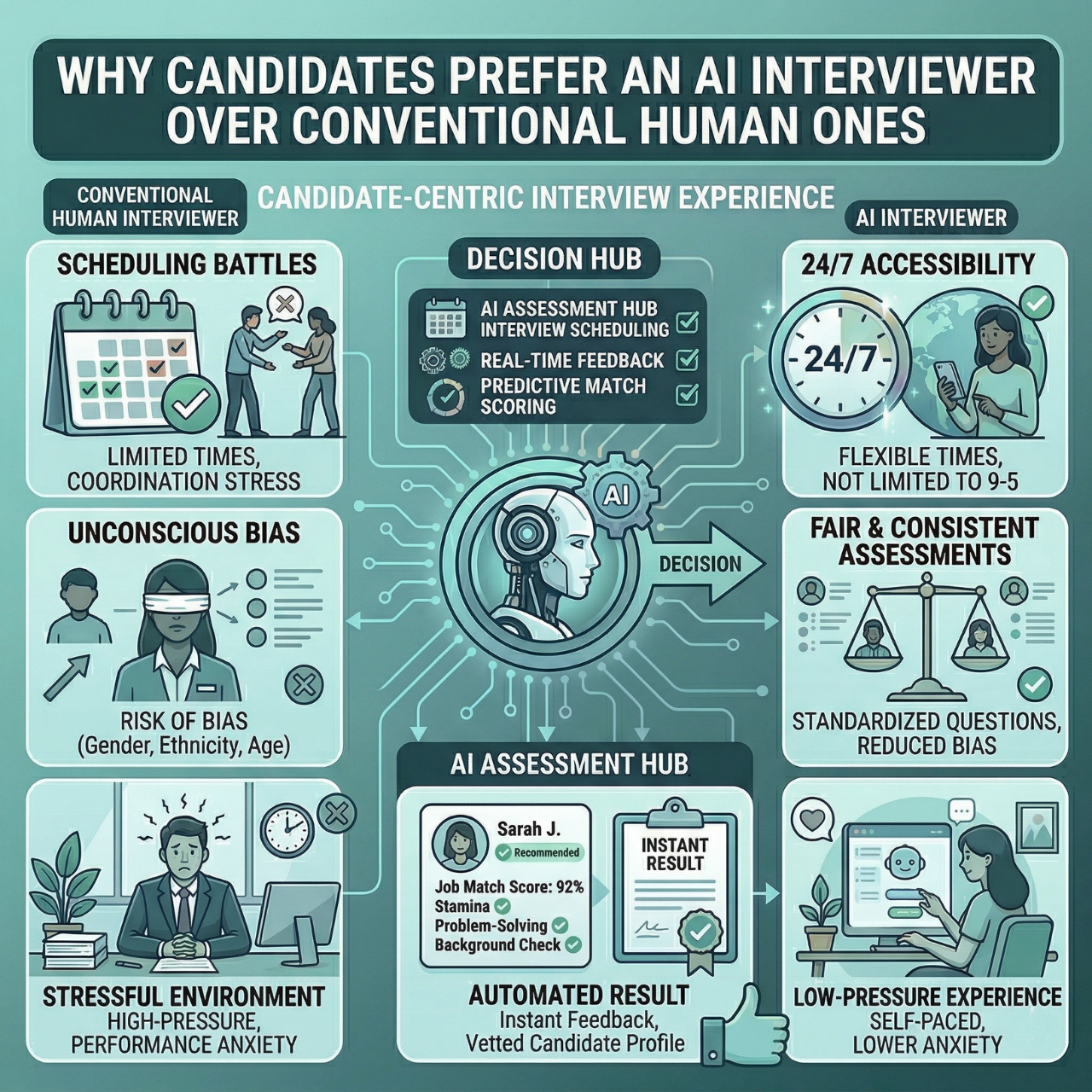
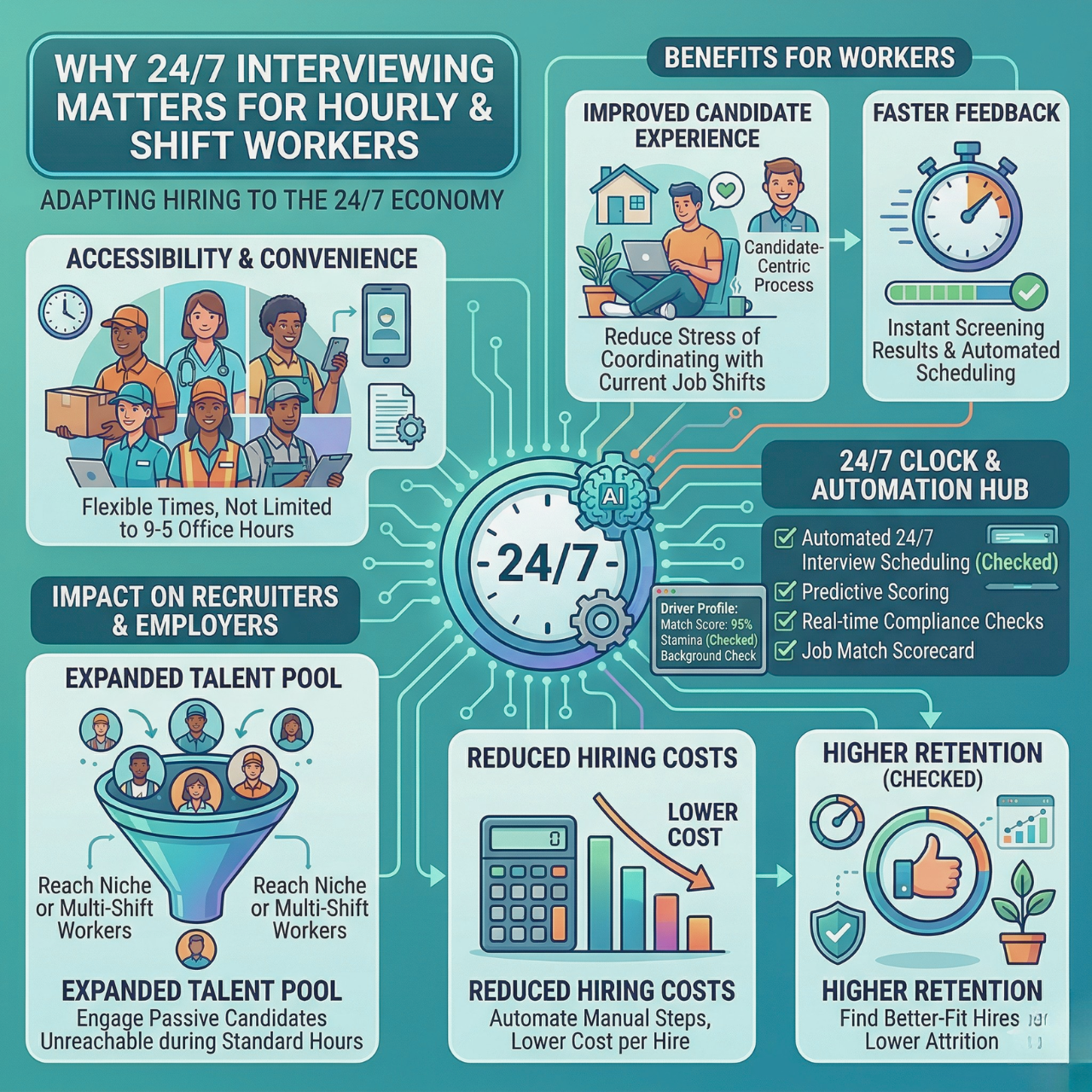
AI hiring automation accelerates repetitive tasks and improves consistency. It works 24/7, so candidates move at their own pace and recruiters stay focused on decisions, not chores.
How AI Is Transforming Recruitment
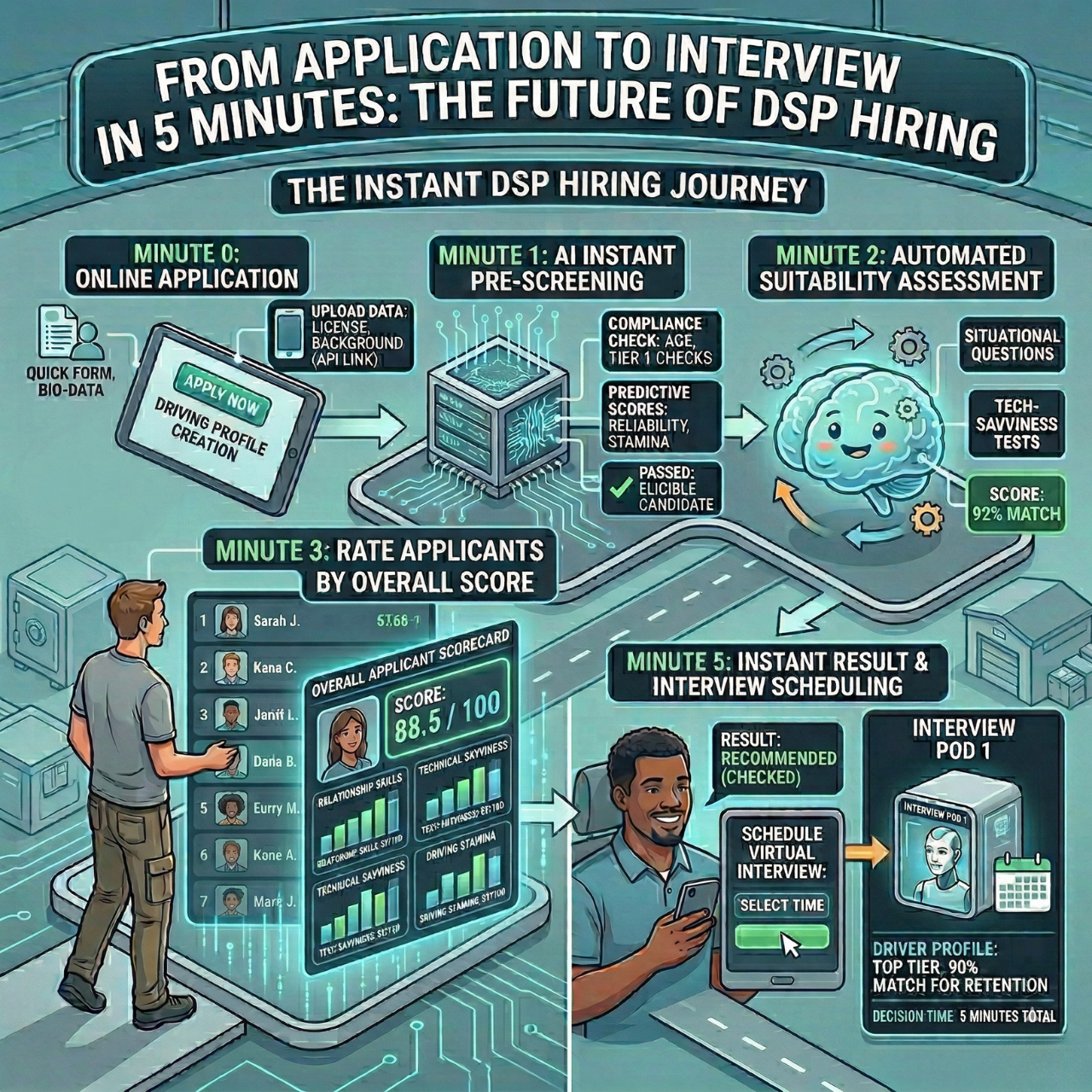
AI handles resume triage and interview scheduling. It sends reminders that keep candidates engaged, reducing no-shows. It scores applicants by job-related skills, not gut feel, to lower bias and improve outcomes. You get speed and quality at once.
Key Technologies in Hiring Automation
- 24/7 AI interviews for fast, flexible pre-screens
- Automated scheduling that reduces no-shows
- AI-driven scoring that surfaces the best fits
- SMS & email engagement to sustain momentum
- ATS integration so systems stay in sync
These features shrink manual work while maintaining fairness and consistency.
Glossary (first mention only)
ATS (Applicant Tracking System): The system you use to manage candidates and jobs.
NCNS (No Call, No Show): When a candidate misses an interview without notice.
Common Use Cases in Talent Acquisition
- Resume screening: Prioritize high-fit candidates fast
- Interview automation: Offer flexible, always-on pre-screens
- Candidate ranking: Let data drive priorities
- Scheduling: Book interviews only with engaged candidates
- Candidate communication: Automate reminders and status updates
Result: recruiting that scales with volume and maintains quality.
Defining ROI in AI Hiring
ROI shows how automation helps you save time, reduce costs, and hire better. It’s not just money. It’s speed, quality, and consistency across roles.
What ROI Means for Recruiting Teams
- Time savings: Remove manual scheduling and first-round screens
- Cost reduction: Fewer low-value tasks and less rework
- Candidate quality: Blind, criteria-based scoring improves signal
You see faster time-to-hire, stronger teams, and a calmer pipeline.
Measuring Success of Automation Tools
Track a focused set of metrics:
- Time to Hire: Days from post to accept
- Interview No-Shows: A proxy for engagement
- Qualified Throughput: Share of applicants who pass screens
- Cost per Hire: All recruiting spend divided by hires
Dashboards highlight bottlenecks so you can fix issues quickly.
Factors Influencing ROI
- Hiring volume: More roles amplify gains
- Integrations: Clean data flow boosts reliability
- Candidate engagement: Multi-channel nudges reduce drop-off
- Model quality: Better screening means fewer mis-hires
Get these right and ROI rises steadily.
AI Hiring Automation ROI Benchmarks
Benchmarks help you set expectations and defend investments.
Industry Average ROI Statistics
Teams often see a ~62% reduction in time to hire through faster screening and scheduling. Automation saves ~2.7 hours per hire by removing repetitive chores. Consistent scoring reduces bias and ghosting while raising match quality—fewer wasted interviews, stronger shortlists.
Pair each stat with an outcome:
62% faster → fewer lost candidates and quicker team productivity.
2.7 hours saved → recruiters spend time on interviews, not email.
Benchmarks by Company Size
- Small teams (<50): Automation acts like extra hands—pre-screens and scheduling run themselves
- Mid-sized (50–500): Hiring volume scales without more admin
- Enterprise: Biggest cost wins via standardization and fewer errors across many requisitions
Trends by Industry Sector
- High-volume industries (tech, retail): Highest ROI from speed and throughput
- Regulated fields (healthcare, finance): Gains from consistency, auditability, and fair scoring
In every sector, automated recruitment tools improve pace and predictability.
Calculating ROI for Automated Hiring
Keep the math simple and repeatable.
Essential Metrics for ROI Analysis
- Time to Hire
- Cost per Hire
- Candidate Quality (screen pass rate / onsite pass rate)
- Ghosting Rate (NCNS)
- Interview-to-Offer Ratio
These reveal where automation is paying off—and where to optimize next.
Best Practices for Data Collection
- Use your ATS as the single source of truth
- Standardize job fields and scoring rubrics
- Track SMS and email engagement events
- Set baselines before rollout to enable clean before/after comparisons
- Audit data monthly for duplicates and status drift
Common Calculation Methods
- ROI % = [(Savings – Cost) ÷ Cost] × 100
- Time Saved Per Hire = (Old TTH – New TTH) × Hires
- Cost Savings = (Old CPH – New CPH) × Hires
Add quality signals (e.g., ramp time, early turnover) for a fuller ROI story.
Key Drivers of ROI in Automated Hiring Processes
Time-to-Hire Reduction
Automation clears bottlenecks in screening, scheduling, and follow-ups. Faster cycles keep top talent engaged and reduce competing offers.
Cost-Per-Hire Improvements
Fewer manual tasks and fewer misroutes mean fewer hours burned. Cleaner data and integrated tools prevent duplicate work.
Quality of Hire Enhancements
Always-on pre-screens improve response rates. Consistent, job-related scoring raises the average quality of finalists and curbs early attrition.
Challenges in Achieving Strong ROI
Integration with Existing Systems
Prioritize native connections to your ATS and calendars. Avoid manual exports. Data should sync automatically to prevent silos and missed updates.
Data Quality and Consistency
AI performs only as well as the inputs. Maintain standardized roles, current contact info, and clear evaluation criteria. Schedule recurring data hygiene checks.
Change Management Considerations
Give recruiters hands-on training and quick wins. Show how automation removes drudgery so they can do higher-value work. Celebrate improvements to build trust.
Strategies to Improve AI Hiring Automation ROI
Ongoing Optimization of Automated Workflows
Review pass rates, drop-off points, and no-shows monthly. Adjust screening questions, scoring thresholds, and reminder cadence. Test, measure, iterate.
Stakeholder Training and Engagement
Enable hiring managers with score guidelines and structured feedback. Keep recruiters informed on what the model values and why. Encourage feedback loops.
Regular Benchmarking, Fairness Checks, and Performance Audits
Set quarterly targets for time to hire, cost per hire, candidate quality, and NCNS. Run fairness reviews alongside ROI checks:
- Selection rate parity across demographics
- Error-rate gaps by group
- Adverse impact ratio tracking
- Audit cadence: pre-deployment, then quarterly, with retained audit trails
Fair, transparent systems are more resilient—and deliver better long-term ROI.
Key Metrics to Track (At a Glance)
Metric
Why It Matters
Time to Hire
Fast hiring reduces dropout and lost productivity
Candidate Quality
Stronger shortlists, better team performance
No-Show Rate (NCNS)
Measures engagement and scheduling effectiveness
Cost per Hire
Captures efficiency gains
Automation Coverage
Identifies remaining manual work to optimize
Fairness Indicators
Ensures compliant, bias-aware decisions
Future Outlook and Emerging Trends
Advanced AI and Predictive Analytics
Models increasingly forecast performance and retention, using behavioral and engagement signals. Expect sharper shortlists and fewer false positives.
Evolving Regulatory and Ethical Standards
Rules are tightening on explainability and bias. Build in transparency: document criteria, store rationale, and monitor outcomes. Compliance builds trust with candidates and leadership.
Long-Term Impact Projections
As automation matures, expect sustained gains: shorter cycles, fewer drop-offs, happier candidates, and steadier pipelines. Teams spend more time on conversations, less on coordination.
Frequently Asked Questions
How can AI-driven hiring tools enhance recruitment efficiency?
They automate screening, scheduling, and follow-ups. That often saves 2+ hours per hire and can cut time to hire by ~60%, depending on volume and role type.
What success metrics show the ROI of AI hiring automation?
Time to hire, cost per hire, candidate quality, engagement, and no-show rates. Track before/after to prove impact.
Can AI reduce overall recruitment costs? By how much?
Yes. Removing repetitive work and reducing mis-hires can lower recruiting costs by 20–30%, depending on baseline process and volume.
How does AI improve candidate quality?
Consistent, criteria-based scoring filters noise. Teams often see 3× more qualified candidates reaching later stages.
How does automation affect candidate experience?
24/7 AI interviews let candidates move on their schedule. Instant updates and easy scheduling reduce confusion and dropout.
How long to see ROI after deploying AI hiring solutions?
Many teams see results within 3–6 months, especially when integrations and training are in place.
Ready to Cut Time-to-Hire and Stop Ghosting?
Make your hiring flow as fast as your business. Turn on 24/7 AI interviews, automate scheduling, and surface only qualified candidates—without adding headcount. See HRMLESS in action with real-time analytics, 24/7 AI interviews, and automated scheduling that reduce ghosting and speed up offers—without extra headcount.
Featured

Subscribe to ournewsletter
Related posts
Explore the world of photography with our curated selection of
portfolio websites that showcase creativity and innovation.