

AI Vs. Human Interviews: What Really Works in Hiring Today
Hiring teams are under pressure to move faster without sacrificing quality. The debate around AI vs. human interviews comes from real pain points: slow screening, inconsistent evaluations, and missed talent due to overloaded recruiters.
Tools like HRMLESS help address these challenges by automating early interviews, reducing manual effort, and keeping candidate evaluations consistent while recruiters focus on higher-value conversations.
This guide breaks down how AI interviews and human interviews actually compare. You’ll learn where each approach works best, where it falls short, and how modern teams combine both to hire smarter and faster.
What Are AI Interviews?
An AI interview uses computer software to talk with job candidates, no person required. The system asks questions and records your answers, video, audio, or just text.
The technology uses natural language processing to make sense of what you say. It analyzes your word choice, tone, and sometimes even facial expressions to score your responses. AI interviews follow a structured format. Every candidate gets the same questions in the same order.
The software compares your answers against stored data to decide if you fit the job requirements. Some systems spit out instant feedback, others just send results to human recruiters for the final call. You can do these interviews whenever you want, day or night. No need to juggle schedules.
Overview of Human-Conducted Interviews
Human interviews are face-to-face or video conversations with a real person from the company. This could be a recruiter, hiring manager, or maybe even your future coworker.
The interviewer asks you questions and listens to your responses. They can shift their questions based on what you say or dig deeper if something catches their interest.
Human interviewers watch your body language and listen to how you communicate. You get a chance to build a connection with someone at the company.
You can ask questions back and have a real conversation about the role and workplace culture. The interviewer uses their own judgment and experience to decide if you’d fit the job and the team.
Core Differences Between Automated and Traditional Methods
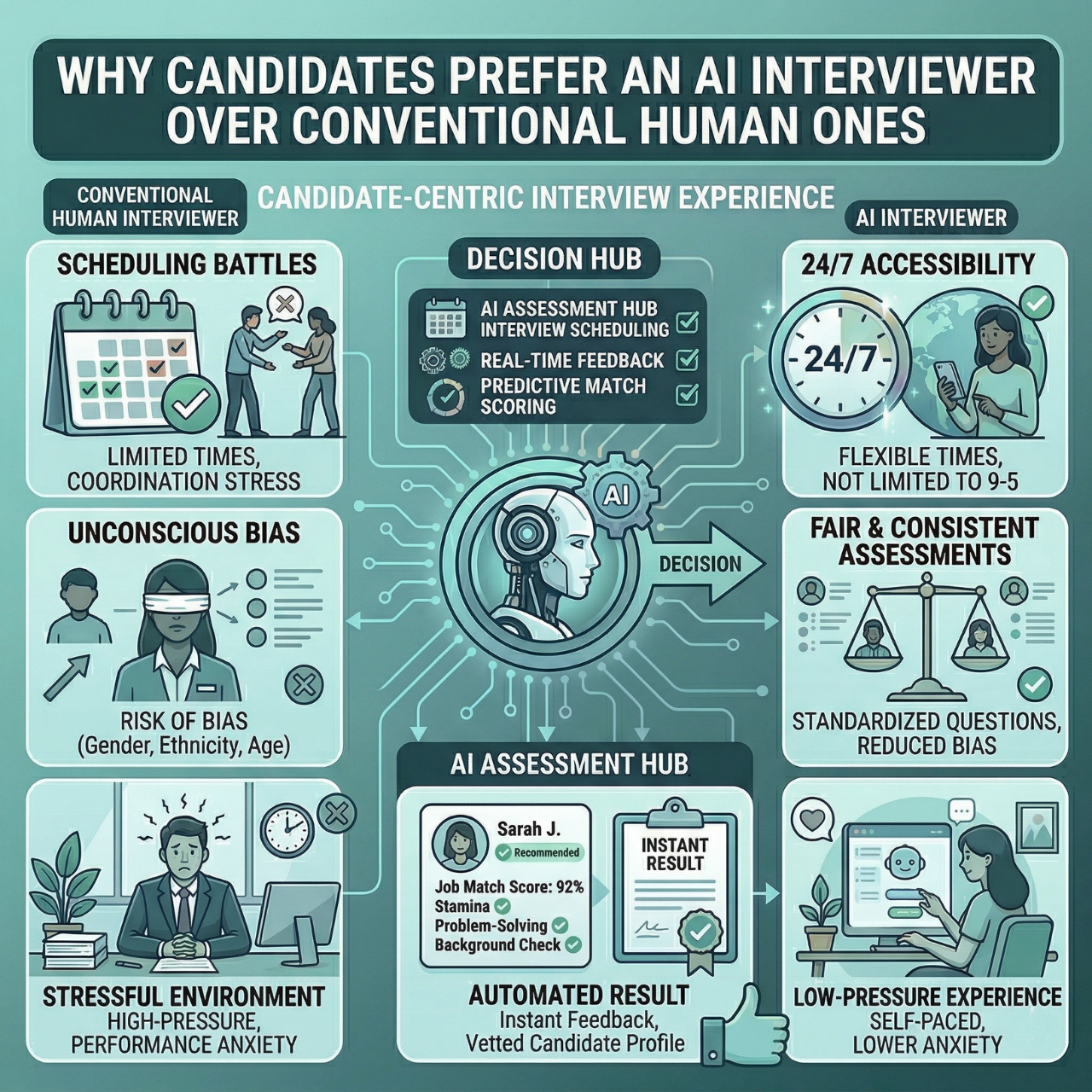
- Consistency: AI interviews ask the same questions to everyone, every time. Human interviewers might change their questions or approach depending on the candidate.
- Flexibility: Humans can adjust the conversation on the fly, exploring topics that seem important. AI sticks to its script, no surprises.
- Emotional reading: Human interviewers get emotions, humor, and social cues way better than AI. They notice things like enthusiasm, confidence, and how you handle stress.
- Speed: AI can interview hundreds of candidates at once and score them almost instantly. Humans need time to meet with each person.
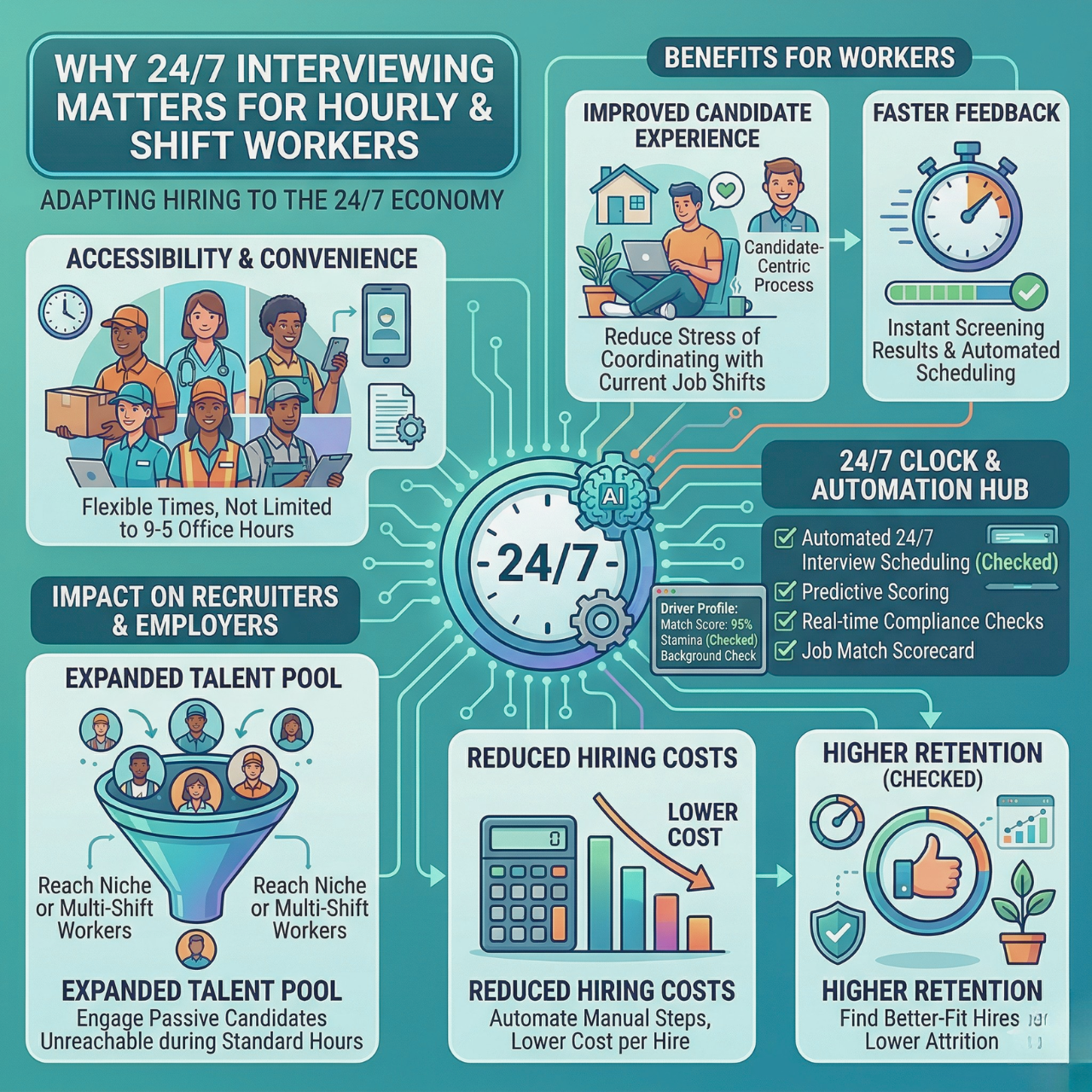
- Availability: You can do an AI interview whenever you want. Human interviews require both people to be free at the same time.
Strengths and Weaknesses of AI Interviews
AI interviews really shine when it comes to consistency and speed. But they struggle with the subtle stuff, those little human things that people just pick up on without thinking.
Consistency and Bias Reduction
AI interviews evaluate every candidate with the same questions and scoring. Everyone gets judged on the same factors, which helps remove those weird variations that pop up with different human interviewers.
The technology isn’t swayed by unconscious bias about appearance, accent, or background. It just looks at your responses and qualifications. Some studies say this approach can improve hiring accuracy by up to 40% compared to old-school methods.
Key benefits:
- Same questions for everyone
- Standardized evaluation
- No mood swings or snap judgments
- Data-driven scoring
But AI isn’t flawless. If its training data has bias baked in from past hiring, it can still reflect those patterns.
Speed and Scalability
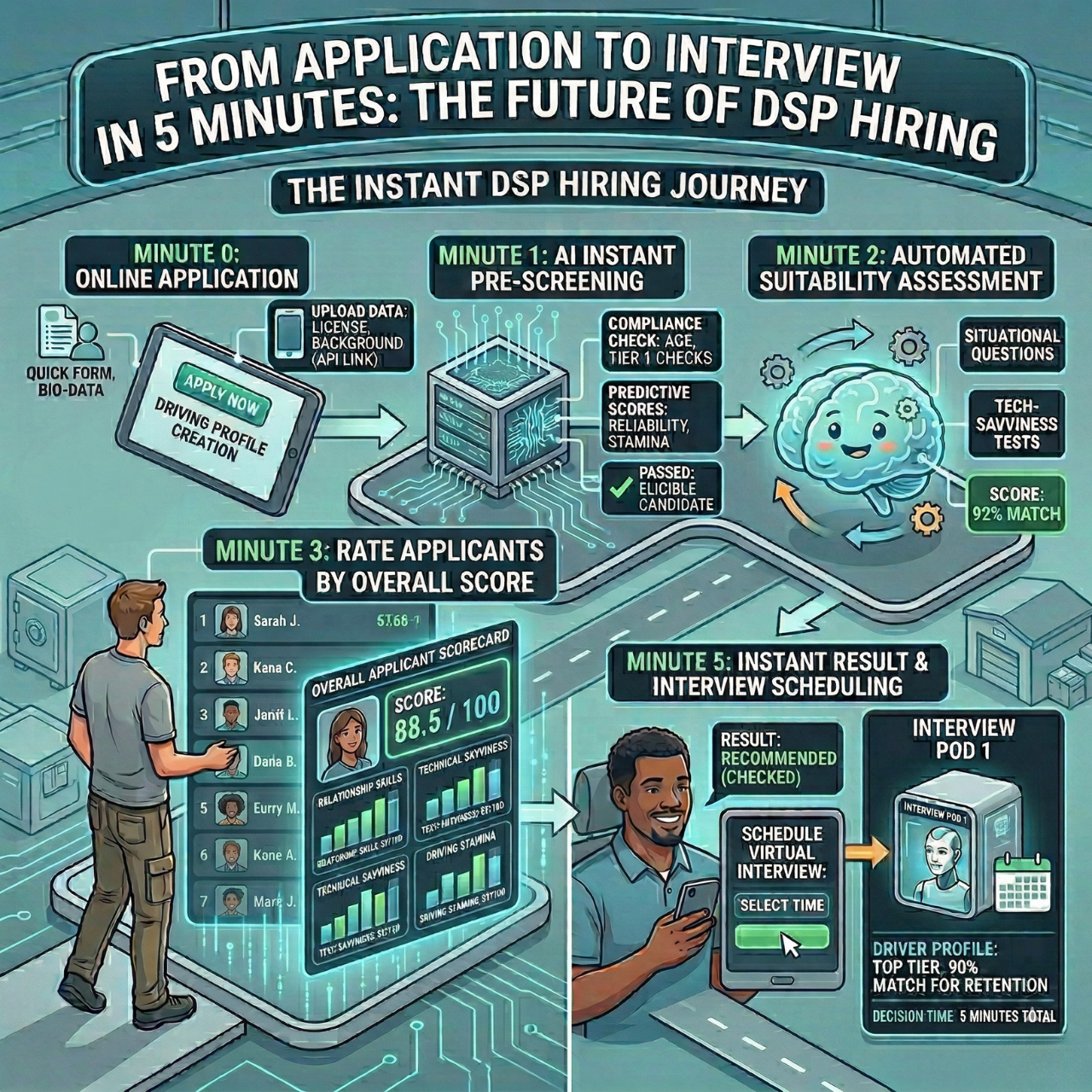
You can do an AI interview any time that works for you. The system processes your responses right away and spits out results in minutes, not days.
Companies can interview hundreds of candidates at once; there is no need for a small army of interviewers. This makes hiring much faster, especially when there are piles of applications.
Your responses get analyzed immediately using voice patterns and content checks. The cost savings are pretty significant, too. HR teams can focus on final-stage candidates instead of drowning in first-round interviews.
Challenges in Understanding Nuance
AI systems just don’t pick up on the subtle stuff in conversations. They miss sarcasm, humor, and the emotional context behind your words.
Your body language, facial expressions, and tone shifts? AI often doesn’t get it. If you pause or rephrase, the system might score you differently than a human would.
It can’t ask thoughtful follow-up questions if you bring up something interesting. Cultural differences in communication styles also throw AI for a loop, since it only knows what it’s been trained on.
Human interviewers naturally adapt and dig deeper into your unique experiences. That’s something AI just can’t do well, at least, not yet.
Advantages and Limitations of Human Interviews
Human interviewers bring emotional awareness and personal connection to the hiring process. But they also bring inconsistency and unconscious bias into the mix.
Emotional Intelligence and Personalization
A human interviewer can pick up on cues that AI usually misses. They notice your body language, tone, and facial expressions.
This helps them figure out if you’re genuinely excited about the job or just saying what you think they want to hear. Humans can adapt their questions on the spot. Mention an interesting project? They’ll ask for details. You get natural, unscripted follow-up questions.
This personal touch matters, especially for soft skills like empathy, adaptability, and teamwork. Interviewers can sense how you might handle workplace conflicts or fit into a team.
The rapport you build can really shape your experience. Sometimes a friendly interview makes you feel valued, even if you don’t end up getting the job.
Assessing Cultural Fit
Human interviewers are great at figuring out if you’ll thrive in the company’s environment. They know the unwritten rules and social dynamics.
Your interviewer might share stories about the culture, so you get a real sense of what it’s like to work there. They might talk about how the team celebrates wins or gets through crunch time.
They also size up whether your work style matches what the team needs. Some places need lone wolves, others want team players. Humans can sense these things in conversation, something a standardized assessment just can’t do.
Potential for Bias and Inconsistency
Human interviewers sometimes let unconscious bias creep into their decisions. They might favor candidates who remind them of themselves or share similar backgrounds.
Your interview can feel totally different depending on who’s asking the questions. One person might drill you on technical skills, another might focus on personality. This inconsistency makes fair comparisons tough.
Interviewers have moods and energy swings, too. The time of day or their own stress can change how they evaluate you, even if they’re trying to be objective.
Situations Where AI or Human Interviews Excel
AI interviews are the go-to when speed and consistency matter most. Human interviews are best when you need to evaluate personality and complex communication.
The right choice depends on your hiring volume, the role, and how much nuanced judgment the job calls for.
High-Volume Screening Scenarios
AI interviews can process thousands of candidates in a few hours. That’s a lifesaver when you’re hiring for multiple positions or dealing with a seasonal rush.
You’ll save a ton of time on initial screenings. No more days spent scheduling and running first-round interviews, AI handles the basic qualifications check automatically.
The system asks standard questions and evaluates responses using keywords and preset criteria. Companies report that AI can screen about 1,000 candidates with 85% accuracy in the time it would take human recruiters several days.
But don’t count on AI for the final call. Use it to narrow the pool from hundreds down to a shortlist, then have humans dig deeper with the top candidates.
Role Suitability and Position Levels
Entry-level and technical roles are a good fit for AI interviews at the start. These jobs usually have clear, measurable requirements that AI can check easily.
Technical skills, certifications, and basic qualifications are straightforward for automated systems. Senior leadership and executive positions? Those need human interviewers from the start.
You’re looking for strategic thinking, leadership presence, and cultural alignment at that level. AI just can’t judge how someone will navigate complex challenges or inspire a team.
Customer-facing roles land somewhere in the middle. AI can handle the first round to check communication basics, but you’ll want humans to assess empathy and problem-solving before making an offer.
Complexity of Communication Required
AI is great at evaluating straightforward, fact-based answers. If you need to verify work history, technical knowledge, or specific experience, AI interviews keep things consistent.
When communication gets nuanced, though, you really need a person. Humans can pick up on tone, read between the lines, and understand context.
Some roles demand handling ambiguity or explaining complex ideas simply. Human interviewers can dig deeper with follow-up questions and see how you think on your feet.
Future Trends in Interviewing: Blending AI and Human Approaches
Companies are moving toward hybrid interview systems. AI takes care of early screening, and humans handle the final decisions. This aims to balance speed and efficiency with personal connection and good judgment.
Increasing Use of Hybrid Models
More companies now use AI for the first stages of hiring. AI systems review applications, ask basic questions, and test technical skills at lightning speed.
That frees up human recruiters to focus on the candidates who make it through. The typical hybrid process works in stages. AI interviews candidates first to check qualifications and basic fit. It scores answers and flags top performers.
Human recruiters then meet with these selected candidates to discuss deeper topics like company culture, team vibes, and communication style.
This two-step system lets companies handle big applicant pools without losing the human touch. You’ll still talk to a real person before getting hired, but you might have to get past an AI screening first.
Ethical Considerations and Candidate Experience
Companies have to address fairness concerns as AI becomes more common in hiring. AI can pick up bias from its training data, which means some qualified folks could get screened out unfairly.
Candidate experience matters, too. Plenty of people feel weird talking to AI instead of a real person. They worry about being judged by an algorithm that might miss context or unique situations.
Good hybrid systems keep humans in the loop for the final say. They’re upfront about when AI is in play and how it evaluates your answers.
Companies should test their AI tools regularly to catch bias and give candidates a way to appeal decisions.
Choosing the Right Interview Approach for Today’s Hiring
Hiring delays, inconsistent screening, and candidate drop-off are real problems. Understanding AI vs. human interviews helps teams reduce bottlenecks while still making thoughtful, high-quality hiring decisions.
HRMLESS supports this balance by automating early interviews and scheduling, so recruiters spend less time screening and more time connecting with the right candidates.
If slow hiring or missed talent is holding your team back, book a demo and see how a smarter interview workflow can speed things up without losing the human touch.
Frequently Asked Questions
What is the main difference between AI interviews and human interviews?
The biggest difference in AI vs. human interviews is how candidates are evaluated. AI interviews use structured questions and automated scoring, while human interviews rely on judgment, conversation, and real-time interaction.
Are AI interviews replacing human interviewers?
AI interviews are not replacing humans entirely. Most companies use AI for early screening and rely on human interviews for deeper evaluation, decision-making, and cultural fit.
Do AI interviews reduce bias in hiring?
AI interviews can help reduce bias by asking the same questions and applying consistent scoring criteria. However, they still depend on how the system is trained, so human oversight remains important.
When are AI interviews most effective?
AI interviews work best for high-volume hiring, entry-level roles, and early screening stages. They help companies save time and quickly identify qualified candidates.
When should companies rely on human interviews?
Human interviews are best for roles that require complex communication, leadership, emotional intelligence, or strong cultural alignment. These situations benefit from real-time discussion and follow-up questions.
How should candidates prepare for AI vs human interviews?
For AI interviews, focus on clear, structured answers and staying on topic. For human interviews, be ready to explain your experiences in depth, ask questions, and show interpersonal skills.
Is a hybrid interview process becoming standard?
Yes, many organizations now use a hybrid approach. AI handles early screening, while human interviews are used later to make final, well-informed hiring decisions.
Featured

Subscribe to ournewsletter
Related posts
Explore the world of photography with our curated selection of
portfolio websites that showcase creativity and innovation.