

Why AI Hiring Software Wins for Startups
Hiring in a startup is high-pressure. You need strong talent fast, but limited time and budget make every hire risky.
AI hiring software for startups automates screening, scheduling, and early evaluations, so you can move faster without sacrificing quality. HRMLESS supports this shift by reducing manual tasks and keeping your process structured as you scale.
In this guide, you’ll learn how these tools work, what problems they solve, and how to choose the right solution for your team.
What Is AI Hiring Software for Startups?
AI hiring software uses artificial intelligence to automate and improve how you find, screen, and hire candidates. These platforms handle repetitive tasks like resume screening and interview scheduling while helping you make better hiring decisions faster.
Key Features of AI Hiring Platforms
AI hiring platforms offer resume parsing that automatically extracts info from applications and organizes it into your system. Candidate scoring ranks applicants based on how well they match your job requirements.
- Resume parsing that extracts and organizes application details
- Candidate scoring that ranks applicants against your requirements
- Automated screening that filters out unqualified candidates early
- Chatbots that answer candidate questions and schedule interviews
- Bias-reduction options that hide demographic information during initial screening
- Analytics dashboards that show drop-off points and stage-by-stage timing
- Interview intelligence that records and analyzes video interviews for consistency
- Skills testing that measures technical abilities or role-relevant fit
Many platforms include tools that help you evaluate candidates consistently. Some also include skills testing that measures technical abilities or personality fit automatically.
How AI Differs From Traditional Recruitment Tools
Traditional applicant tracking systems mostly store and organize candidate info. AI hiring software for startups can also make recommendations and take actions for you.
Instead of manually reading every resume, AI can screen hundreds of applications in minutes. With AI platforms, you don’t have to search job boards yourself; they can source candidates automatically from multiple channels.
You can also get predictive analytics that forecast which candidates will succeed in the role based on historical data. Traditional systems typically don’t learn from past hires or improve recommendations over time.
AI can reduce time-to-hire by handling multiple tasks at once. Your team can focus on interviewing top candidates instead of getting stuck in admin work.
Common Use Cases for Startups
Startups use AI hiring software for startups when they need to fill roles quickly with limited HR support. Screening hundreds of applications for technical roles becomes doable, even if you don’t know every skill set inside out.
- Hiring fast without adding more recruiters
- Keeping standards consistent as headcount grows
- Supporting remote hiring across multiple time zones
- Replacing expensive recruiting agencies with a lower-cost workflow
Remote startups often rely on async video interviews and automated scheduling across time zones. Assessing soft skills and culture fit through AI analysis can be especially helpful when you can’t meet candidates in person.
Budget-conscious startups can swap pricey recruiting agencies for AI tools that cost a fraction as much. Faster responses to applicants can also help you compete with bigger companies for talent.
Benefits of AI Hiring Solutions for Startups
AI hiring tools help startups recruit talent faster, find better candidates, and save money during the hiring process. These systems handle time-consuming tasks and support more consistent decisions using data.
Faster Recruitment Cycles
AI tools can cut hiring time from weeks to just a few days. The software automatically screens resumes and ranks candidates by their qualifications.
- Review hundreds of applications in minutes, not days
- Use pre-recorded video interviews and self-paced skill assessments
- Focus interviews on top candidates only
- Scale hiring without adding recruiters to payroll
This speeds up your pipeline and can help you fill critical roles before competitors do. That’s a relief when you’re moving fast.
Improved Quality of Hires
AI systems analyze candidate data to predict who will succeed in specific roles. The technology looks at skills, experience, and work patterns to find stronger matches for your startup.
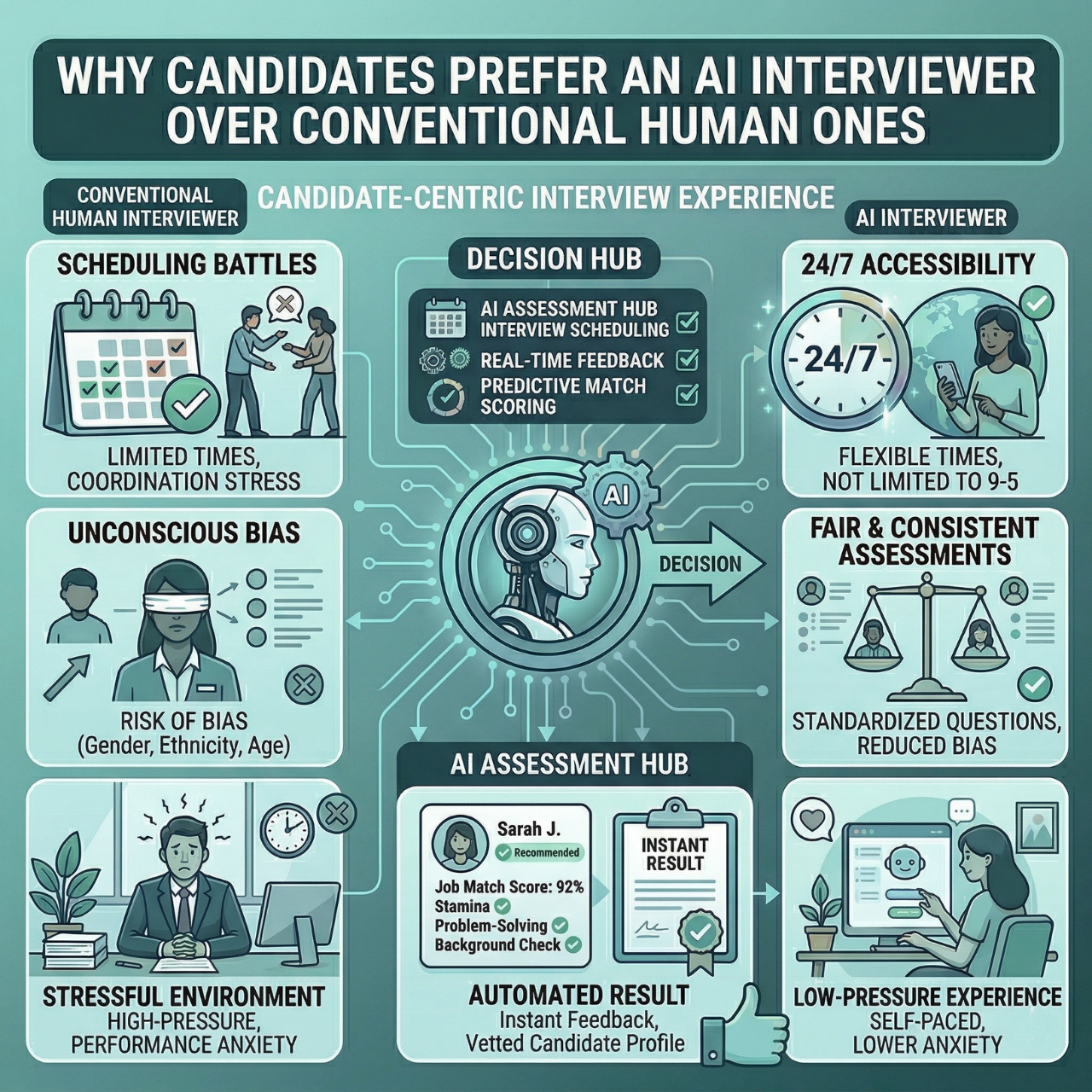
These tools can help minimize bias by focusing on qualifications rather than subjective factors. The software evaluates all candidates using the same criteria, which supports fairer hiring decisions.
AI can also assess technical skills through automated tests and coding challenges. The technology can identify candidates whose values and work style fit your company culture, which can reduce bad hires and replacement costs.
Cost-Effective Talent Acquisition
AI hiring software often costs less than traditional recruiting methods. You may spend less on job board posts, recruiting agencies, and staffing fees.
- Less time spent on administrative tasks
- Faster fills for high-impact roles
- Lower costs from fewer empty-seat days
- A small team can manage more openings with automated screening
Empty roles cost money in lost productivity and delayed projects. AI hiring software for startups helps reduce those costs by shortening time-to-hire.
Evaluating and Selecting AI Recruitment Tools
Choosing the right AI recruitment tool means weighing the features that matter most to startups: budget, compatibility, and growth potential.
Essential Criteria for Startups
Your budget is probably tight, so focus on tools that offer clear pricing without hidden fees. Many platforms charge per user, per hire, or via monthly subscriptions.
Some offer free trials or freemium versions so you can test core features before committing. Look for tools that actually solve your biggest hiring headaches.
If you spend hours screening resumes, prioritize AI-powered resume screening and candidate matching. If scheduling interviews eats up your day, choose tools with automated scheduling features.
Key features to check:
- Ease of use: Can your team start using it without hours of training?
- AI accuracy: Does it surface quality candidates or create more noise?
- Support quality: Will you get help when something breaks?
- ROI timeline: How quickly will it save you time and money?
Testing the tool with real job postings is often more useful than a sales demo. Many vendors offer trial periods between 7 and 30 days.
Integrations With Existing Workflow
Your AI recruiting tool should work with the software you already use. Check whether it connects with your applicant tracking system, email, calendar, and job boards.
Poor integrations can create duplicate work and data entry headaches. Native integrations are often more reliable and faster than third-party connectors like Zapier.
Ask vendors for a list of direct integrations before you sign up. Your team shouldn’t have to switch between multiple platforms to manage one candidate.
During your trial, test the data flow between systems. Make sure candidate info, interview notes, and communications sync properly without manual copying and pasting.
Scalability and Flexibility
Your startup might hire 10 people this year and 50 next year. The tool you pick should handle both scenarios without forcing a switch or making costs jump sharply.
Check pricing as you grow. Some tools scale reasonably, while others spike. A tool that charges $99 per month for 5 users but $999 for 15 users might not work long-term.
Flexibility markers to consider:
- Can you add or remove features as needs change?
- Does it support different workflows for different roles?
- Can you customize it without needing a developer?
Your hiring needs will change as your startup grows. The right platform adapts to new job types, hiring volumes, and team structures without forcing a full replacement.
Implementing AI Hiring Software in Startup Teams
Successfully adding AI hiring software for startups isn’t just about tech. People and processes matter just as much.
Your team needs clear guidance on adapting to new workflows, practical training to use the tools well, and ongoing support to make the transition stick.
Change Management Strategies
Start by picking a team champion who will advocate for the tool and help others through the transition. This person should understand both your current process and the new workflow.
Communicate the reasons for the change early and often. Let your team know AI tools will handle repetitive tasks like resume screening so they can focus on interviewing and building relationships with candidates.
Be clear about what will change in day-to-day work. Create a rollout timeline that introduces features gradually instead of launching everything at once.
Begin with one part of your process, like candidate screening, before expanding to scheduling or assessment tools. Set clear expectations about which tasks the AI will handle and which still require human judgment.
For example, AI can rank candidates based on qualifications, but your team makes final hiring decisions. Document these boundaries so everyone knows their role.
Training and Onboarding Processes
Schedule hands-on training where team members practice using the software with real scenarios. Avoid generic demos that don’t match your roles or hiring process.
Create simple reference guides with step-by-step instructions for common tasks. Include screenshots and keep the language straightforward.
Hiring managers should be able to do basics like posting jobs or reviewing AI-generated candidate summaries without needing constant help. Pair experienced users with those still learning.
Set up a feedback channel so team members can report issues or suggest improvements. The first few weeks will reveal gaps in training or confusing features that need attention.
Ensuring User Adoption
Track who is actively using the platform and who is reverting to old habits. Usage data can show who needs more support. Recognize early adopters and ask them to share what’s working. Real stories from colleagues often land better than top-down mandates.
Address resistance directly by listening to concerns. Some people worry about job security or feel AI undermines their expertise.
Show how the tool supports their work rather than replacing it. Make the AI workflow the default by updating procedures and templates, so adoption becomes the norm.
Ethical Considerations and Best Practices
AI hiring software can speed up recruitment, but it raises questions about fairness, privacy, and transparency. Address these issues early to build trust with candidates and reduce legal risk.
Mitigating Bias in AI Hiring
AI systems learn from historical data, so they can inherit and amplify existing bias in hiring practices. If past data includes patterns tied to gender, race, or age discrimination, the AI may repeat those patterns.
Regularly audit your tools for bias. Test how the system evaluates candidates across demographic groups where appropriate and legally permitted.
Review which qualifications the AI prioritizes and confirm they are job-related. Work with vendors who conduct bias testing and can share audit results.
Consider using diverse training data sets when setting up your system. Remove information that can drive discrimination, like graduation years, photos, or names that signal gender or ethnicity. Keep humans involved in final decisions instead of letting the system make choices alone.
Data Privacy and Security Compliance
Your AI hiring software collects sensitive candidate information. You must protect it and follow privacy laws like GDPR in Europe or CCPA in California. Only collect data you truly need to evaluate candidates. Don’t gather extra information just because it can be stored.
Have clear policies for retention and deletion. Your vendor should encrypt data at rest and in transit. Ask about security certifications and whether they’ve had data breaches. You’re responsible for candidate data even if a third-party tool processes it.
Tell candidates what data you’re collecting and how you’ll use it. Provide a way to access data or request deletion when applicable. Some laws may require you to explain how AI influences hiring decisions. Transparency is not just helpful; it may be required.
Transparent Hiring Processes
Candidates should know when AI is used to evaluate applications. State this in job postings and during the application process. Explain what factors the AI considers when screening. If your system analyzes video interviews or writing samples, explain how those assessments work.
Transparency helps candidates prepare and builds trust. You also need a way for candidates to request a human review or challenge an outcome. Set up an appeals process and make sure someone can explain rejection reasons at a high level. Keep records of how your system supports decisions so you can respond to questions or complaints.
Train your team on how the tools work, where they fall short, and when to override recommendations. Your people remain the first line of defense against unfair hiring practices.
Hire Faster Without Burning Out Your Team
Startups can’t afford slow hiring, inconsistent screening, or losing candidates to faster competitors. The right setup helps you automate administrative work, reduce delays, and maintain high quality without adding headcount.
HRMLESS helps you simplify screening, scheduling, and early evaluations so your team can focus on conversations that actually move hiring forward.
If hiring feels messy or slow, it’s time to fix the bottlenecks. Book a Demo to see how streamlined your process can be.
Frequently Asked Questions
What Is AI Hiring Software for Startups?
AI hiring software for startups uses artificial intelligence to automate tasks like resume screening, candidate scoring, interview scheduling, and early-stage assessments. It helps small teams move faster while keeping hiring decisions structured and consistent.
How Does AI Hiring Software Reduce Time-to-Hire?
AI tools automatically review applications, rank candidates, and coordinate interviews. By removing manual screening and back-and-forth scheduling, startups can move qualified candidates through the pipeline much faster.
Is AI Hiring Software Expensive for Startups?
Many platforms offer flexible pricing based on usage, users, or hiring volume. For startups, the cost is often lower than agency fees or the hidden cost of unfilled roles and slow hiring cycles.
Can AI Hiring Software Help Reduce Bias?
AI hiring software can help minimize bias by standardizing screening criteria and masking certain demographic details during early evaluation stages. Human oversight is still important to ensure fairness and accountability.
Will AI Replace Human Recruiters?
No. AI hiring software supports recruiters by automating repetitive tasks and surfacing qualified candidates. Final decisions, culture fit assessments, and relationship-building still rely on human judgment.
Featured

Subscribe to ournewsletter
Related posts
Explore the world of photography with our curated selection of
portfolio websites that showcase creativity and innovation.