

AI Personality Assessment for Smarter Hiring

AI personality assessment uses advanced algorithms to read how people speak, write, and behave, so you can understand who they are faster. This helps you make clearer, more confident decisions about candidates and employees.
With HRMLESS, AI personality assessment moves from theory to everyday practice in your hiring stack. Automated analysis turns interviews, text, or video into practical signals about fit, motivation, and style, so your team spends less time guessing and more time choosing the right people.
In this guide, you’ll see how AI personality assessment works, where it fits in business and HR, and which models and data it relies on. By the end, you’ll know when and how to use AI personality assessment to improve real hiring outcomes.
What Is AI Personality Assessment?
AI personality assessment uses technology to evaluate a person’s traits, behaviors, and tendencies. It relies on data from natural conversations, videos, or written text instead of traditional questionnaires. This approach speeds up hiring and reduces bias while providing deeper insights.
Defining AI Personality Assessment
AI personality assessment uses algorithms to analyze behavior, speech, and online data. Unlike surveys or self-reports, it studies things like voice tone, facial expressions, and social media activity.
These methods reveal patterns linked to traits like openness, conscientiousness, or emotional stability. The goal is to create a detailed profile quickly and objectively.
This helps recruiters, educators, and therapists understand people better without relying solely on what individuals say about themselves.
How It Differs From Traditional Methods
Traditional personality tests often use fixed questions and multiple-choice answers. You fill in forms that rely on self-reporting, which can be biased or inaccurate. AI removes this need by observing natural behavior during interviews or online interactions.
Instead of waiting days for results, AI can deliver instant, data-driven insights. These insights tend to be richer because they include nonverbal cues and real-world language use. Using AI reduces human error and speeds up decision-making in hiring or personal assessments.
Core Technologies Used
AI personality assessment depends on machine learning, natural language processing (NLP), and computer vision. Machine learning improves the AI’s ability to identify traits by analyzing large data sets.
NLP reads and interprets text or speech, detecting emotions and intentions. Computer vision processes images and videos to assess facial expressions and body language. Together, these technologies create a well-rounded profile that is more accurate than traditional tests.
Key Benefits of AI Personality Assessment
AI personality assessments offer specific advantages that help you improve hiring and personal evaluation. They provide better accuracy, save time, and deliver insights tailored to individual needs. These benefits help you make smarter decisions with less effort.
Improved Accuracy and Consistency
AI tools analyze a wide range of data, including speech, video, and text, to assess personality traits. This reduces errors you might get from traditional self-report questionnaires or biased human judgments.
Because AI uses consistent methods every time, you get objective and repeatable results. This helps eliminate unconscious bias, improving fairness in hiring and development. With up to 90% accuracy in some cases, AI assessments give you reliable insights that support better candidate or employee decisions. However, human review is still important to balance results.
Scalability and Efficiency
AI-powered personality assessments allow you to evaluate many candidates at once without slowing down your process. You don’t need to schedule separate tests or spend time manually scoring answers.
Automation frees your team from repetitive tasks like screening and sorting. You can quickly move top candidates forward with fewer delays.
This reduces time to hire and lowers the chance of losing candidates to ghosting. You can integrate AI assessments with your existing ATS and HR systems. This seamless setup helps you manage volume and growth easily, no matter how many roles you need to fill.
Personalized Insights
AI doesn’t just give scores; it offers detailed, tailored feedback based on varied data sources. By analyzing natural conversations and behavior, it finds traits that match specific roles or career paths.
You get a clearer picture of strengths and potential areas for growth. This supports better job matching and helps employees understand their own skills and motivations. These insights can also guide personalized coaching or development plans.
Applications in Business and HR
AI personality assessments improve how you find and manage talent. They help speed up hiring, support employee growth, and build better teams by using smart data on personality traits. This lets you make clearer decisions about who fits your company culture and who will thrive in specific roles.
Talent Acquisition
AI personality assessments can screen candidates faster and with less bias. Instead of relying only on resumes or interviews, these tools analyze behavior, motivation, and emotional traits. When you use AI-powered tools, you get:
- Automated pre-screening that highlights top personalities for the role
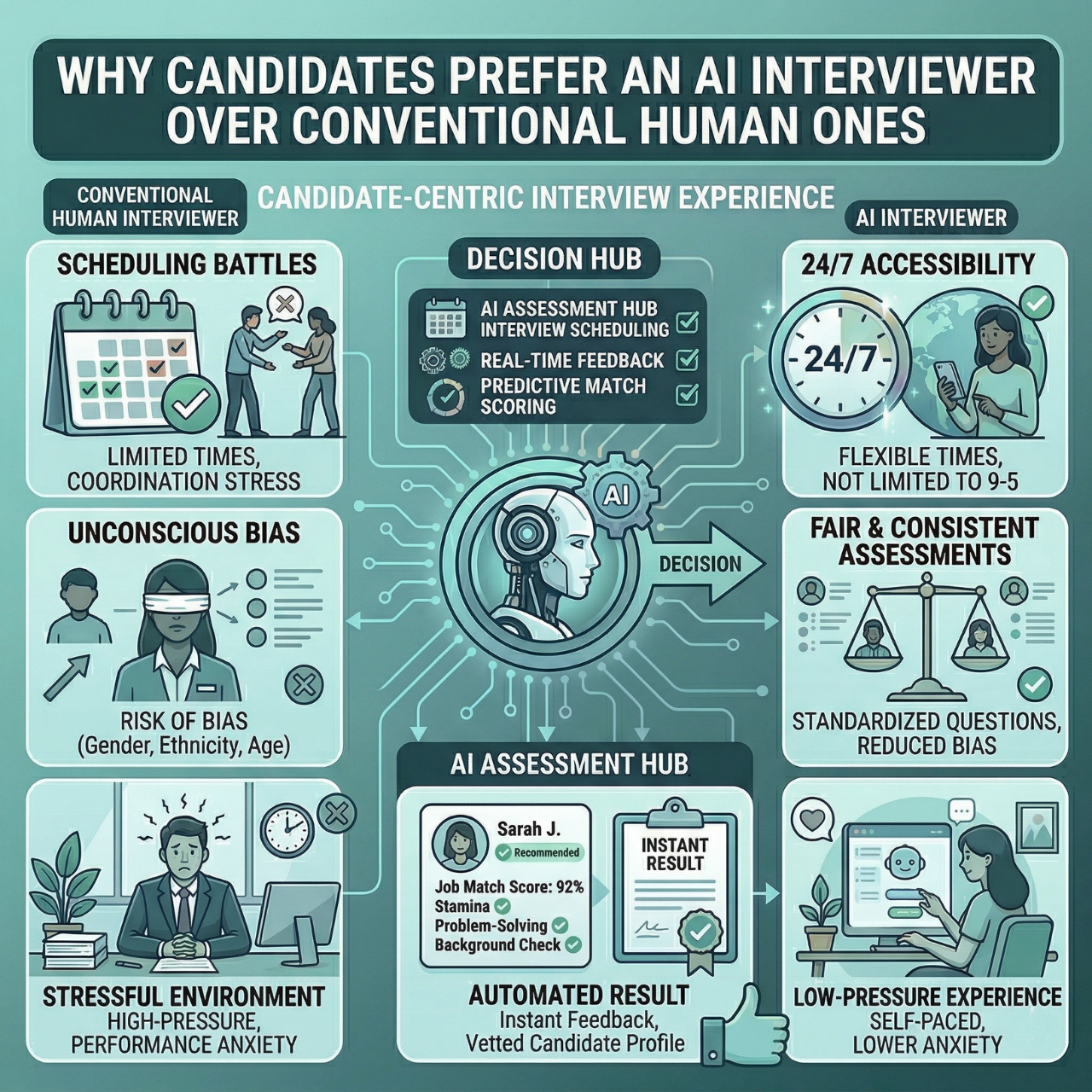
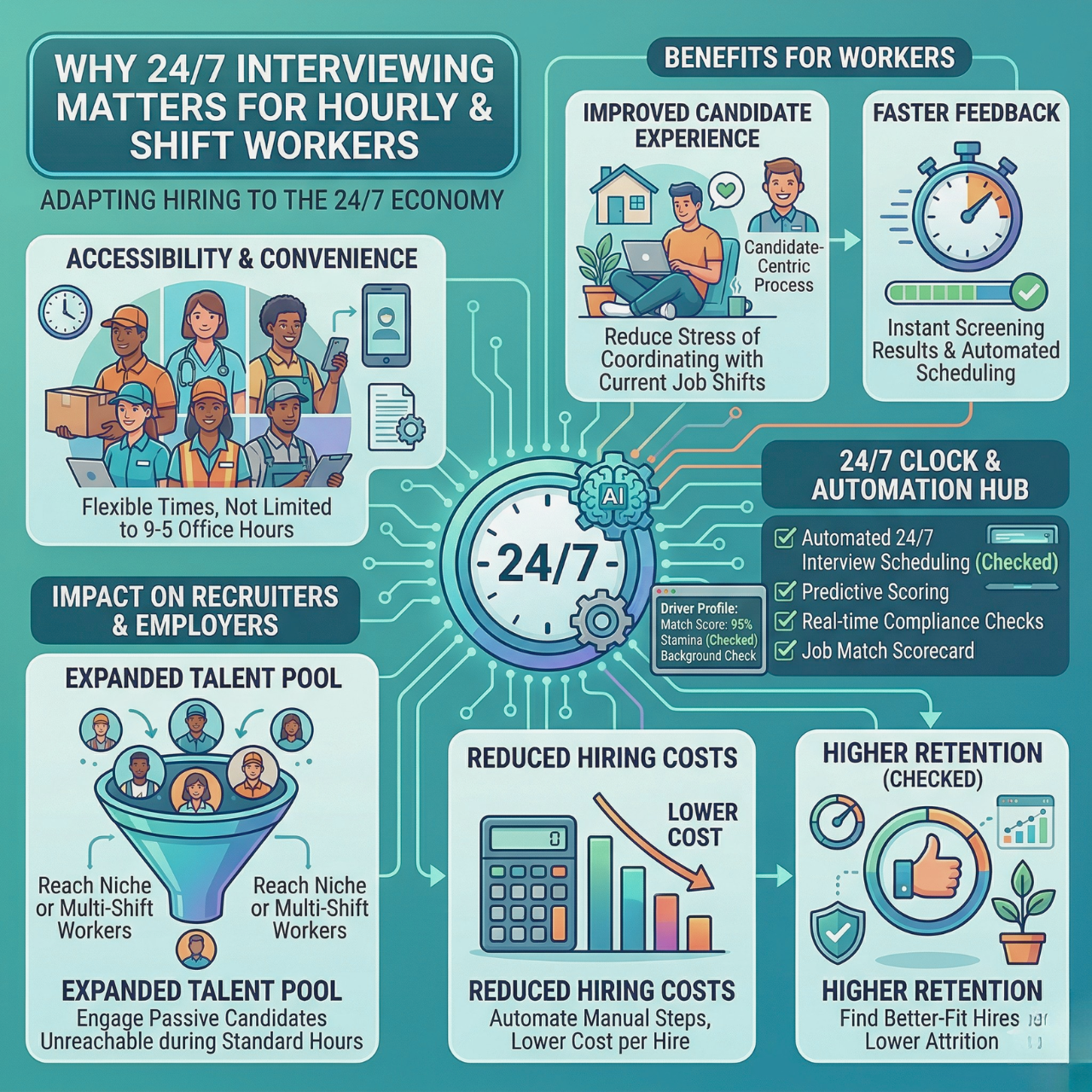
- Reduced time-to-hire with 24/7 candidate interviews
- Lower risk of bias by using data-driven analysis
This makes it easier to find candidates who match job requirements and have a higher chance of success. You also reduce ghosting because only qualified, engaged candidates move forward.
Employee Development
Using AI to assess personality traits helps you shape employee growth plans. You get real-time insights into strengths, weaknesses, and potential challenges. With this data, you can:
- Personalize training and coaching
- Identify future leaders by spotting creative or resilient traits
- Monitor progress over time with continuous feedback
These insights create a clearer path for employee development. You can help your workers improve skills that matter most, which supports retention and engagement.
Team Formation and Dynamics
AI-driven personality assessments guide better team building. You learn how different personalities interact and which combinations work best for collaboration and productivity. Knowing this, you can:
- Balance teams with complementary personalities
- Avoid conflicts by understanding potential friction points
- Improve communication by tailoring approaches to different styles
This science-backed approach strengthens your teams, making projects run smoothly and boosting overall morale. Using AI for this helps you make informed decisions that traditional methods might miss.
Popular Methodologies and Models
AI personality assessment relies on proven psychological frameworks combined with powerful computational techniques. These help automate understanding personality traits using text and behavior data.
The methods cover how personality is defined, how AI learns from data, and how language analysis extracts personality clues.
Big Five Model Integration
The Big Five personality model is a key framework in AI assessments. It breaks personality down into five traits: openness, conscientiousness, extraversion, agreeableness, and emotional stability (also called neuroticism).
AI systems use this model because it’s well-researched and links directly to behavior. You’ll find AI tools analyzing responses on social media to measure these traits automatically.
Personality traits from the Big Five provide clear, measurable targets for models, making the AI’s findings interpretable and reliable.
Machine Learning Algorithms
Machine learning powers personality detection by teaching AI to spot patterns in large data sets. The main types used include:
- Supervised learning: The AI trains on labeled examples, such as known personality scores.
- Unsupervised learning: The AI finds hidden patterns without preset labels.
- Deep learning: Powerful neural networks extract complex features from text or audio data.
These algorithms classify personality based on the inputs they get, such as interview transcripts or video. Machine learning’s strength lies in adapting to new data and improving accuracy over time, which means better candidate insights with every hire.
Natural Language Processing
Natural Language Processing (NLP) lets AI understand human language in interviews, messages, or social media posts. NLP techniques analyze text content and tone to detect personality traits.
Popular AI models like BERT or RoBERTa process words and sentences to map them to personality frameworks. NLP can measure openness or agreeableness by examining how people phrase their answers or engage in conversations.
In recruiting, NLP makes personality assessment scalable and less intrusive. Rather than filling out surveys, candidates talk naturally, and AI pulls out meaningful personality data quickly. This approach bridges the gap between qualitative behavior and quantitative assessment, enabling faster and fairer hiring decisions.
Data Collection and Analysis
AI personality assessments rely on various types of data and require careful handling due to privacy concerns. Understanding what data is used and how it is protected helps ensure assessments are accurate and ethical.
Types of Data Used
AI evaluates personality from several data sources. Common inputs include:
- Text: Emails, chat logs, social media posts, and transcripts.
- Audio: Speech recordings that capture tone and pace.
- Video: Facial expressions and body language during interviews.
- Behavioral data: Interaction patterns and response times.
These data points let AI models, like those using Big Five traits or MBTI frameworks, analyze your personality without needing surveys or questionnaires.
AI processes this data with natural language processing (NLP) and machine learning to identify traits like openness or extraversion. The variety helps paint a detailed personality picture across multiple communication modes.
Data Privacy Considerations
Handling your personal data means safeguarding your privacy. AI systems must comply with laws like GDPR and respect ethical standards to protect sensitive information. Key privacy measures include:
- Consent: You must agree to how your data is collected and used.
- Data minimization: Only relevant information is gathered.
- Secure storage: Data encryption prevents unauthorized access.
- Transparency: Clear explanations of what data is collected and why.
- Anonymization: Removing personal identifiers where possible.
Implementation Best Practices
To implement AI personality assessments successfully, focus on choosing the right tools that match your goals. You also need to ensure smooth integration with your current systems to keep everything working together without delays or extra work.
Selecting the Right Tools
Pick an AI personality assessment tool that fits your hiring needs and matches the traits you want to measure. Look for solutions that analyze a variety of data sources like video, audio, speech, or written responses without relying on self-reporting questionnaires.
Make sure the tool supports ethical standards and reduces bias. Transparency about how the AI works helps build trust for both you and candidates. Tools with real-time analytics and easy scoring can speed up decision-making and surface your best candidates.
Integration With Existing Systems
Your AI assessment tool should work smoothly with systems like ATS (Applicant Tracking System) or HRIS (Human Resource Information System). This avoids manual data entry and keeps your workflow efficient.
Look for platforms that offer API or built-in integration options. This way, scores and candidate data automatically update your records without extra work. Automated scheduling and candidate engagement features can also sync with your existing setup, reducing ghosting and no-shows.
Using AI assessments that fit well into your current tech stack lets you scale hiring without adding stress or confusion. Keep your team trained on these tools to maximize their benefits.
Challenges and Limitations
AI personality assessment brings many benefits, but it also comes with specific problems. These challenges mostly involve fairness in the results and how clearly the AI explains its decisions.
Bias and Fairness
AI systems learn from data, but if that data contains biases, the AI will likely repeat them. This can lead to unfair personality assessments that favor certain groups over others. For example, cultural differences in language use can skew the results, making assessments less accurate for some candidates.
Bias also arises when the AI handles sensitive information without proper safeguards. Ensuring fairness means carefully selecting training data and regularly testing the system. However, no AI is perfect. You should still review results with human judgment to catch and correct any unfairness.
Interpretability Concerns
AI models, especially deep learning ones, can be complex and hard to understand. When you receive a personality assessment, it may not be clear how the AI reached its conclusions. This lack of transparency makes it difficult to trust or explain the results to candidates or hiring teams.
You want an AI tool that provides clear, understandable feedback. Without interpretable results, you risk misusing data or overlooking errors. Improving AI transparency means designing systems that reveal the key factors behind each assessment.
Future Trends in AI Personality Assessment
AI personality assessment is becoming faster and more precise. It is moving toward on-the-spot feedback and smarter analysis methods. These changes will help you make better decisions quickly while keeping assessments fair and detailed.
Real-Time Assessment Capabilities
AI tools are starting to give instant feedback during interactions. This means you can see how someone’s personality traits show in real-time, such as through voice tone or word choice.
Real-time feedback improves hiring by spotting subtle cues that traditional tests might miss. For recruiting, this means faster decisions and less waiting.
You can engage candidates right away and adjust questions based on their answers. This method saves time and helps reduce ghosting because candidates stay involved longer.
Advancements in Deep Learning
Deep learning is making AI better at understanding complex behaviors. It processes huge amounts of text, voice, and video data to detect patterns linked to personality traits. These models improve with more data, becoming more accurate over time.
This technology allows AI to go beyond simple tests by analyzing subtle patterns, like microexpressions or speech pauses. Results are more nuanced, helping you predict how a person might fit in your team and culture.
Deep learning can score and filter candidates automatically, reducing bias by focusing on data that really matters.
Turning Personality Insights Into Better Hires
AI personality assessment gives you faster insight into how people think, communicate, and work, using real behavior instead of guesswork. It supports quicker, more confident hiring while helping teams stay focused on fit, performance, and long-term potential.
Used well, it turns your data into practical guidance for recruiters, managers, and candidates. With HRMLESS in your stack, these insights become part of a smooth, consistent hiring process that reduces bias, improves quality, and keeps candidates engaged.
If you’re ready to put AI personality assessment to work in your hiring, now is the time to act. Book a demo to see these evaluations in action, or connect your ATS for a free audit and learn where AI can remove friction from your current process.
Frequently Asked Questions
What is AI personality assessment?
AI personality assessment uses algorithms to analyze speech, text, video, and behavior to infer personality traits. Instead of long surveys, it reads real interactions to surface patterns related to communication style, motivation, and working preferences.
How accurate are AI personality assessments?
Accuracy depends on data quality, model design, and how the tool is used. Well-built AI personality assessment systems can provide consistent, repeatable insights, but they should always be paired with human judgment rather than used as the only decision factor.
Is AI personality assessment fair and unbiased?
AI can help reduce some forms of human bias by using standardized criteria. However, models can inherit bias from their training data, so it is critical to audit results regularly, use diverse datasets, and keep humans involved in reviewing outcomes.
How is candidate data protected in AI personality assessment?
Responsible tools follow privacy regulations, seek explicit consent, and limit data collection to what is needed. Best practice includes data minimization, encryption, anonymization where possible, and clear explanations of what is collected, why, and for how long it is stored.
Where does AI personality assessment fit in the hiring process?
Most teams use AI personality assessment after an initial screen to prioritize candidates and tailor interviews. It supports better job matching, faster shortlisting, and more focused conversations, while your recruiters still make the final hiring decision.
Schema markup:
{
"@context": "https://schema.org",
"@type": "FAQPage",
"mainEntity": [
{
"@type": "Question",
"name": "What is AI personality assessment?",
"acceptedAnswer": {
"@type": "Answer",
"text": "AI personality assessment uses algorithms to analyze speech, text, video, and behavior to infer personality traits. Instead of long surveys, it reads real interactions to surface patterns related to communication style, motivation, and working preferences."
}
},
{
"@type": "Question",
"name": "How accurate are AI personality assessments?",
"acceptedAnswer": {
"@type": "Answer",
"text": "Accuracy depends on data quality, model design, and how the tool is used. Well-built AI personality assessment systems can provide **consistent, repeatable insights**, but they should always be paired with human judgment rather than used as the only decision factor."
}
},
{
"@type": "Question",
"name": "Is AI personality assessment fair and unbiased?",
"acceptedAnswer": {
"@type": "Answer",
"text": "AI can help **reduce some forms of human bias** by using standardized criteria. However, models can inherit bias from their training data, so it is critical to audit results regularly, use diverse datasets, and keep humans involved in reviewing outcomes."
}
},
{
"@type": "Question",
"name": "How is candidate data protected in AI personality assessment?",
"acceptedAnswer": {
"@type": "Answer",
"text": "Responsible tools follow privacy regulations, seek explicit consent, and limit data collection to what is needed. Best practice includes data minimization, encryption, anonymization where possible, and clear explanations of what is collected, why, and for how long it is stored."
}
},
{
"@type": "Question",
"name": "Where does AI personality assessment fit in the hiring process?",
"acceptedAnswer": {
"@type": "Answer",
"text": "Most teams use AI personality assessment after an initial screen to prioritize candidates and tailor interviews. It supports **better job matching, faster shortlisting, and more focused conversations**, while your recruiters still make the final hiring decision."
}
}
]
}
Featured

Subscribe to ournewsletter
Related posts
Explore the world of photography with our curated selection of
portfolio websites that showcase creativity and innovation.