

Reducing Bias With Structured AI Interviews for Fair Hiring

Bias can quietly shape hiring decisions, often without recruiters realizing it. Structured AI interviews create a fairer, more consistent process by asking every candidate the same questions and scoring answers objectively.
With HRMLESS, recruiters gain access to automated AI interviews that simplify scoring, scheduling, and communication. The platform ensures fairness by standardizing evaluations and removing guesswork. This helps teams move faster while improving diversity and trust in hiring outcomes.
In this article, you’ll learn how structured AI interviews reduce bias, strengthen hiring decisions, and enhance candidate experience. You’ll also discover best practices to implement these tools effectively and make fairness a natural part of your recruitment strategy.
Understanding Bias in Interviews
Bias in interviews comes in all shapes and sizes, affecting how candidates are seen and judged. It can sneak in at different stages, from resume review to reference checks. Knowing how bias creeps in helps you spot problems and make better choices.
Types of Bias in Hiring
Bias in hiring often falls into specific categories:
- Affinity Bias: Favoring candidates similar to you in background or interests.
- Confirmation Bias: Looking for information that supports your first impression.
- Halo Effect: Letting one positive trait overshadow other qualities.
- Name or Demographic Bias: Judging based on a candidate’s name, gender, or ethnicity rather than skills.
These biases can show up anywhere in the process. Structured AI interviews help filter them out by focusing on facts and consistent scoring.
Impact of Bias on Recruitment
Bias can shrink your talent pool and reduce diversity by unfairly screening out qualified candidates. It stifles team creativity and limits growth.
It also slows down hiring. If you’re not making decisions based on fair data, you might waste time on unfit candidates or have to backtrack after poor hires. Candidates may lose trust and disappear from the process.
Structured interviews with automated scoring keep things efficient and fair, focusing on skills instead of personal preferences.
Signs of Unconscious Bias
Unconscious bias pops up in subtle ways, like:
- Asking different questions to different candidates.
- Leaning on gut feelings instead of clear criteria.
- Skipping structured scoring or note-taking.
- Overlooking red flags because of a personal connection.
You might notice patterns—certain backgrounds getting rejected or favored without a solid reason. Trusted tools can flag these trends by tracking data over time, so you catch bias early. Spotting these signs lets you take action and improve fairness.
The Science Behind Structured Interviews and Bias Reduction
According to the Forbes Human Resources Council, structured interviews are one of the most effective ways to eliminate bias in hiring. By asking the same set of questions to every candidate, recruiters can focus on skill-based evaluation instead of personal traits or gut feelings.
This consistency ensures decisions are grounded in objective data rather than assumptions. The article also highlights that organizations must train interviewers to recognize unconscious bias and design questions aligned with job competencies.
Combined with AI scoring, structured interviews create a fairer process that opens opportunities to a wider, more diverse pool of talent.
What Are Structured AI Interviews?
Structured AI interviews use a fixed set of questions and clear scoring rules to evaluate candidates fairly. They stick to consistent formats and objective data points, making hiring decisions more reliable.
You’ll see what sets these interviews apart from traditional ones, how AI helps, and the key features that define structured AI interviews.
Definition and Key Features
Structured AI interviews ask every candidate the same questions in the same order. It’s simple but powerful—fairness comes from consistency.
Key features include:
- Standardized questions: No off-script or random queries.
- Automated scoring: AI scores answers based on set criteria.
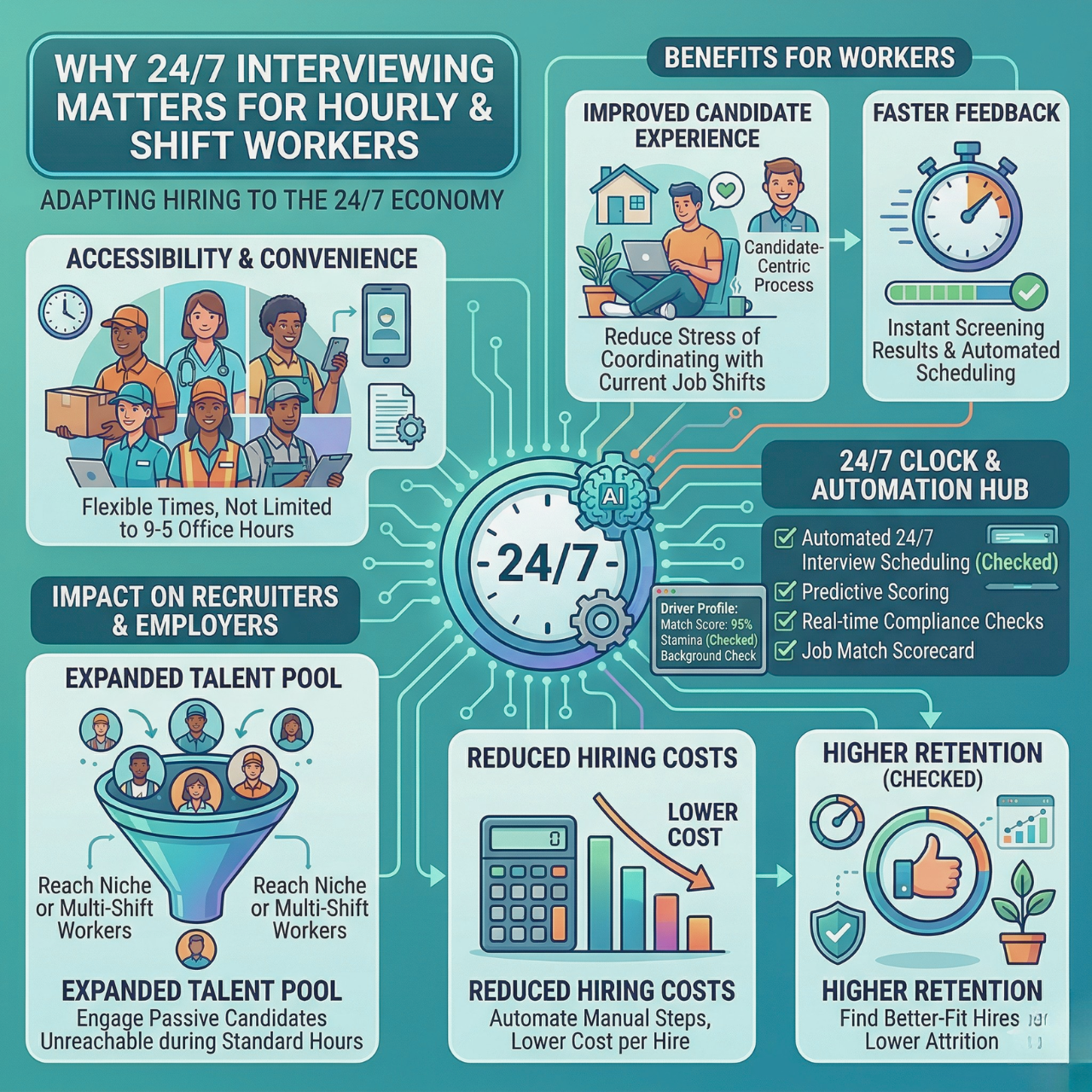
- 24/7 availability: Candidates can do interviews anytime.
- Automated reminders: SMS or email nudges keep candidates on track.
This setup helps you quickly spot qualified hires and cuts down on bias.
How Structured AI Interviews Differ from Traditional Methods
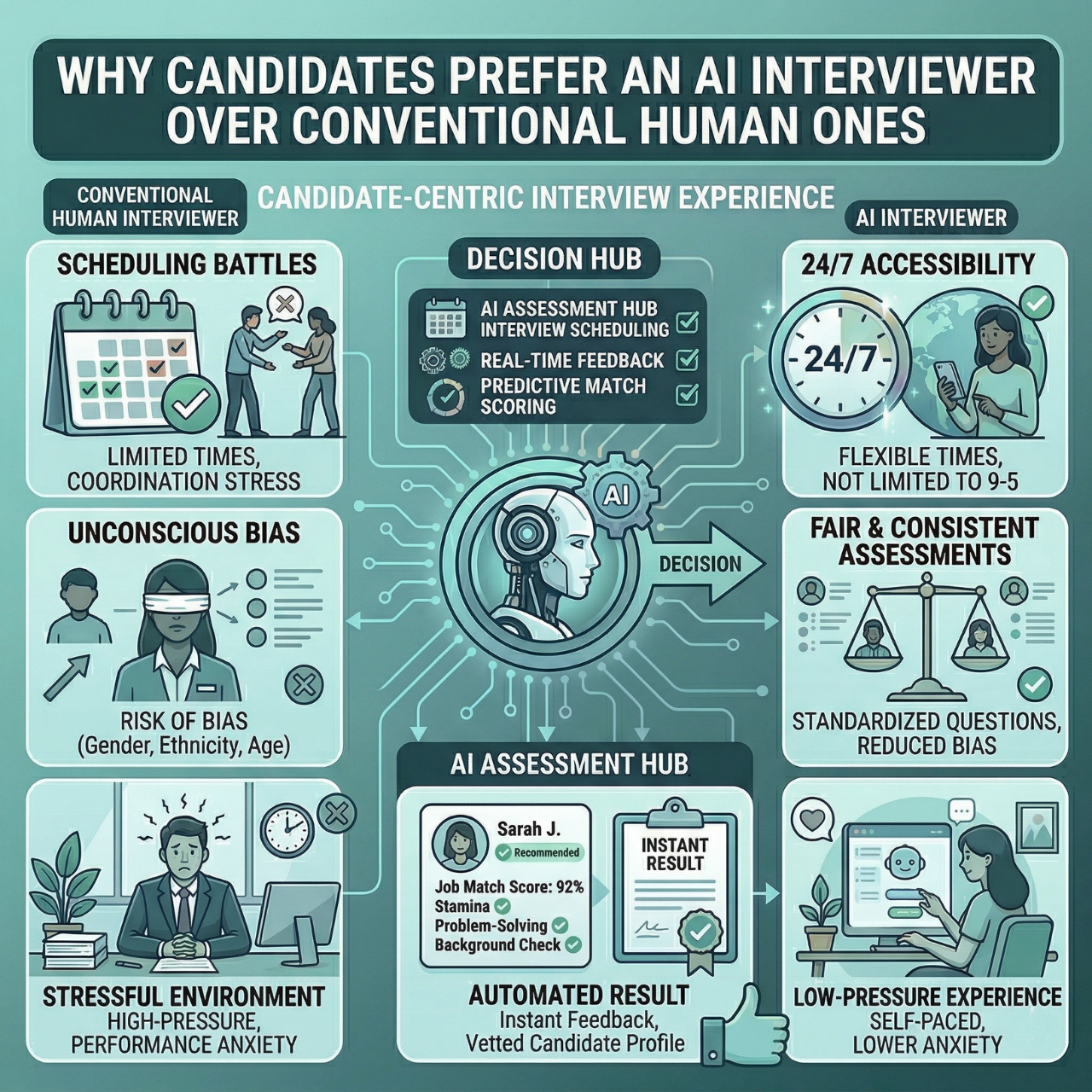
Traditional interviews can be all over the place. Questions and scoring often depend on who’s asking, which opens the door to bias.
Structured AI interviews remove that variability by automating question delivery and evaluation. Every candidate gets the same experience, no matter who reviews their answers later.
This method:
- Saves time by automating scheduling and scoring.
- Increases fairness with objective criteria.
- Reduces ghosting by keeping candidates engaged automatically.
With our AI tools, you can swap out manual steps for a smoother, less error-prone process.
Role of Artificial Intelligence in Interviewing
AI handles interview tasks like asking questions, scoring responses, and scheduling follow-ups. Algorithms focus on candidate answers, not resumes or first impressions.
The AI system analyzes verbal or typed answers quickly and consistently. It highlights top candidates, so you only review the best.
Benefits AI brings include:
- Cutting human bias in evaluations.
- Speeding up hiring without losing quality.
- Sending automatic reminders to reduce no-shows.
A reliable AI tool automates and improves interviews, keeping things fair and easy to manage.
How Structured AI Interviews Reduce Bias
Structured AI interviews make hiring fairer by keeping every step clear and the same for all candidates. They rely on set questions, clear scoring rules, and real data to help you avoid favoritism or unconscious bias.
Consistent Interview Frameworks
With a structured AI interview, every candidate gets the same questions. No one gets an easier ride or a tougher challenge—just the same shot. Your AI system follows a strict script. It cuts out human variations, so moods or emotions don’t sway things.
Consistent questions make side-by-side comparisons much easier. Personal preferences have less room to sneak in. You can trust that the data is based on the same criteria for each applicant. That shrinks bias tied to race, gender, or background.
Objective Evaluation Criteria
Structured AI interviews score answers using clear, defined criteria. You decide what skills and qualities matter, and the AI sticks to those. This approach trims out gut feelings and snap judgments. It relies on measurable data—like how accurate or complete an answer is.
You get scores that reflect actual performance, not personal opinions. That helps you pick talent based on facts. Objective evaluation means bias has less room to creep in, and your hiring process stays more transparent.
Data-Driven Decision-Making
AI interviews collect a ton of useful data during candidate assessments. You get detailed reports with scores, timing, and responses for each person. This lets you review decisions with hard evidence. If bias shows up, the data will highlight inconsistencies.
Data also helps you spot trends—like which questions best predict success.
With trusted tools, you can track how candidates move through your funnel and fix bias fast. Data-driven hiring keeps you accountable and helps you pick the right fit every time.
Designing Effective Structured AI Interviews
To reduce bias, your AI interviews need clear questions, respect for diversity, and well-trained AI models. These three things work together to help you assess candidates fairly and consistently.
Creating Fair Assessment Questions
Good questions focus on job skills and behaviors. Skip the vague or personal stuff that could trigger bias. Use consistent questions for everyone. That way, you can compare answers easily.
Design questions that measure real abilities like problem-solving or teamwork. For example:
- “Describe a time you handled a tough challenge at work.”
- “How do you prioritize tasks under pressure?”
Keep questions clear and simple. Avoid slang or cultural references that might trip someone up. Using structured AI interviews makes sure every candidate gets the same set of questions.
Incorporating Diversity Considerations
Your interview design should welcome people from all backgrounds. Avoid language that favors one group. Use neutral words that anyone can understand. Consider different communication styles. AI can analyze tone and language, but shouldn’t make assumptions about culture or identity.
Make sure your interview platform is accessible—offer text or voice options. Encourage your AI to recognize different ways people express their skills and experiences. Unique styles shouldn’t be penalized.
Training AI Models to Minimize Bias
Your AI needs to learn from balanced, diverse data. If it trains on biased examples, it’ll repeat those mistakes. Update AI models regularly to reflect current fairness standards. Use features that detect and block biased language or decisions.
Test your AI with real candidates from different backgrounds to check for fairness. Our tool combines data-driven insights with ongoing monitoring to keep bias in check.
Best Practices for Implementing Structured AI Interviews
Using structured AI interviews well means preparing your team and candidates, being clear about how the AI works, and constantly checking for bias. You want a process that’s fair, smooth, and easy to manage at every step.
Preparing Interviewers and Candidates
Start by training your interviewers on how AI tools work and what their role is. Interviewers should know that AI helps score and filter candidates consistently.
For candidates, explain the process up front. Let them know the AI interview takes about 10 minutes and is part of a fair, streamlined process. Reminders by SMS or email can help boost completion rates.
The best platforms let you automate interview scheduling and candidate engagement. This keeps things moving and lets interviewers focus on the best-fit people. Still, interviewers should stay involved to add a human touch when it counts.
Ensuring Transparency and Compliance
Be open about using AI in your hiring process. Tell candidates how AI evaluates responses and what data it collects. Transparency builds trust and eases worries about fairness. Make sure your AI system follows laws on equal opportunity and data privacy.
Avoid features that could unintentionally discriminate based on gender, race, or age. Using structured interviews with consistent questions for every candidate helps minimize unconscious bias. Integrating AI tools with your ATS makes data handling and compliance easier for your team.
Continuous Bias Monitoring and Feedback
Set up regular checks on your AI interview’s performance. Look at candidate scores and hiring outcomes to spot bias patterns. Don’t just rely on AI—mix in human reviews.
Ask candidates and interviewers for feedback after each stage. This helps you catch issues and improve the process faster. Use analytics dashboards from top platforms to track metrics like time-to-hire, engagement, and drop-off rates.
By continuously monitoring and tweaking your system, you keep hiring fairly and efficiently, and make the candidate experience better, too.
Challenges and Limitations
AI interviews can cut bias and save time, but they’re not perfect. Bias can still sneak in, interpreting AI decisions can get tricky, and you have to juggle technical and ethical issues.
Potential AI Bias Sources
AI learns from data. If the data’s biased, the AI might repeat those patterns. For example, if old hiring data favors certain groups, the AI could unknowingly lean the same way. Bias can also slip in through how you design interview questions.
If questions focus on qualities that don’t apply equally to all candidates, that’s a problem. Even the way AI scores answers might create issues. You need to test algorithms regularly to make sure they’re not favoring certain backgrounds or styles.
Using balanced, diverse data and clear criteria helps reduce these risks. Reputable platforms are set to apply consistent scoring and avoid bias based on age, gender, or background.
Interpreting Automated Decisions
AI spits out scores and rankings, but what do they really mean? Your team needs to understand why the AI made those calls. Sometimes AI flags candidates for reasons that aren’t obvious. Without clear insights, you could miss out on great hires or make the wrong choice.
It’s important to combine AI results with human judgment. Use AI as a tool—not the final decision-maker. Transparency features in AI platforms, like reports on scoring criteria, help you see why candidates rank as they do. That makes your hiring fairer and easier to explain.
Addressing Technical and Ethical Concerns
AI software needs to be secure and actually protect candidate data—otherwise, trust takes a hit and you might even run into legal trouble. Technical hiccups, like bugs or awkward question order, can really mess with the candidate’s experience.
Staying on top of updates and regular testing helps keep things on track. Ethical questions pop up, too. You’ve got to think about how AI affects privacy and whether it’s treating people with basic respect.
Your vendor choice matters a lot here. Our platform puts bias reduction and smooth automation front and center. That goes a long way toward keeping things ethical.
Future Trends in Bias Reduction with AI Interviews
AI is shaking up how you spot and reduce bias in hiring. We’re seeing tech that makes interviews fairer, tools that predict who’ll thrive, and a bigger impact on workplace diversity.
Emerging Technologies
New AI tools are making interviews more fair by automating the process. Conversational AI, for instance, lets candidates speak naturally while the system scores their answers based on actual skills. That means less guessing and more consistency.
Voice tech is on the rise, too. Soon you’ll be able to offer audio interviews any time, making it easier for folks in different time zones. This helps smooth out barriers like language and those unpredictable interviewer moods.
Some platforms keep things consistent by focusing on data, not personal opinions. That speeds up workflows and cuts down on wasted time during hiring.
Predictive Analytics in Talent Acquisition
Predictive analytics digs into data from past candidates to find patterns linked to success. You can use that to make smarter choices instead of just trusting your gut. It looks at skills, experience, and how people actually perform in interviews to rank candidates.
This approach can catch hidden bias, too. If it spots certain groups getting scored unfairly, it flags that and suggests fixes. Hiring decisions become more transparent and are actually backed by facts.
You’ll get reports showing where your process slows down. With quick tweaks, your team can avoid delays and keep candidates engaged—tools like SMS reminders really help with that.
Long-Term Impact on Workplace Diversity
When AI reduces bias, you end up building teams based on what people can do, not where they’re from. Over time, that translates into a more diverse, skilled group. Automated scoring and structured interviews hold everyone to the same standard.
Fairer hiring gives underrepresented groups a real shot at moving forward. That lowers turnover and sparks more innovation, since you’re getting a wider mix of perspectives.
Trusted tools reduce ghosting and no-shows, keeping your candidate pool steady. You get better hires who actually fit your culture and goals—without the usual bias getting in the way.
Making Fair Hiring a Reality With Structured AI Interviews
Structured AI interviews give recruiters a clear way to remove guesswork and bias from the hiring process. By standardizing questions and scoring, they make each candidate’s evaluation consistent, measurable, and based on actual performance rather than assumptions.
HRMLESS empowers hiring teams to adopt this fairness-driven approach with ease. Our AI-powered tools automate structured interviews, score responses objectively, and maintain compliance—all while improving speed and transparency.
Ready to bring fairness and efficiency together? Explore how structured AI interviews can transform your hiring process. Start a free trial and see it in action.
Frequently Asked Questions
Here are some real questions about how structured AI interviews help with fairness, bias reduction, and keeping your hiring process consistent. You’ll also find answers on how AI cuts errors and what to do to maintain fairness in the long run.
How can structured AI interviews promote a more equitable hiring process?
Structured AI interviews give every candidate the same set of questions. That takes personal bias out of the equation—no more judging based on gut feelings or first impressions. The AI looks at skills and experience, not irrelevant stuff like appearance or background. Everyone gets a fair shot.
What are the best practices for designing unbiased AI interview questions?
Stick to questions about job skills and tasks. Skip anything about personal life or opinions that don’t relate to the role. Use simple, clear language so everyone knows what you’re asking. Keep testing your questions to ensure they aren’t biased toward any group.
Can AI interviews help mitigate unconscious bias in recruitment?
Absolutely. AI doesn’t care about gender, race, age, or any of that. It scores answers based on what’s said, not who says it. You still set the criteria and check the results, but AI removes many of the usual bias points.
In what ways does structured AI interviewing reduce human error?
Structured AI interviews make sure you don’t forget key questions or score people inconsistently. Every candidate gets the same treatment and an objective score. This cuts down on mistakes from tired or distracted interviewers and helps you compare candidates on a level playing field.
How do structured AI interviews ensure consistency across different candidates?
AI sticks to a script, so everyone gets the same questions in the same order. That keeps the experience standardized. It scores responses using the same rules, ensuring fair and open evaluations for all.
What measures are in place to continually assess and improve the fairness of AI-driven interviews?
Teams regularly check AI interview results to catch and address new biases. If something seems off, they tweak the questions or scoring right away.
Some platforms—take HRMLESS, for example—give you real-time analytics on candidate engagement and outcomes. That way, you can keep an eye on fairness and make adjustments as things evolve.
Featured

Subscribe to ournewsletter
Related posts
Explore the world of photography with our curated selection of
portfolio websites that showcase creativity and innovation.