

AI Recruitment Solutions In The USA for Faster Hiring

Hiring in today’s market is slow, manual, and unpredictable. Teams reviewing hundreds of resumes still miss strong candidates, while top talent drops off due to delays. AI recruitment solutions in the USA are built to fix this by automating screening, matching, and scheduling without sacrificing quality.
HRMLESS helps recruiting teams reduce admin time, speed up interviews, and improve candidate flow with structured automation. Instead of juggling tools and spreadsheets, you get a streamlined process that improves efficiency and supports better hiring decisions.
In this guide, you’ll learn how AI recruitment technology works, where it delivers the most impact, and what to evaluate before choosing a platform. You’ll also see how these tools reduce bottlenecks, support fair hiring practices, and strengthen your overall recruiting strategy.
What Are AI Recruitment Solutions?
AI recruitment solutions use artificial intelligence to automate and improve how companies find and hire employees. These tools handle tasks like screening resumes, matching candidates to jobs, and communicating with applicants throughout the hiring process.
Key Features of AI Recruitment Technology
AI recruitment platforms bring a bunch of features that make hiring faster and more accurate. Resume parsingautomatically reads and organizes information from resumes into structured data you can search and filter.
Candidate matching uses algorithms to compare applicant qualifications against job requirements and ranks candidates by fit. Automated screening tools evaluate candidates based on criteria you set, filtering out unqualified applicants before human review.
Many platforms include chatbots that answer candidate questions and schedule interviews without your HR team's direct involvement. Predictive analytics help you forecast which candidates will likely succeed in a role based on historical hiring data.
Some solutions also offer bias detection features, flagging potentially discriminatory language in job postings or screening processes to support fair hiring practices.
Types of AI Recruitment Tools
You'll find AI recruitment tools designed for specific parts of the hiring workflow. Sourcing platforms search across job boards, social media, and professional networks to identify potential candidates who match your requirements.
Applicant tracking systems (ATS) with AI capabilities manage your entire recruitment pipeline from application to offer. Interview scheduling tools coordinate availability between candidates and hiring managers automatically.
Assessment platforms use AI to evaluate candidate skills through tests, video interviews, or work simulations. Engagement tools maintain communication with candidates through automated emails and messages that feel personalized.
Evolution of AI in Hiring
Recruitment technology started with simple keyword matching in the 1990s and 2000s. AI-powered tools showed up in the 2010s, and machine learning capabilities improved over time by learning from hiring outcomes.
Today's systems handle end-to-end automation while keeping up with employment regulations. The technology keeps advancing with better natural language processing and more sophisticated algorithms that reduce bias and improve candidate experience.
Benefits of AI Recruitment Solutions in the USA
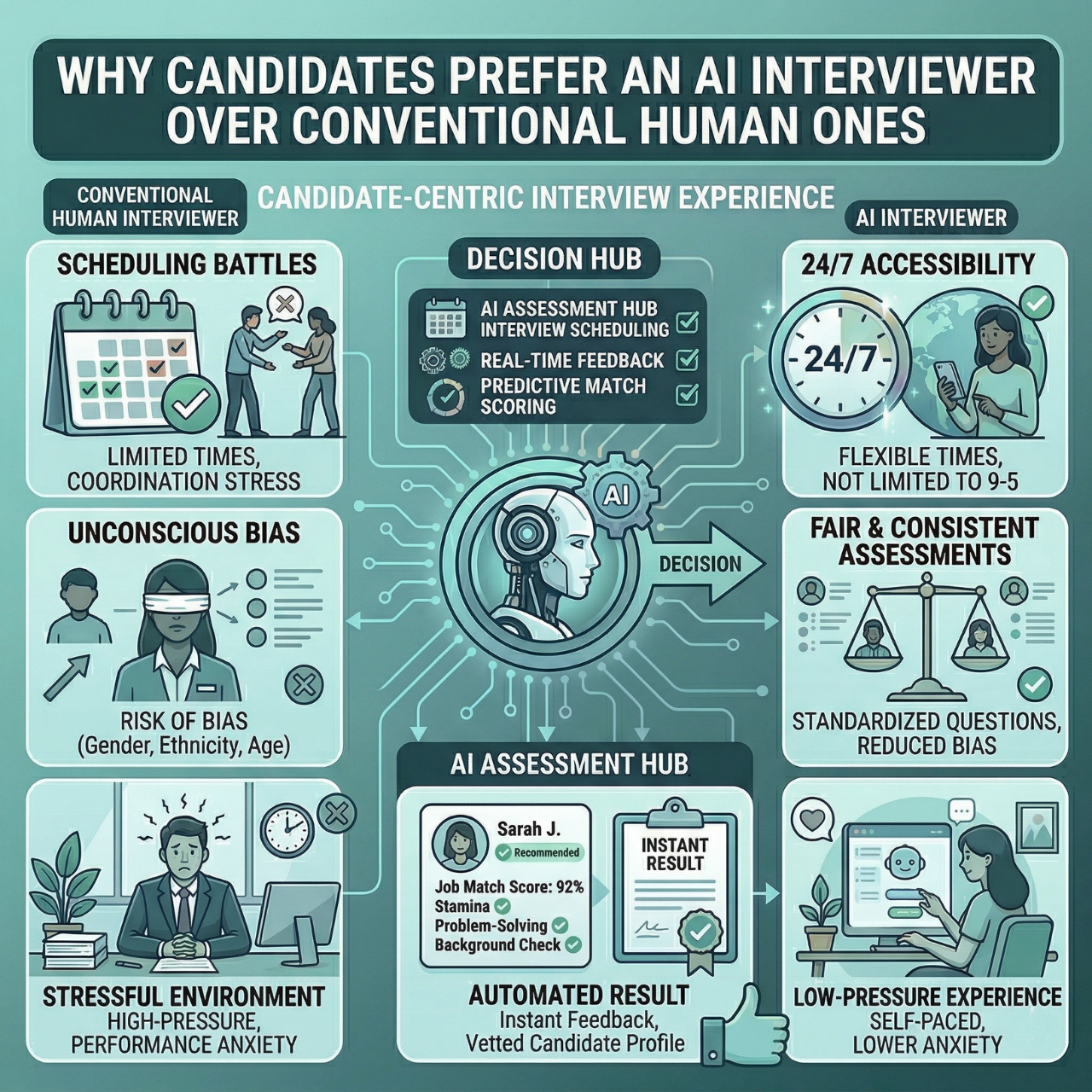
AI recruitment tools help you find better candidates faster while removing unfair bias from your hiring process. These systems use smart technology to match job seekers with the right roles, speed up every step of hiring, and make decisions based on skills rather than personal factors.
Improved Candidate Matching
AI recruitment solutions analyze thousands of resumes in seconds to find candidates who truly fit your open positions. The technology looks at skills, experience, education, and work history to score each applicant against your job requirements.
You get more accurate matches because AI systems can spot patterns that humans might miss. They compare candidate qualifications with past successful hires in similar roles.
Key matching capabilities include:
- Skill-based scoring that ranks applicants by qualification level
- Keyword analysis that identifies relevant technical abilities
- Experience mapping that matches career progression to role needs
- Cultural fit assessment based on company values and work style
The system also finds passive candidates by searching databases and professional networks. This expands your talent pool beyond people actively applying to jobs.
Enhanced Hiring Efficiency
Your recruiting team saves significant time when AI handles repetitive tasks. Automated screening processes reduce the time spent reviewing applications from hours to minutes.
AI tools schedule interviews, send follow-up emails, and update candidates on their application status. This keeps communication flowing without requiring constant attention from your HR staff.
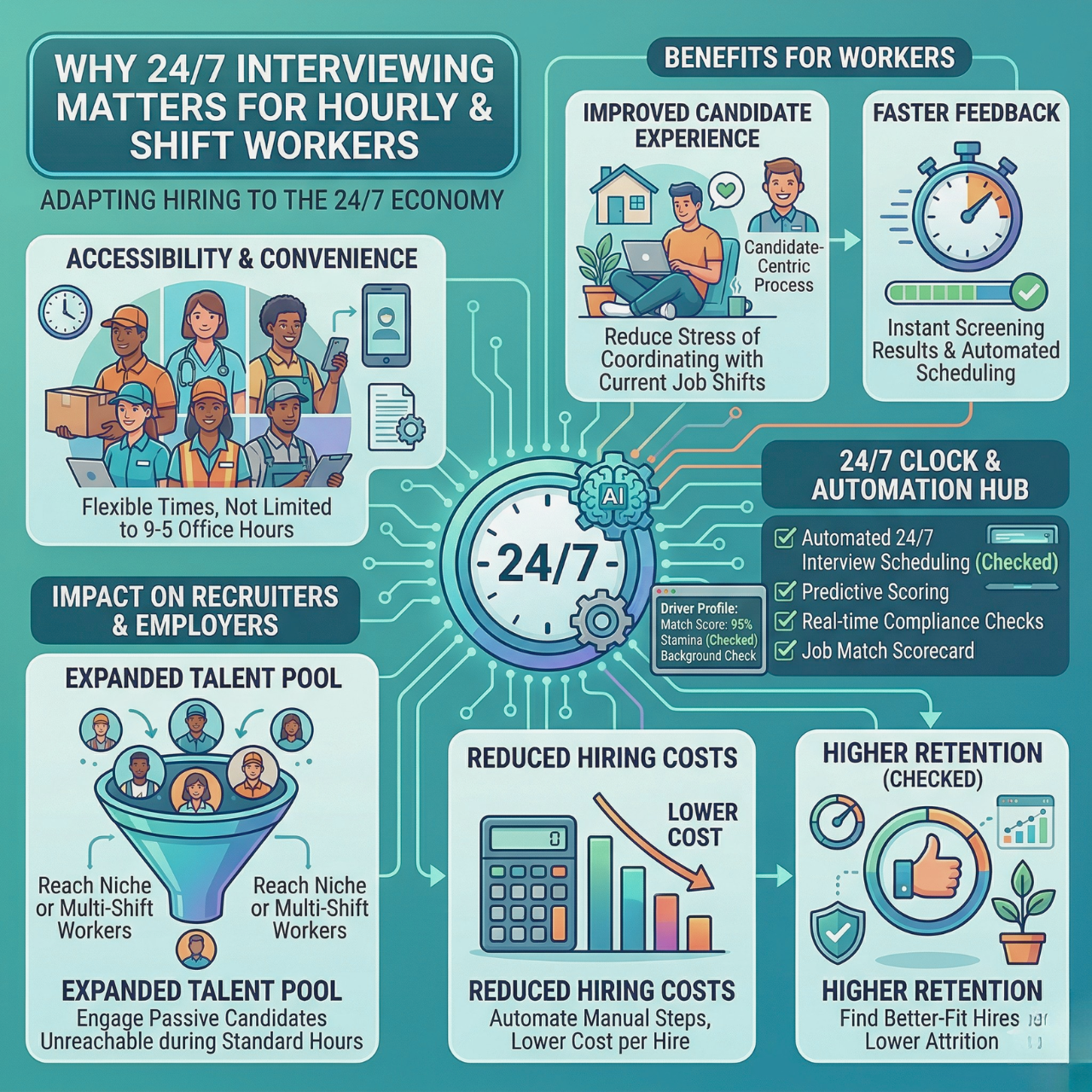
You can fill positions 40-60% faster with AI-powered recruitment systems. The technology works around the clock, screening new applications as they arrive rather than waiting for business hours.
Time-saving features:
- Automated resume screening and initial candidate filtering
- Instant interview scheduling based on calendar availability
- Pre-recorded video interviews that candidates complete on their own time
- Automated reference checks and background verification
Reduction in Hiring Bias
AI recruitment solutions evaluate candidates based purely on qualifications and job-related factors. The systems ignore information about age, gender, race, or other personal characteristics that can lead to unfair decisions.
You create a more diverse workforce when AI removes human bias from initial screening. The technology focuses only on whether someone can do the job well.
However, you need to monitor your AI tools regularly to ensure they don't develop bias from training data. Companies that check their systems for fairness see better results in building inclusive teams.
How AI Recruitment Solutions Streamline the Hiring Process
AI recruitment tools handle repetitive tasks that traditionally consume hours of recruiter time. Hiring teams can process thousands of applications in minutes while keeping accuracy high.
These systems use machine learning and natural language processing to automate screening. They also communicate with candidates and coordinate interviews—no more endless manual back-and-forth.
Automated Resume Screening
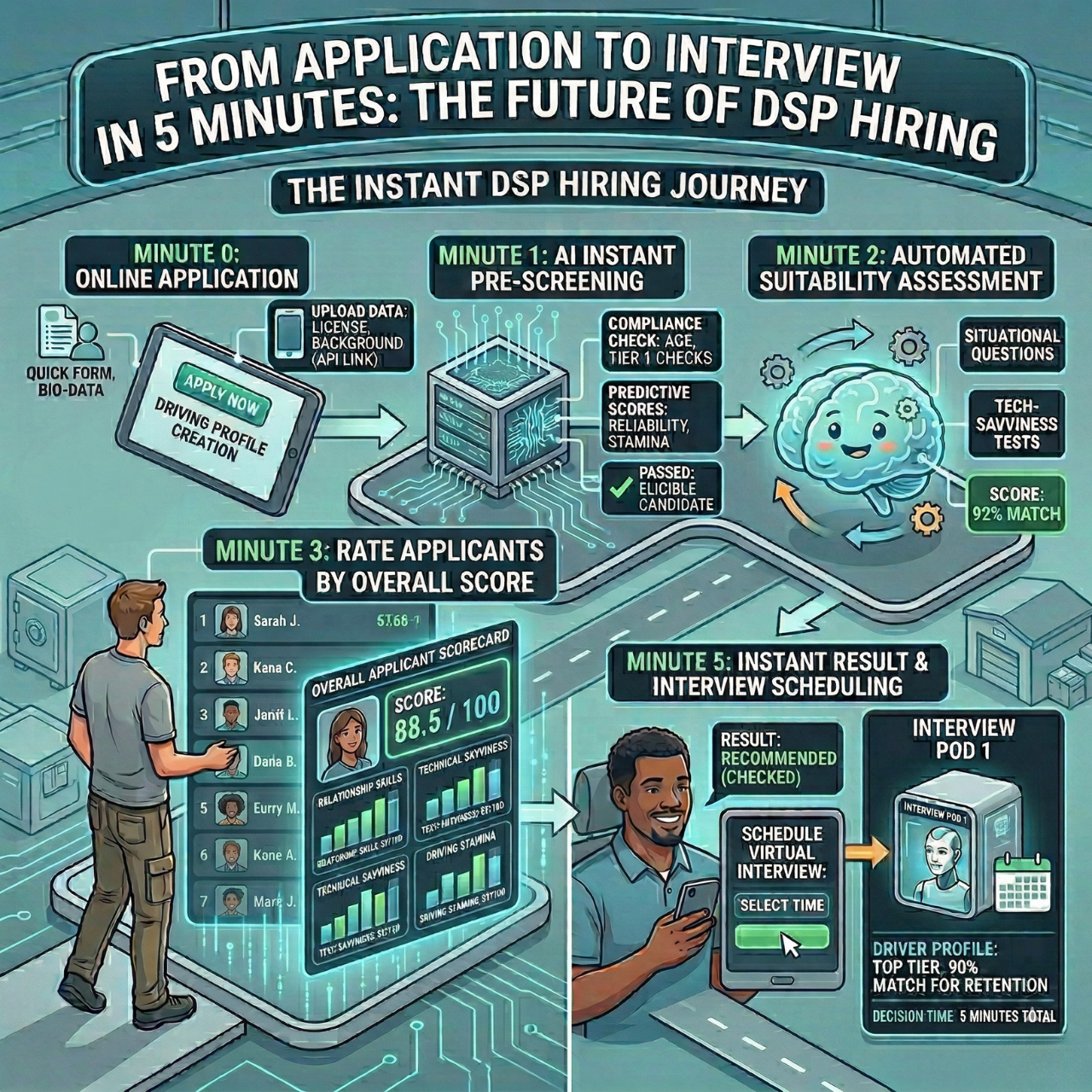
AI-powered screening systems scan resumes and applications to identify qualified candidates based on your specific job requirements. The software parses information like work experience, education, skills, and certifications within seconds.
You can set custom criteria for each position, and the AI ranks candidates according to how well they match your needs. This eliminates the need to manually review hundreds or thousands of resumes for a single opening.
The technology identifies relevant keywords and phrases while understanding context, so it won't reject qualified candidates who use different terminology. AI screening reduces your time-to-hire significantly because you can focus on the top-ranked applicants instead of sorting through every submission.
Recruiters already use AI primarily to save time and improve candidate sourcing. The system works continuously, processing applications as they arrive rather than waiting for your team to review them during business hours.
Candidate Engagement and Communication
AI chatbots and messaging systems communicate with candidates throughout the hiring process without requiring your constant attention. These tools answer common questions about job details, company culture, benefits, and application status at any time of day.
The chatbots use natural language processing to understand candidate questions and provide relevant responses. They can also send automated updates about application progress, keeping candidates informed and engaged.
You can personalize messages based on where candidates are in your hiring pipeline. Automated communication maintains candidate interest while freeing your recruiters to focus on more complex interactions and decision-making tasks.
Interview Scheduling
AI scheduling tools coordinate interview times by checking availability across your hiring team and candidates simultaneously. The system sends calendar invitations, reminders, and rescheduling options without back-and-forth emails.
You simply set your team's available time slots, and the AI offers those options to candidates. Once a candidate selects a time, the system automatically updates all calendars and sends confirmations.
The software also handles time zone conversions for remote interviews and can integrate with video conferencing platforms to generate meeting links. This automation reduces scheduling time from days to minutes and prevents double-bookings or missed appointments.
Challenges and Considerations for Implementing AI Recruitment
AI recruitment tools require careful planning around data protection, ethical hiring practices, and preparing your HR team for new technology. Companies in the USA face specific requirements that affect how they can use these systems.
Data Privacy and Security
When you use AI recruitment tools, you collect and store large amounts of personal information about job candidates. This includes resumes, social media profiles, assessment results, and sometimes even video interviews.
You need to protect this data from breaches and unauthorized access. Many states have different privacy laws that control how you can collect, use, and store candidate information.
Key data security steps include:
- Encrypting all candidate data during storage and transfer
- Limiting employee access to sensitive information
- Creating clear data retention and deletion policies
- Getting explicit consent from candidates about data usage
You should also check if your AI vendor follows security standards like SOC 2 or ISO 27001. Some candidates may request to see what data you have about them or ask you to delete it, so you need systems in place to handle these requests quickly.
Ethical Concerns
AI systems can accidentally discriminate against certain groups of candidates. This happens when the AI learns from biased historical hiring data or uses factors that indirectly relate to protected characteristics like race, gender, or age.
You could face legal issues if your AI tool creates unfair hiring outcomes. Some states are already passing laws that require companies to audit their AI recruiting tools for bias.
Your team needs to regularly test the AI system to make sure it treats all candidates fairly. This means checking if the tool recommends candidates from different backgrounds at similar rates. You should also be able to explain why the AI rejected or advanced specific candidates. Keep humans involved in final hiring decisions instead of letting AI make choices automatically.
Change Management in HR Teams
Your HR staff might worry that AI will replace their jobs or struggle to learn new technology. Some recruiters prefer traditional methods they trust and understand.
You need to train your team on how to use AI tools properly and interpret their recommendations. Start by showing them how AI handles time-consuming tasks like resume screening, which gives them more time for candidate interviews and relationship building.
Include your HR team in selecting and testing AI tools so they feel ownership over the process. Create clear guidelines about when to follow AI recommendations and when human judgment should override the system.
Some team members will adapt faster than others, so plan for ongoing support and training sessions.
Top AI Recruitment Solution Providers in the USA
The US market hosts a large portion of the world's AI recruitment companies, driven by strong investment in HR technology and enterprise demand. These providers range from specialized platforms that focus on matching algorithms to full-service agencies offering end-to-end hiring support.
Leading Platforms and Software
TRC Talent Solutions operates with a Hybrid Intelligence approach through its TRC Talent AI platform. The company offers both software and full-service staffing support.
Their system speeds up hiring by up to 20 times, taking you from job posting to first interview much faster than traditional methods. Data Teams uses data-driven recruitment methods to find AI talent for your organization.
They focus on matching technical skills with your specific role requirements. Insight Global provides versatile staffing solutions across multiple industries, helping you fill AI positions in tech, healthcare, and finance sectors.
Industry-Specific Solutions
Different agencies specialize in particular sectors where AI talent is most needed. Tech companies often work with providers who understand software development and machine learning roles.
Healthcare organizations need recruiters familiar with AI applications in medical imaging and diagnostics. Finance sector recruiters focus on roles involving algorithmic trading and risk analysis.
Organizations now use AI in at least one business function. This means you need recruiters who understand both the technology and your industry context.
Comparing Features and Pricing
When you evaluate AI recruitment providers, consider their speed, accuracy, and service model. Some companies charge flat fees per placement, while others use subscription pricing for ongoing access to their platforms.
Full-service agencies typically cost more but handle everything from sourcing to onboarding. Software-only solutions give you more control but require your team to manage the process.
Look for providers that offer workforce analytics and compliance support as part of their service. Most platforms now include automated candidate matching and interview scheduling.
The best ones also provide consultation services to help you define role requirements and salary ranges for competitive offers.
Future Trends in AI Recruitment Solutions
AI recruitment tools are moving toward full automation with smarter predictive features and better integration across HR systems. Companies are focusing on creating personalized experiences for candidates while reducing hiring costs and time.
Integration With Other HR Technologies
AI recruitment platforms are connecting with existing HR systems to create seamless workflows. You'll see recruitment tools that talk directly to your payroll software, performance management systems, and employee onboarding platforms.
This integration means data flows automatically between systems. When you hire a candidate through an AI platform, their information transfers to your HR database without manual entry.
Background checks, offer letters, and first-day paperwork start processing immediately. Many companies use recruitment tools that link with their applicant tracking systems, video interview platforms, and skills assessment software.
You can track a candidate's entire journey in one place instead of jumping between different programs. The goal is to build a unified HR technology stack where recruitment is just one connected piece.
Your AI recruitment solution will share insights with other tools to help you make better decisions about hiring and workforce planning.
Advancements in Predictive Analytics
AI tools are getting better at predicting which candidates will succeed in specific roles. These systems analyze past hiring data to identify patterns that human recruiters might miss.
You can now use AI that forecasts how long a candidate will stay with your company. The technology looks at factors like job history, skills match, and cultural fit indicators to predict retention rates.
Some platforms estimate a candidate's future performance based on assessments and interview responses. Predictive analytics also helps you understand hiring trends before they happen.
You'll know when you need to start recruiting for seasonal positions or when competitors might be hiring in your industry. These tools reduce the risk of bad hires by giving you data-driven insights.
You make decisions based on evidence rather than gut feelings alone. Sometimes, that's a relief—other times, maybe you still want to trust your instincts, but at least now you have more to go on.
Personalization in Candidate Experience
AI recruitment solutions now customize the application process for each person. You can send tailored job recommendations that actually match a candidate's skills, experience, and what they're hoping for in their career.
Chatbots powered by AI answer candidate questions instantly. They tweak their responses as the conversation goes on, so if someone asks about remote work, the bot shares real details about your company's policies—no cookie-cutter replies.
Personalized communication doesn't stop after the first contact. Candidates get updates specific to where they are in the process and what comes next.
The AI remembers earlier interactions and builds on them, instead of hitting reset every time someone reaches out.
You can offer interview scheduling that feels genuinely flexible, working around a candidate's actual availability. The system suggests times that fit both your team's calendar and the applicant's, which saves everyone a headache.
Some platforms even tweak the tone and style of their messages. It's a subtle touch, but matching communication to what resonates with each candidate just feels more human.
Turn Slow Hiring Into Structured Growth
Manual screening, scheduling delays, and inconsistent evaluation slow your team down. AI recruitment solutions in the USA help automate repetitive steps, improve candidate matching, and reduce process gaps so you can hire faster with more confidence.
HRMLESS gives recruiting teams structured automation that improves speed, efficiency, and candidate experience without adding complexity. You stay in control while removing the bottlenecks that cause missed talent and lost time.
Ready to simplify your hiring workflow? Book a Demo and see how automation can strengthen your recruiting process.
Frequently Asked Questions
What are AI recruitment solutions in the USA?
AI recruitment solutions in the USA are software platforms that use artificial intelligence to automate and improve hiring tasks. They help screen resumes, match candidates to roles, schedule interviews, and manage communication throughout the hiring process.
These tools are designed to reduce manual workload while improving speed and consistency in recruiting decisions.
How do AI recruitment tools reduce time-to-hire?
AI recruitment tools automate repetitive steps like resume screening and interview scheduling. This allows recruiters to focus on qualified candidates instead of sorting through every application. By working continuously and ranking applicants based on fit, these systems shorten the time between job posting and offer.
Can AI recruitment software reduce bias in hiring?
AI recruitment software can help reduce bias by focusing on skills, experience, and job-related qualifications. Many platforms include features that flag potentially biased language in job descriptions or screening criteria.
However, companies should regularly audit their systems to ensure fairness and maintain human oversight in final decisions.
Are AI recruitment solutions secure for candidate data?
Most AI recruitment platforms include encryption, access controls, and compliance measures to protect candidate information. Security standards such as SOC 2 or ISO certifications are common among reputable vendors.
Organizations should review vendor security policies and ensure they align with state and federal data privacy requirements.
What should companies look for when choosing AI recruitment solutions USA?
Companies should prioritize ease of integration with their existing systems, transparency in how candidate scoring works, and clear data protection practices. It’s also important to choose a solution that aligns with your team’s workflow and supports both automation and human decision-making.
Featured

Subscribe to ournewsletter
Related posts
Explore the world of photography with our curated selection of
portfolio websites that showcase creativity and innovation.