

Voice AI For Recruitment: Speed Up Screening And Scheduling

Hiring teams are buried in screening, scheduling, and follow-ups. Voice AI for recruitment tackles these bottlenecks by automating early interviews, scoring responses, and confirming availability. The result is faster pipelines, fewer errors, and clearer decisions.
With HRMLESS, you get 24/7 voice interviews, objective scoring, and ATS sync that cut manual steps without hurting quality. Automation speeds time-to-hire, reduces no-shows, and surfaces the right candidates earlier so recruiters can focus on final evaluation.
This guide explains how Voice AI for recruitment works, where it outperforms text-only tools, and the use cases that deliver quick wins. You will see must-have features, integration tips, safeguards for bias and privacy, and upcoming trends to watch. Expect practical steps you can apply now.
Understanding Voice AI For Recruitment
Voice AI uses spoken language to interact with candidates, making hiring faster and more natural. It involves technologies that listen, understand, and respond like a human would. This helps you improve candidate screenings, reduce bias, and keep hiring moving smoothly.
Definition and Core Concepts
Voice AI is software that can understand and respond to human speech. In recruitment, it acts like a virtual recruiter, conducting interviews and answering candidate questions.
It uses natural language processing (NLP) to make conversations sound real and fluid. This technology captures more than just keywords; it picks up tone, pauses, and subtle cues that help assess candidate fit.
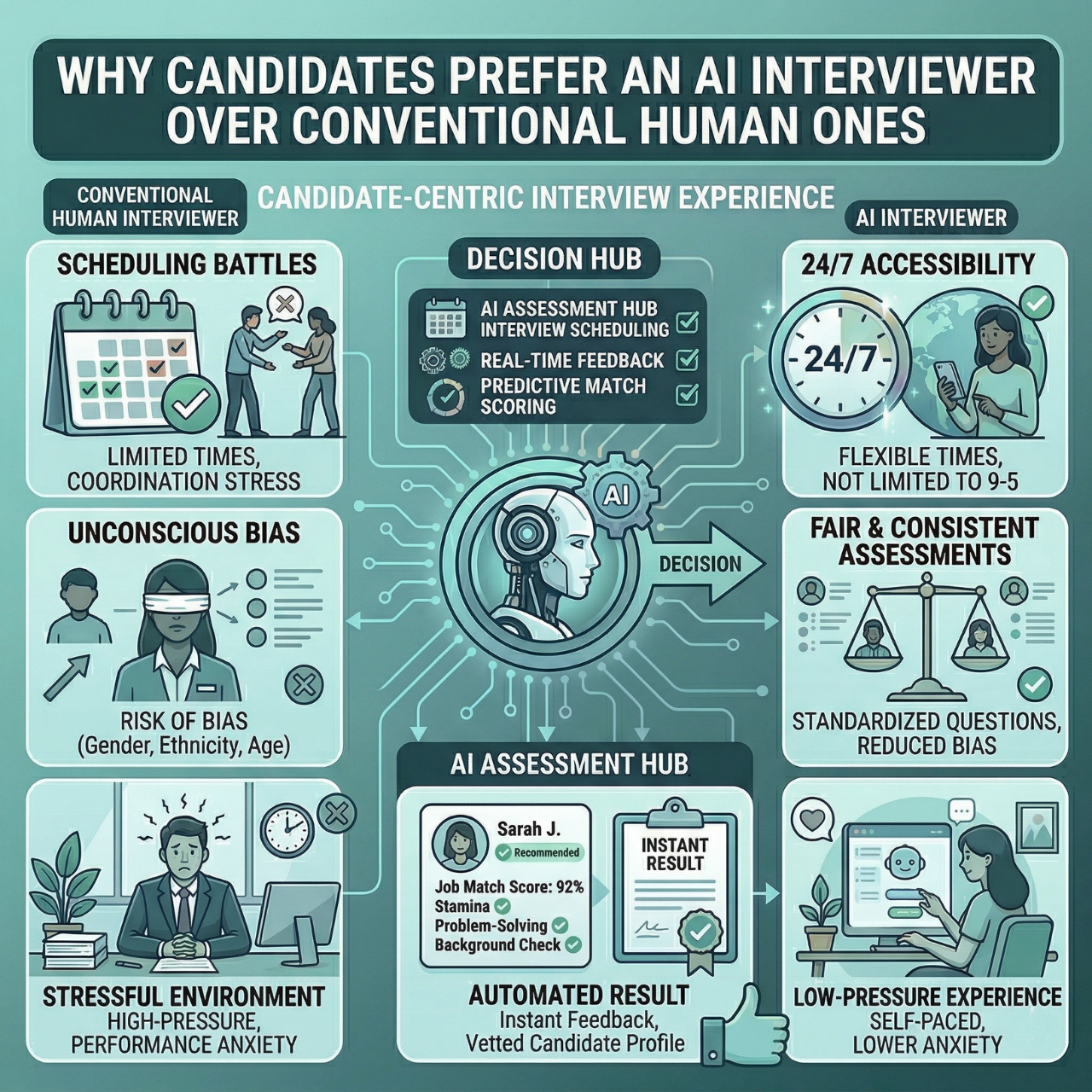
Voice AI lets candidates talk on their time, not just during business hours, which speeds up the hiring process. With Voice AI, you reduce repetitive work like scheduling or initial screenings.
It helps focus your time on candidates who meet your needs, improving efficiency and candidate quality.
Types of Voice AI Technologies
There are several types of Voice AI tools you can use in hiring:
- Interactive Voice Response (IVR): Simple systems with preset questions and answers, common in call centers.
- Conversational AI: Advanced tools that understand context and handle complex candidate conversations.
- Voice Agents: Digital recruiters that ask follow-up questions and provide a personalized experience.
Some Voice AI connects to your ATS to update candidate records automatically. Others use predictive analytics to score candidates based on their responses.
How Voice AI Differs From Traditional AI
Traditional AI in recruiting often focuses on text, such as parsing resumes or analyzing written answers. Voice AI adds a spoken layer, letting candidates use their voice instead of typing.
This creates a more natural, human-like interaction while still automating key tasks. Unlike rigid phone menus, Voice AI holds real conversations that adapt to the candidate’s answers.
Voice AI also captures tone, emotion, and hesitation, giving insights beyond text. It improves engagement by allowing candidates to speak freely, making the process easier and quicker for both sides.
Using Voice AI alongside your existing recruitment tools reduces manual work. It cuts no-shows and ghosting by keeping candidates involved with responsive conversations.
Quick Comparison
Capability
Traditional Text AI
Voice AI For Recruitment
Input Mode
Typed responses
Natural speech
Context Handling
Limited follow-ups
Adaptive, conversational flow
Signals Captured
Keywords
Tone, pauses, sentiment, intent
Candidate Availability
Business hours
24/7 self-serve interviews
Bias Controls
Standardized prompts
Standardized prompts plus consistent delivery
Applications of Voice AI in Recruitment
Voice AI streamlines key recruitment tasks by automating candidate interactions. It speeds up screening, handles interview scheduling, and supports voice-based assessments.
This technology reduces delays and lets your team focus on top talent.
Screening Candidates
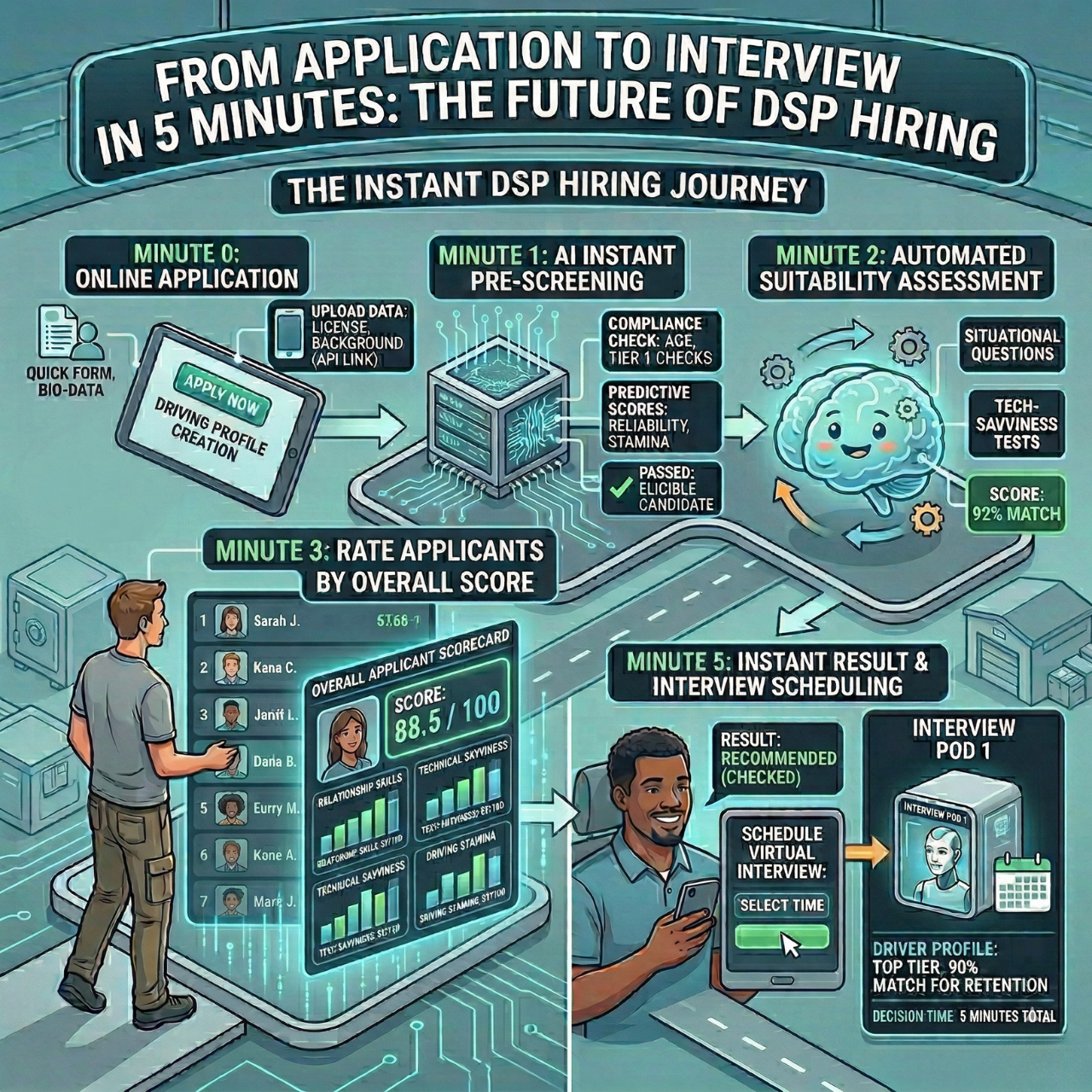
Voice AI can pre-screen candidates automatically. It asks relevant questions based on the job description and collects answers in real time.
This lets you quickly identify who meets key requirements without manual work. Because the system understands natural speech, candidates respond naturally, improving engagement.
Voice AI also scores responses to help rank candidates objectively. This reduces bias and ensures only qualified people move forward.
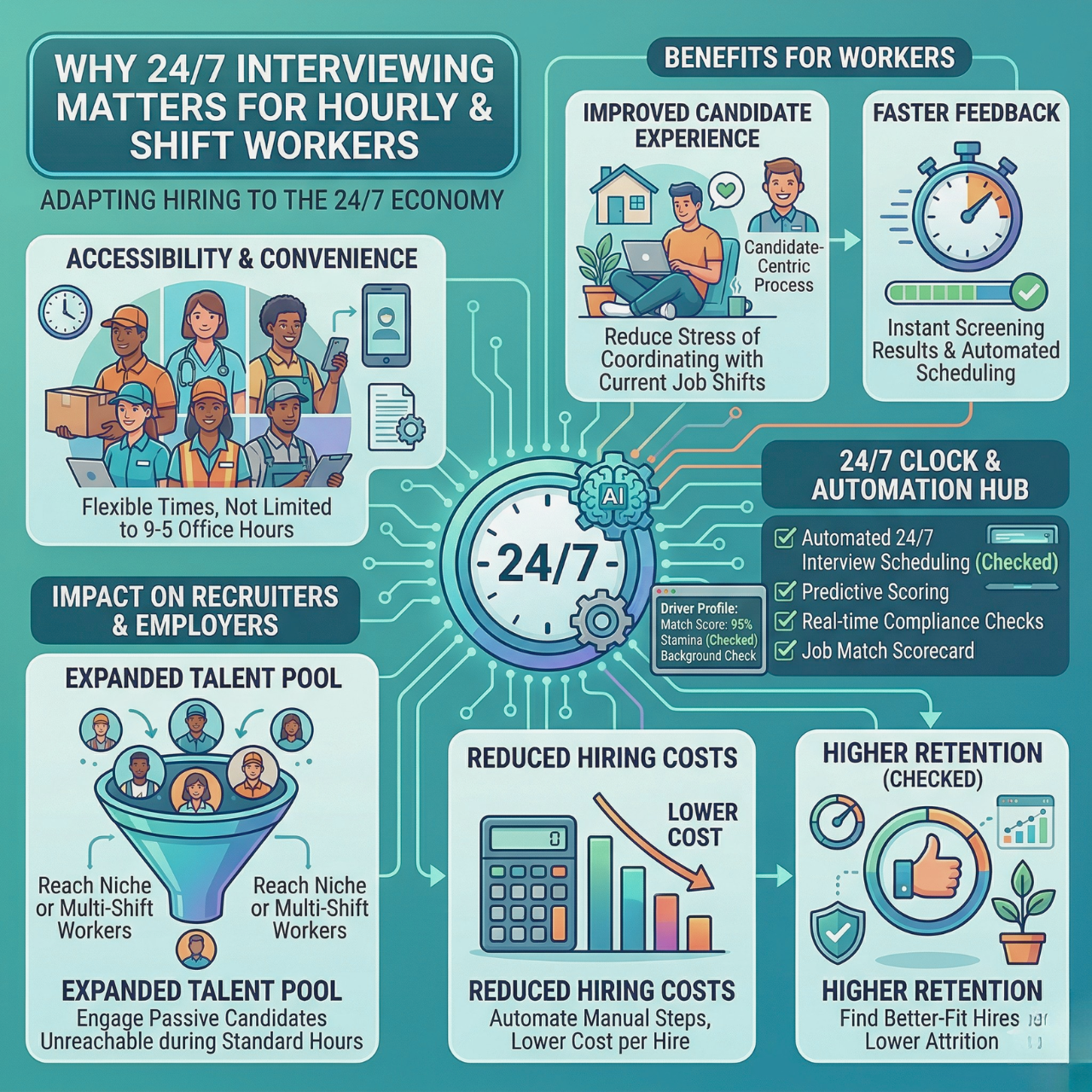
Using Voice AI for screening means you can connect with candidates 24/7. You won’t miss out on talent due to time zones or limited office hours.
Your team can focus on reviewing top-scoring candidates, saving hours each week.
Scheduling Interviews
Scheduling becomes easier and faster with Voice AI. It can reach out to candidates, ask for availability, and book times instantly.
This automated process cuts down on back-and-forth emails or missed calls. Voice AI also confirms appointments and sends reminders via SMS or email.
That means fewer no-shows and better communication. You get a smooth interview calendar that updates automatically in your ATS.
By automating this task, you save time and reduce confusion, letting you spend more energy on candidate engagement and decisions.
Conducting Voice Assessments
Voice AI supports voice-based assessments to evaluate communication skills and cultural fit early in the process. It conducts real-time interviews, listens to tone, and analyzes answers for clarity and confidence.
With conversational AI, candidates speak naturally instead of typing or clicking. This creates a more engaging experience.
The AI can detect hesitation or inconsistencies, helping you flag issues early. You gather deeper insights without extra recruiter effort. You can use voice assessments to add another layer of quality control, quickly and consistently.
Voice AI in Interview Processes
Voice AI uses advanced technology to make interviews faster and more effective. It automates routine tasks and evaluates candidates as they talk, helping you focus on the best talent.
This improves how you screen, engage, and move candidates through the hiring pipeline.
Automated Interviewing
Voice AI conducts interviews automatically by asking candidates preset questions. This lets candidates complete interviews anytime, without constant recruiter oversight.
The AI listens, records answers, and scores responses based on your criteria. You save time by skipping scheduling complexities and manual screenings.
Automated interviews also reduce bias because every candidate gets the same questions delivered the same way.
Key benefits include:
- 24/7 interview access for candidates
- Consistent, fair questioning
- Faster initial screening
- Less recruiter workload
Real-Time Candidate Evaluation
Voice AI assesses candidates as they speak, analyzing tone, clarity, and content. It uses NLP to understand conversations, not just keywords.
This creates a natural interview flow. You get instant feedback on candidate skills and communication.
AI scoring highlights strengths and flags concerns right after the interview. Real-time analytics also spot bottlenecks or drop-off points, helping you optimize the process.
Inviting only engaged candidates to schedule live interviews reduces no-shows and speeds decisions.
Benefits of Using Voice AI For Recruitment
Voice AI helps you speed up recruitment while improving how candidates interact with your process. It also supports fairness by reducing bias in early stages.
Enhanced Efficiency
Voice AI handles routine steps like candidate pre-screening and interview scheduling. This frees recruiters to focus on tasks that need human insight.
Your hiring team saves time by automating repetitive work, cutting hours spent on phone calls and emails. Voice AI works around the clock, so candidates get quick responses anytime.
Automation also reduces scheduling errors and manual follow-up. You scale hiring without adding stress or headcount.
Improved Candidate Experience
Candidates prefer fast and simple communication. Voice AI allows them to speak naturally, making interviews feel less robotic and more flexible.
They can complete interviews when it suits them, not just during office hours. This reduces drop-off and keeps engagement high.
Personalized voice interactions answer questions immediately and provide clear next steps, helping candidates feel valued. Your process becomes more transparent, cutting down on ghosting and no-shows.
Bias Reduction
Voice AI applies the same screening criteria to every candidate, helping minimize unconscious bias in initial steps. This supports fairer hiring focused on skills and fit.
Standardized interviews ensure each person is asked identical questions, making comparisons more objective. This leads to higher-quality hires based on merit.
By automating scoring and filtering, you avoid favoritism and common human errors. You create a process with more equal opportunity for all applicants.
Key Features to Look For in Voice AI Recruitment Tools
When choosing Voice AI for recruitment, focus on how well the tool fits with your current hiring systems, the quality of its language understanding, and the security measures it offers.
These points affect how smoothly the AI works, how natural candidate interactions feel, and how safely your data is protected.
Compatibility With Existing Systems
Your Voice AI should connect with your Applicant Tracking System (ATS) and human resources information systems (HRIS). This avoids manual entry and speeds up screening and scheduling.
Look for software that supports popular ATS platforms and exchanges data in real time. It should sync candidate info, interview results, and schedules automatically. A compatible tool reduces errors, saves time, and keeps your recruitment flow consistent.
Natural Language Processing Capabilities
Strong NLP allows the AI to understand and respond to candidates naturally. It helps the system handle different accents, pauses, and varied answers without confusion.
Choose Voice AI that conducts real conversations, not rigid menus. The AI should grasp context to ask follow-up questions or provide detailed responses. Good NLP ensures candidates feel heard and reduces frustration. It also helps your team get clear, relevant information quickly.
Data Security and Compliance
Recruitment data is sensitive. Your Voice AI must protect candidate information with strong encryption and follow data privacy laws like GDPR or CCPA.
Check for secure call recordings, role-based access, and data anonymization. Verify compliance with standards relevant to your industry and location. This avoids legal risks and builds trust with candidates.
Implementation Strategies for Voice AI
To get the most from voice AI for recruitment, you need a clear plan for connecting it to your existing tools and preparing your team.
Proper integration and training ensure your hiring process runs smoothly and gains the full benefits of automation.
Integration With Applicant Tracking Systems
Linking voice AI with your ATS is crucial. This connection allows candidate data from voice interviews to flow directly into your ATS without manual entry. It saves time and reduces errors. When integrating, check for compatibility and data mapping.
Your Voice AI should sync candidate scores, interview notes, and contact info automatically. Recruiters access all data in one place.
Set up triggers that move candidates forward or mark them for follow-up based on AI scoring. This makes decision-making faster and clearer.
Training Hiring Teams
Your hiring team must understand how to use voice AI effectively. Start by outlining what the AI handles, such as conducting 24/7 interviews and initial scoring.
Show recruiters how to review AI-generated reports and candidate insights. Emphasize that AI supports decisions but does not replace judgment.
Provide hands-on training with the platform interface. Let teams practice customizing scripts and adjusting settings to match your hiring needs.
Regular updates and Q&A sessions keep users confident and informed as the AI evolves. Well-trained teams minimize errors and improve candidate experience.
Challenges and Limitations of Voice AI in Recruitment
Voice AI can speed up hiring and improve engagement. However, it faces challenges in accuracy and raises ethical and privacy issues that you must manage carefully.
Accuracy and Reliability
Voice AI can struggle with different accents, speech patterns, and background noise. This may lead to errors in interpreting answers or missing important details.
Misunderstandings can cause poor assessment or unfair scoring. You might also see false negatives when qualified candidates are overlooked due to technical glitches.
Continuous testing and training of voice models are needed to improve accuracy. Ensure your system supports clarifications and allows candidates to correct responses.
Ethical and Privacy Concerns
Using Voice AI involves collecting and processing sensitive candidate data. You must protect this data to comply with privacy laws and build trust.
Bias in AI remains a concern. Voice AI can reflect training data biases, leading to unfair treatment of some groups.
Laws in places like California and Texas aim to regulate this. To reduce bias, choose platforms designed to support no-bias recruitment software practices.
Inform candidates about how their voice data is used and stored. Transparency, auditing, and consent strengthen your process and reduce risk.
Future Trends in Voice AI For Recruitment
Voice AI in recruitment is growing smarter and more connected. Expect improvements in personalization, cross-platform workflows, and new hiring tasks.
Personalization Advances
Voice AI is getting better at understanding candidates beyond their words. It analyzes tone, sentiment, and engagement to tailor conversations.
Interviews can adapt in real time, asking the right questions based on each response. Feedback and follow-ups can be customized, making candidates feel valued. This level of personalization helps identify top talent faster and improves the experience.
Cross-Platform Integration
Recruitment relies on multiple systems, like ATS, calendars, and messaging apps. Voice AI is evolving to connect smoothly with these tools.
This integration automates scheduling, tracking, and communication without manual work. Automatic interview invites and reminders keep candidates engaged with less effort. It ensures your hiring flow is seamless, letting you hire more people with less stress.
Emerging Use Cases
Voice AI is moving beyond typical screening calls. It now supports skill assessments, real-time candidate coaching, and diversity and bias detection.
You can conduct immersive interviews that assess how candidates think and communicate. These tools analyze speech patterns and other cues to provide deeper insights.
Voice AI is also helping with onboarding, offering voice-guided instructions and instant answers to common questions. This reduces HR workload and smooths the start for new hires.
Turn Conversations Into Hires
Voice AI For Recruitment accelerates screening and scheduling, cuts manual steps, and improves consistency. You move faster, reduce errors, and raise candidate quality with objective, real-time insights. The result is a simpler process and stronger hiring decisions.
With HRMLESS, conversational interviews, scoring, and ATS syncing work together to streamline each stage. You keep candidates engaged, reduce no-shows, and give recruiters more time for high-impact work. Automation supports fairness by standardizing early evaluations.
Ready to modernize your pipeline with Voice AI for Recruitment? Book a demo to see the workflows, metrics, and integrations that fit your team. We will map your steps, connect your ATS, and show real gains fast.
Frequently Asked Questions
What Is Voice AI For Recruitment?
Voice AI For Recruitment uses speech recognition and natural language processing to conduct early interviews, answer candidate questions, and capture structured data. It automates screening and scheduling, providing consistent questions and real-time scoring so recruiters can focus on high-value decisions.
How Does Voice AI For Recruitment Differ From Text-Only Tools?
Text systems rely on typed answers and keyword parsing, while Voice AI analyzes tone, pauses, and sentiment in addition to content. This creates a more natural conversation, improves engagement, and surfaces signals that text alone can miss.
Which Hiring Scenarios Benefit Most?
High-volume roles, multi-location hiring, and teams working across time zones see the fastest gains. Voice AI For Recruitment enables 24/7 interviews, instant eligibility checks, and queue-based routing, which shortens the time to screen and reduces manual effort.
Can It Integrate With Our ATS or HRIS?
Yes. Leading Voice AI platforms sync candidate profiles, interview transcripts, scores, and scheduling events to your ATS or HRIS. Look for real-time APIs, field mapping, and role-based access to keep data accurate and secure.
How Does It Improve Candidate Experience and Reduce No-Shows?
Candidates can interview on their schedule, receive confirmations, and get reminders through voice, SMS, or email. Clear next steps and immediate feedback reduce confusion, which lowers drop-offs and no-shows while keeping pipelines active.
What About Bias, Privacy, and Compliance?
Standardized prompts, consistent delivery, and transparent scoring help minimize bias in early stages. Choose tools that offer encryption, consent management, and data retention controls aligned with GDPR and CCPA, and publish audit logs for accountability.
Schema markup:
[
{
"@context": "https://schema.org",
"@type": "Article",
"headline": "Voice AI For Recruitment: Faster, Fairer Hiring",
"description": "Voice AI For Recruitment automates screening, scheduling, and assessments to speed hiring, cut no-shows, and deliver consistent, bias-aware evaluations.",
"inLanguage": "en-US",
"dateModified": "2025-11-11",
"keywords": [
"Voice AI For Recruitment",
"AI hiring software",
"automated recruitment tools",
"AI interviewer",
"reduce ghosting in hiring",
"ATS integration hiring tool",
"24/7 AI interviews",
"fast-track hiring process",
"no bias recruitment software"
],
"author": {
"@type": "Organization",
"name": "Editorial Team"
}
},
{
"@context": "https://schema.org",
"@type": "FAQPage",
"mainEntity": [
{
"@type": "Question",
"name": "What Is Voice AI For Recruitment?",
"acceptedAnswer": {
"@type": "Answer",
"text": "Voice AI For Recruitment uses speech recognition and natural language processing to conduct early interviews, answer candidate questions, and capture structured data. **It automates screening and scheduling**, providing consistent questions and real-time scoring so recruiters can focus on high-value decisions."
}
},
{
"@type": "Question",
"name": "How Does Voice AI For Recruitment Differ From Text-Only Tools?",
"acceptedAnswer": {
"@type": "Answer",
"text": "Text systems rely on typed answers and keyword parsing, while Voice AI analyzes **tone, pauses, and sentiment** in addition to content. This creates a more natural conversation, improves engagement, and surfaces signals that text alone can miss."
}
},
{
"@type": "Question",
"name": "Which Hiring Scenarios Benefit Most?",
"acceptedAnswer": {
"@type": "Answer",
"text": "High-volume roles, multi-location hiring, and teams working across time zones see the fastest gains. Voice AI For Recruitment enables **24/7 interviews, instant eligibility checks, and queue-based routing**, which shortens time to screen and reduces manual effort."
}
},
{
"@type": "Question",
"name": "Can It Integrate With Our ATS or HRIS?",
"acceptedAnswer": {
"@type": "Answer",
"text": "Yes. Leading Voice AI platforms sync candidate profiles, interview transcripts, scores, and scheduling events to your ATS or HRIS. Look for **real-time APIs, field mapping, and role-based access** to keep data accurate and secure."
}
},
{
"@type": "Question",
"name": "How Does It Improve Candidate Experience and Reduce No-Shows?",
"acceptedAnswer": {
"@type": "Answer",
"text": "Candidates can interview on their schedule, receive confirmations, and get reminders through voice, SMS, or email. **Clear next steps and immediate feedback** reduce confusion, which lowers drop-offs and no-shows while keeping pipelines active."
}
}
]
}
]
Featured

Subscribe to ournewsletter
Related posts
Explore the world of photography with our curated selection of
portfolio websites that showcase creativity and innovation.