

Can AI Replace Recruiters? What Automation Still Misses

If you’ve ever wondered Can AI replace recruiters, it’s probably because your team is buried in resumes, no-shows, and back-and-forth emails. Manual screening, scheduling, and follow-ups drain hours and still don’t guarantee better hires.
HRMLESS helps teams offload that busywork so recruiters can spend their time on conversations, not calendars and inboxes. You get faster shortlists and clearer signals without sacrificing human judgment.
This guide breaks down where AI shines in hiring and where humans are still essential. You’ll see which tasks to automate, what AI can’t do well, and how to blend both for a faster, fairer process. By the end, you’ll know how to use AI to support recruiters, not replace them.
The Role of Recruiters in Modern Hiring
Recruiters play a vital role in finding the right talent and keeping the hiring process on track. They blend skill, judgment, and a whole toolbox of resources to match people with jobs.
This role includes everything from figuring out what the job actually needs to building relationships and using tech to get things done. It's not as simple as it sounds.
Core Responsibilities of Recruiters
Recruiters juggle a lot of steps in hiring. They write job descriptions that (hopefully) attract the right folks.
Then they hunt for candidates everywhere: job boards, social media, you name it. Interview scheduling, resume screening, and checking if someone’s a good fit are all part of the daily grind.
You count on recruiters to review skills, experience, and whether someone will vibe with the team. They also keep candidates updated and engaged, so nobody feels like they’re in the dark.
Recruiters often negotiate offers and act as the go-between for hiring managers and candidates. Their work keeps hiring moving without letting quality slip.
Human Elements in the Recruitment Process
No matter how shiny the tech, you just can’t replace the human touch. Recruiters pick up on subtle cues in interviews and try to figure out what really motivates someone.
Their judgment helps dodge bad hires that AI might let slip through. Building trust with candidates? That’s a skill only a real person brings to the table.
Recruiters answer questions, calm nerves, and represent your company’s values in a way no robot can. They spot culture fit (or the lack of it) and sense potential team issues that algorithms just don’t catch.
Empathy and relationship-building help reduce ghosting, too. Recruiters keep people interested by providing updates and support—sometimes just a quick check-in makes all the difference.
Current Recruitment Technologies
Recruiters now lean on AI and automation tools to blast through the boring stuff. AI pre-screening, automated scheduling, and candidate scoring are everywhere these days.
Smart systems filter resumes, highlight top picks, and keep candidates engaged through SMS and email. That saves recruiters a ton of time; no more sifting through endless resumes by hand.
These tools usually plug right into your existing ATS, so the workflow stays smooth. You can track metrics and spot bottlenecks in real time, thanks to dashboards.
AI boosts efficiency, but you still need recruiters to interpret results and drive the overall strategy. It’s not hands-off by any means.
Understanding AI in Recruitment
AI helps automate a bunch of hiring steps, making recruitment faster and maybe a bit more accurate. It can screen resumes, schedule interviews, and crunch candidate data like nobody’s business.
Still, you need real people for building relationships and figuring out who actually fits your culture. AI isn’t great at that—at least not yet.
AI Capabilities for Hiring
AI’s real strength lies in processing huge piles of candidate info fast. It can scan resumes for the right skills and experience, then sort the best matches to the top.
AI tools also automate routine stuff like sending interview invites and reminders, so you see fewer no-shows. But when it comes to judging soft skills or company fit, it drops the ball.
You make the final calls and actually connect with candidates. AI frees you up for those real conversations by handling the busywork.
Popular AI Recruiting Tools
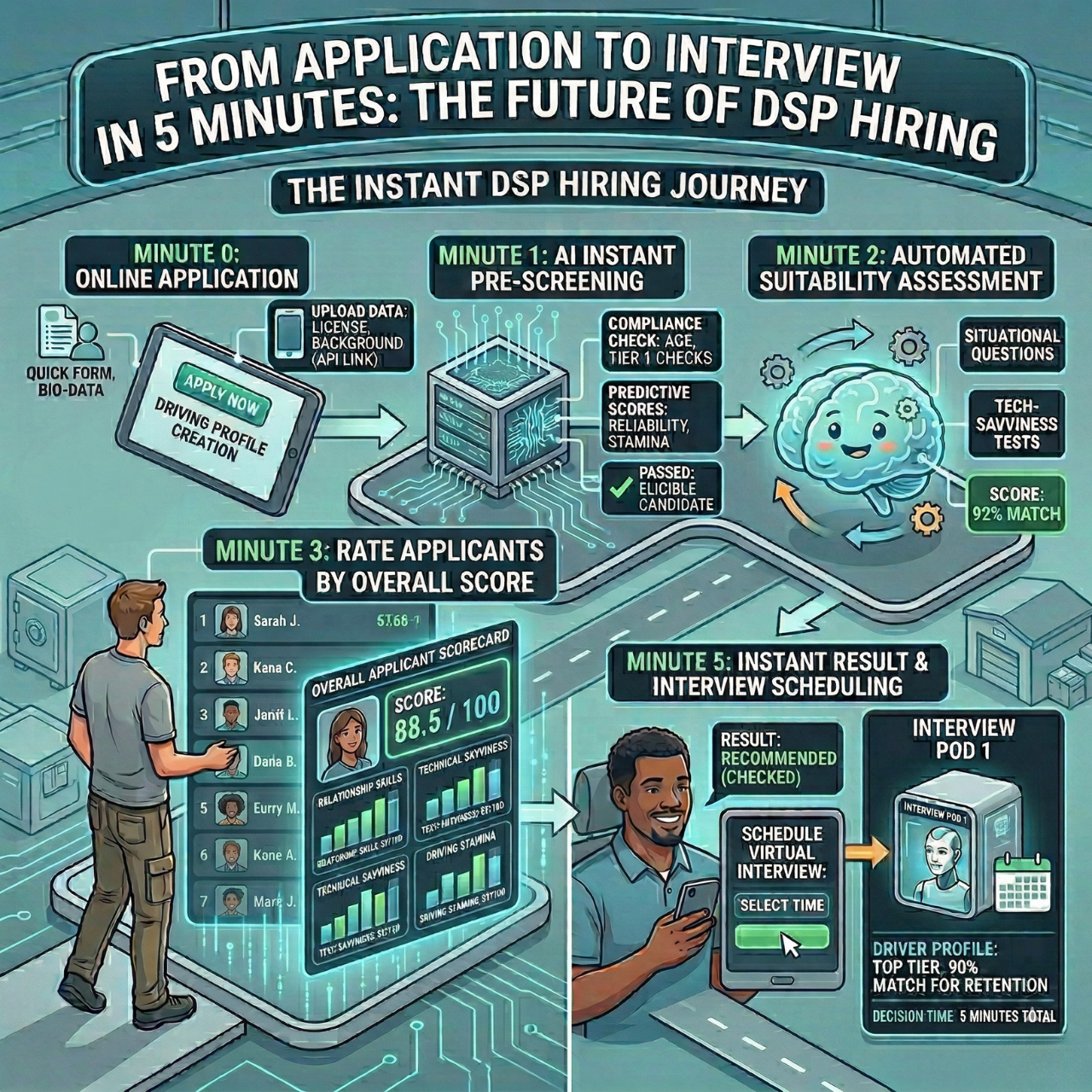
Automated scheduling and AI-powered pre-screening interviews are pretty much standard now. These tools save you hours in the hiring process, plain and simple.
Some platforms handle SMS and email engagement to keep candidates in the loop and cut down on ghosting. Others integrate with your ATS for seamless workflows, offering real-time analytics so you can spot bottlenecks before they become a headache.
It’s about hiring more efficiently, not about losing control over who you bring on board.
Data-Driven Decision Making
AI gives you structured data to compare candidates in a fair, objective way. It scores resumes and interview answers based on set criteria, helping reduce human bias.
With dashboards showing engagement and time-to-hire stats, you can actually see how things are going. AI data lets you pinpoint where things slow down and fix issues fast.
It’s less stress, more predictability—at least in theory.
Comparing AI and Human Recruiters
AI and human recruiters both have their strengths and limits. When you know the difference, it’s easier to decide when to lean on automated tools and when to trust your gut. Combining both? That’s where the magic happens!
Strengths and Weaknesses of AI
AI can chew through massive amounts of data in no time. It screens resumes 24/7, ranks candidates by your criteria, and schedules interviews without breaking a sweat.
Automation also helps cut down on bias by focusing on qualifications, not gut feelings. It speeds up hiring, sometimes slashing time-to-hire by over 60%.
But AI just doesn’t get context, emotions, or tricky situations. It can’t build real relationships or spot those hidden gems that don’t fit the algorithm perfectly.
Strengths and Weaknesses of Human Recruiters
Human recruiters bring emotional intelligence, judgment, and that personal touch. They read between the lines, gauge culture fit, and handle sensitive conversations or tricky negotiations.
You can trust people to spot unique skills or potential that AI might miss. They’re great at building trust and guiding candidates through the process, which helps cut down on ghosting.
The downside? Humans work more slowly, and bias can creep in. Reviewing hundreds of applications by hand takes time, and high-volume hiring can get overwhelming fast.
Collaboration Between AI and Recruiters
The best teams use AI and humans together. AI takes care of repetitive stuff like prescreening, scoring, and scheduling, freeing recruiters to focus on real conversations.
Automated candidate engagement with SMS and email can seriously reduce ghosting. Recruiters keep control over decisions and relationships while AI speeds up the early steps.
This combo lets you scale hiring without letting quality slip or things grind to a halt. Let AI handle the routine, and let people deliver the insights that actually matter.
Can AI Fully Replace Recruiters?
AI can handle a ton of repetitive recruitment tasks quickly and with fewer mistakes. But hiring still needs human judgment, relationships, and someone to keep an eye on the ethics. AI tools boost speed and fairness, yet they just don’t cover every part of the hiring puzzle.
Tasks AI Can Automate
AI shines at data-heavy, repeatable tasks. You can use AI to:
- Pre-screen resumes based on keywords and experience
- Score candidates with objective criteria
- Schedule interviews automatically to avoid delays
- Send reminders and follow-ups via SMS or email to cut down on no-shows
Automating pre-screening and candidate engagement saves a ton of time. These steps free you up for deeper evaluation and building relationships. Automation cuts out a lot of manual work, but it’s not going to handle every recruitment need.
Limitations of AI in Recruitment
AI just can’t understand emotions or those complex, human traits. It can't:
- Build trust and rapport with candidates
- Judge cultural fit or team dynamics
- Negotiate offers or handle sensitive conversations
- Make strategic hiring decisions that go beyond data
Recruiting is full of empathy and nuance—things AI just isn’t built for. You still need your own knowledge and instincts to hire the right person. AI acts as a tool to make recruiters sharper, not as a total replacement. It's more of a sidekick than a superhero.
Ethical and Legal Considerations
AI can introduce bias if you train it on biased data. You need to keep an eye on AI tools to make sure things stay fair.
Transparency and human oversight are key to avoiding legal headaches like discrimination. Hiring laws and regulations change depending on where you are, and you need a real person to navigate that mess.
AI can help reduce bias by standardizing how you screen candidates, but you’re still responsible for ethical decisions. Use AI responsibly and keep control of the process to protect both candidates and your company.
Impacts of AI on the Recruitment Industry
AI is shaking up how hiring works. It’s changing job roles, the skills recruiters need, and even the way candidates experience the process. This shift can help you hire faster and better, but it also means you’ve got to adapt to new tech and methods. It’s not all smooth sailing.
Job Market Transformations
AI is automating routine tasks like resume screening and interview scheduling. That means fewer entry-level recruiting jobs, but it also opens up roles for people who manage AI systems or focus on strategic hiring.
Traditional recruiter tasks now take minutes instead of days. For example:
- AI tools scan resumes for keywords and skills instantly.
- Automated scheduling slashes the endless back-and-forth emails.
Recruiters’ roles are shifting from admin work to more decision-making and candidate engagement. You might find your team focusing more on high-value work while AI does the grunt work.
Changing Skill Requirements
With AI handling the basics, recruiters need to level up their tech and data analysis skills. Knowing how to use AI hiring software is basically a must now.
You’ll want recruiters who can interpret AI insights and make smart decisions, maintain ethical standards, and build relationships with candidates—something AI just can’t do.
Training your team on AI tools, like conversational AI interviews, will help you get the most out of these systems. Recruiters who get both people and technology? They’re the ones who deliver the best results, hands down.
Candidate Experience Evolution
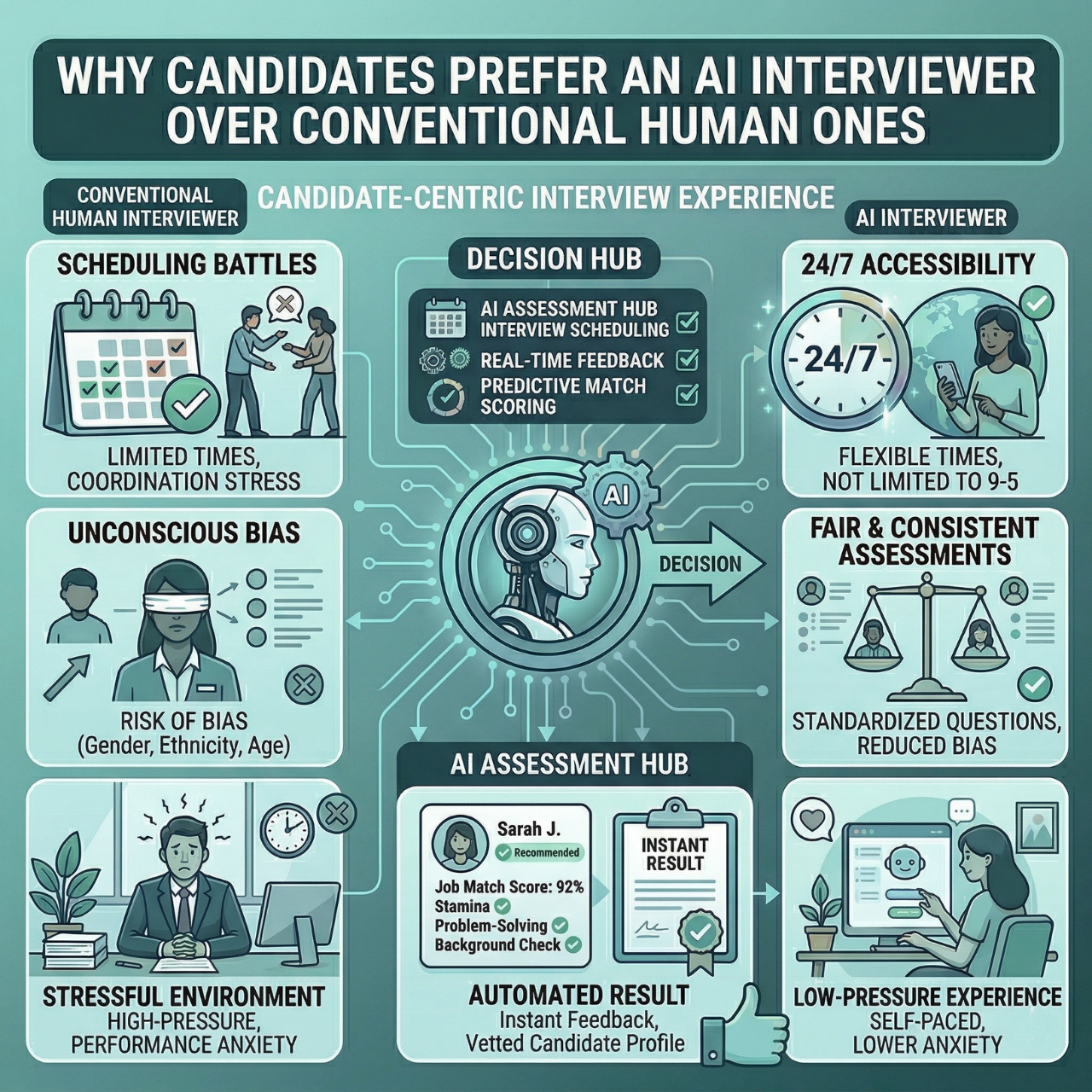
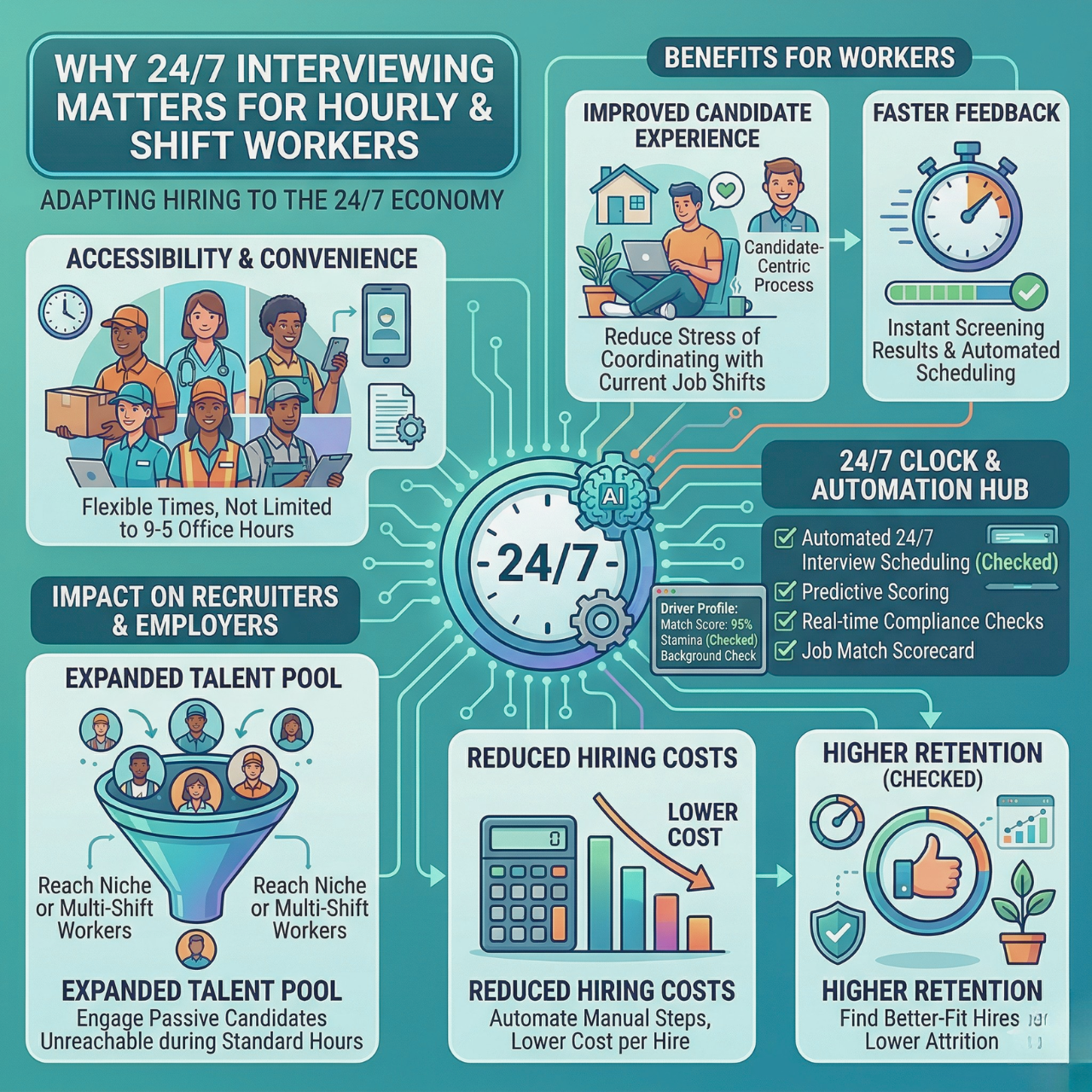
AI is reshaping how candidates move through your hiring process. With tools like 24/7 AI interviews, folks can apply and respond whenever it works for them. This flexibility makes hiring less rigid and more approachable.
Benefits for your candidates include:
- Faster response times and instant updates through SMS or email nudges.
- Less waiting and fewer missed interviews thanks to automatic scheduling.
- More personalized communication without extra effort from your team.
Still, keeping the process human-friendly matters. When you blend AI efficiency with real recruiter engagement, candidates feel valued, and ghosting drops.
Future Outlook for Recruiters and AI
AI will absolutely change how you hire. That said, it won't erase the need for human recruiters. You'll see recruitment trends shifting, your role evolving, and new ways to blend AI into your process.
Emerging Trends in Recruitment
AI already tackles routine stuff like pre-screening, scheduling, and candidate scoring. You get freed up from tedious tasks, and hiring moves way faster. For example, you can automate interview scheduling with tools that cut down no-shows by half.
AI-driven candidate engagement shows up, too, with SMS and email nudges keeping things moving and reducing ghosting.
AI sorts through hundreds of applicants, surfacing the most qualified ones. But even with all this tech, human judgment stays critical. You still need to build trust and understand what motivates people—AI just can't cover that territory.
Evolving Recruiter Roles
Your role as a recruiter is going to shift. Instead of drowning in admin, you'll focus on strategy and building real relationships.
You'll use AI insights to make sharper hiring calls. Recruiters will step up as talent advisors, using data to personalize candidate experiences and handle complex hiring needs.
Skills like empathy, critical thinking, and negotiation will matter even more. You'll also keep an eye on AI tools, watching for bias and fairness. Humans are the ones who make sure AI supports diversity and keeps hiring fair.
Predictions for AI Integration
AI's going to be a standard part of your recruitment toolkit, not some sci-fi replacement. Expect to see more conversational AI interviews available on demand, so candidates can complete assessments whenever they want.
Integration with ATS and HRIS systems will keep growing, smoothing out data flow and giving you better analytics. You'll spot bottlenecks in real time and adjust as needed.
AI will score and filter candidates automatically, so only the best land on your desk. That means less time wasted and better results.
You'll engage candidates instantly with AI, slashing average time-to-hire by over 60%. Still, the parts that need human judgment—like cultural fit and negotiation—aren't going anywhere.
Why AI Needs Recruiters To Work
AI has answered the question Can AI replace recruiters with a clear no. It speeds up screening, scheduling, and follow-ups so your team moves faster. Recruiters still own judgment, relationships, and the final hiring call.
With HRMLESS in your stack, AI becomes a practical assistant instead of a risky replacement. You get structure, consistent scoring, and faster shortlists while people stay responsible for fit, fairness, and offers.
If you want to cut manual work without losing the human touch, now is the time to act. Book a demo to see how AI can support your recruiters and upgrade your hiring process.
Frequently Asked Questions
Can AI replace recruiters entirely?
No, AI cannot fully replace recruiters. It can speed up screening, scheduling, and follow-ups, but it cannot build trust, handle nuanced conversations, or judge culture fit. The best results come when AI handles repetitive tasks, and recruiters focus on relationships and final decisions.
What tasks can AI automate in recruitment?
AI is strong at high-volume, repeatable work. It can pre-screen resumes, score candidates against set criteria, schedule interviews, and send reminders or follow-ups. This frees recruiters to spend more time on interviews, stakeholder alignment, and offer strategy.
Does using AI in hiring increase or reduce bias?
AI can help reduce bias when it follows consistent criteria and structured scoring. However, if it is trained on biased data, it can also repeat or even amplify those patterns. Human oversight, regular audits, and clear guidelines are essential to keep hiring fair.
How does AI affect candidate experience?
AI can make the candidate journey faster and more predictable. Automated scheduling, updates, and reminders keep candidates informed and reduce no-shows. When you pair this with human touchpoints, candidates feel both supported and respected.
Will recruiters need new skills as AI grows in hiring?
Yes, recruiters will need stronger data literacy and tech comfort alongside people skills. They must understand how AI tools work, interpret scores and insights, and spot potential issues like bias. Empathy, communication, and strategic thinking will matter even more, not less.
Featured

Subscribe to ournewsletter
Related posts
Explore the world of photography with our curated selection of
portfolio websites that showcase creativity and innovation.