

How Is AI Used In Hiring For Better, Bias-Aware Decisions

If you are asking how AI is used in hiring, the short answer is: to make recruiting faster, fairer, and easier to manage. AI tools now handle resume screening, scheduling, and early interviews so your team can focus on real conversations with top candidates.
With HRMLESS, AI screening, scoring, and scheduling work quietly in the background to cut time-to-hire and reduce bias. Recruiters see clear shortlists, candidates get quick responses, and leaders gain visibility into what is working across every role.
In this guide, you’ll see how AI supports screening and shortlisting, interview automation, bias reduction, and predictive analytics. You’ll also learn about data privacy, ATS integration, common pitfalls, and future trends so you can apply AI in hiring with confidence.
Overview of AI Applications in Hiring
AI in hiring changes how you find, evaluate, and engage candidates. It speeds up tasks like resume screening and interview scheduling while aiming to reduce bias and improve candidate quality. You can automate parts of recruiting to save time and focus on top talent.
Definition of AI in Recruitment
AI in recruitment uses software to automate hiring tasks. This includes analyzing resumes, scoring candidates, scheduling interviews, and communicating with applicants. The goal is to make hiring faster, fairer, and less prone to human error.
AI systems rely on machine learning and natural language processing to understand candidate data. Conversational AI can conduct pre-screening interviews 24/7. These tools help you spot qualified candidates quickly and keep candidates engaged with instant messaging.
Historical Perspective on AI in Talent Acquisition
Recruiting has long been a manual process, involving job posts, resume sorting, and phone calls. AI started entering hiring as simple resume filters.
Over time, it evolved to include automated interview scheduling and candidate communication. Early AI tools only handled basic tasks, but now AI manages complex functions like candidate scoring and bias reduction.
This shift helps you reduce repetitive work and improve quality by focusing on data-driven decisions.
Current Trends in AI Hiring Tools
Today, AI hiring tools cover the full process: sourcing, screening, interviewing, and onboarding. New features include automated conversational interviews, real-time candidate scoring, and smart scheduling that cuts no-shows by half.
Popular trends focus on reducing bias through standardized assessments and data analysis. Engagement happens via SMS and email nudges to prevent ghosting and speed up hiring cycles.
Many companies now rely on AI to quickly identify and engage the best candidates, saving hours per hire and scaling recruitment without extra stress.
AI-Powered Screening and Shortlisting
AI speeds up early hiring steps by quickly understanding resumes, testing candidate fit, and ranking applicants. These tools help you spend less time sorting through unqualified candidates and more time on the best fits.
They reduce bias and improve consistency, making your hiring process faster and fairer.
Automated Resume Parsing
AI scans resumes to pull out key details like skills, experience, and education. This process is much faster and more accurate than manual review. You can handle large volumes of applications without missing important information. The AI ignores irrelevant data and focuses on qualifications that match your job description.
It standardizes different formats, so you see candidate info clearly and consistently. Using automated parsing means fewer human errors and faster shortlists.
Pre-Screening Assessments
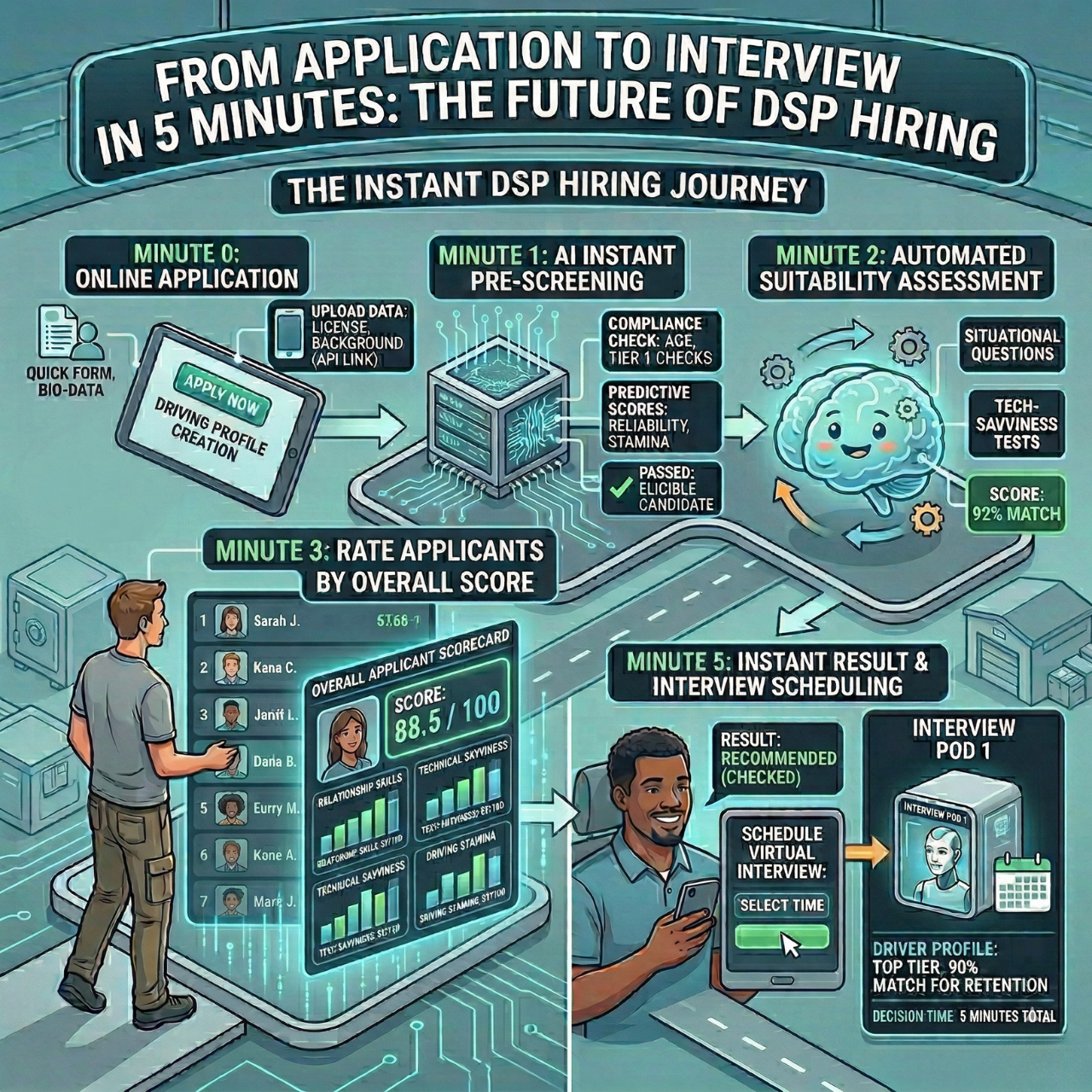
Pre-screening uses AI-driven tests or interviews to check candidates' skills and fit early on. These assessments happen before you spend time on a full interview, saving you hours in your schedule.
AI tools can ask candidates job-related questions or run short video or chat interviews. The system evaluates responses, scoring candidates on criteria like communication, problem-solving, and cultural fit.
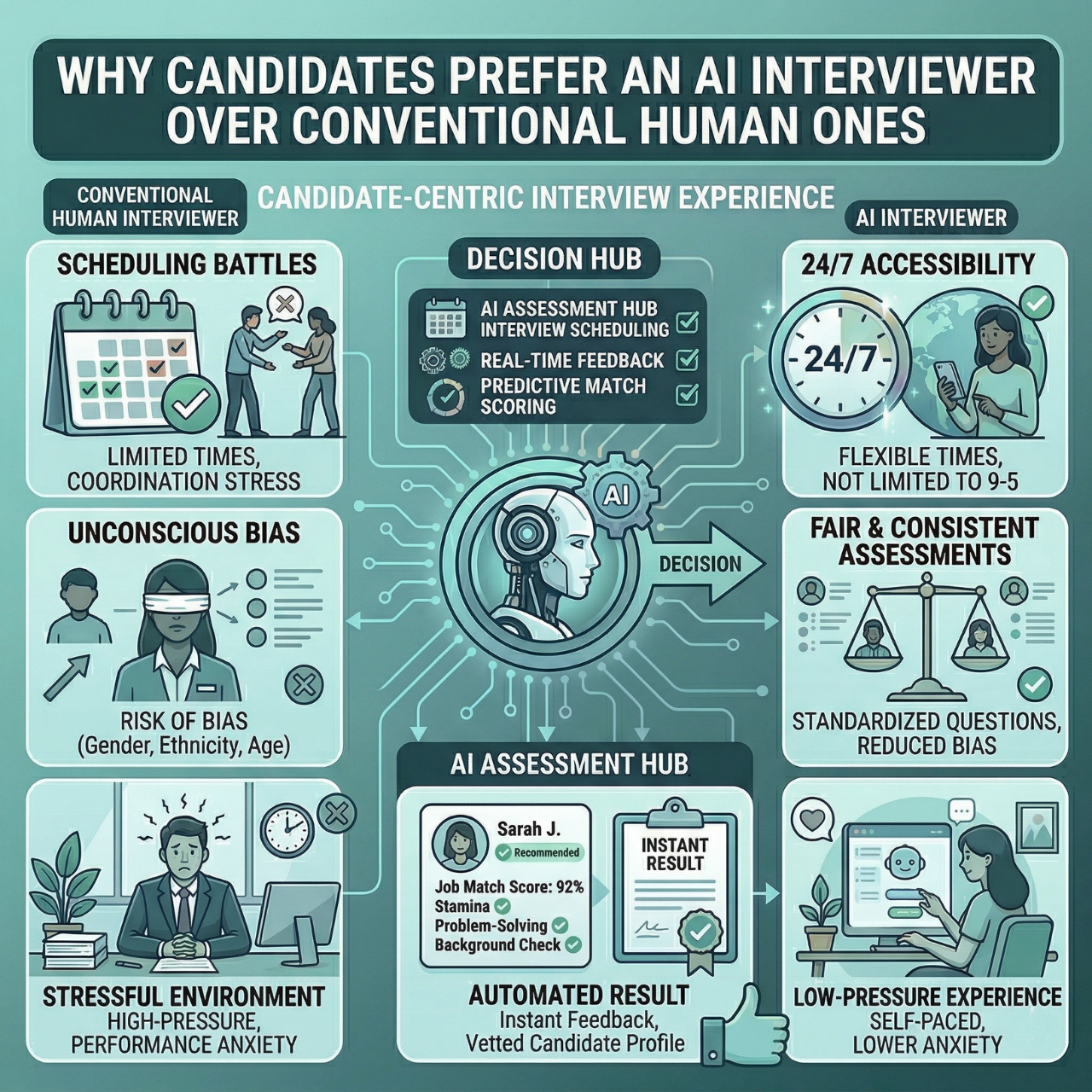
This method reduces bias by applying the same tests to all applicants. It also keeps candidates engaged by letting them complete assessments on their own time, 24/7.
Ranking and Scoring Candidates
After collecting data, AI ranks candidates based on how well they meet your requirements. Scores come from resume parsing, pre-screening, and other factors like experience and education.
You get a clear list with top matches highlighted, so you don’t waste time on poor fits. This objective scoring cuts bias by focusing on data, not gut feelings.
Interview Automation and Chatbots
You can speed up hiring by automating key parts of the interview process. AI chatbots keep candidates engaged, handle scheduling, and analyze video interviews.
AI Chatbots for Candidate Engagement
AI chatbots talk to your candidates instantly. They answer common questions and guide applicants through the first steps. This means candidates get quick responses, making the experience smoother. Chatbots also collect important info like skills and work history.
This helps pre-screening by spotting qualified people right away. You waste less time on resumes that don’t fit. Using AI chatbots cuts down on no-shows and keeps candidates interested. Your hiring team can then spend time on top prospects, not on repetitive tasks.
Automated Interview Scheduling
Scheduling interviews can slow you down with back-and-forth emails or calls. AI tools automate this by letting candidates pick times that fit your calendar.
It removes human error and saves hours of work. Automated scheduling also reduces no-shows by confirming candidates and sending reminders via SMS or email. This keeps candidates accountable and ready. With AI-driven scheduling, your team can manage multiple openings easily.
Video Interview Analysis
AI can analyze video interviews to add objectivity to your hiring decisions. It looks at tone, facial expressions, and word choices to assess candidate fit based on key traits.
This helps uncover communication skills, confidence levels, and engagement—all before a live interview. Analysis is fast and consistent, so you avoid bias from first impressions. You get data-driven insights that assist your decisions without replacing human judgment. Video AI supports your team by pointing out strong or weak spots efficiently.
Bias Reduction and Fairness Enhancements
Using AI in hiring targets clear problems like human bias, lack of fairness, and limited diversity. Smart tools help reduce subjective decisions, create fairer candidate comparisons, and open doors to a wider range of applicants. These improvements help you build stronger teams based on merit and potential.
AI-Driven Blind Recruitment
AI-driven blind recruitment removes identifying details like names, gender, or age from applications. This lets the system focus purely on skills and experience, stopping unconscious bias early.
By automating resume reviews, AI standardizes evaluations. Automated systems speed screening while ignoring irrelevant traits.
This stops assumptions based on race or background, helping you select fairly. At the same time, AI tracks patterns and flags when bias might sneak in. Its consistent application makes sure every candidate gets the same attention and opportunity to move forward.
Mitigating Unconscious Bias
AI can detect and limit unconscious bias that humans often miss. It analyzes large datasets to spot trends harmful to fairness.
For example, it can reduce reliance on "proxy" features—things linked to protected traits but not skills—by adjusting how algorithms weigh data. Still, AI isn’t perfect.
You’ll need ongoing oversight and audits to keep models fair and balanced. Regular updates prevent biases from creeping back as hiring needs evolve.
Using AI tools alongside human judgment creates a stronger process. You combine tech precision with recruiter experience to vet candidates best suited for the role.
Improving Diversity in Hiring
AI can actively support diversity goals by ensuring wider talent pools are considered. Automated tools help you find candidates beyond usual channels, reducing bias from small or homogeneous networks.
AI also measures diversity outcomes, revealing gaps in hiring stages or candidate flows. This data guides you to adjust job descriptions, screening, or outreach efforts.
Predictive Analytics for Talent Acquisition
Predictive analytics uses data and AI to improve how you find and hire the right people. It helps you understand if candidates will fit your company culture, predict their job performance, and estimate how long they might stay. These insights make hiring faster and more accurate.
Evaluating Culture Fit
AI tools analyze more than resumes. They look at candidates' micro-expressions, voice tones, and language patterns to judge how well they match your team’s culture.
This helps you avoid hiring people who may clash with your company’s values or work style. Your hiring process gains consistency by focusing on skills and behaviors that support your work environment. This results in better team harmony and fewer chances of early turnover caused by poor cultural alignment.
Performance Forecasting
Predictive analytics uses past hiring data and AI models to forecast a candidate’s potential success on the job. It reviews factors like career growth, interview performance, and behavior patterns to predict how well they will perform.
This allows you to prioritize candidates who match the skills and traits proven to succeed in your roles. It also speeds up hiring by quickly filtering out less suitable applicants.
Employee Retention Predictions
Predictive models also estimate how long a new hire might stay with your company. By analyzing patterns from previous hires—such as job changes and engagement levels—AI identifies candidates likely to remain longer.
This insight helps you avoid costly turnover and plan workforce needs. You can target candidates who are not only skilled but also more committed.
Data Privacy and Ethical Considerations
When using AI in hiring, protecting candidate information, ensuring fairness, and following legal rules are essential. You need to handle data carefully, avoid bias in decisions, and meet hiring laws to keep your process trustworthy and effective.
Candidate Data Protection
You collect a lot of personal data during hiring, like resumes, interviews, and background checks. Keeping this data safe is critical. Use encryption and limit access to only necessary staff. Avoid storing more data than needed.
Be clear with candidates about how their data will be used. Transparency builds trust. Make sure you follow privacy laws, like GDPR or CCPA, depending on where you operate.
Ethical Use of AI in Hiring
AI can speed up your hiring by scoring and sorting candidates quickly. But it can also repeat old biases if trained on biased data. You should regularly test AI tools for fairness.
Mix AI decisions with human judgment. Humans can catch problems AI misses. Your AI should treat all candidates fairly, regardless of age, gender, race, or background. Avoid tools that rely solely on past hiring data that may reflect bias.
Compliance With Hiring Regulations
Hiring laws protect candidates from unfair treatment based on protected traits. Your AI must comply with these laws to avoid legal trouble. Review local and federal rules regularly to ensure your AI hiring software follows them.
Avoid asking for or using data about race, religion, disability, or other sensitive info unless legally allowed. Keep clear records of AI decisions and audits to prove compliance if questioned.
Integration With Applicant Tracking Systems
AI transforms your hiring tools by automating key tasks, adapting to your needs, and improving each step in recruiting. With AI-powered Applicant Tracking Systems (ATS), you can save time while finding better candidates with less effort.
Seamless Workflow Automation
AI lets your ATS handle routine tasks automatically. It screens resumes, ranks candidates, and even schedules interviews without manual input. This means you spend less time on paperwork and more time on decisions that need your attention.
Automation also reduces errors and bias by applying consistent criteria across every application. By automating reminders and follow-ups through SMS and email, you keep candidates engaged and reduce no-shows.
Benefits of automating workflow with AI:
- Faster resume screening
- Instant candidate ranking
- Automated interview scheduling
- Reduced candidate drop-off
This leads to quicker hiring cycles and better candidate experiences with less hassle for you.
Customizing AI Solutions
Your hiring needs are unique, so your AI tools should fit your process. Modern ATS platforms let you tailor AI models to weigh skills, experiences, and qualifications that really matter for your roles.
With customization, you control screening rules, scoring methods, and engagement strategies. You can also choose integration levels, from simple resume parsing to full automation, including candidate communication.
Custom AI helps avoid one-size-fits-all pitfalls and improves decision quality.
Key ways to customize AI include:
- Setting priority skills and traits
- Adjusting scoring thresholds
- Personalizing candidate interactions
- Integrating with your existing ATS and HR systems
This makes AI a flexible partner in your recruitment, not a rigid tool.
Optimizing Recruitment Processes
AI-powered ATS platforms analyze hiring data in real time to spot bottlenecks and improve future decisions. You get insights into candidate flow, engagement rates, and time-to-hire—all in one dashboard.
Using this data, you can fine-tune each hiring step to work smoothly and quickly. For example, you might find a certain interview stage causes delays or that some job postings attract unqualified applicants.
Focus on these optimization points:
- Real-time hiring dashboards
- Identifying and fixing delays
- Scaling hiring without extra stress
- Monitoring candidate quality and fairness
Challenges and Limitations of AI in Hiring
AI brings many benefits to hiring. However, it also faces issues with the data it uses, risks creating unfair outcomes, and struggles to explain its decisions clearly. You need to be aware of these challenges to use AI tools effectively and fair.
Data Quality Concerns
AI depends heavily on the data fed into it. If the data is incomplete, outdated, or inaccurate, the AI’s decisions can be flawed. For example, if past hiring data reflects biases or mistakes, AI will learn to repeat them.
This means candidates could be unfairly filtered out or favored. You should make sure your data is clean, current, and unbiased. Regular audits and updates are essential to keep your AI system performing well and selecting the best candidates.
Potential for Algorithmic Bias
AI can unintentionally reinforce bias present in the data or algorithms. This can affect diversity in your hiring process. Bias might come from how training data is labeled or from imbalances in candidate representation.
Certain groups may get unfairly rejected even if qualified. Companies are starting to face laws limiting biased AI hiring practices, so compliance is critical. You should use tools that monitor bias and include human judgment checkpoints.
Transparency and Explainability
AI systems often act as "black boxes," making decisions without clear reasons that you can easily understand. This lack of transparency makes it hard to explain to candidates why they were rejected or advanced.
It also complicates compliance with fairness and privacy rules. You need AI tools that provide clear reports and reasons for their outcomes.
This helps maintain trust with candidates and lets you justify hiring choices. Look for platforms that offer explainability features, making it easier to see how scores and screening decisions are made.
Future Trends in AI for Recruitment
AI in hiring is moving beyond basic automation to smarter ways of matching talent, personalizing candidate interactions, and expanding into new parts of the recruitment process. These trends help you hire faster, reduce bias, and improve candidate quality with less effort.
Innovations in Talent Matching
AI now uses advanced algorithms to better match candidates with job roles. It goes beyond keywords by analyzing skills, experience, and even cultural fit. This helps you find talent who not only qualify on paper but also fit your company’s needs.
Some tools predict candidate success by reviewing past performance and traits. This means your chances of hiring the right person increase. With AI helping identify overlooked candidates from large pools, you expand your talent options without extra effort.
Personalization in Candidate Experience
AI is making hiring more human by customizing interactions with candidates. Automated systems send personalized messages, reminders, and updates through SMS and email.
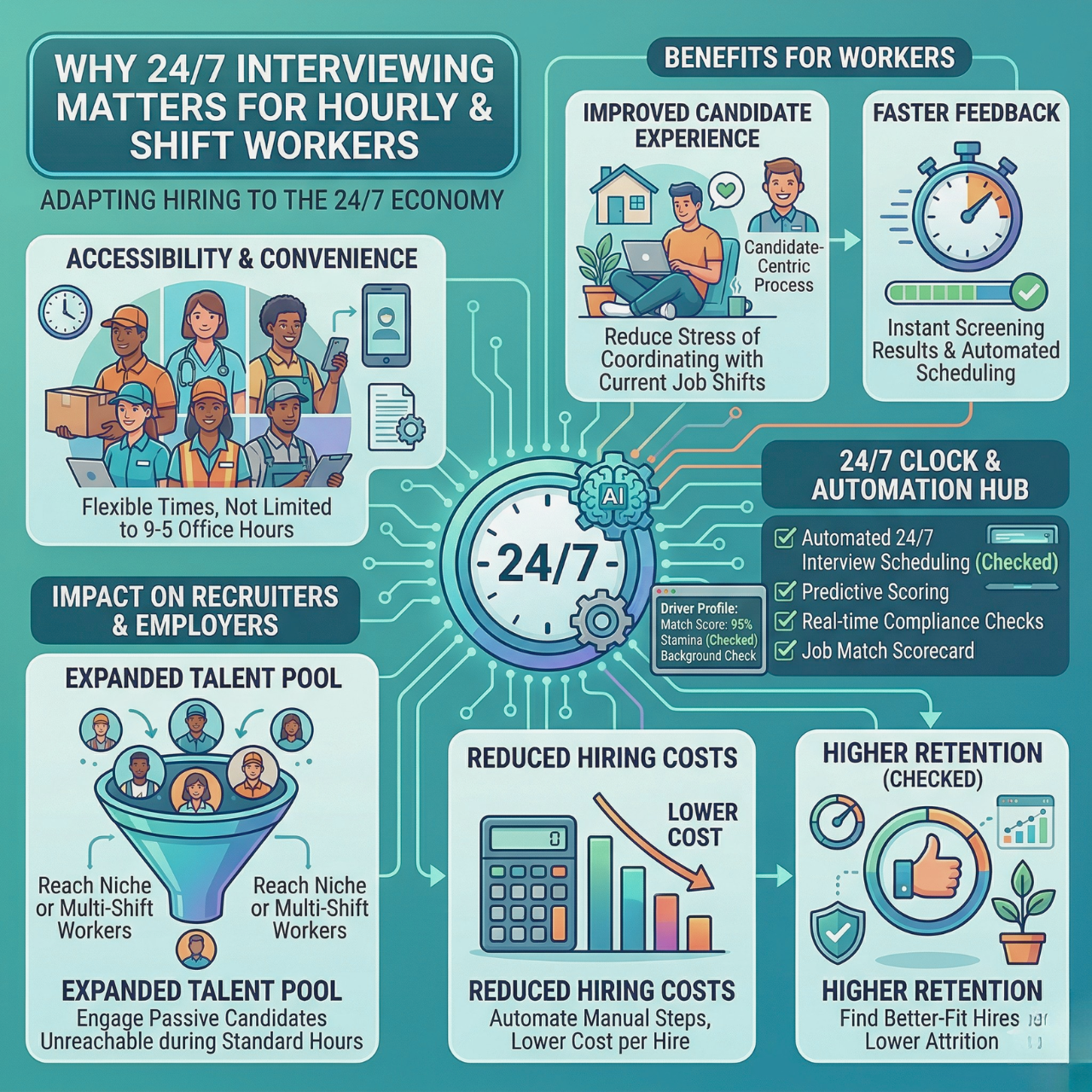
This keeps candidates engaged and reduces "No Shows" for interviews. You can offer 24/7 AI pre-screening interviews that fit candidates’ schedules.
This flexibility improves their experience and speeds up your hiring. Personal touches by AI help build positive candidate relationships, showing respect and professionalism even in a digital process.
Expanding Use Cases for AI
AI is no longer limited to resume screening or scheduling. Its role is growing into areas like predictive workforce planning, video interviews, and immersive skill assessments. These uses give you deeper insights into candidates before human interviews.
For example, AI-driven video platforms analyze speech and behavior to gauge communication skills. Predictive tools forecast hiring needs based on business trends. This helps you plan ahead. These new AI tools also increase fairness by reducing unconscious bias in early hiring stages.
Turning AI Insights Into Better Hires
AI in hiring streamlines screening, interviews, and follow-ups so your team moves faster with fewer manual tasks. When used well, it improves efficiency, consistency, and decision quality while helping reduce bias across each stage of the funnel.
With HRMLESS, AI-driven screening, scoring, and scheduling come together in a single workflow that surfaces stronger shortlists, shortens time-to-hire, and gives teams clear, data-backed hiring decisions.
Ready to see how AI is used in hiring for your team? Book a demo or connect your ATS for a free audit to explore where automation can deliver the most significant gains in your current processes.
Frequently Asked Questions
How is AI used in hiring today?
AI is used in hiring to automate resume screening, pre-screening assessments, interview scheduling, and candidate follow-ups. It helps teams shortlist candidates faster, reduce manual work, and make more consistent, data-informed decisions. When people ask how is AI used in hiring, these are usually the first touchpoints.
Can AI in hiring really reduce bias?
AI can help reduce bias by standardizing evaluations, removing identifying details, and applying the same criteria to every candidate. However, it does not remove bias completely, so companies still need regular audits, clear policies, and human oversight to keep the process fair.
What parts of the recruitment process can AI automate?
AI can automate resume parsing, candidate scoring, interview scheduling, and routine communication such as reminders and status updates. It can also support video interview analysis and predictive analytics for performance and retention, giving teams deeper insight before making final decisions.
Will AI replace human recruiters?
AI is designed to support recruiters, not replace them. It takes over repetitive tasks so recruiters can focus on relationship-building, strategic decisions, and final hiring choices that still require human judgment and context.
How can companies start using AI in hiring safely and effectively?
Companies should begin with clear goals, such as reducing time-to-hire or improving candidate experience. From there, they can pilot AI tools on a limited set of roles, monitor outcomes, review for fairness and compliance, and adjust processes before scaling more broadly across the hiring workflow.
Featured

Subscribe to ournewsletter
Related posts
Explore the world of photography with our curated selection of
portfolio websites that showcase creativity and innovation.