

How AI Helps in Recruitment: Faster Hiring, Better Matches
Learn how AI helps in recruitment with faster screening, smarter matching, and automated scheduling to reduce drop-off and improve hiring quality.

If you’re wondering how AI helps in recruitment, it comes down to removing the slow, manual steps that drag hiring out. Resume overload, calendar back-and-forth, and inconsistent screening can stall teams and frustrate candidates.
HRMLESS helps automate pre-screening, scoring, and scheduling so you can move faster without losing quality. That means fewer bottlenecks, less ghosting, and more time for real conversations with top candidates.
In this guide, you’ll see how AI supports sourcing, resume screening, job matching, candidate experience, and fair evaluation. You’ll also learn where automation saves the most time and how teams use data to make smarter hiring decisions.
AI-Powered Candidate Sourcing
AI finds the right candidates faster, and honestly, with more precision. It crunches huge piles of data so you can zero in on the best talent out there. The tech even targets passive candidates; those who aren’t job hunting but fit your needs perfectly. That’s a game changer.
Automated Resume Screening
AI scans resumes in seconds. You don’t have to spend hours combing through stacks anymore. It picks out the skills, experience, and qualifications that actually match your job description. Only the most relevant resumes land on your desk.
AI-powered screening helps reduce bias by scoring candidates on real data, not just gut feelings. That means hiring decisions get fairer and more consistent.
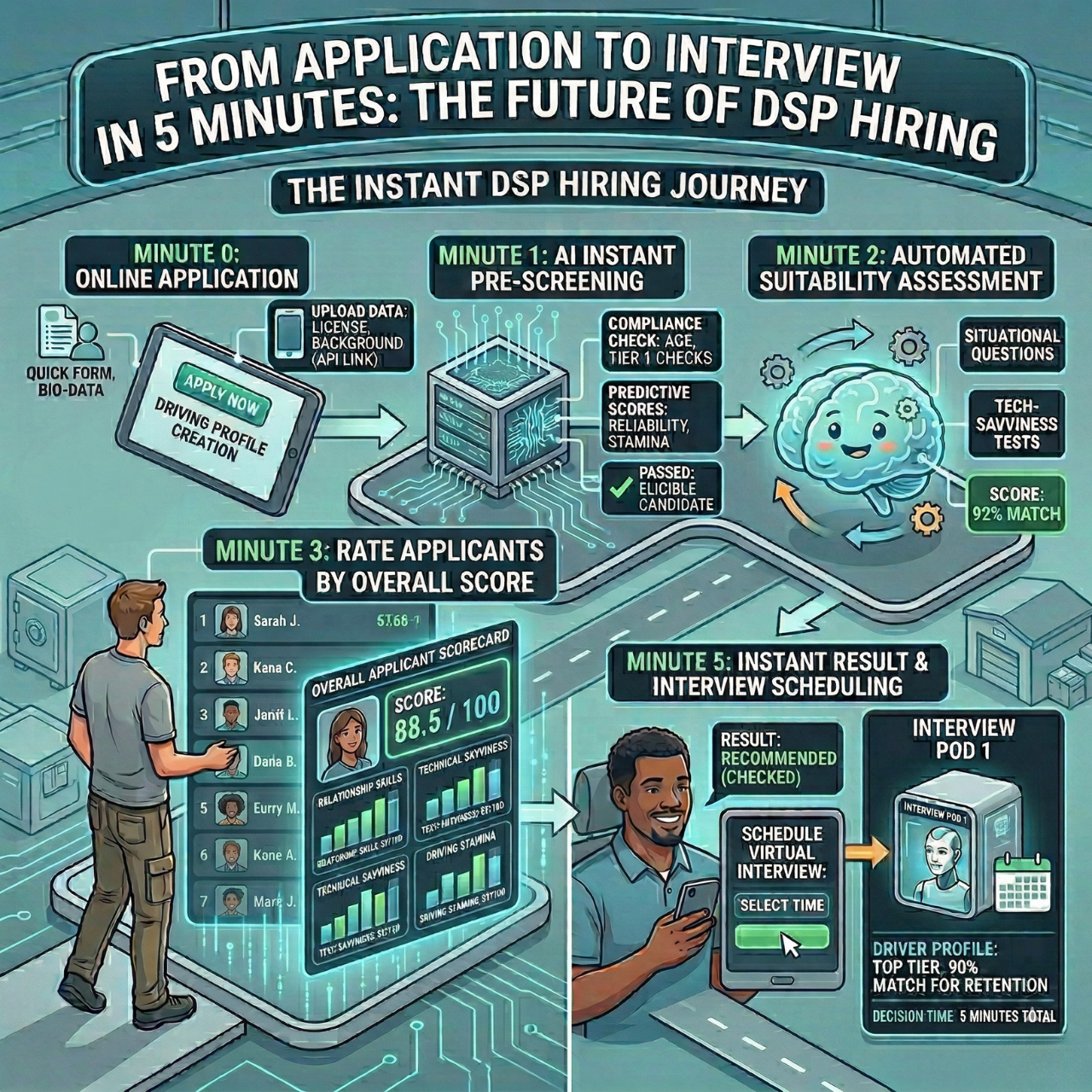
Automated screening connects straight to AI interviews, moving candidates from resume to assessment without unnecessary delays.
Intelligent Job Matching
AI matches candidates to jobs using smart algorithms. It compares skills, past roles, and even career goals with your open positions.
This goes beyond basic keywords. AI looks for patterns in the data that most of us would probably miss. You get personalized recommendations for each role. That means you can focus on candidates AI thinks are the best fit.
Passive Candidate Identification
Not every great candidate is actively applying. AI digs through multiple databases and social networks to find these passive gems.
The system spots people with the right skills and backgrounds for your roles. It can even guess who might be open to new opportunities, based on their activity and engagement.
By targeting passive candidates, you grow your talent pool without extra sourcing headaches. AI tools automate outreach and keep candidates engaged, cutting down on ghosting.
Enhancing Candidate Experience
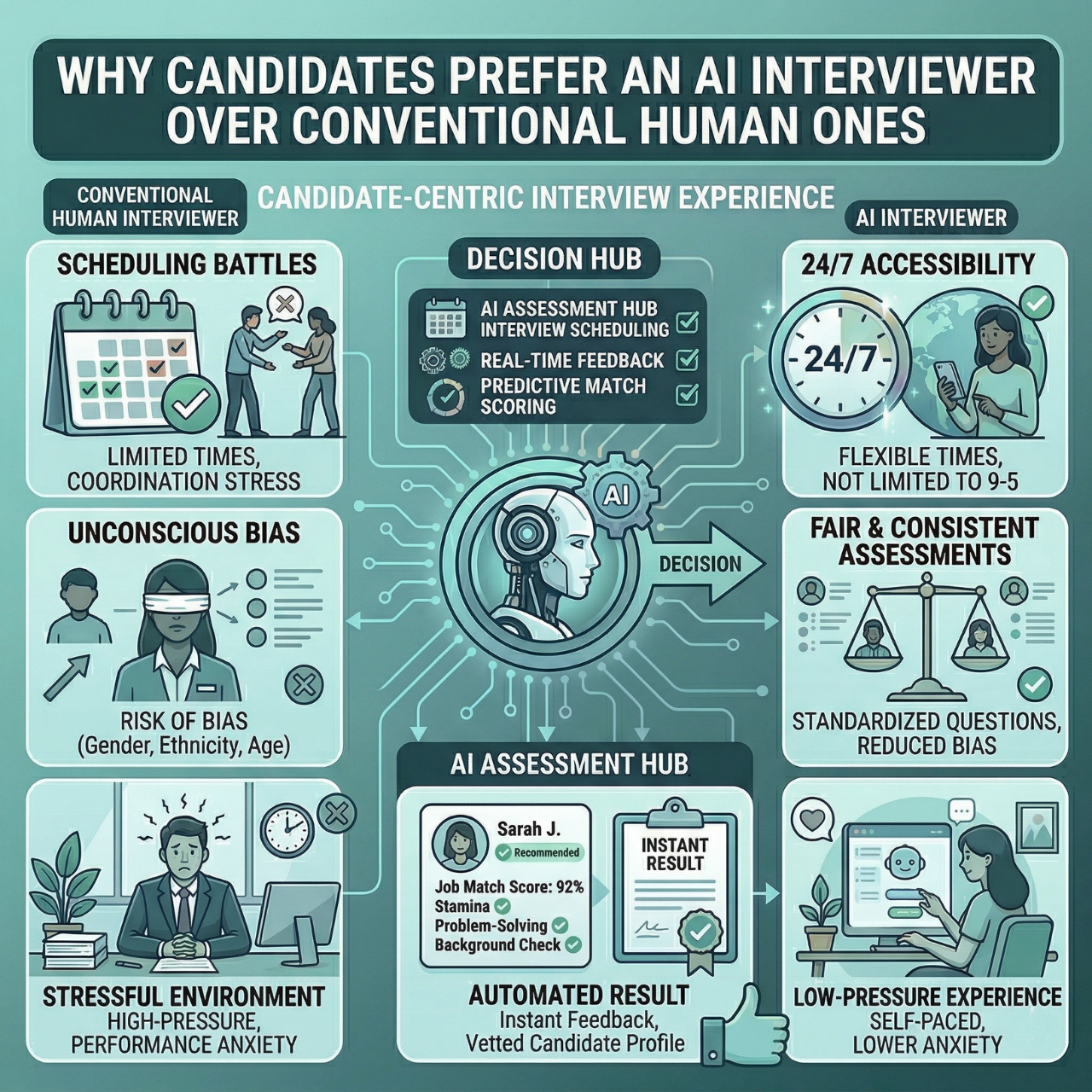
AI makes the hiring process faster and less confusing for candidates. It keeps them in the loop, answers their questions right away, and makes applying less of a pain.
These tweaks make candidates feel respected and engaged, which, let’s be honest, is rare in hiring.
Personalized Communication
AI helps you send messages that actually feel personal and arrive at the right time. Instead of boring, generic emails, AI tools tweak the wording based on where someone is in the process.
Automated reminders for interviews and updates help cut down on no-shows and confusion. Addressing candidates by name and following up quickly makes a bigger difference than you’d think.
You can schedule automated SMS and email nudges to keep candidates moving through the pipeline. This keeps things rolling without making your team work overtime.
AI-Powered Chatbots
AI chatbots answer candidate questions instantly, any time of day. No more waiting around for a reply from a human.
Chatbots guide applicants through requirements and next steps. They also handle boring stuff like scheduling interviews or collecting documents.
This saves recruiters time and gives candidates the info they need, right when they need it. Chatbots make the whole process smoother and more responsive.
Streamlined Application Processes
AI guides candidates through forms and screens them automatically. It even pre-fills info when possible, which cuts down on errors and wasted time.
Unqualified candidates get filtered out early, so only the best move forward. That speeds up decisions and keeps things from piling up. Automated interview booking and scoring help you spot top talent quickly. The whole process just feels easier for everyone involved.
Bias Reduction and Fair Hiring
AI tools help you build fairer hiring processes by focusing on objective data and consistent methods. That means fewer human errors and less chance for unconscious bias to sneak in.
Blind Screening Techniques
Blind screening removes stuff like names, gender, or age from applications. You see only the skills and qualifications.
AI handles this automatically. The software scans and scores applicants without showing identity details, lowering the risk of bias sneaking in.
AI-driven pre-screening hides identifying info while highlighting what matters. You can actually trust that your decisions are based on merit.
Blind screening also speeds up early hiring steps by filtering out candidates who don’t meet minimum criteria. It’s a win-win for time and fairness.
Consistent Evaluation Criteria
With AI, you set clear rules for scoring and comparing candidates. Everyone’s judged on the same standards—no favorites.
You pick the skills, experience, or answers that matter most. AI screens and ranks candidates based on those, not someone’s hunch.
This cuts down on costly mistakes caused by bias or “gut feeling.” It’s fair whether you’re hiring five or five hundred people. Consistent evaluation means everyone gets the same shot, and your team gets real data to make smarter choices.
Data-Driven Decision Making
When you use precise data, your hiring decisions get sharper. You can actually predict who’ll succeed, using clear, measurable tools instead of just guessing.
Predictive Analytics for Hiring
Predictive analytics looks at past hiring data to spot candidates most likely to succeed in a role. It breaks down traits, experience, and performance to score applicants objectively.
Predictive tools help you spend less time on resumes that don’t fit. You can focus on candidates with the highest potential.
Key benefits include:
- Forecasting job fit before interviews
- Lowering turnover by picking candidates who actually match the role
- Speeding up screening with data-backed scores
Performance Assessment Tools
Performance assessment tools give you clear, objective ways to measure skills and job readiness. They automate tests, simulations, and AI-driven interviews for consistent results.
You can evaluate technical skills, problem-solving, and even cultural fit without relying on a hunch. Candidates do assessments on their own time, so you get data you can actually compare.
Benefits you get:
- Automated pre-screening saves valuable time
- Standardized evaluation reduces bias
- Easy-to-understand scores support quick decisions
Interview Automation
Automating interviews saves time and keeps candidates engaged. You can screen more people, more fairly, and way faster. Clear data helps you make better decisions without extra work. It’s a relief, honestly.
Virtual Interviews with AI
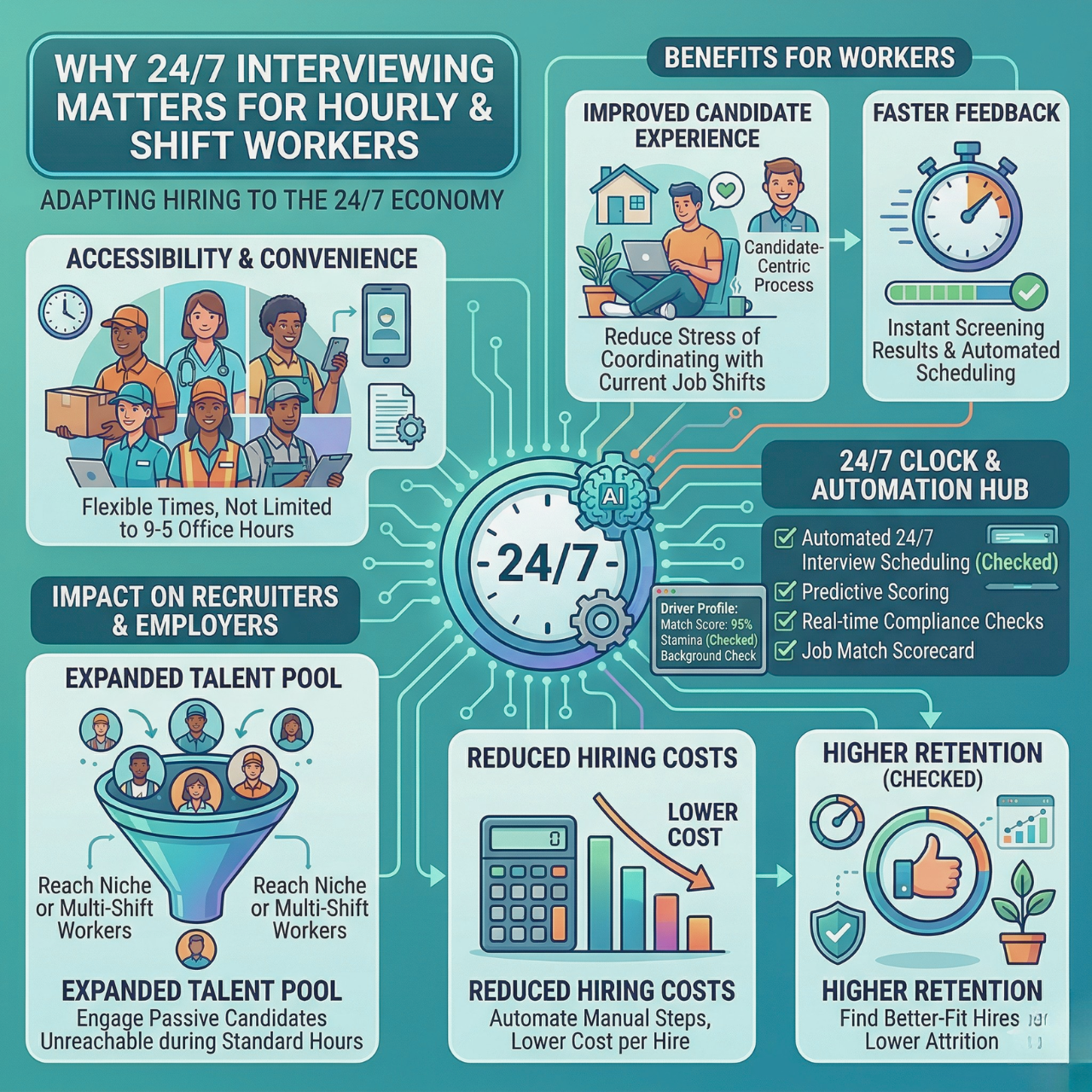
AI-powered virtual interviews let candidates complete screening whenever it works for them. They answer pre-set questions that measure skills and fit.
AI scores each response for consistency and relevance, so you can spot who’s actually qualified. Everyone gets the same criteria, so bias doesn’t creep in.
No more scheduling headaches, as candidates do interviews on their own time. Smart scoring and filtering surface top talent, saving you hours of manual review.
Automated Interview Scheduling
Scheduling interviews by hand just slows everything down. Automated tools let candidates pick times that work for them from your available slots.
You cut down on endless email threads and mismatched bookings. Automated platforms send reminders via SMS or email, which helps cut no-shows by up to 50%.
By automating scheduling, your team can focus on interviewing instead of logistics. No more double-bookings or missed appointments.
Recruitment Workflow Optimization
Optimizing your recruitment workflow means less manual work and smoother connections between your tools. That helps you move faster and keeps candidates engaged without extra hassle.
AI-Driven Task Automation
AI takes care of repetitive tasks like screening resumes, scoring candidates, and scheduling interviews. You get to focus on actually talking to the best applicants.
Automated pre-screening quickly filters out unqualified candidates. Scoring ranks applicants based on skills and experience.
Scheduling tools send invites and reminders, cutting no-shows by up to 50%. Use AI-powered messaging to keep candidates in the loop instantly through SMS or email.
It nudges them to complete steps, so you see less ghosting. Automation saves hours per hire by managing these tasks. You get faster, more consistent results and don’t miss out on top talent.
Integration with HR Platforms
Your recruitment process really hits its stride when AI tools fit right in with what you already use.
These tools integrate easily with ATS (Applicant Tracking Systems) and HRIS (Human Resource Information Systems). Candidate data just flows straight through, so you don’t have to deal with annoying data entry errors or those little delays that always pop up.
The integration keeps your hiring pipeline synced from job posting to onboarding. You can track progress in real time and spot bottlenecks through dashboards.
This kind of insight lets you tweak your hiring strategies fast, before things get messy. Seamless connections also support more personalized candidate communication across different channels.
Automated updates keep candidates in the loop and the process moving—without piling more work on your plate.
Cost and Time Efficiency
AI hiring software automates so many of the tasks that slow down recruitment. You can actually cut your time-to-hirefrom weeks to just days. Less time wasted sorting resumes or playing calendar tag for interviews.
Manual screening racks up costs fast. AI tools can slash screening costs by up to 75%, letting you save money while handling more candidates at once.
Here’s what automation can do for you:
- Automated Pre-Screening: Candidates complete interviews whenever works for them, so you’re not left waiting.
- Smart Scoring: Only the best candidates rise to the top, which saves you a ton of review time.
- Scheduling Automation: Invites only engaged candidates to book, so you see fewer no-shows.
You can claw back around 2.7 hours per hire by ditching manual scheduling and endless follow-ups.
Track key metrics like cost-per-hire, time-to-fill, and candidate drop-off in real time. Spotting bottlenecks gets a lot easier.
These tools play nicely with your existing ATS and HRIS systems. No extra headaches for you—just smoother, quicker hiring.
When you automate the routine stuff, your team finally gets to focus on the human side of recruitment. That’s where you really get the best mix of speed and quality.
Improving Diversity in Recruitment
AI helps take human bias out of hiring by zeroing in on skills and experience, not personal details. That means everyone gets a fairer shot. You can automate pre-screening, scoring, and scheduling so every applicant gets the same shake.
Your hiring process grows more inclusive through automated candidate engagement and unbiased AI scoring. You’ll spend less time wading through applications and more time with quality candidates from all backgrounds.
AI tools also scan your job ads for language that might accidentally turn people away. Swapping out those words helps you pull in a wider range of applicants.
With AI-driven analytics, you can track diversity metrics over time. This lets you see how well your recruiting strategies are working—and where you could do better.
Key benefits of using AI for diversity:
- Reduces unconscious bias during screening
- Helps write inclusive job ads
- Provides real-time diversity tracking
- Engages candidates fairly across channels
You can put these steps in place without piling on extra work. The result? Faster, more effective hiring—and a more diverse team that actually reflects your values.
Future Trends in AI Recruitment
AI recruitment is leaning hard into faster, fairer, and more personalized hiring. It’s not just about resume screening anymore.
Now, AI digs into data to predict which candidates might actually thrive and matches skills to job needs with surprising precision.
Companies are already using AI to automate pre-screening and interview scheduling. That means less wasted time and fewer no-shows—since only genuinely interested candidates get invited to interview.
Some of the trends popping up lately include:
- Hyper-personalized interactions: AI tailors communication to each candidate’s style and preferences.
- Immersive assessments: Virtual and video interviews are getting smarter, making it way easier to evaluate people beyond the usual checklist.
- Ethical AI: More safeguards are coming in to reduce bias and try to make hiring fairer.
AI is on track to fully automate big chunks of the hiring process soon. You’ll probably fill roles faster, but without sacrificing candidate quality—at least, that’s the hope.
So, what does this all mean for you?
Trend
Benefit
Automated Scheduling
Save time and reduce missed interviews
AI-Driven Candidate Scoring
Focus only on top applicants
Multi-channel Engagement
Keep candidates interested and responsive
Modern recruiting platforms work around the clock to tame hiring chaos. You can move quickly, stay efficient, and actually make the candidate experience better.
Looking ahead, voice engagement and real-time analytics are about to offer even deeper insights. You’ll spot bottlenecks and fix things almost instantly, which just makes everything run smoother and a little less stressful.
Hire Faster Without Losing Great Candidates
When hiring drags on, good candidates drop out, and recruiters get buried in repetitive work. Automation helps reduce those delays by speeding up screening, scoring, and scheduling while keeping the evaluation more consistent.
HRMLESS supports a smoother process end-to-end, so you spend less time on admin work and more time with qualified people. The payoff is faster decisions, fewer missed interviews, and stronger candidate follow-through.
Ready to cut delays and reduce drop-off? Book a Demo to see how automation can tighten your workflow and keep candidates engaged.
Frequently Asked Questions
How AI helps in recruitment without replacing recruiters?
AI handles high-volume tasks like resume screening, interview scheduling, and candidate updates. Recruiters stay focused on evaluating fit, building trust, and closing top candidates.
What hiring tasks should you automate first?
Start with resume screening, pre-screening questions, and scheduling. These are usually the biggest bottlenecks and the fastest wins for reducing time-to-hire and candidate drop-off.
Can AI reduce bias in hiring?
AI can help minimize bias by using consistent scoring rules and options like blind screening. Results still depend on the data you use and how you set up evaluation criteria.
How does AI improve candidate experience?
Candidates get faster updates, clearer next steps, and quicker scheduling. That reduces confusion and keeps qualified candidates engaged through the process.
Will AI work with an ATS or HRIS?
Most AI hiring software integrates with an ATS (Applicant Tracking System) or HRIS (Human Resource Information System). This helps keep candidate data synced and reduces manual data entry.
Featured

Subscribe to ournewsletter
Related posts
Explore the world of photography with our curated selection of
portfolio websites that showcase creativity and innovation.