

How Conversational AI Helps Hiring Teams Hire Faster

Hiring teams are under pressure to move fast without sacrificing quality. Inboxes overflow, scheduling drags on, and candidates drop off when responses take too long. This is where understanding how conversational AI helps hiring becomes critical for teams that want to compete.
HRMLESS helps reduce these bottlenecks by automating early-stage conversations, screening, and interview scheduling. The result is faster response times, less manual work, and a smoother candidate experience without removing human judgment.
In this guide, you’ll learn how conversational AI works in hiring, where it delivers the most value, and how teams are using it to hire faster while keeping candidates engaged.
What Is Conversational AI in Hiring
Conversational AI relies on natural language processing and machine learning to interact with job candidates by text or voice. These systems screen applicants, answer questions, and schedule interviews, learning from every interaction to get better over time.
Key Features of Conversational AI Solutions
Conversational AI platforms use natural language processing to understand what candidates say or type. This lets the system respond in ways that feel surprisingly human.
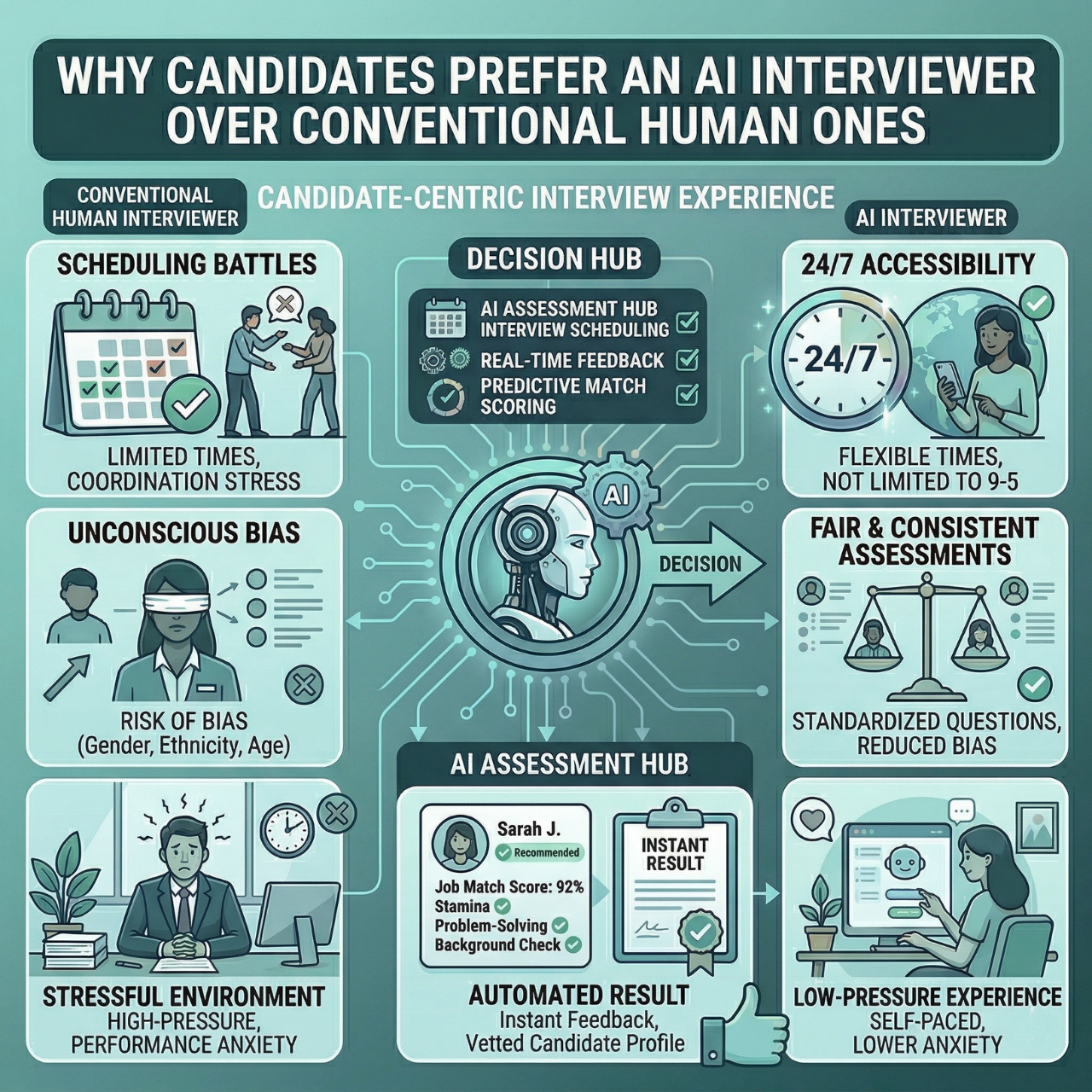
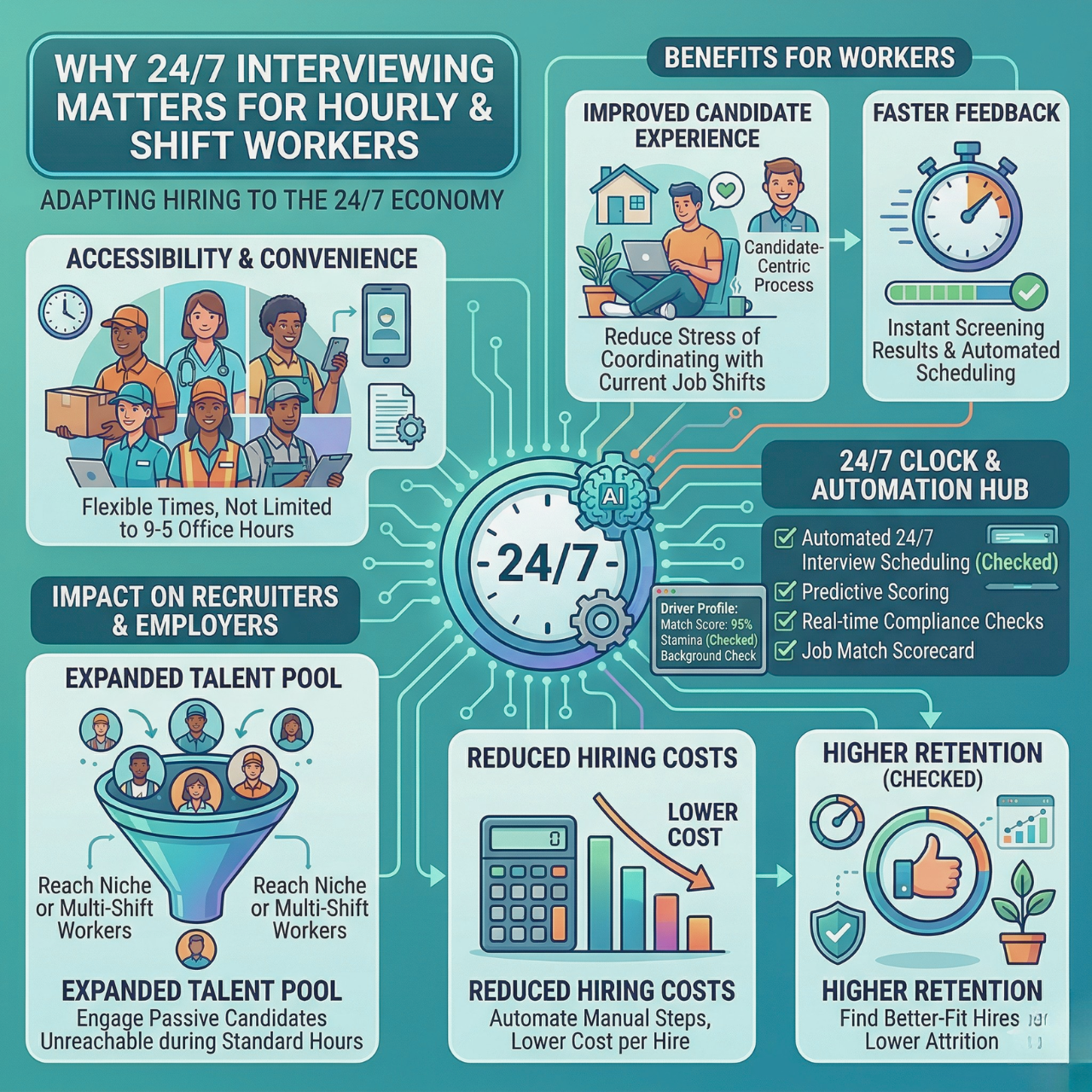
These tools never take breaks. Candidates can reach out at any hour, even late at night or on weekends.
Core capabilities include:
- Real-time conversation through text or voice
- Automatic candidate screening based on qualifications
- Interview scheduling (no endless email chains)
- Instant answers to FAQs
- Integration with your existing hiring software
The system collects data from every chat. It uses this to spot patterns and offer smarter recommendations. You can customize the AI’s tone to fit your company’s brand and hiring needs.
How Conversational AI Differs from Traditional Hiring Tools
Traditional applicant tracking systems just store and organize candidate info. Recruiters still have to manually review applications and contact candidates. That’s slow, and you can only connect with so many people at once.
Conversational AI actually engages with candidates. It can have personalized conversations with hundreds of applicants at once. Traditional tools wait for recruiters; conversational AI just gets to work.
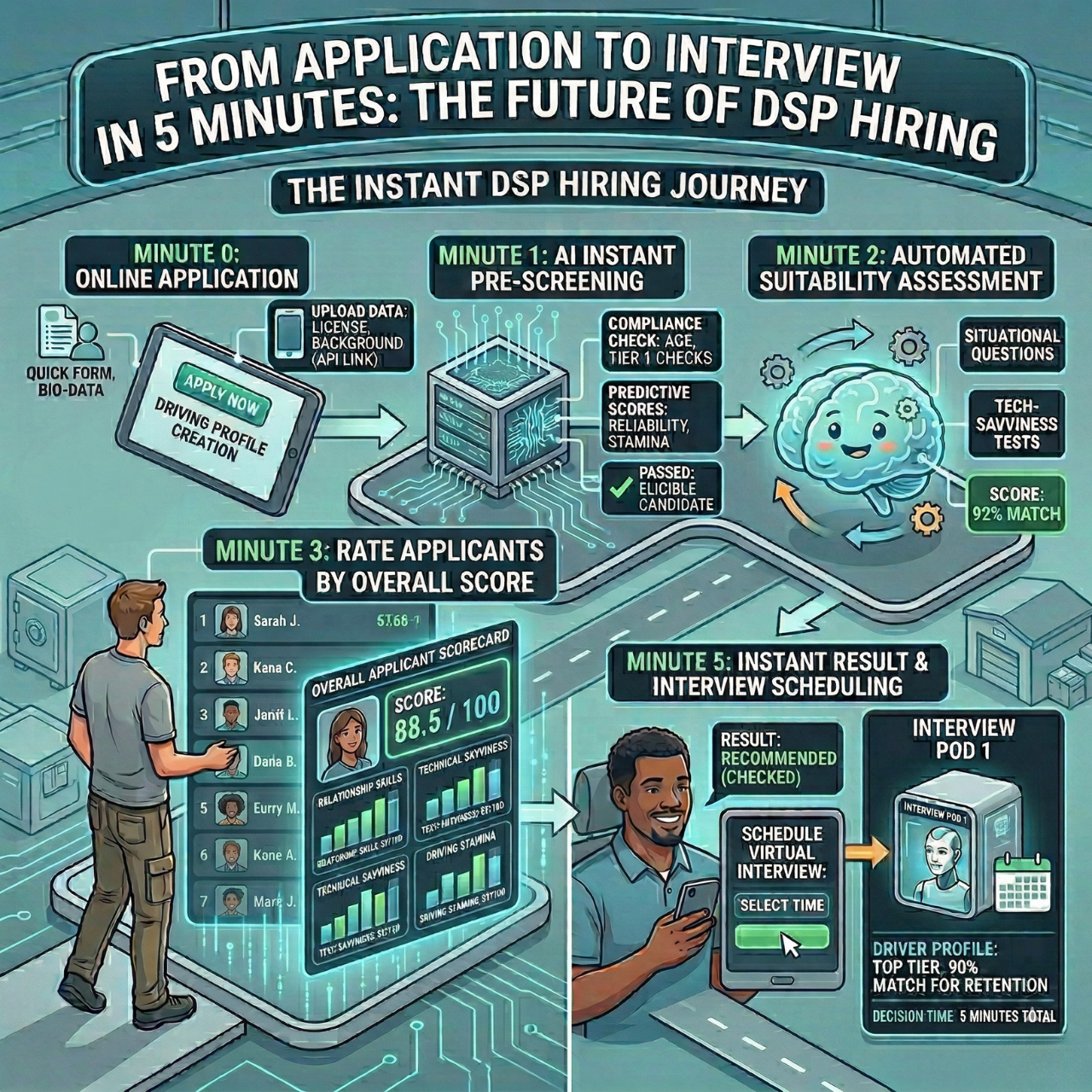
Speed is the big difference. Traditional screening and scheduling can take days. Conversational AI does it in minutes. There’s also availability. Human recruiters have office hours. AI doesn’t. That’s a big deal for candidates applying at night or on weekends.
Types of Conversational AI Used in Recruitment
Chatbots show up on career pages and job postings. They answer basic questions about roles, company culture, and application status. These text-based assistants handle the simple stuff.
Voice assistants handle phone screenings. Candidates answer by speaking, and the AI evaluates their responses. This works especially well for high-volume hiring.
AI interview platforms go deeper, asking follow-up questions based on previous answers. They analyze not just what candidates say, but how they say it.
Smart scheduling assistants handle the calendar chaos. They check everyone’s schedules and automatically send confirmations.
Most companies mix and match. Maybe you use a chatbot for first contact, then move promising candidates to an AI interview platform.
Benefits of Conversational AI for the Hiring Process
Conversational AI isn’t just a buzzword. It speeds up screening, keeps applicants more engaged, and helps you make fairer hiring choices.
Faster Candidate Screening
Conversational AI slashes the time you spend on early screening. Instead of slogging through hundreds of applications, the AI jumps in and asks candidates about their experience, skills, and availability right away.
You can screen candidates 24/7. The system grabs their answers, checks them against your requirements, and flags the best ones for you to review.
You get to focus on interviewing top candidates while the AI manages the initial filtering. Some companies say they’ve cut their screening time in half or more. The AI even schedules interviews automatically by checking everyone’s calendars. No more endless email chains.
Enhanced Candidate Engagement
Conversational AI keeps candidates in the loop by answering their questions instantly. No more losing great applicants because they waited days for basic info.
The tech personalizes the experience by using the candidate’s name, referencing their background, and sending timely updates about what’s next.
Candidates love the quick feedback and clear communication. That keeps them interested, even if they’re considering other offers.
The AI can answer common questions about culture, benefits, and roles, so your team isn’t stuck replying to the same emails over and over.
When candidates have smooth, responsive interactions from the start, your employer brand gets a boost.
Reducing Human Bias in Recruitment
Conversational AI treats every candidate the same, using the same criteria and questions. It focuses on skills, experience, and qualifications, not on details that might bias a human recruiter.
You can set the AI to ignore information that often leads to bias, such as names that suggest gender or ethnicity. It just looks at what matters for the job.
The tech doesn’t get tired or cranky. Each candidate gets a fair shot, based on your standards. That levels the playing field for people who might face unconscious bias elsewhere.
You’re still making the final call, but now you’re choosing from a pool selected for merit, not first impressions.
Improving Recruiter Productivity
Conversational AI picks up the time-consuming admin work and early candidate interactions. That frees recruiters to focus on strategy and building relationships with top talent.
Automating Repetitive Tasks
Conversational AI handles routine tasks that eat up your day. It answers the same candidate questions over and over, without getting bored or making mistakes.
It can read and sort resumes in seconds. Candidate records update automatically, and status updates go out without you having to do a thing.
You can set up the AI to schedule interviews by checking calendars and finding open slots. It also sends reminders and follows up after interviews.
Common tasks AI handles:
- Replying to basic candidate questions
- Updating application statuses
- Sending interview reminders
- Collecting documents
- Pre-screening for basic requirements
With this automation, you spend less time on email and data entry. More time for evaluating the people who matter.
Streamlining Initial Interviews
Conversational AI runs first-round screenings with candidates any time, day or night. These AI-powered interviews ask about experience, skills, and availability. The system records and analyzes answers, searching for keywords and checking if someone fits the role.
You get a summary of each conversation with the highlights. The AI ranks candidates based on your criteria, so you know who to prioritize. Screening happens instantly, so you cut your time-to-fill. Candidates get immediate engagement, and you only spend time interviewing the real contenders.
Enhancing the Candidate Experience
Conversational AI makes applying for jobs less of a headache. It offers instant help and tailored responses that help people feel valued.
24/7 Applicant Support
AI chatbots answer questions any time, no waiting for business hours. Candidates get quick access to job requirements, company culture, and application status.
This always-on support means less candidate frustration. If someone applies at midnight, they still get answers. The chatbot can cover benefits, salary ranges, and next steps, so your team doesn’t have to.
HR teams benefit too. They spend less time on repeat questions and more time on meaningful work. Candidates get faster responses, which keeps them interested.
Personalized Communication
AI systems look at each candidate’s skills, experience, and preferences to offer customized interactions. The tech matches people with jobs that fit, instead of blasting out generic replies.
These systems use the candidate’s name and reference details from their application. That personal touch goes a long way.
The AI also tweaks its style based on where someone is in the process. Early applicants get role and company info; later-stage candidates get interview details and next steps. It keeps everyone informed without overwhelming them.
Practical Implementation and Success Stories
Adding conversational AI to your hiring process takes some planning. But companies across industries have seen significant improvements.
Steps to Integrate Conversational AI
First, figure out which hiring tasks eat up your time. Think about answering candidate questions, scheduling interviews, or screening applications.
Pick a conversational AI platform that fits your needs and budget. Make sure it connects with your current applicant tracking system. Try it out with a small group before rolling it out everywhere.
Set up your AI assistant with clear scripts and responses. Cover common questions about job requirements, culture, and application status. Train your HR team to monitor AI and make tweaks.
After a month, check the results. Look at metrics like response time, candidate satisfaction, and time saved. Adjust the AI’s responses based on feedback from both candidates and your team.
Hire Faster Without Burning Out Your Team
Slow screening, missed follow-ups, and constant scheduling back-and-forth hold hiring teams back. Conversational AI removes these friction points by automating early conversations, speeding up decisions, and keeping candidates engaged from the start.
HRMLESS supports hiring teams by handling repetitive tasks while recruiters focus on evaluating talent and building relationships. The result is a faster, more consistent hiring process that does not sacrifice candidate experience.
Ready to reduce delays and candidate drop-off? Book a Demo and see how conversational AI can streamline your hiring workflow.
Frequently Asked Questions
How does conversational AI help hiring teams move faster?
Conversational AI speeds up hiring by automating early interactions like screening, answering questions, and scheduling interviews. Candidates get immediate responses, and recruiters avoid delays caused by manual follow-ups.
What hiring tasks can conversational AI automate?
Conversational AI can handle resume pre-screening, interview scheduling, application status updates, and common candidate questions. This reduces admin work and keeps the hiring process moving.
Does conversational AI replace recruiters?
No. Conversational AI supports recruiters by managing repetitive tasks. Recruiters still make final decisions, conduct deeper interviews, and build relationships with candidates.
How conversational AI improves candidate experience?
Candidates receive instant answers, clear next steps, and consistent communication at any time. This reduces frustration and keeps qualified candidates engaged throughout the process.
Can conversational AI help reduce hiring bias?
Conversational AI applies the same screening criteria to every candidate and focuses on job-related qualifications. When monitored correctly, it helps minimize unconscious bias in early-stage screening.
Is conversational AI suitable for high-volume hiring?
Yes. Conversational AI is especially effective for high-volume roles where recruiters need to screen and schedule large numbers of candidates quickly without sacrificing responsiveness.
How hard is it to add conversational AI to existing hiring systems?
Most conversational AI tools integrate with existing applicant tracking systems. Setup usually starts with a pilot, followed by adjustments based on recruiter and candidate feedback.
What results can hiring teams expect from conversational AI?
Teams often see faster time-to-hire, fewer candidate drop-offs, and improved recruiter productivity. Candidates benefit from quicker responses and a more transparent hiring process.
Featured

Subscribe to ournewsletter
Related posts
Explore the world of photography with our curated selection of
portfolio websites that showcase creativity and innovation.