

How Many Companies Use AI for Hiring? What’s Really Happening
Learn how many companies use AI for hiring and where it shows up in recruiting. See common uses, benefits, risks, and how to add AI responsibly.
If you’re asking how many companies use AI for hiring, the real challenge is not adoption; it’s overload. Recruiters are buried in resumes, emails, scheduling, and follow-ups, all while trying to move fast and avoid mistakes.
AI hiring software helps reduce that strain by handling repetitive coordination and early-stage tasks. HRMLESS supports this shift by automating screening support and scheduling, so teams spend less time managing logistics and more time making informed hiring decisions.
This guide explains where AI shows up in hiring today, what problems it actually solves, and where human judgment still matters most. The goal is clarity, not hype, so teams can decide how AI fits into their process responsibly.
Where AI Actually Fits in the Hiring Process
AI has become part of the everyday recruiting infrastructure. Many hiring platforms now include AI-driven features by default, even when companies don’t explicitly label their process as “AI-powered.”
What matters most isn’t whether a company uses AI at all, but where AI fits in the hiring funnel and how much influence it has over decisions. Some organizations use AI strictly for logistics, while others rely on it to assist with screening, matching, or assessments.
Understanding these differences helps employers adopt AI responsibly, and helps candidates understand what’s happening behind the scenes.
Current Trends in AI-Based Recruitment
AI is used most in the early, high-volume stages
Organizations tend to apply AI where it offers immediate efficiency without replacing human judgment. Common use cases include:
- Resume parsing and basic matching
- Interview scheduling and calendar coordination
- Automated candidate updates and reminders
These steps reduce delays and bottlenecks without determining who ultimately gets hired.
Generative AI is changing recruiter workflows
Beyond screening, AI is increasingly used to support recruiters themselves, helping draft job descriptions, summarize candidate profiles, and streamline outreach. This kind of AI enhances productivity without directly influencing hiring outcomes.
Human oversight remains central
Even as automation expands, most hiring teams keep humans accountable for final decisions. This approach reflects growing awareness of legal, ethical, and reputational risks tied to fully automated decision-making.
Industries Leading AI Implementation
Across industries, adoption is driven by operational pressure, not experimentation. AI supports speed and consistency when hiring demands outpace manual processes. Take a look:
Technology
Tech teams face fast growth, competitive talent markets, and specialized skill requirements. AI helps manage resume volume, surface relevant skills, and keep hiring pipelines moving without slowing teams down.
Finance and Healthcare
These industries adopt AI more cautiously due to compliance, data sensitivity, and regulatory oversight. AI is typically used to support coordination and screening while humans retain control over decisions and risk management.
Retail and Manufacturing
High applicant volume and constant scheduling needs make efficiency critical. AI helps organize large candidate pools, automate interview scheduling, and reduce delays during peak hiring periods.
Regional Differences in How AI Is Used
AI adoption looks different around the world, largely due to regulatory environments, not technical capability. In North America, companies are adapting AI hiring tools to meet growing transparency and fairness requirements.
In Europe, strict data protection and AI governance rules shape how recruitment tools are designed and deployed. In other regions, adoption often depends on infrastructure, cost, and access to compliant vendors. These differences influence how AI is used, not whether it’s used at all.
Applications of AI in Recruitment Processes
AI supports modern hiring by streamlining tasks that would otherwise slow teams down.
Resume screening and shortlisting
AI can help organize and surface relevant experience by analyzing resumes at scale. Used responsibly, it improves consistency and reduces manual overload—especially in roles that attract large applicant volumes.
Automated interview scheduling
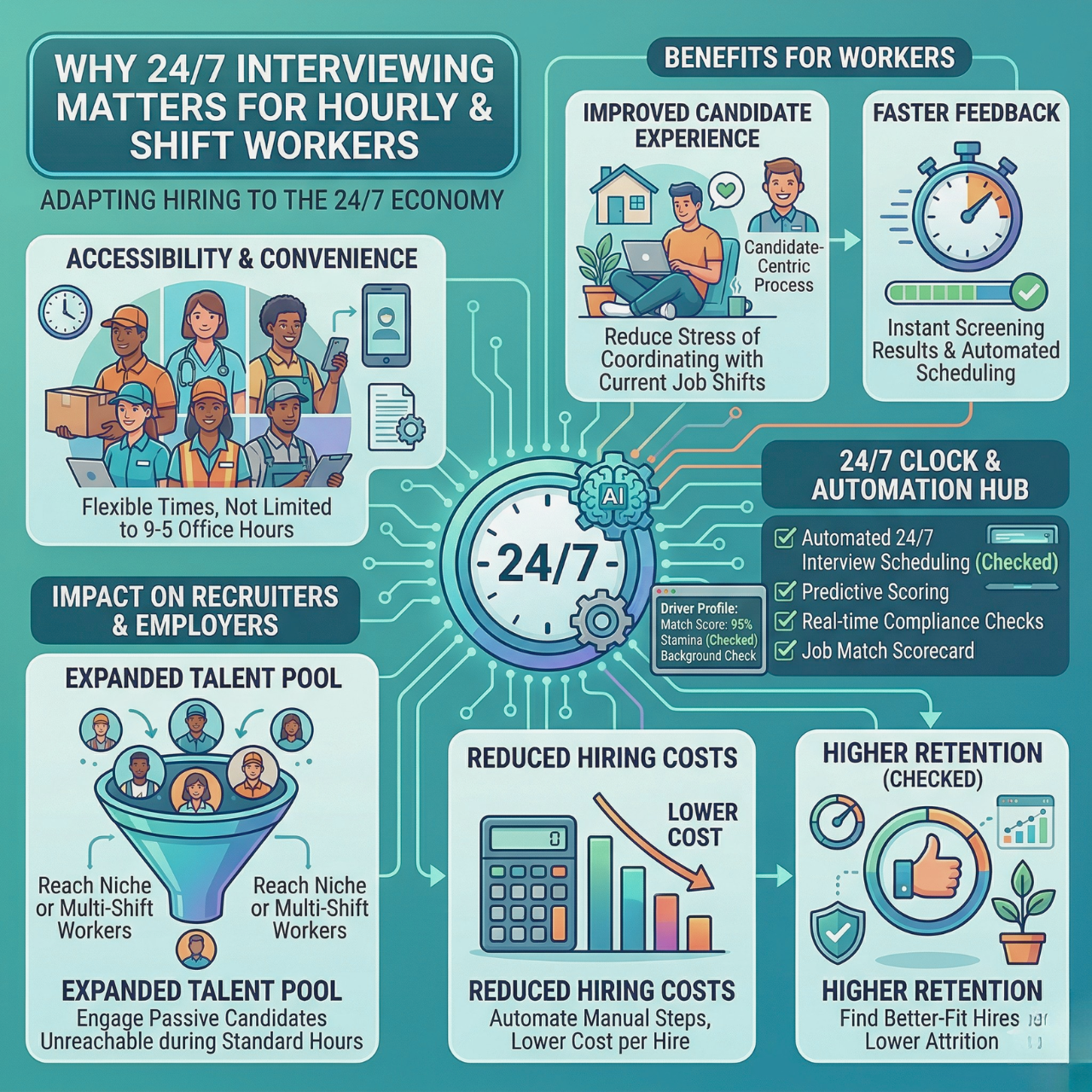
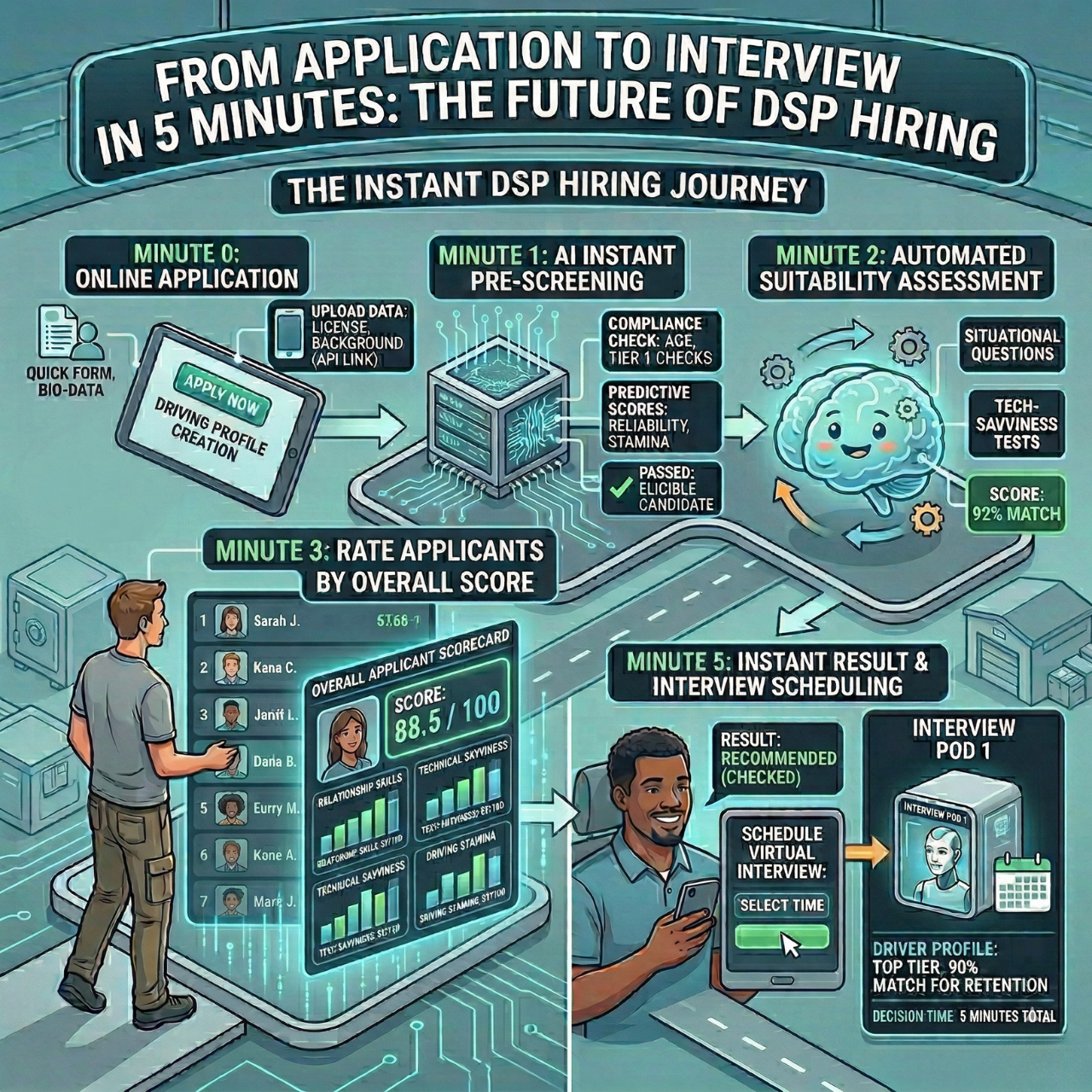
Scheduling tools remove one of recruitment’s biggest friction points. Candidates can select available times, receive confirmations, and get reminders without endless email chains.
Candidate assessment and testing
Some platforms use AI to support skills assessments or structured evaluations. These tools work best when paired with clear job criteria and human review, ensuring relevance and fairness.
Key Benefits of Using AI for Hiring
Efficiency and focus
AI reduces administrative work, allowing recruiters to focus on interviews, evaluation, and relationship-building instead of coordination tasks.
Greater consistency
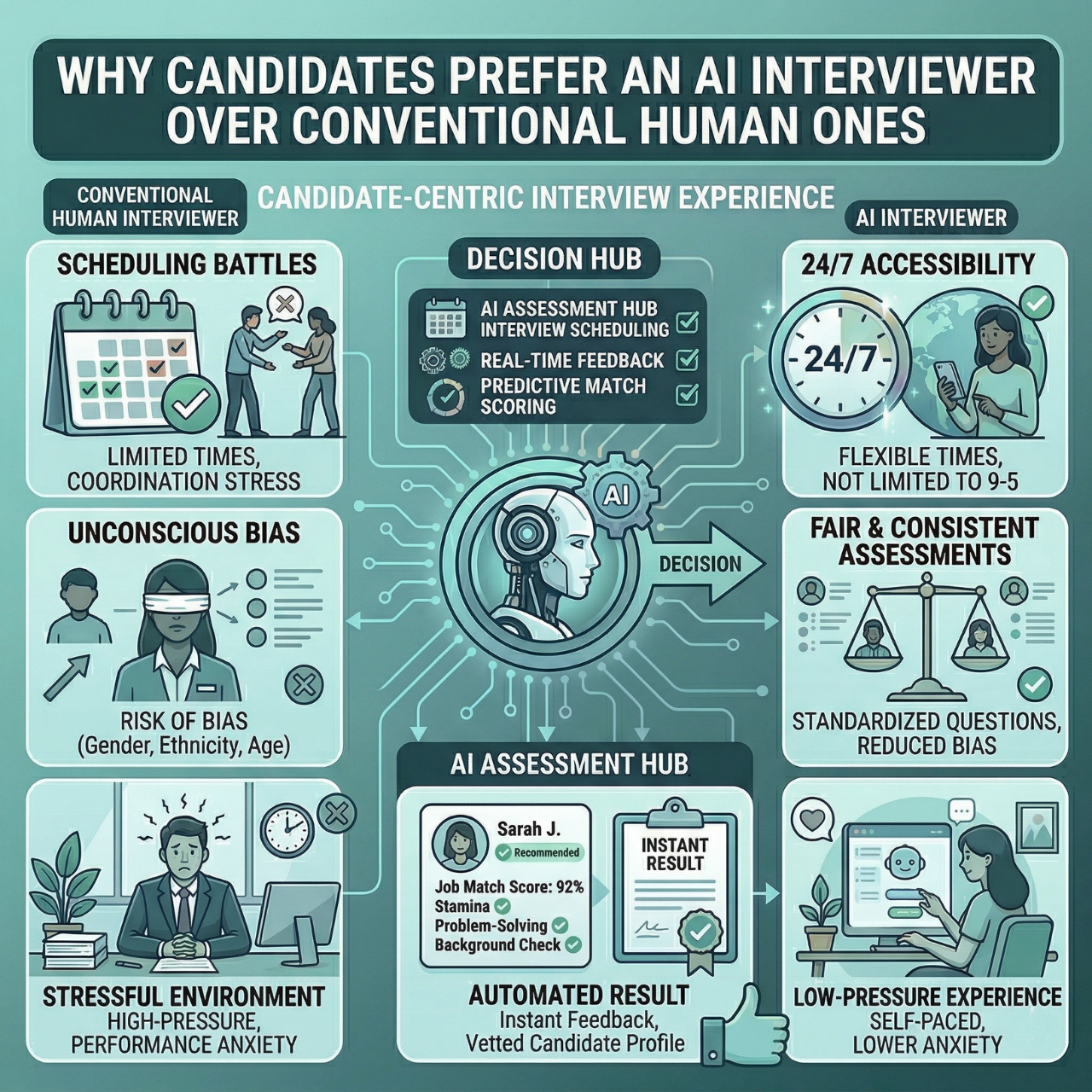
Standardized workflows help ensure candidates are evaluated using the same criteria, reducing randomness and informal bias.
Improved candidate experience
Clear communication, faster responses, and smoother scheduling create a more transparent and respectful hiring process.
Challenges and Concerns in AI-Based Hiring
Data privacy and security
Hiring involves sensitive personal information. AI tools must follow data protection laws and limit access to candidate data through strong security controls and transparent policies.
Risk of algorithmic bias
AI systems reflect the data and assumptions behind them. Without monitoring, they can reinforce existing patterns rather than correct them. Regular testing and human oversight are essential.
Legal and compliance obligations
Hiring regulations vary by region and continue to evolve. Organizations must understand how AI tools interact with employment law, accessibility requirements, and disclosure rules.
Responsible use means documenting decisions, explaining processes, and staying informed about regulatory changes.
AI Recruitment Platforms and System Integration
Modern AI recruitment tools work best when they integrate smoothly with existing systems.
Integration with ATS and HR systems
When AI tools sync with ATS and HRIS platforms, teams gain visibility across the entire hiring process, supporting compliance, reporting, and collaboration.
Analytics without disruption
Well-integrated tools highlight bottlenecks and workflow issues without forcing companies to rebuild their hiring infrastructure.
The Future of AI in Corporate Hiring
AI will continue to expand its role in workflow automation, coordination, and recruiter support. At the same time, regulation and governance will play a bigger role in shaping how AI influences hiring decisions.
The future isn’t about removing humans from hiring; it’s about using AI to support better human decisions.
Hiring Faster Without Adding More Work
Hiring teams are under constant pressure to move faster without sacrificing quality. Manual screening, scheduling delays, and missed follow-ups slow everything down and frustrate both recruiters and candidates.
Used correctly, AI helps remove that operational drag. HRMLESS supports hiring teams by automating time-consuming coordination tasks, helping recruiters stay focused on evaluation, communication, and sound decision-making.
If your team is spending too much time managing logistics instead of hiring, it may be time to simplify the workflow. Book a demo to see how automation can reduce friction and keep hiring moving.
Frequently Asked Questions
How many companies use AI for hiring today?
There is no single number that captures adoption accurately. AI is often embedded inside ATS and recruiting tools, so many companies use it without labeling their process as AI-driven.
What counts as AI in the hiring process?
AI in hiring usually refers to tools that automate or support tasks like resume parsing, interview scheduling, candidate messaging, and screening assistance. It does not mean decisions are made without humans.
Do companies use AI to make final hiring decisions?
Most organizations do not allow AI to make final decisions. AI is typically used for organization and early-stage support, while recruiters and hiring managers remain responsible for evaluations and offers.
Why are companies using AI for hiring at all?
The main driver is workload. AI helps reduce manual tasks, shorten response times, and keep candidates engaged, especially when teams manage high application volume.
Is AI in hiring fair and unbiased?
AI can help improve consistency, but it can also reflect bias if not monitored. Responsible use includes clear criteria, regular reviews, and human oversight at every decision point.
Does AI replace recruiters?
No. AI reduces repetitive coordination work so recruiters can focus on interviews, relationship-building, and judgment-based decisions that technology cannot replace.
How does AI affect the candidate experience?
When used well, AI improves communication, speeds up scheduling, and reduces uncertainty. Poorly implemented tools can feel impersonal, which is why transparency and thoughtful design matter.
Do small companies use AI for hiring, too?
Yes. Many small and mid-sized companies use AI through built-in features in their recruiting software, especially for scheduling and resume organization.
Is AI in hiring regulated?
Regulation varies by region. Employers are responsible for ensuring their AI tools comply with data protection, accessibility, and employment laws.
How should companies decide where AI fits in their hiring process?
Teams should start with pain points like scheduling delays or resume overload. AI works best when it supports efficiency without removing accountability or human judgment.
Featured

Subscribe to ournewsletter
Related posts
Explore the world of photography with our curated selection of
portfolio websites that showcase creativity and innovation.