

What Is AI Interviewing: Its Impact on Hiring Processes

If you are asking what AI interviewing is, you are likely wrestling with slow screening, calendar chaos, and uneven evaluations. AI interviewing streamlines early assessments by scoring video, voice, or text answers with clear criteria. The result is faster decisions, consistent scoring, and fewer bottlenecks.
With HRMLESS, AI interviewing connects to your ATS, runs 24/7 AI interviews, and nudges candidates to reduce no-shows. You get automated pre-screening, skills-based scoring, and instant scheduling so teams move quickly without sacrificing quality. The focus stays on verified skills and role fit.
In this guide, you will learn what AI interviewing is, how it works, and the main platform types. You will also see implementation tips, compliance checkpoints, and future trends to keep your process sharp.
Understanding AI Interviewing
AI interviewing changes how you screen and evaluate candidates by automating many traditional interview tasks. It uses technology to analyze responses quickly and fairly.
Definition of AI Interviewing
AI interviewing is a hiring method where software, not a human, conducts part of the interview process. The AI listens to or reads answers, then scores and ranks candidates based on set criteria.
This system can assess skills, personality traits, and communication styles by analyzing language, tone, and behavior. Its goal is to automate steps like screening, saving you time and reducing human error or unconscious bias.
Using AI interviewing, you can review more applicants faster. Leading platforms offer AI-driven tools that automate scoring and engagement for smoother hiring.
How AI Interviewing Works
AI interviewing works by combining technologies like natural language processing and machine learning. When candidates answer questions by video, text, or voice, AI evaluates content and delivery.
It looks for key skills and traits by analyzing:
- Word choice and sentence structure
- Tone and voice inflection
- Response timing and consistency
AI then provides a score or recommendation based on these factors. You can use AI interviews live or as pre-recorded sessions.
This flexibility lets candidates complete interviews anytime, making scheduling easier while speeding up your hiring pipeline. Many tools integrate with Applicant Tracking Systems (ATS) to keep your workflow smooth.
Types of AI Interviewing Platforms
There are three main types of AI interview platforms you might use:
Type
How It Works
Benefit
Pre-Recorded Interviews
Candidates record answers on their time
Flexible timing, fits busy schedules
Live AI Interviews
AI interacts with candidates in real time
Dynamic question flow, real-time analysis
Hybrid Systems
Combines live and automated elements
Mix of convenience and interaction
Each type suits different hiring needs and stages. Pre-recorded setups work well for early screening.
Live AI interviews offer a more interactive evaluation. Choosing the right platform depends on your process size, candidate volume, and role type.
Modern platforms handle everything from pre-screening to scheduling, helping you reduce no-shows and improve candidate quality.
Key Features of AI Interviewing
AI interviewing uses technology to handle many parts of the hiring process quickly and fairly. It improves how candidates are screened, how questions are created and scored, and how bias is reduced. This makes your hiring faster, more consistent, and easier to manage.
Automated Screening Processes
AI interviewing automates the early steps of screening candidates. Instead of manually reviewing hundreds of resumes, the system checks applications against job requirements.
It uses pre-set criteria to filter out unqualified candidates and highlight those who fit best.
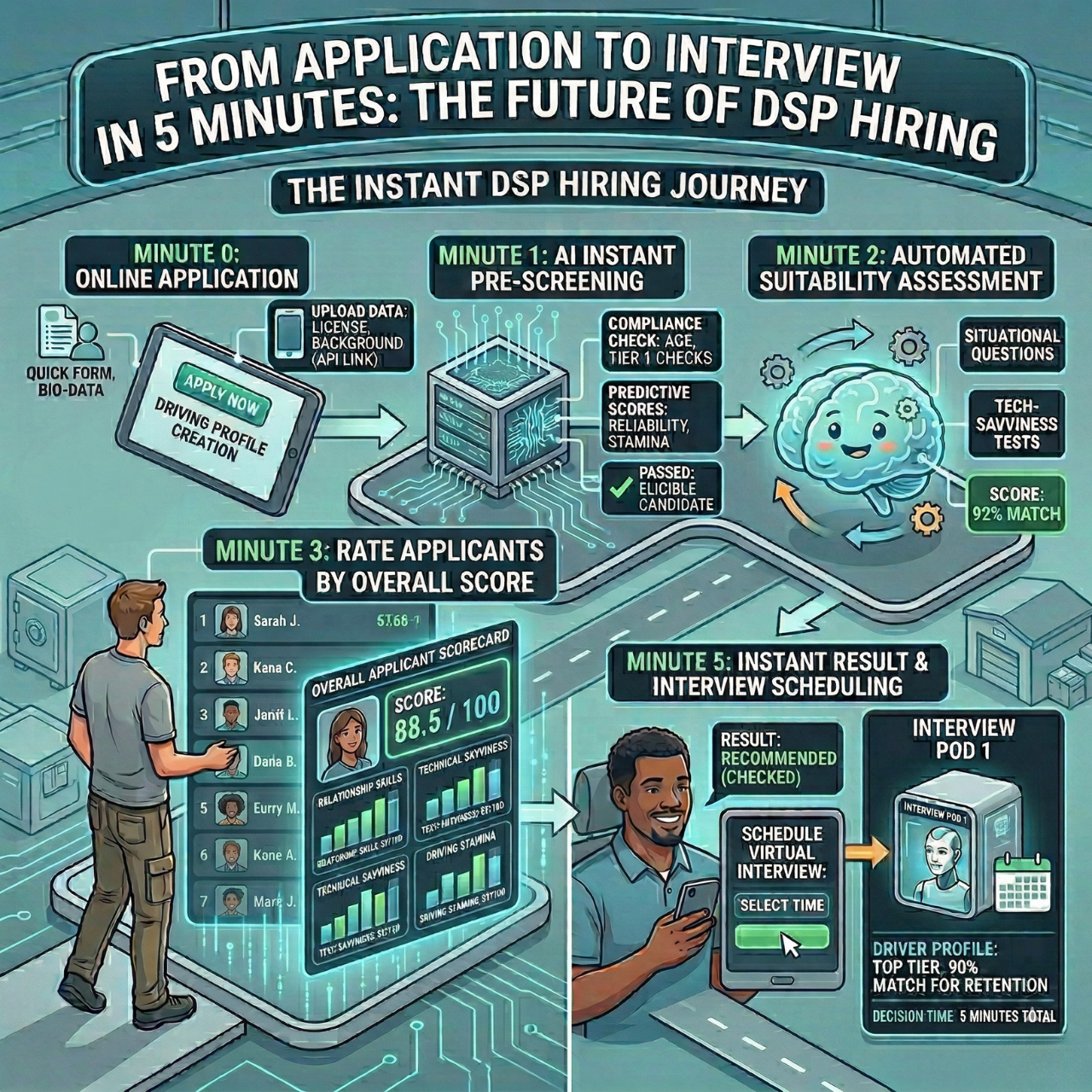
You can set the AI to score responses during interviews, ranking candidates based on skills and experience. This saves time and helps you focus on top talent. Many tools use this automation to schedule interviews and engage candidates automatically.
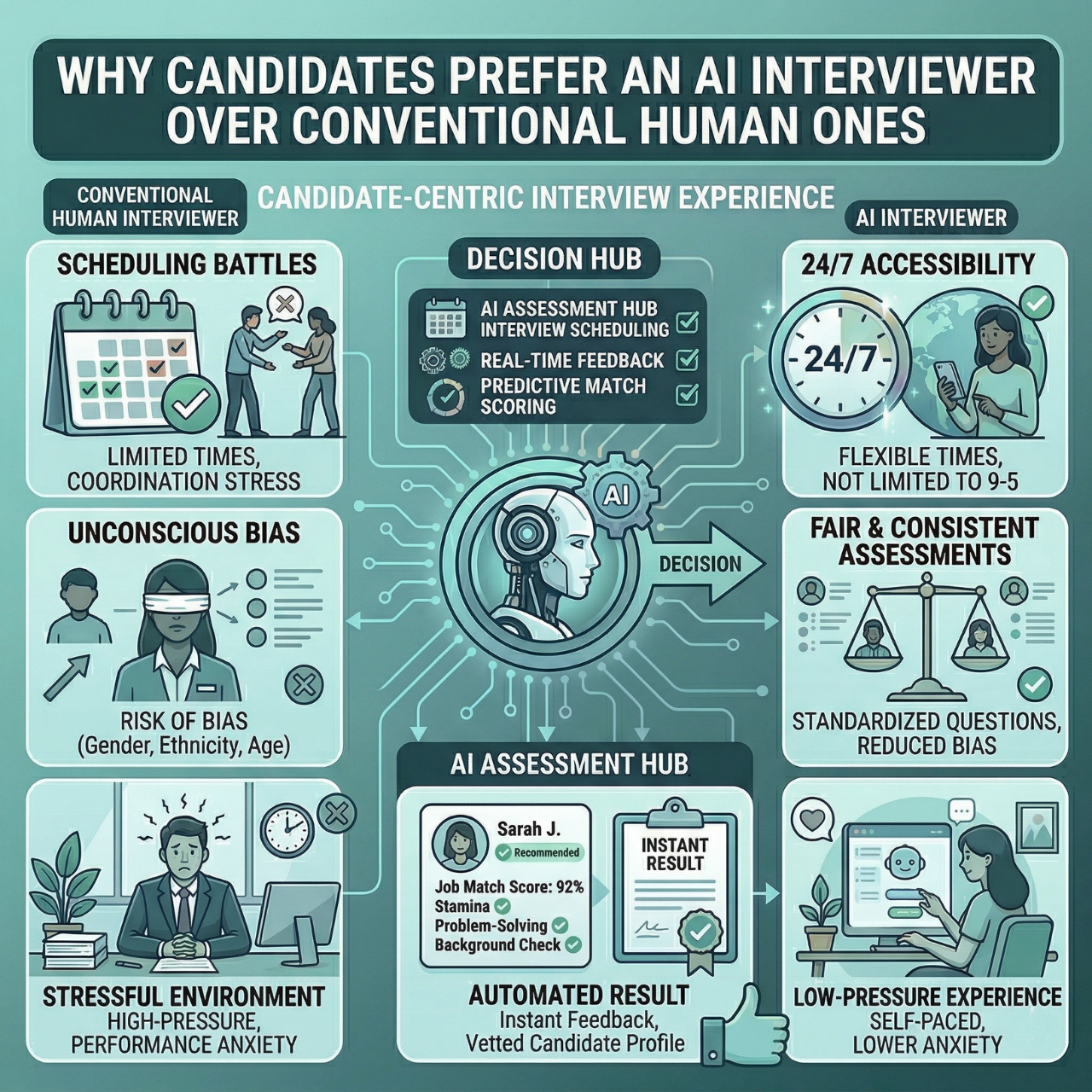
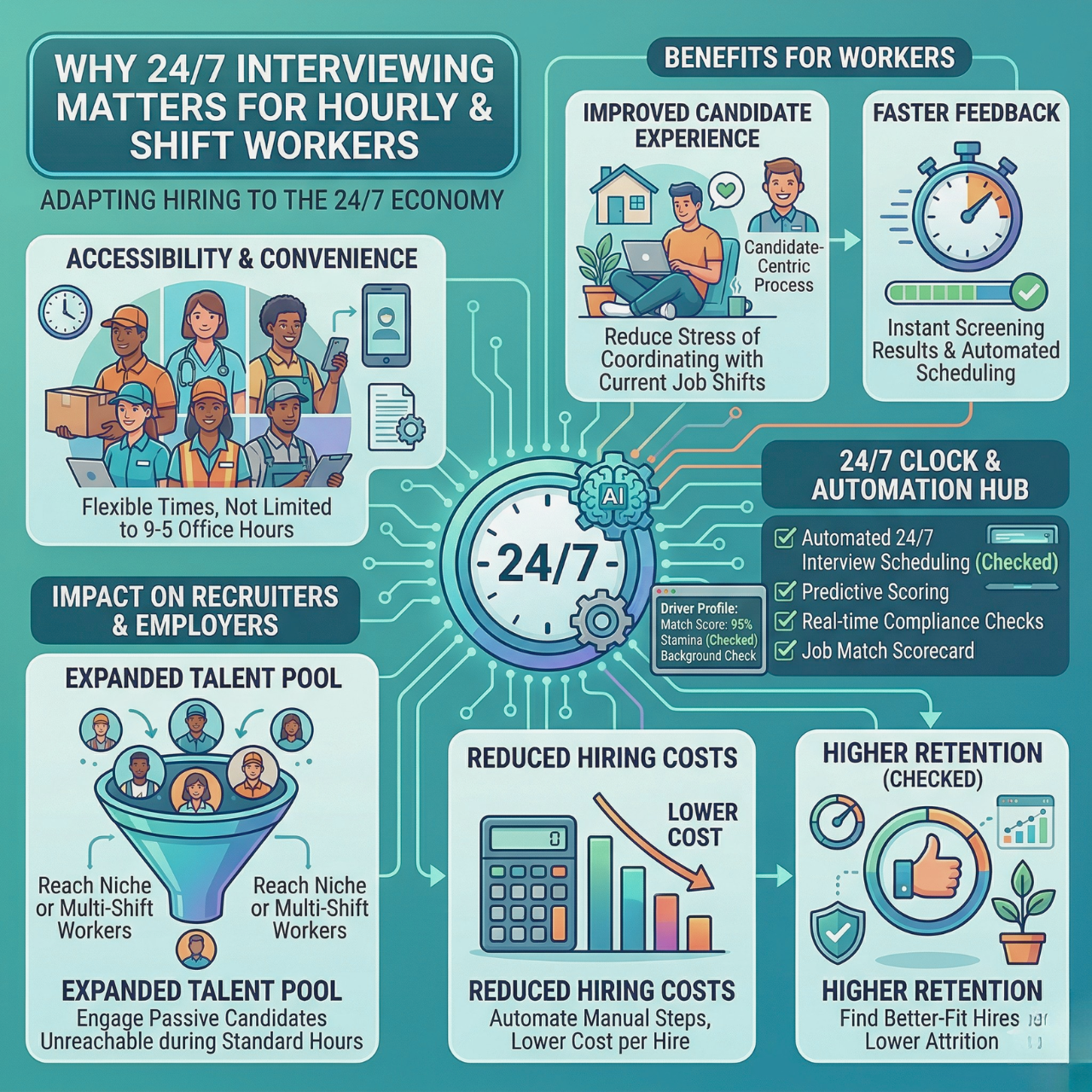
Automated screening works 24/7. Candidates can complete interviews anytime, making your process flexible and convenient for different time zones and schedules.
Natural Language Processing Capabilities
Natural Language Processing (NLP) lets AI understand and analyze human language during interviews. This means it can assess how candidates answer questions, picking up on key skills and relevant details.
NLP helps generate role-specific questions by analyzing the job description. It also interprets candidate answers for relevance and clarity.
With NLP, AI systems go beyond simple yes or no answers. They evaluate tone, word choice, and problem-solving ability in replies. This deeper analysis gives you better insights into each candidate’s fit for the role.
Bias Detection and Mitigation
One major benefit of AI interviewing is reducing human bias. The AI system applies the same criteria to all candidates, lowering the risk of unfair judgments based on gender, race, age, or background.
AI hiring software can detect patterns that suggest bias in questions or scoring. It adjusts or flags these issues so your process stays fairer.
Ongoing machine learning improvements help strengthen fairness, making hiring more objective and focused on skills and potential.
Benefits of AI Interviewing
AI interviewing changes how hiring works by saving time and making evaluations fairer. It streamlines your process and helps you focus on the best candidates without extra effort.
Efficiency and Time Savings
AI interviewing lets candidates complete their interviews anytime, day or night, fitting their schedule. This means you can review more candidates without waiting for everyone to be available at the same time.
Thanks to automated scheduling and instant scoring, processes that once took hours can happen in minutes. Automation can cut manual work by handling pre-screening and scheduling, saving about 2.7 hours per hire.
This faster review speeds up your time to hire, so you do not lose good candidates to long delays. SMS and email reminders can reduce no-shows by 50%.
Consistency in Candidate Evaluation
AI interviews use the same questions and scoring for every candidate. This removes human bias and keeps evaluations fair.
The AI scores responses based on set criteria, which means every answer is judged equally. That consistency helps you spot truly qualified candidates fast.
With clear, data-driven results, you get a reliable comparison between candidates. Standardized workflows keep your process fair and consistent.
Challenges and Limitations of AI Interviewing
AI interviewing can speed up hiring and reduce bias, but it also faces challenges. Issues around how candidate data is handled and how decisions are made by AI tools affect fairness and privacy.
Data Privacy Concerns
When you use AI for interviews, your candidates share a lot of personal information. This data includes resumes, video answers, and sometimes facial expressions or voice recordings. Protecting this information is critical because breaches can harm candidates and damage your company’s trust.
You must ensure AI hiring software complies with privacy laws like GDPR or CCPA. This means keeping data secure, limiting who can access it, and being clear about how candidate data is used.
Candidates also worry about how long their data is stored and whether it is used beyond hiring decisions. Transparent policies and secure storage are essential to build confidence in AI interviewing.
Potential for Algorithmic Bias
AI systems only work as well as the data they learn from. If your AI tools train on biased past hiring data, they might favor certain groups unfairly.
This can happen even if the system aims to improve objectivity. You might see some qualified candidates filtered out because the AI unintentionally prefers certain words, backgrounds, or behaviors.
Bias can also show up in how the AI scores or ranks responses. To reduce bias, regularly audit your AI tools and update them with diverse data. Routine checks can flag biased outcomes, helping you keep hiring fair while speeding up candidate screening.
Best Practices for Implementing AI Interviewing
To get the most from AI interviewing, you need to fit it smoothly into your current hiring steps and follow legal rules carefully.
Integration with Existing Hiring Workflows
AI interviewing should work well with your ATS and other hiring tools. Your AI platform must sync with scheduling, scoring, and candidate communication without extra steps.
Automate where you can, but keep humans in the loop for decision-making. Use AI to handle repetitive tasks like ranking candidates and setting interview times.
Track metrics like time to hire and candidate engagement in real-time dashboards. This helps spot delays or drop-offs early. Make sure your AI tool supports multi-channel communication so candidates get reminders and instant feedback that reduces no-shows.
Compliance with Employment Laws
When using AI interviews, you must follow laws against discrimination. Your AI should be tested regularly for bias to ensure it treats all candidates fairly. Avoid relying only on algorithm scores; combine them with human judgment to meet legal standards.
Keep candidate data secure and private according to regulations like GDPR or CCPA.
Inform applicants how their data is used and stored during AI interviews. Document your AI hiring process clearly.
This helps in audits and builds trust with candidates. Train your team on these compliance steps so they understand when and how to apply AI tools responsibly.
Future Trends in AI Interviewing
AI interviewing is becoming smarter and more tailored to candidates. It will soon read emotions better and create customized experiences.
These changes can help you find the right person faster while keeping candidates engaged and treated fairly.
Advances in Emotional Intelligence Analysis
AI systems are getting better at understanding how candidates feel during interviews. They analyze voice tone, facial expressions, and body language in real time. This helps identify confidence, honesty, or stress levels, giving you deeper insights beyond answers alone. Emotional cues can flag when a candidate needs follow-up or additional support. For example, if someone seems nervous but truthful, you might give them a chance to clarify answers. This adds a human-like layer to automation without needing a live interviewer every time.
With such tools, you can reduce bias by focusing on behavior signals rather than words alone. These features help score candidates more fully, leading to fairer, faster decisions.
Increased Personalization in Candidate Experience
Future AI interviews will offer questions shaped for each candidate. The system adjusts based on their resume, skills, and previous answers. Expect dynamic questioning where follow-ups depend on earlier performance.
Stronger applicants get more challenging prompts, while others receive simpler questions.
Automation also personalizes scheduling and engagement. Automated SMS and email nudges keep candidates informed and reduce no-shows.
Comprehensive workflows will customize every step, helping you keep top talent interested from start to finish.
Turn AI Interviews Into Results
AI interviewing speeds screening, boosts consistency, and lifts quality. Automated scoring and scheduling remove bottlenecks. Teams make faster, fairer decisions with clear evidence.
With HRMLESS, you connect AI interviewing to your ATS, run 24/7 AI interviews, and keep candidates engaged. The platform reduces no-shows, shortens time to hire, and focuses reviews on skills and fit.
Ready to modernize your hiring? Book a demo or connect your ATS for a free audit to see the impact fast.
Frequently Asked Questions
What Is AI Interviewing?
AI interviewing is software that asks structured questions and scores responses from video, voice, or text. It applies consistent criteria to assess skills and role fit. The goal is faster screening and fairer evaluations.
How Accurate And Fair Are AI Interviews?
Accuracy depends on clear criteria, high-quality training data, and regular audits. Use standardized questions, explainable scoring, and human review for edge cases. Ongoing bias testing helps keep results fair across groups.
Is AI Interviewing Legal To Use In Hiring?
Yes, when you follow anti-discrimination and privacy laws. Provide notice, obtain consent where required, and document how the system works. Combine algorithmic scores with human judgment to meet compliance expectations.
How Should Candidates Prepare For An AI Interview?
Review the job description and practice concise, structured answers. Check audio, lighting, and network ahead of time. Use concrete examples that show skills, outcomes, and impact.
What Data Does The System Collect And How Is It Protected?
Common inputs include resumes, recorded answers, transcripts, and interaction metadata. Limit access, encrypt data at rest and in transit, and set retention timelines. Share a plain-language privacy notice with candidates.
Does AI Interviewing Replace Human Recruiters?
No. It handles repetitive tasks like early screening and scheduling. Recruiters still make final decisions, manage stakeholder alignment, and deliver candidate experience.
How Does AI Interviewing Integrate With An ATS?
Most platforms sync candidates, stages, and notes with the ATS. Use single sign-on, standardized fields, and webhooks to automate status updates and scheduling. Track time to hire and pass-through rates in one place.
Which Roles Benefit Most From AI Interviews?
High-volume and repeatable roles see the fastest gains, such as support, sales, and operations. Specialized roles can benefit too with skills-focused prompts and structured scoring rubrics.
What Metrics Should We Track To Prove ROI?
Start with time to hire, no-show rate, screen-to-interview pass rate, and quality of hire. Add candidate satisfaction scores and recruiter hours saved to quantify impact.
Featured

Subscribe to ournewsletter
Related posts
Explore the world of photography with our curated selection of
portfolio websites that showcase creativity and innovation.