

What Is AI Recruitment? Benefits and Best Practices

What Is AI Recruitment? It is the use of intelligent software to pre-screen, score, and schedule candidates so teams move faster with fewer errors. If hiring feels slow and manual, AI turns repeatable steps into speed, efficiency, and quality gains across your funnel.
With HRMLESS, recruiters automate early interviews, keep candidates engaged 24/7, and surface the best matches first. The result is less back-and-forth, fewer no-shows, and a pipeline that advances on time without extra headcount.
This guide explains how AI recruitment works, core technologies, and practical benefits. You will see common use cases, limits to watch, and best practices to integrate with your ATS. By the end, you will know which steps to automate and how to measure impact.
Defining AI Recruitment: Key Concepts
AI recruitment uses technology to make hiring faster, easier, and more accurate. It helps you find the best candidates by automating routine tasks, analyzing data, and improving decision-making.
Core Principles of AI Recruitment
AI recruitment works by automating time-consuming tasks like screening resumes and scheduling interviews. It uses data to match candidates to jobs more accurately than manual methods. The goal is to save time, reduce bias, and improve candidate quality.
You benefit from:
- Automated pre-screening and scoring of candidates
- Faster engagement through SMS and email nudges
- Smart scheduling that lowers no-shows
- Data-backed decisions to select the right fit
Modern platforms use these principles to remove bottlenecks and ghosting. This lets you focus on strategic hiring instead of routine work.
Historical Evolution of AI in Hiring
Recruitment started as a fully manual process. Recruiters posted jobs, read resumes, and interviewed by gut feeling. Over time, software like Applicant Tracking Systems (ATS) was introduced to organize resumes and track candidates. The real change came with AI and machine learning.
These tools began analyzing data at scale, automating screening, and even conducting video interviews. Today, AI hiring software handles multiple tasks automatically, reducing hiring time and improving accuracy.
Types of AI Technologies Used in Recruitment
AI recruitment uses several key technologies:
- Natural Language Processing (NLP): Analyzes resumes and cover letters to understand skills and experience.
- Machine Learning: Learns from past hiring data to predict candidate success and rank applications.
- Chatbots & Conversational AI: Engage candidates instantly, answer questions, and schedule interviews.
- Predictive Analytics: Identifies patterns to foresee how well a candidate fits the role.
Together, these technologies automate your hiring funnel from sourcing to onboarding. You get faster screening, better candidate matches, and improved communication, all without extra effort.
How AI Recruitment Works
AI recruitment uses automation and smart software to make hiring faster and simpler. It finds candidates, reviews resumes, and manages scheduling without delays. This speeds up hiring while improving candidate quality and reducing mistakes.
Automating Candidate Sourcing
AI tools scan multiple job boards, social media, and databases to find potential candidates. They use keywords and skills to match your job needs instantly. This saves you hours compared to manual searching.
You get a larger, more relevant pool of candidates quickly. AI can also identify passive candidates, those not actively job hunting but open to offers. This broadens your reach without extra work.
Your hiring platform can automate messaging to candidates. It sends emails or texts to engage talent fast and keeps communication consistent. This helps avoid losing candidates early.
AI-Driven Resume Screening
Sorting through dozens or hundreds of resumes is slow and error-prone. AI speeds this up by reading and scoring resumes based on your criteria, like experience and skills. AI uses natural language processing to understand the resume content, even when it is formatted differently.
It highlights top candidates for you automatically, helping minimize human bias. You save time and focus only on well-matched applicants. Your hiring platform can score and rank candidates so you know exactly who to interview next.
Interview Scheduling Automation
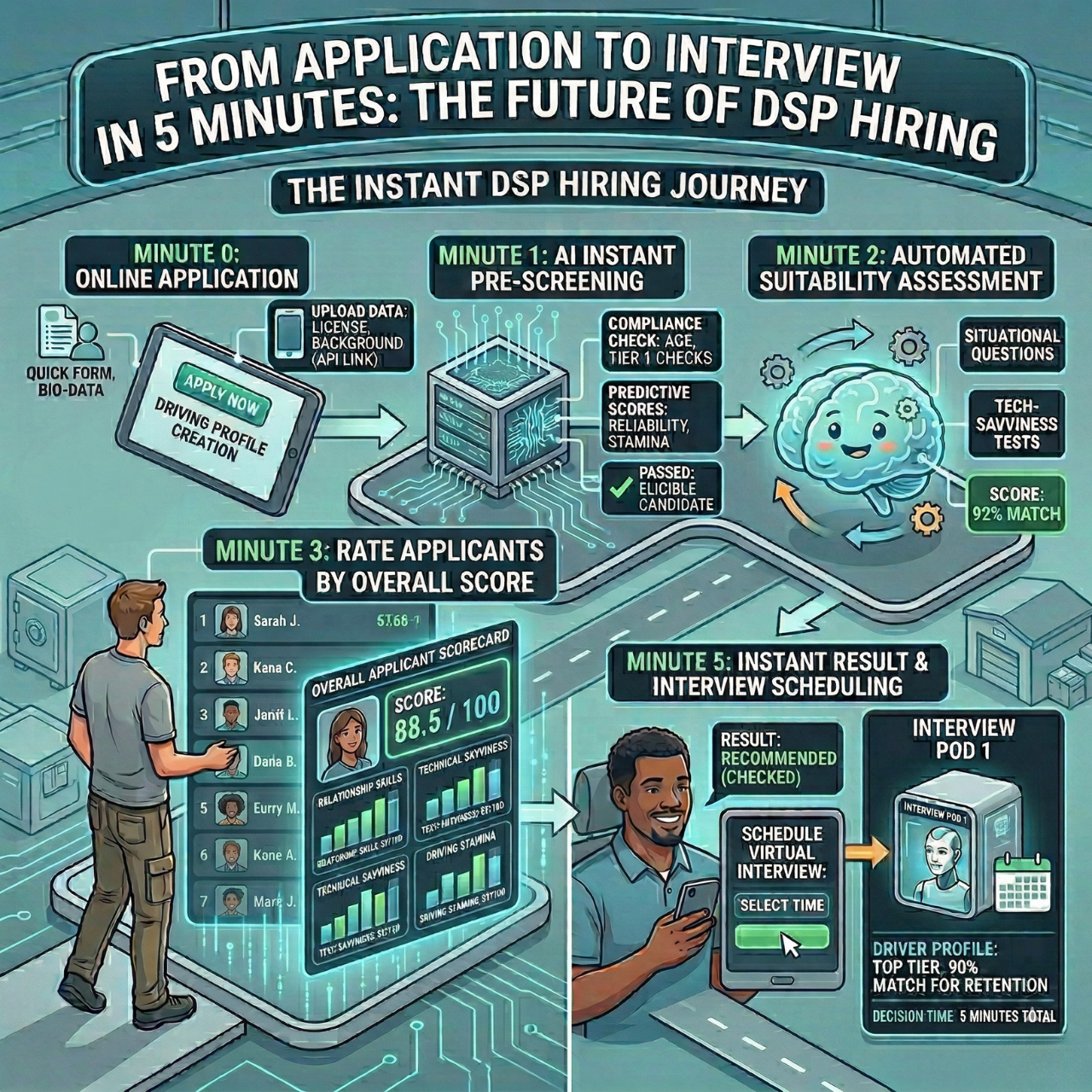
Scheduling interviews can cause delays and missed opportunities. AI tools link with your calendar and send candidates available slots instantly. Candidates pick their interviews without back-and-forth emails, reducing no-shows by about half.
Automated reminders keep candidates engaged and prepared. Your calendar stays organized with automated updates for reschedules or cancellations. This hands-off approach frees up your time and keeps hiring moving smoothly.
Benefits of AI Recruitment
AI recruitment speeds up hiring, improves how candidates feel during the process, and helps you make smarter choices. Using AI tools cuts down on busywork and delivers clearer insights so you can focus on hiring the right people.
Improved Efficiency in Talent Acquisition
AI automates key hiring steps like screening resumes, scheduling interviews, and scoring candidates. This saves you countless hours, often over 100,000 hours per year for larger teams.
Instead of manually sorting through unqualified resumes, AI filters applicants based on your exact needs. Automation also reduces no-shows by inviting only engaged, qualified candidates to schedule interviews.
Modern platforms use AI to handle this automatically, cutting your time to hire by up to 62%. You can scale your hiring without adding stress or complexity.
Enhanced Candidate Experience
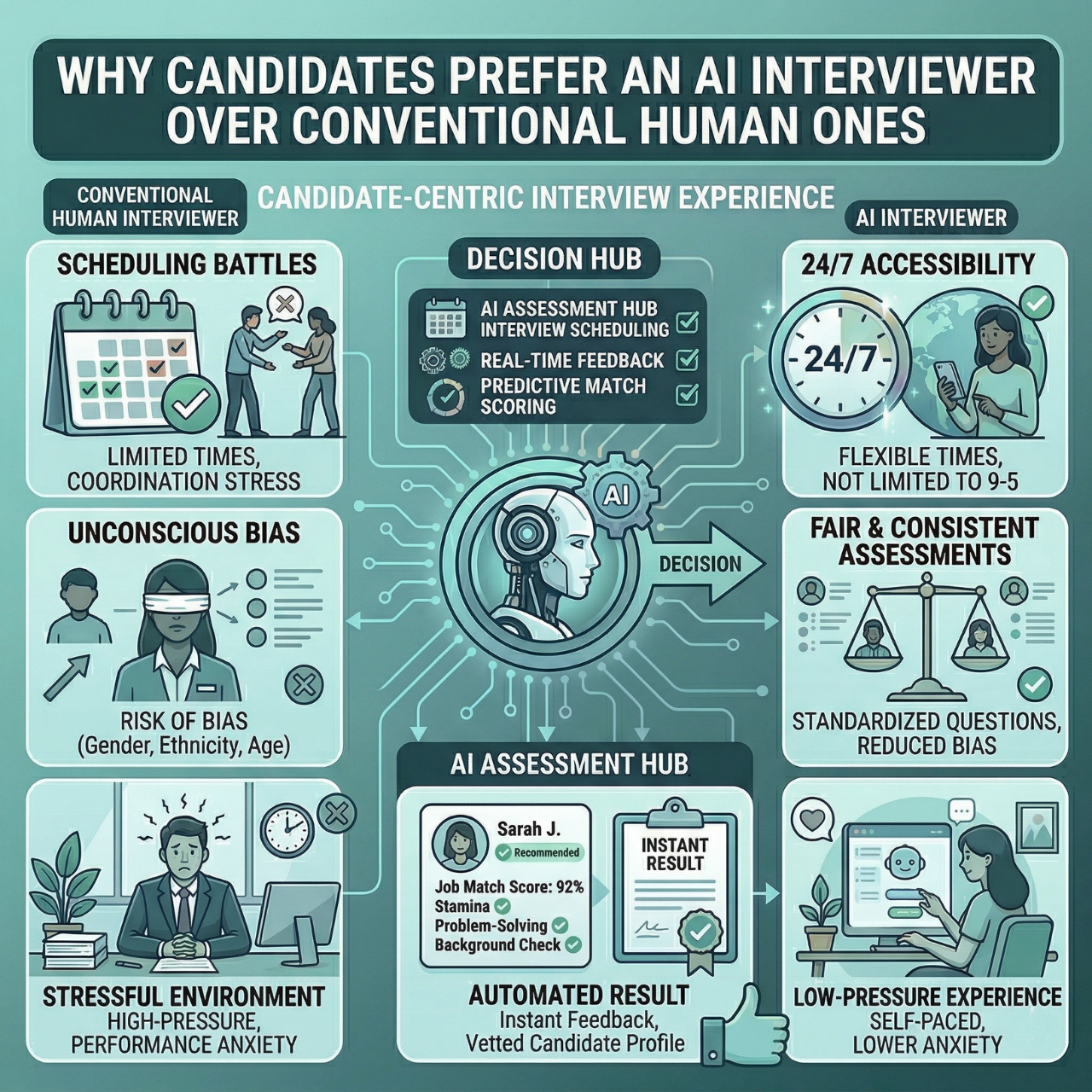
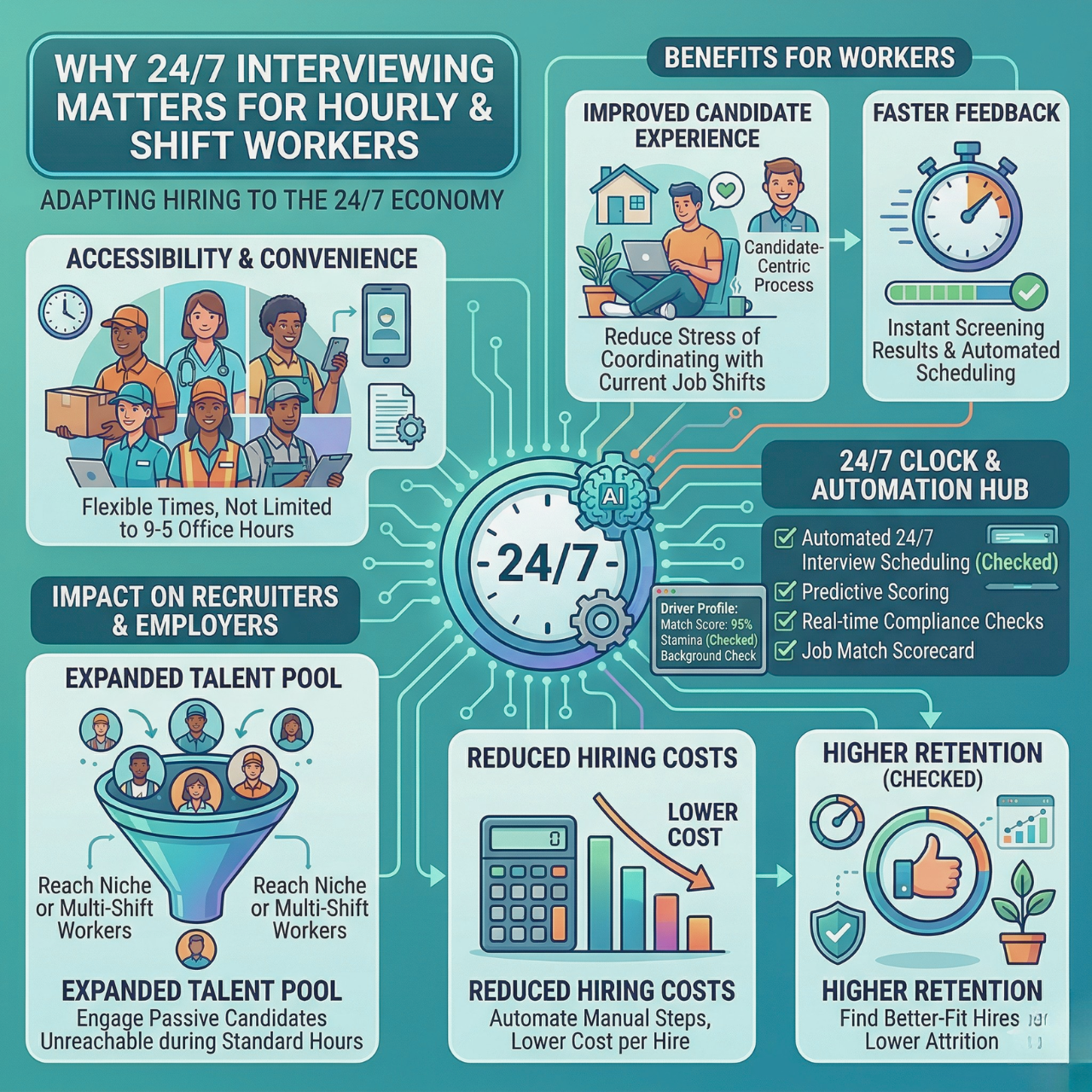
Candidates can complete AI-powered pre-screening interviews anytime, day or night. This flexibility fits their schedule and speeds up your process.
Automated messaging keeps candidates informed and engaged, reducing the risk of ghosting by up to 50%. Clear, quick communication makes candidates feel respected and valued. When candidates get fast responses and easy scheduling, your employer brand improves.
Data-Driven Decision Making
AI collects and analyzes data at every stage of hiring. It scores candidates based on skills, experience, and answers rather than gut feelings alone. This means you focus only on the best matches.
You get real-time reports showing bottlenecks, engagement levels, and time to hire. These insights help you adjust your process quickly. Using AI helps minimize bias, promoting fairer, more accurate hiring decisions.
Common Applications of AI Recruitment
AI recruitment uses smart tools to automate hiring tasks and improve how you find and engage candidates. It focuses on speeding up communication and matching talent to the right roles with better accuracy.
Chatbots for Candidate Communication
AI chatbots handle routine candidate questions and provide quick answers anytime. They respond instantly to queries about job roles, company culture, and application status. This keeps candidates engaged without needing your constant attention.
Chatbots also schedule interviews automatically. This reduces no-shows because candidates book slots when they are ready. For example, many platforms use chatbots to keep candidates informed and involved through SMS and email, which cuts down delays and frustration.
By automating these tasks, you free up time for deeper candidate evaluation. Chatbots offer instant, 24/7 communication, making your process faster and smoother.
Predictive Analytics in Talent Matching
Predictive analytics uses data to find candidates who best fit your job openings. AI reviews resumes, skills, and experience to score applicants against the role’s needs. This means you see only qualified candidates, saving hours of manual screening.
AI can also identify patterns from past hires that led to success. You can trust these insights to improve hiring quality. Modern systems combine analytics with automated scoring and filtering to highlight top talent instantly.
The results: less bias, fewer unsuitable interviews, and faster hiring decisions.
Challenges and Limitations
Using AI in hiring can bring efficiency, but it also comes with important issues you need to manage. These include ensuring fairness in candidate evaluation and protecting sensitive information. Addressing these problems is key to making AI recruitment work well for your company.
Potential Bias in AI Algorithms
AI tools learn from past hiring data, which can include hidden biases. If the data favors certain groups, the AI might unfairly screen out others. This can result in less diversity and missed talent.
Bias can come from factors like gender, race, or educational background. AI systems may unintentionally repeat these patterns if not carefully designed and tested. To reduce bias, it is essential to regularly audit
AI algorithms and update data inputs. Using platforms that help minimize bias helps ensure fair screening. Combining AI with human judgment is also important to catch errors and keep hiring balanced.
Data Privacy and Compliance
Recruitment involves handling a lot of personal candidate data. AI tools must follow laws like GDPR or CCPA to protect this information. Failing to do so can lead to legal trouble and loss of candidate trust.
You need clear data storage rules, secure systems, and limits on who accesses data. Candidate consent is also critical before processing their information. Reputable AI platforms build privacy controls into their systems. They help you stay compliant by anonymizing data where possible and tracking audit logs. This reduces risk while allowing you to automate tasks safely.
Best Practices for Implementing AI Recruitment
To get the most out of AI in hiring, focus on choosing the right tools, blending AI with your existing methods, and making sure your HR team knows how to use new technology well. These steps will help you speed up hiring, reduce bias, and keep candidates engaged.
Selecting the Right AI Recruitment Tools
Start by looking for AI tools that fit your hiring needs. You want software that can automate tasks like screening, scoring, and scheduling without causing extra work. Check if the tool offers:
- AI Pre-Screening Interviews: Candidates can apply anytime, which speeds up your pipeline.
- Smart Scoring and Filtering: It should surface top candidates automatically.
- Integration with ATS and HRIS: This keeps your workflow smooth without switching systems.
Choose options that reduce common problems like ghosting and NCNS (no call, no show) by using automated SMS and email nudges. Make sure the tool matches your team size and hiring volume. For example, some tools excel at these tasks with advanced AI engines, helping you save hours per hire.
Integrating AI with Existing Recruitment Processes
Do not replace your whole system at once. Add AI gradually by automating specific steps like candidate engagement or interview scheduling. Map your current process and spot bottlenecks. Use AI where it saves the most time, often in pre-screening and communication.
For example:
- Automate initial screenings
- Schedule interviews without back-and-forth emails
- Keep candidate feedback consistent
Keep human judgment in critical decisions like final interviews to avoid over-reliance on AI. A smooth link between AI tools and your ATS prevents data loss and confusion.
Training HR Teams on AI Adoption
Your HR team must understand how to work with AI, not fight it. Provide training that covers how AI tools work, what they automate, and how to interpret AI results.
Focus on these key areas:
- How to review AI-generated candidate scores
- Managing automated communications
- Spotting and addressing any AI errors or biases
Encourage your team to ask questions and share feedback to improve workflows. Many vendors offer onboarding support for smooth adoption, helping your team hit the ground running.
Future Trends in AI Recruitment
AI recruitment is becoming smarter and more precise. It uses better language understanding to analyze candidate responses and tailors communication to each applicant. This improves your hiring speed and candidate experience, helping you find the right fit faster.
Advancements in Natural Language Processing
Natural Language Processing (NLP) helps AI understand and interpret human language better. This means AI can analyze resumes, cover letters, and interview answers more accurately. You will get insights based on tone, sentiment, and keyword context, not just keywords alone.
With these improvements, AI tools can detect subtle cues showing a candidate’s skills, motivation, or fit. Advanced NLP can streamline screening and scoring, saving you hours per hire.
NLP also allows automated interviews to ask follow-up questions based on candidate answers. This makes the process feel more natural and gives you richer data without manual effort.
Personalization in Candidate Engagement
Personalized communication is key in keeping candidates interested. AI can tailor messages, reminders, and follow-ups based on where each candidate is in your hiring funnel.
You can automate SMS and email nudges that feel relevant and timely. For example, if a candidate misses an interview, AI will send a polite reschedule invite.
If they pass pre-screening, instant congratulations and next steps follow. Personalization also improves diversity and reduces no-shows by connecting with candidates individually.
Automated, multi-channel engagement tools can cut ghosting significantly. This lets you move faster and smarter through your hiring pipeline.
Turn Insights Into Faster Hires
AI recruitment streamlines pre-screening, scoring, and scheduling so teams move faster with fewer errors. The payoff is automation that saves time, speed that shortens time-to-hire, and quality that improves match accuracy.
HRMLESS consolidates these steps into one workflow—automating early interviews, keeping candidates engaged, and surfacing the best fits—so your team focuses on decisions, not admin.
Ready to put What Is AI Recruitment into practice? Book a Demo or Start Free Trial to see the impact on your next hiring cycle.
Frequently Asked Questions
What Is AI Recruitment?
AI recruitment is the use of software to pre-screen, score, and schedule candidates. It automates routine steps so teams hire faster with better matches.
How Does AI Recruitment Work With an ATS?
It connects to your Applicant Tracking System to sync jobs, candidates, and stages. Screening scores and interview statuses update automatically in one workflow.
Does AI Recruitment Remove Bias?
No tool can guarantee zero bias. Well-designed systems help minimize bias by using structured criteria, consistent scoring, and regular audits.
Which Roles Benefit Most From AI Recruitment?
High-volume roles, support and sales, and repeat technical roles see the biggest gains. Consistent requirements and large applicant pools amplify automation benefits.
Is AI Recruitment Compliant With GDPR and CCPA?
Yes, when configured properly. Use consent prompts, clear retention policies, access controls, and audit logs to meet privacy requirements.
Featured

Subscribe to ournewsletter
Related posts
Explore the world of photography with our curated selection of
portfolio websites that showcase creativity and innovation.