

How AI Reduces Time-To-Hire in Competitive Industries

Hiring in fast-moving markets rewards speed. AI reduces time-to-hire in competitive industries by automating pre-screening, scoring, and scheduling, so your team moves from req to offer faster. The result is shorter cycles, fewer drop-offs, and better visibility into what slows you down.
With HRMLESS, automation plugs into your ATS to run 24/7 AI interviews, real-time scoring, and smart reminders that reduce ghosting. Recruiters spend less time on admin and more time with qualified talent. You get consistent decisions, improved compliance, and measurable gains in throughput.
This guide explains how time-to-hire works in competitive industries, the AI tools that compress each step, and benchmarks to track progress. You’ll see practical implementation tips, adoption safeguards, and sector examples.
Understanding Time-To-Hire in Competitive Industries
Time-to-hire in competitive industries really matters when you’re chasing top talent. There’s pressure, tight deadlines, and if you’re not quick, someone else scoops up the best people. Knowing what it means, the headaches in fast sectors, and what numbers to aim for can help you stay out front.
Definition and Importance of Time-To-Hire
Time-to-hire is the time from opening a job to making an offer. It covers the whole cycle: finding, interviewing, and selecting a candidate.
In competitive industries, this metric is huge. The faster you hire, the less likely you’ll lose great people to someone else. Shorter time-to-hire boosts your shot at landing top talent before competitors do.
If you cut time-to-hire, you make hiring more efficient and save money on long vacancies. Candidates notice when you move fast and treat them well, so your employer brand gets a lift too.
Challenges in Fast-Paced Sectors
In tech, retail, and healthcare, jobs open and close fast. The talent pool is tight, and demand often beats supply.
You deal with:
- Lots of candidates ghosting or dropping out
- Pressure to move quickly, but still hire quality
- Roles that need very specific skills
- Heavy competition from other companies chasing the same folks
Old-school hiring slows you down. Scheduling interviews and reading resumes by hand eats up time and drags out the process.
You need tools that automate repetitive tasks and keep candidates interested. AI-powered solutions can score candidates and schedule interviews instantly, so you don’t get stuck.
Current Benchmarks and Expectations
Time-to-hire depends on your industry and the job. For example:
Industry
Average Time-To-Hire
Technology
30–45 days
Retail
15–25 days
Healthcare
40–60 days
In competitive sectors, shaving off even 20–30% can make a real difference.
Employers using modern AI hiring platforms report cutting time-to-hire by up to 62%. Features like 24/7 AI interviews and real-time scoring help you move candidates through fast without giving up quality.
If you keep a close eye on your hiring metrics, you can spot delays and fix them quickly. Set clear goals for time-to-hire, and you’ll stay competitive.
The Impact of AI on Time-To-Hire Reduction
AI in recruitment cuts the time it takes to fill jobs by handling the slow stuff. It speeds up screening, interview scheduling, and matching, so hiring feels far less like a slog.
AI-Powered Resume Screening
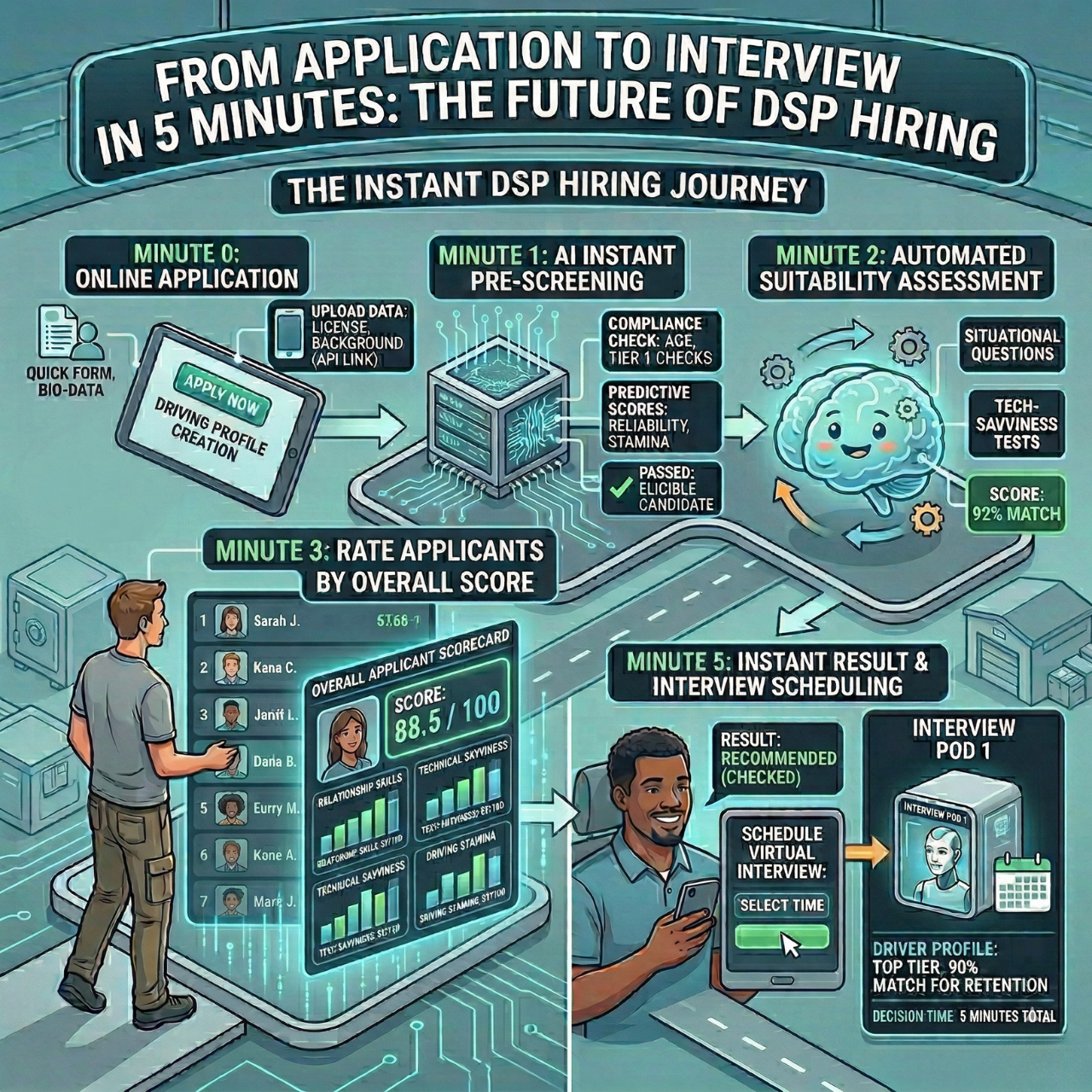
AI scans resumes for the right skills and qualifications in seconds. You don’t have to dig through endless applications. The system ranks candidates by how well they fit.
With consistent, criteria-based screening, fewer mistakes slip through, and strong candidates aren’t missed. AI learns from past hires, so it keeps getting better.
Automating resume screening saves around 2.7 hours per hire, time you can spend actually talking to people.
Automated Interview Scheduling
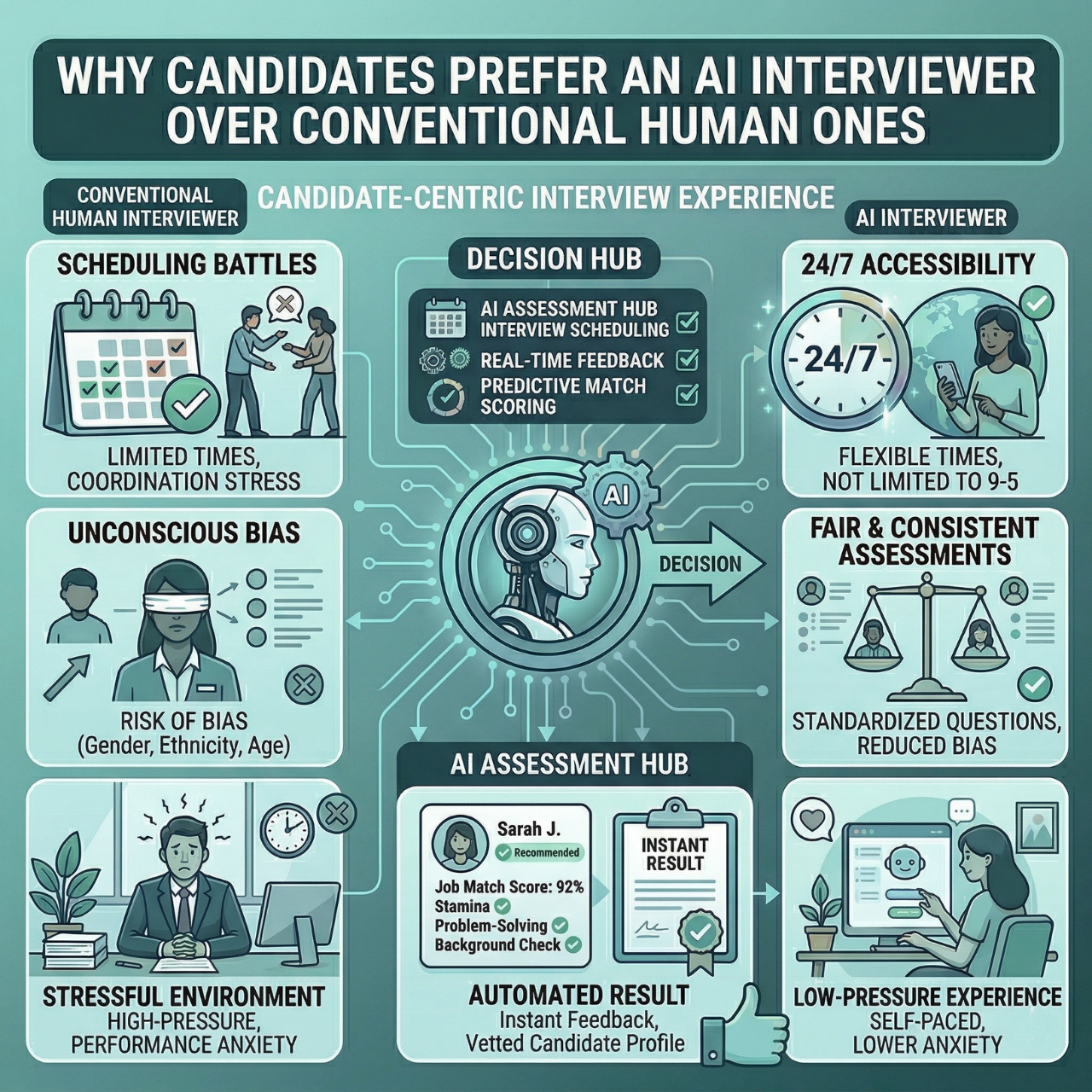
Interview scheduling is a notorious bottleneck. AI lets candidates book their own slots anytime, on any device, with no email ping-pong.
This can cut no-shows by 50%. Only engaged candidates book interviews, and the system sends reminders so they don’t forget.
You save time, keep the process moving, and avoid chasing people to confirm.
Smart Candidate Matching
AI matches people to jobs using skills, experience, and culture indicators. Instead of guessing, you get a shortlist of top picks ready for interviews.
You only spend time on candidates who truly fit. Decisions come faster, with less wasted effort.
With configurable AI scoring, you can adjust how candidates are ranked, keeping your process data-driven and sharp. That means faster hires and better quality, without extra work.
Key AI Technologies Driving Efficiency
AI speeds up hiring by crunching data, screening candidates, and smoothing communication. These tools save time and cut down on errors.
Natural Language Processing in Recruitment
Natural Language Processing (NLP) helps your system read resumes, cover letters, and other documents. It sifts through large application volumes to find the right skills and experience for your roles.
NLP sorts candidates so you see the best first. It can even pick up on soft skills or tone in responses. Using NLP supports fairer, faster reviews. Automation delivers quick, thorough reads without cutting corners.
Machine Learning Algorithms for Talent Acquisition
Machine Learning (ML) digs into your hiring data to help you pick better candidates. It learns what worked in the past and applies those lessons to new applicants.
ML models update as you hire more, sharpening decisions over time. Some systems score candidates on skills, experience, and interviews, ranking them for you.
ML removes guesswork and speeds up the pipeline. Combined with AI pre-screening, you can significantly reduce time-to-hire.
Chatbots and Virtual Assistants
Chatbots and virtual assistants handle candidate communication and scheduling. They answer FAQs, share job details, and keep candidates in the loop 24/7. No one needs to be glued to their inbox.
These tools also book interviews and send reminders, which means fewer no-shows. Candidates get quick responses and feel valued.
With AI chatbots, your team can focus on interviews and decisions instead of admin. A smoother candidate journey helps you move faster and keeps communication personal.
Benefits of Faster Hiring in Competitive Industries
Speed is everything when you’re fighting for talent. Hiring faster improves candidate experiences, sharpens selection quality, and optimizes time and budget.
Enhanced Candidate Experience
When you move fast, candidates aren’t left hanging. Quick replies and easy scheduling keep them interested.
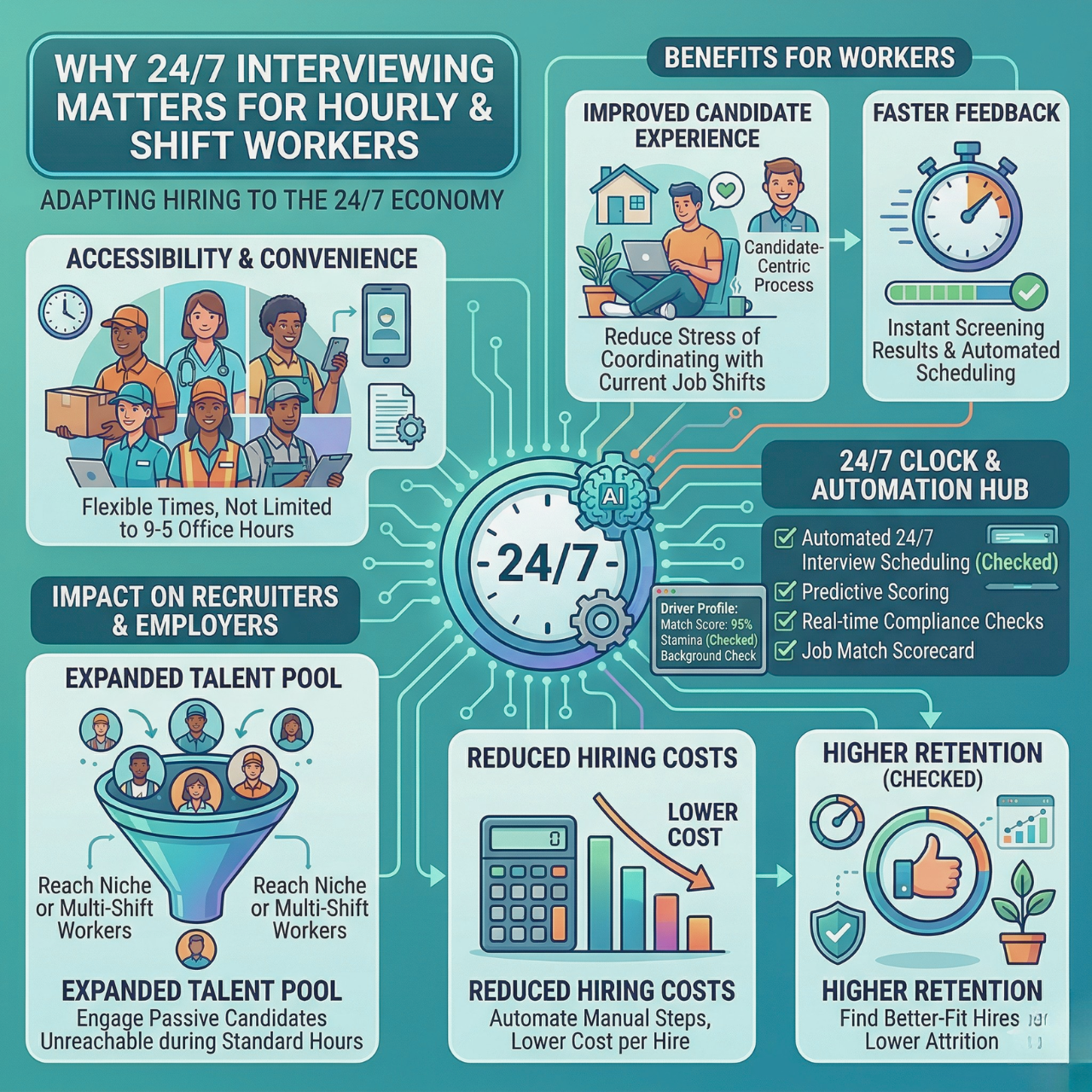
Automated SMS and email nudges send timely updates so nobody’s stuck waiting. This can cut no-shows and ghosting by up to 50%. Candidates appreciate interviews that they can do anytime, which shows you respect their time.
A fast, smooth process boosts your brand. People talk when hiring is easy, so more strong applicants apply next time.
Improved Quality of Hires
Hiring faster doesn’t mean rushing. AI-powered screening and scoring keep the focus on candidates who actually fit. You skip the guesswork and the endless sorting.
Automation highlights top talent quickly, keeping your pipeline full of qualified people. You don’t have to settle just to fill a seat.
Acting fast means you grab the best before someone else does.
Cost Savings and Resource Allocation
Cutting time-to-hire saves money in several ways. Less recruiter time spent on manual work means more time for interviews and strategy.
Filling roles faster reduces downtime. You avoid paying overtime to cover open positions.
Just a few examples:
- Automated pre-screening frees up hours
- Faster scheduling slashes interview no-shows
- Better hires reduce turnover and re-hiring costs
Modern AI tools help you track costs and prove that your hiring budget works, without burning out your team.
Real-World Case Studies: AI Success Stories
AI hiring tools help companies find the right people faster by automating key steps. From tech to healthcare and finance, the benefits show up across the board.
Tech Industry Recruitment Transformations
Tech moves fast. Always-on AI screening helps you reach top talent quickly, without waiting for manual resume checks. Automatic scoring and filtering push the best candidates to the top, so you don’t lose them to ghosting or slowdowns. Some organizations have seen a 62% drop in time-to-hire.
Automated scheduling reduces email tagging. Only engaged candidates get to interviews, and no-shows drop by half. That saves hours per hire and keeps projects on track.
Healthcare Staffing Improvements
Healthcare needs strong staff quickly, especially in nursing and urgent care. AI hiring tools instantly screen for certifications and experience, so you interview people who actually qualify.
Smart SMS and email nudges keep candidates engaged and your pipeline steady. Teams report faster hiring cycles without a quality dip.
These tools slot into existing ATS setups, so your team avoids extra work. You fill critical roles swiftly and fairly, and patient care stays on schedule.
Financial Services Hiring Innovations
In finance, accuracy and trust matter. AI-powered pre-screening checks relevant criteria consistently, speeding up steps once done by hand.
Engagement tools like SMS alerts keep applicants moving. Quick replies improve brand perception, and hiring managers see more qualified candidates sooner.
Real-time analytics show where things get stuck, so you can fix problems right away. Less stress, better hires, and faster timelines at scale.
Implementation Strategies for Hiring Processes
To get the most from AI, identify steps to automate, prepare your team for change, and integrate with existing systems. You’ll speed up hiring without disrupting workflows.
Identifying Areas for Automation
Map your hiring steps to find time sinks and rule-based tasks. You’ll likely flag resume screening, interview scheduling, and candidate updates.
Target repetitive actions where AI excels, such as pre-screening via structured interviews or skill filters. Free your team to connect with top talent rather than push paperwork.
Prioritize tasks that improve candidate experience and reduce delays. Automation of scoring and reminders helps you avoid losing strong candidates to slow follow-ups.
Change Management and Training
Adopting AI requires comfort with new tools. Provide hands-on training that shows how features make work easier, not risky.
Make benefits clear. Automation trims manual effort and keeps things moving, which builds buy-in.
Assign a point person for questions and troubleshooting while the team adjusts. Gather feedback and iterate. Practical training on conversational interviews and automatic scheduling builds confidence.
Integration with Existing Systems
AI is only as good as its fit with your current stack, like your ATS or HRIS. Confirm your AI platform syncs data reliably. Keep candidate info current, not fragmented.
Choose tools with robust integrations so your team avoids app switching. Seamless integration reduces friction and improves the measurement of hiring metrics. Decision-making gets easier when everything is in one place.
Overcoming Common Challenges with AI Adoption
AI in hiring is powerful, but you must handle it carefully. Address fairness, protect candidate data, and keep humans in the loop. That’s how you build a strong, trusted process.
Bias and Fairness Concerns
AI can speed things up, yet bias risk is real. If models learn from biased data, they may favor certain groups. Monitor tools and test for issues.
Train with diverse data to level the field. Set guardrails to avoid unfair screening based on protected attributes. Be transparent about scoring criteria to build trust.
Aim for a process that helps you find the right fit while helping minimize bias.
Maintaining Data Privacy
Candidate data is sensitive. Protect it first, always. Ensure your AI recruiting software aligns with GDPR, CCPA, and similar laws.
Limit access, enforce encryption, and centralize data in your ATS to avoid duplication. Clear policies on collection, storage, and use reassure candidates and reduce risk.
Balance automation with respect for privacy. It is non-negotiable.
Ensuring Human Oversight
Even the best AI needs human review. Regularly check AI-driven decisions to catch errors and improve outcomes.
Let AI handle screening and scheduling, but reserve final decisions for people. Set checkpoints where recruiters review scores or flags.
You get AI speed and consistency with human judgment steering the ship.
Future Trends: AI’s Evolving Role in Recruitment
AI will do more than automate routine tasks. Expect predictive hiring, personalized engagement, and continuous optimization. Less waste, better hires.
Predictive Analytics for Talent Acquisition
AI will predict best-fit candidates and forecast hiring needs, allowing proactive planning and faster fills.
You’ll see which profiles succeed and stay, based on historical data. That insight reduces mis-hires and accelerates offers. Pair predictive signals with automated screening to remove holdups and surface top talent early.
Personalized Candidate Engagement
AI enables personalized outreach at scale. Timely messages, clear answers, and gentle nudges keep candidates progressing.
Chatbots and SMS keep candidates updated around the clock. Instant replies build confidence and reduce drop-offs. Personalization keeps momentum up and helps you reduce time-to-hire across roles.
Continuous Process Optimization
AI monitors your funnel in real time. You’ll see where candidates drop out, which sources work, and how long each step takes.
Systems learn from outcomes and adjust. You spend less time guessing and more time improving. Dashboards make it simple to track, compare, and act on insights quickly.
Make Speed Your Hiring Advantage
In competitive markets, AI reduces time-to-hire by automating screening, scoring, and scheduling. You gain faster cycles, fewer drop-offs, and clearer metrics to tune each step without sacrificing quality.
With HRMLESS, teams activate 24/7 AI interviews, smart reminders, and data-driven scoring that streamline decisions. The outcome is faster execution, better candidate experiences, and measurable efficiency across roles.
Book a demo to see the workflow, or connect your ATS for a free audit.
Frequently Asked Questions
AI shortens the time it takes to find and hire the right people. It helps you focus on top candidates faster, improves quality, and helps minimize bias.
How is artificial intelligence streamlining the recruitment process in high-demand sectors?
AI handles routine work like resume screening and interview scheduling. That means fewer holdups and a quicker path to offers in competitive fields. It can score and filter large applicant pools instantly.
What role does AI play in expediting the search for top talent in the market?
AI spots and ranks high-quality candidates quickly using resume and interview data. Engagement via SMS and email keeps candidates moving. Done well, it can cut time-to-hire by over 60%.
Can you provide examples of how companies are integrating AI into their hiring practices?
Many teams run automated pre-screening interviews and candidate scoring. Automated scheduling invites engaged candidates to book interviews, and ATS integration simplifies rollout.
How does AI contribute to reducing bias during the hiring process?
AI applies consistent criteria focused on skills and experience. This helps reduce bias and supports more diverse talent pools.
What are the potential risks and benefits of utilizing AI for recruitment purposes?
Benefits include saved time, better match quality, and fewer drop-offs. Risks include overreliance on models or misreading signals. Balance automation with human judgment.
What trends in AI adoption are we seeing among firms seeking a competitive edge in hiring?
Companies are adopting conversational AI interviews that candidates can finish on their schedule. Real-time analytics flag bottlenecks so teams can tweak processes. Scalable platforms support growth without delays.
Featured

Subscribe to ournewsletter
Related posts
Explore the world of photography with our curated selection of
portfolio websites that showcase creativity and innovation.