

AI Hiring for Logistics Companies: Faster, Smarter Recruiting
AI hiring for logistics companies speeds screening and scheduling, reduces admin work, and improves fit so you can fill warehouse and driver roles faster.
Hiring in logistics is a constant race against time. High turnover, seasonal spikes, and fierce competition make it hard to keep roles filled without slowing operations. AI hiring for logistics companies helps teams move faster without sacrificing quality.
With HRMLESS, logistics teams automate screening, ranking, and scheduling so recruiters spend less time on admin and more time hiring the right people. The result is shorter time-to-hire, better-fit candidates, and fewer missed shifts.
This guide breaks down how AI hiring works in logistics, where it delivers the biggest impact, and what to consider before adopting it. You’ll also see what’s next as AI continues reshaping supply chain recruitment.
How AI Is Changing Logistics Hiring
AI hiring uses computer programs to find and screen job candidates way faster than the old-school methods. Logistics companies use these tools to sift through tons of applications, shrink hiring timelines, and match workers to the right jobs using data, not just gut feelings.
What Is AI Hiring?
AI hiring means you’re using artificial intelligence software to automate parts of your recruitment process. The tech scans resumes, checks candidate qualifications, and ranks applicants based on the requirements you set.
These systems analyze structured data like work history, skills, and certifications. They compare all that info against your job criteria to figure out who’s a good fit.
The software handles repetitive screening tasks that would normally take your HR team hours or days. Some AI hiring tools include:
- Chatbots to answer candidate questions
- Scheduling assistants to set up interviews
- Automated systems that send updates to applicants
You’ll often see these platforms integrate directly with your applicant tracking system (ATS). It’s pretty seamless if you set it up right.
Importance of AI in Logistics Recruitment
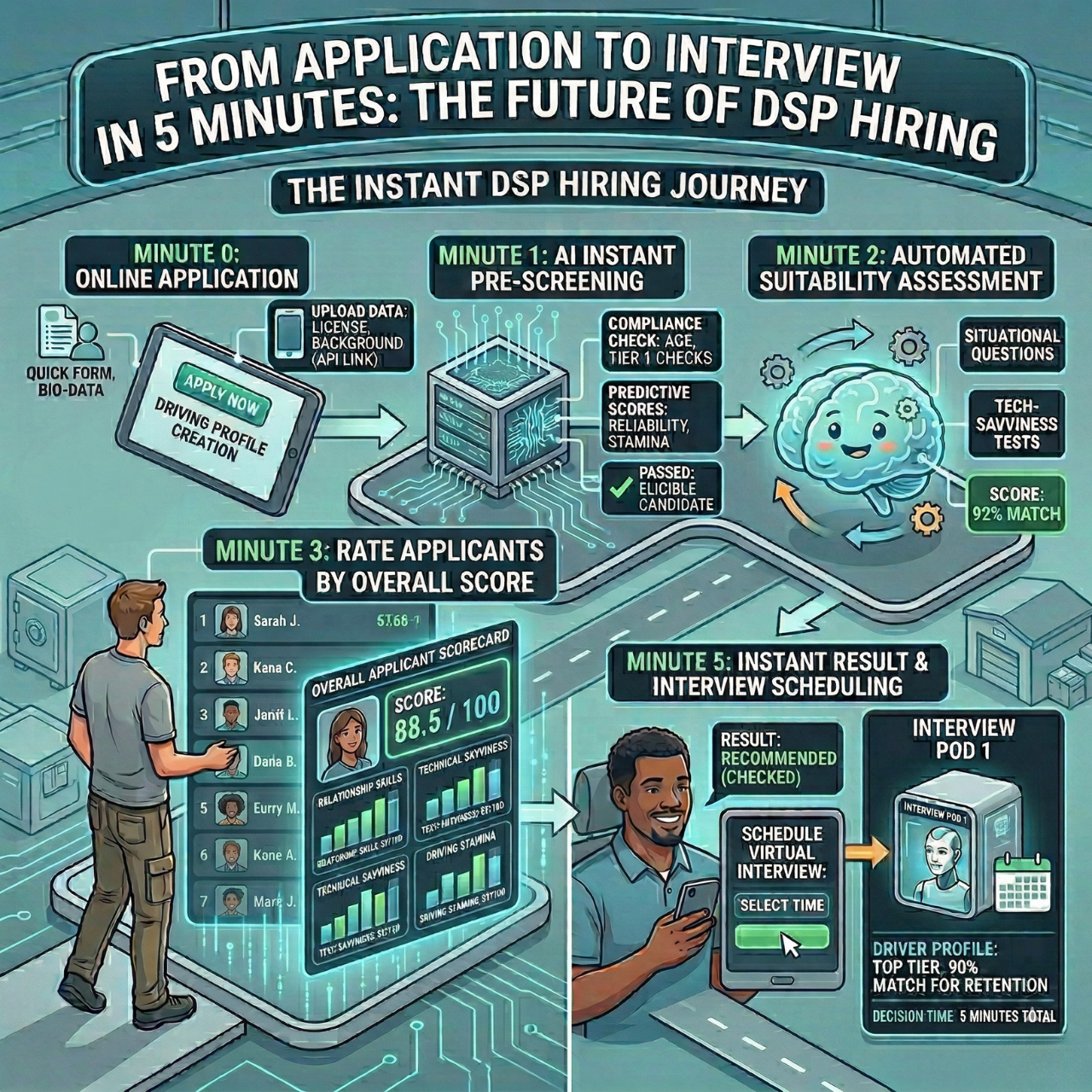
AI cuts your time-to-hire in half by automating screening and those early communications. When you need to fill seasonal jobs or ramp up quickly, AI can process hundreds of applications in the time it’d take a human to read a handful.
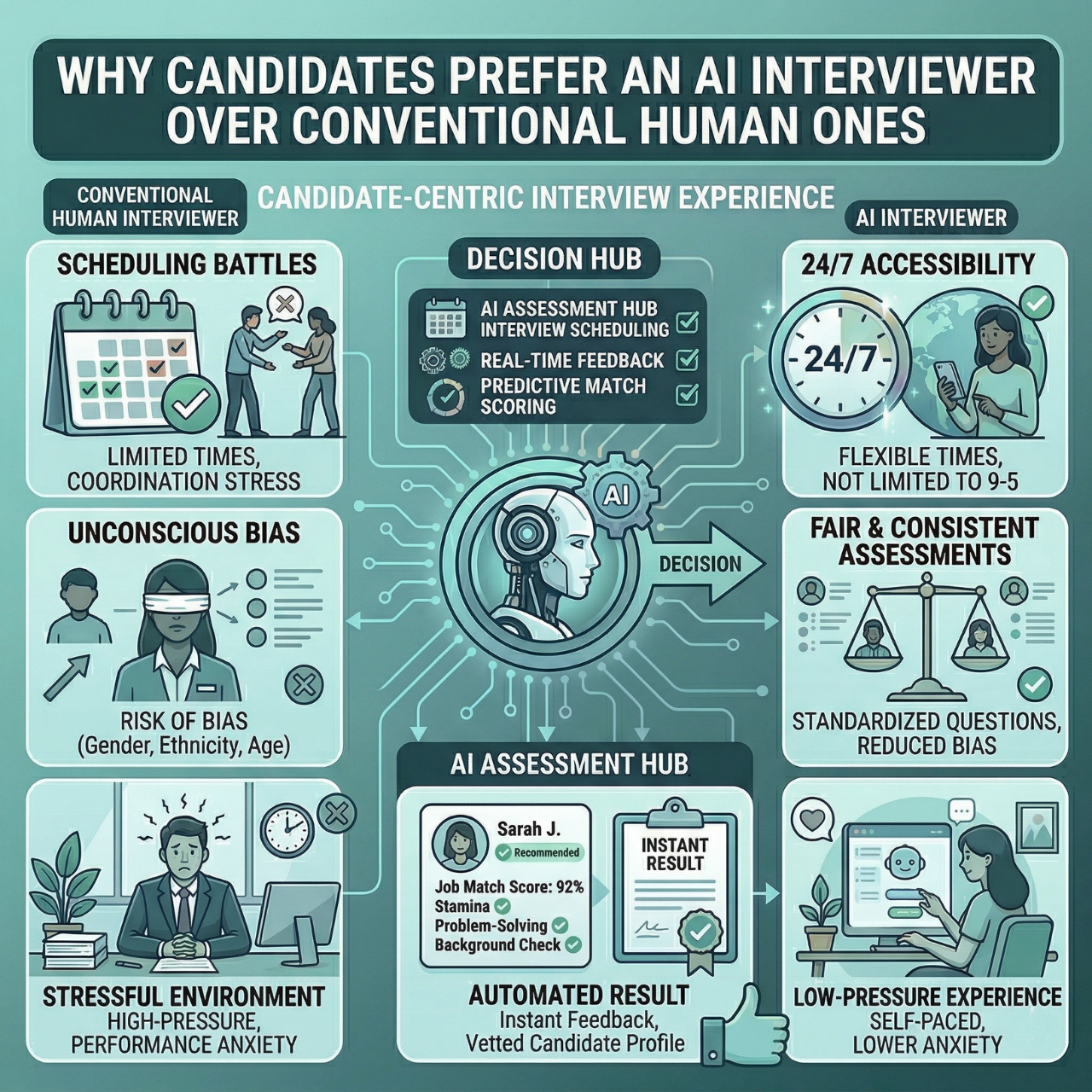
The tech helps minimize unconscious bias by focusing on objective qualifications, not first impressions. That means more consistent evaluations for everyone.
You get better matches, too. AI predicts who’s likely to succeed in specific roles—like warehouse worker, driver, or supply chain manager—based on their experience and your job’s requirements.
Key Challenges for Logistics Companies
Your logistics business deals with unique hiring headaches:
- High turnover forces constant recruiting and training
- Seasonal demand spikes require fast hiring at scale
- Competition for skilled workers (drivers, forklift operators, warehouse managers) is intense
- HR teams get bogged down with admin work like screening, scheduling, and candidate communications
Benefits of AI Hiring for Logistics Companies
AI hiring tools slash recruitment time while improving the quality of your candidate matches. They help clear scheduling bottlenecks and reduce unconscious bias that might limit your talent pool.
Improving Candidate Screening Efficiency
AI screening tools can review hundreds of applications in minutes, not days. The tech scans for specific qualifications like:
- CDL certifications
- Warehouse management experience
- Supply chain credentials
You set up automated screening questions to filter candidates based on what you actually need. The system ranks applicants by how well they match your job criteria.
Your HR team then reviews only the most qualified candidates instead of slogging through every application. AI also spots relevant skills in different formats—like “forklift operator,” “forklift certified,” or “powered industrial truck operator”—and connects the dots.
Reducing Time-to-Hire
Traditional logistics hiring can drag on for weeks or even months. AI recruitment platforms speed things up by automating repetitive tasks like:
- Initial screenings
- Interview scheduling
- Candidate follow-ups and updates
Candidates stay engaged instead of waiting days for a response. Research shows that 45% of logistics companies using AI recruitment have cut their time-to-hire significantly.
In logistics, every day a driver or warehouse role stays empty can hurt operations. Filling critical roles fast keeps things running smoothly.
Minimizing Human Bias in Recruitment
AI systems evaluate candidates based on their skills and experience, not names, addresses, or where they went to school. The tech zeroes in on what predicts job performance.
You can program AI tools to ignore demographic info during the first round of screening. That way, qualified candidates get a fair shot, even if they might’ve been overlooked before.
Every candidate answers the same questions and gets assessed by the same criteria. Your hiring decisions rest on consistent, objective measures—not gut feelings.
AI-Driven Solutions for Talent Acquisition
AI tech speeds up hiring by reviewing applications automatically, predicting which candidates will thrive, and testing job skills with smart digital tools. These solutions help logistics companies fill positions faster and find better matches for their teams.
Automated Resume Parsing
AI resume parsers can read through hundreds of applications in minutes. The software automatically pulls out:
- Work history
- Certifications
- Skills
You set your requirements for logistics roles, and the AI ranks candidates based on how well they fit. Need CDL licenses, forklift certifications, or warehouse management experience? The AI picks those up without you having to scan every document.
Most parsing tools connect straight to your ATS, so candidate info flows right into your database—no tedious data entry.
Predictive Analytics for Talent
Predictive analytics looks at your past hiring data to guess which candidates will perform well and stick around. The AI checks patterns from your best employees and looks for similar traits in new applicants.
You can spot warning signs that someone might leave within the first year, like:
- Commute distance
- Salary expectations
- Job-hopping history
Analytics also help you find skill gaps before they become a problem. The AI can show you which positions are toughest to fill and where to focus your recruiting budget.
AI-Powered Assessments
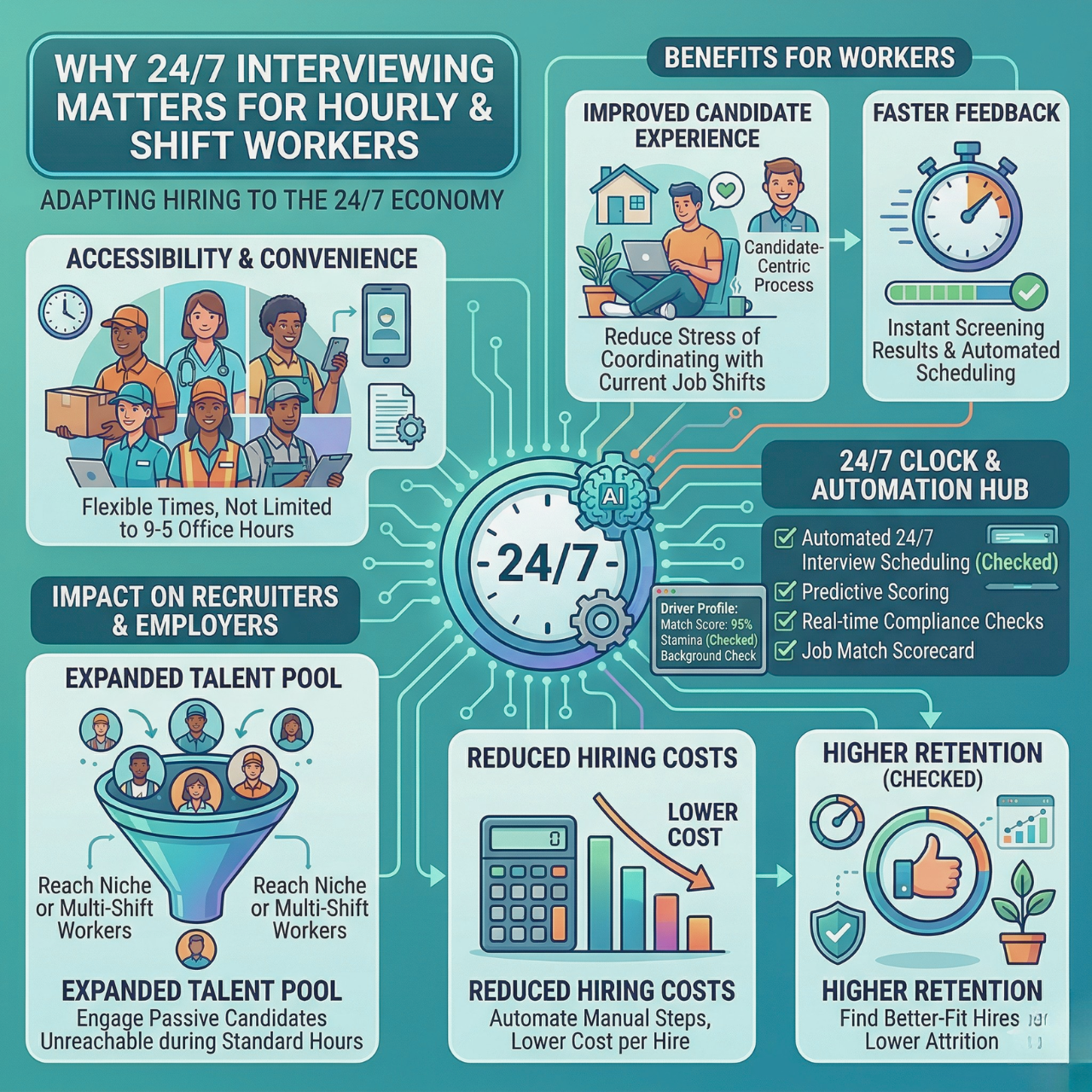
Digital assessment tools test job-specific skills using simulations and scenario-based questions. Candidates can take these tests on their phone or computer whenever it suits them.
For logistics roles, you might use assessments that measure:
- Problem-solving speed
- Attention to detail
- Safety knowledge
The AI scores responses instantly and compares them to benchmarks from your top performers. Chatbots can also run initial screening interviews by asking pre-set questions and evaluating answers. These tools work around the clock, so candidates in any time zone can jump in right away.
Implementing AI in the Logistics Recruitment Process
AI recruitment tools need the right setup and team prep to actually work. That means connecting new tech with your current systems and keeping an eye on costs.
Integrating AI With Existing HR Systems
Your AI recruitment tools should connect smoothly with your ATS and other HR software. Most modern AI platforms offer direct integrations with popular systems like Workday, SAP, and Oracle.
Start by checking if your ATS has API capabilities; these let data flow between systems without manual entry. It’s smart to test the integration with a handful of positions before rolling it out everywhere.
Key setup priorities:
- Transfer existing candidate info, job templates, and workflows
- Map data fields correctly (some tools automate this, others don’t)
- Build automated workflows that update candidate status in your ATS
Training HR Teams
Your HR staff needs hands-on training to get the most out of AI recruitment tools. Plan for at least two weeks of initial training, including system tutorials and practice sessions.
Focus on:
- Reading and interpreting AI-generated candidate scores
- Adjusting screening parameters for different jobs
- Knowing when to step in for a human review
- Understanding bias detection alerts
Your team should work alongside AI, not rely on it blindly. The tech does the screening and matching, but recruiters make the final calls using both AI insights and human judgment.
Cost Considerations for Adoption
AI recruitment tools usually cost between $5,000 and $50,000 a year, depending on your hiring volume and which features you want. Figure out your current cost-per-hire first so you can measure if it’s worth it.
Typical expense categories:
- Software licensing: $200–$2,000/month
- Implementation setup: $2,000–$10,000 one-time
- Training programs: $1,000–$5,000 one-time
- Ongoing support: $100–$500/month
Companies using AI tools often report lower cost-per-hire, thanks to faster screening, better matches, and less turnover.
Future Trends in AI Hiring for Logistics Companies
By 2026, AI hiring tools will be standard across logistics companies. New tech will focus on skills-based matching and faster decision-making.
Companies are under pressure to balance automation’s benefits with workforce needs and legal requirements. It’s not always simple.
Evolving AI Technologies
AI recruitment tools are getting smarter at matching candidates to logistics roles. New capabilities you can expect include:
- Predictive matching that links driver experience to route complexity
- Automated screening for warehouse management skills
- Real-time candidate assessment via video interviews
- Integration across multiple HR systems (less manual data entry)
The biggest change is skills-based recruiting. Instead of relying on job titles and years of experience alone, AI will spot transferable skills from other industries that fit logistics roles.
Impact on Workforce Strategy
Your hiring strategy has to keep up as AI reshapes which roles matter most. You’ll want people who can work with AI systems, not just around them.
Key workforce shifts include:
- More demand for IT specialists who understand logistics operations
- Employees who can train and oversee AI tools
- Roles moving toward decision-making, not just routine tasks
- Tougher competition with other industries for tech talent
You may find it makes more sense to train your current team instead of hiring entirely new talent.
Ethical and Compliance Considerations
AI hiring tools have to follow employment laws, and you’re still on the hook for how AI makes decisions.
Critical compliance areas include:
- Bias prevention: AI can inherit biases from training data
- Transparency: Candidates may need to know how AI impacts decisions
- Data privacy: Candidate information must be protected under state and federal laws
- Equal opportunity: Tools must not disadvantage protected groups
Best practices:
- Test AI systems regularly for bias
- Keep humans in the loop for final decisions
- Be upfront with candidates about AI use and data collection
- Document how your tools work and what decisions they influence
Hire Faster Without Slowing Operations
Logistics hiring breaks down when roles stay open too long. High turnover, tight labor markets, and seasonal spikes make speed critical. AI hiring for logistics companies helps teams screen faster, reduce manual work, and keep operations moving.
HRMLESS supports logistics teams by automating early screening and scheduling, so recruiters can focus on decisions that matter. The result is faster hiring, better-fit candidates, and less strain on HR teams.
Ready to reduce hiring delays and missed shifts? Book a Demo and see how AI can simplify logistics recruiting.
Frequently Asked Questions
What is AI hiring for logistics companies?
AI hiring for logistics companies uses software to automate tasks like resume screening, candidate ranking, and interview scheduling. These tools help logistics teams hire faster while focusing on skills, certifications, and experience that matter for the job.
How does AI hiring help reduce time-to-hire in logistics?
AI speeds up hiring by reviewing large volumes of applications in minutes instead of days. Automated screening, scheduling, and candidate communication keep the process moving, which is critical when filling warehouse, driver, or supply chain roles quickly.
Can AI hiring tools handle high-volume and seasonal logistics hiring?
Yes. AI hiring tools are well-suited for high-volume recruiting and seasonal spikes. They apply consistent criteria to every applicant, helping logistics teams scale hiring without overwhelming HR staff.
Does AI hiring reduce bias in logistics recruitment?
AI hiring helps minimize bias by evaluating candidates based on structured data like skills, experience, and certifications. While it does not eliminate bias entirely, it supports more consistent and objective early-stage screening.
Will AI hiring tools integrate with existing ATS systems?
Most AI hiring platforms integrate with common applicant tracking systems. This allows candidate data, screening results, and status updates to flow automatically, reducing manual work and data duplication.
Is AI hiring difficult for logistics teams to adopt?
AI hiring tools are designed to be user-friendly. With basic training and clear workflows, logistics teams can adopt AI quickly and start seeing faster hiring results without overhauling their entire process.
Featured

Subscribe to ournewsletter
Related posts
Explore the world of photography with our curated selection of
portfolio websites that showcase creativity and innovation.