

How To Use AI In Talent Acquisition For Faster Hiring
Learn how to use AI in talent acquisition to automate screening, scheduling, and outreach, so you hire faster, cut no-shows, and improve candidate quality.

If you are wondering how to use AI in talent acquisition, start with the biggest pain points in your hiring process. AI hiring software can take over repetitive work like screening, scheduling, and follow-ups. That means faster shortlists, fewer no-shows, and more time for real conversations with qualified people.
With HRMLESS, teams use automated recruitment tools to score candidates, schedule interviews, and keep engagement going around the clock. The result is faster hiring with better candidate quality and less manual effort.
In this guide, you will learn where AI fits into sourcing, screening, assessment, and candidate engagement. By the end, you will know exactly how to apply AI in talent acquisition without losing the human touch.
The Meaning Of Using AI In Talent Acquisition
Using AI in talent acquisition changes how you find, screen, and select candidates. It speeds up tasks like assessing resumes, scheduling interviews, and keeping candidates engaged across multiple channels. At the same time, it introduces concerns around fairness, transparency, and accuracy that you need to manage carefully.
It all starts with understanding where AI adds value and where human judgment remains essential. The goal is to combine automation and human decision-making so you can hire faster without sacrificing quality or fairness.
What Is AI-Powered Talent Acquisition
AI-powered talent acquisition uses computer programs to automate parts of recruiting. These tools scan resumes, rank candidates, and even conduct initial interviews. This means you spend less time on routine tasks and more time focusing on the best people.
For example, AI can quickly match job descriptions with candidate skills and flag top fits. It also automates interview scheduling to reduce no-shows.
AI acts as a first filter that improves the quality of applicants you review. This makes hiring faster and helps you reach more qualified candidates while helping to minimize bias.
Benefits of AI in Recruitment
AI offers several clear advantages in recruiting: speed, efficiency, and improved candidate quality. You can reduce time-to-hire by over 60% because AI speeds up sourcing, pre-screening, and scheduling.
Automated tools save you around 2.7 hours per hire by handling repetitive tasks that used to require manual work. AI also helps cut down on ghosting by engaging candidates promptly through SMS or email nudges. It keeps momentum going and reduces no-shows by up to 50%.
AI scoring highlights candidates who meet your job requirements, so you do not waste time on unqualified applicants. You can scale your hiring without adding stress or staff, and AI tools work with your ATS and HRIS to limit disruption to existing workflows.
Key Challenges and Considerations
While AI improves hiring, it also comes with challenges. One major concern is bias. AI systems learn from past data, which can include human biases, so you must monitor and adjust AI to make sure it does not unintentionally favor or exclude groups.
Another issue is transparency. You need to understand, in broad terms, how AI algorithms decide which candidates advance to keep your process fair and compliant with laws. Candidate experience matters as well.
Relying too much on AI might feel impersonal to applicants, so using a human touch alongside automation keeps communication clear and respectful. Finally, integration with existing systems requires careful planning, so AI tools work smoothly with your current workflows.
AI Tools and Technologies for Recruitment
Using AI in recruitment means relying on smart systems that handle tasks faster and with less bias. These tools help you sort candidates, communicate with them, and track the hiring process. They free up your time and improve how you identify the best fit for your roles.
Applicant Tracking Systems with AI
Applicant Tracking Systems (ATS) help manage job applications by organizing resumes and candidate data in one place. When powered by AI, an ATS can do more than just store information. It automatically ranks candidates based on skills, experience, and other factors you set.
This saves you time and reduces mistakes from manual sorting. AI-driven ATS tools also schedule interviews and send candidate reminders. This lowers your no-show rates and speeds up hiring without extra manual work. You get clear insights into where each candidate stands at every stage.
Key benefits include:
- Automated resume sorting and ranking
- Integration with your current HR systems
- Real-time hiring analytics and dashboards
- Reduced administrative tasks and manual data entry
AI-Powered Resume Screening
Resume screening is tedious and often inconsistent. AI tools scan hundreds or thousands of resumes quickly using criteria relevant to your job posting. These systems detect important skills, experience, and qualifications without relying on human assumptions.
You will not miss top candidates buried in a stack of resumes. These tools highlight the best matches and filter out unqualified applicants early. This means your team focuses only on candidates who meet your standards.
Strong AI screening platforms learn over time to improve results, saving you hours per hire. By automating this process, you also minimize ghosting because candidates who do not fit are informed faster, keeping your pipeline clean and active.
Chatbots and Virtual Assistants in Hiring
Chatbots and virtual assistants interact with candidates at various stages. They answer common questions around the clock, schedule interviews, and collect information from applicants. This keeps candidates engaged and moves them smoothly from one step to the next.
Using conversational AI reduces delays and administrative follow-ups. Candidates appreciate fast replies, which improves their experience with your company.
You also save time by automating routine communications that typically require human intervention. These assistants reduce the chance of human error and bias in messaging, which improves fairness and efficiency.
Implementing AI in the Hiring Process
To use AI effectively in hiring, you need to set clear goals, pick the best tools, connect them with your current systems, and train your team. Done well, these steps help you save time, reduce bias, and improve candidate quality at the same time.
Defining Talent Acquisition Goals
Start by outlining exactly what you want AI to improve in your hiring process. Are you looking to speed up screening, reduce no-shows, or improve candidate matching? Clear goals help you choose AI tools that fit your needs.
Focus on measurable outcomes like:
- Time to hire
- Candidate engagement rates
- Quality of hires
Write down your priorities and share them with your team. This makes it easier to measure success and adjust your approach over time.
Selecting the Right AI Solutions
Choosing the right AI tools means matching features to your goals. For example, if you want to reduce ghosting, look for platforms with automated SMS and email engagement. If fast scoring matters most, pick AI with strong pre-screening and filtering.
You should consider:
- Ease of use for recruiters and hiring managers
- Integration options with your existing tech stack
- Quality of support, training, and product updates
Integration With Existing Systems
Your AI tools must connect with your current software, such as your ATS (Applicant Tracking System) or HRIS (Human Resource Information System). Seamless integration prevents data silos and avoids double work.
Check that your AI solution:
- Syncs candidate data in real time
- Updates statuses automatically
- Fits into your current workflow rather than forcing new steps
Good integration keeps your team informed and hiring fast without requiring a full process rebuild.
Training Recruiters and Teams
Even the best AI will not help if users are not trained. Train your recruiters to understand what AI can and cannot do. Teach them how to interpret AI scores and how to engage candidates after automated steps.
Highlight key points such as:
- Reading and explaining AI candidate reports
- Handling exceptions or flagged candidates
- Communicating AI’s role to hiring managers and candidates
Enhancing Candidate Sourcing With AI
Using AI in candidate sourcing lets you tap into multiple channels and data automatically. It improves how well candidates fit your roles by predicting match quality and helps you keep candidates interested with timely, personalized communication.
Automated Talent Pool Search
AI scans resumes, profiles, and social media from many platforms at once. This broad search finds more potential candidates than manual sourcing. You can set filters for skills, experience, location, and education to narrow results.
AI then prioritizes the best fits based on your criteria. This saves you time and increases the chance of quality hires. You do not have to juggle multiple sites or databases manually anymore. AI pulls the data into one place so you can focus on outreach and decision-making.
Predictive Analytics for Talent Matching
AI uses past hiring data and candidate skills to predict who is likely to succeed in a role. It scores and ranks candidates based on fit, which reduces guesswork. This helps you focus only on qualified prospects and avoid bias by sticking to clear criteria.
Your team can trust AI to surface top talent quickly. Predictive analytics also identifies trends, such as which skills lead to success in certain jobs. You can then adapt hiring standards and job descriptions to improve results over time.
Proactive Candidate Engagement
AI enables you to contact candidates personally and quickly. It sends emails or texts that feel tailored to the candidate based on their data and previous interactions. This keeps candidates interested while reducing ghosting and delays.
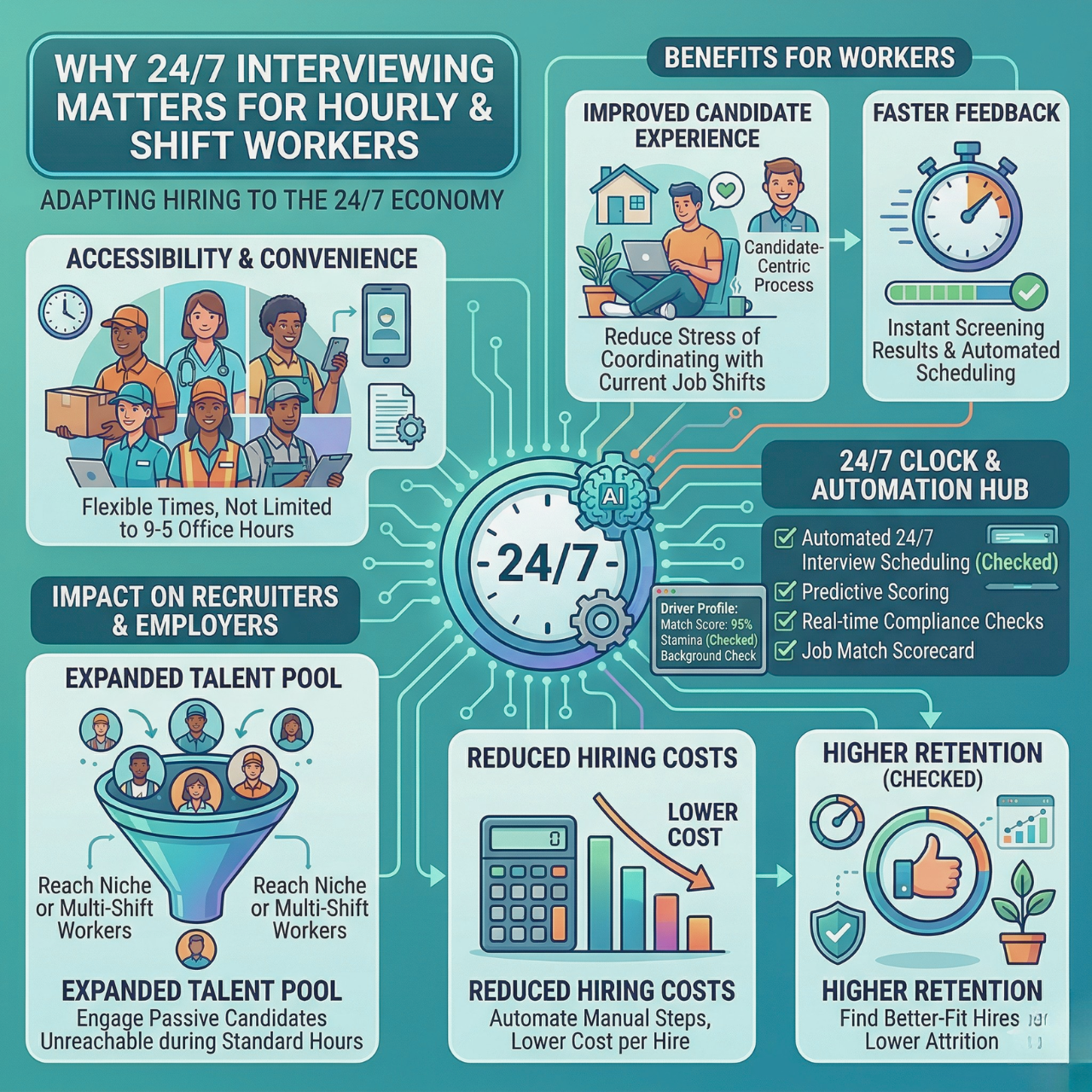
Automated engagement tools nudge candidates to complete tasks like interview scheduling or form submissions. With 24/7 conversational AI, candidates get timely replies, which makes your process faster and smoother.
You stay connected without adding extra work to your plate, and this proactive approach helps you lock in top talent before competitors.
Improving Candidate Assessment Using AI
You can use AI to make candidate assessment faster, fairer, and more accurate. It helps you screen skills, analyze interviews, and evaluate cognitive abilities with structured criteria. This streamlines your hiring and ensures only the best-fit candidates move forward.
AI-Based Skill Assessment Tools
AI skill assessment tools test candidates on job-specific abilities such as coding, language, or technical knowledge. These tools automatically grade tests and rank candidates based on their performance. That saves you time by replacing manual scoring.
AI can tailor questions to each candidate’s skill level and create a more personalized experience. Using clear scoring criteria reduces human bias and errors in evaluation. You get consistent comparisons across candidates.
Video Interview Analysis
AI analyzes video interviews by studying speech patterns, facial expressions, and word choice. It highlights communication skills, confidence, and consistency, which give you insights beyond a resume.
You can automate scheduling and scoring of video interviews with specialized tools. The platform scores answers based on your criteria, so you only review top candidates.
AI also flags possible red flags, such as long pauses or inconsistent answers. This helps reduce bias and ensures your decisions rely on consistent data across interviews.
Cognitive and Psychometric Evaluations
AI-powered cognitive tests measure reasoning, memory, and problem-solving speed that are relevant to job tasks. Psychometric assessments evaluate personality traits and motivation to check culture fit and job suitability.
These AI evaluations are faster and more reliable than many traditional paper tests. They collect data points that can help predict candidate success beyond skills alone. AI scores candidates with objective rules, allowing you to compare results easily and make better-informed decisions.
Reducing Bias and Improving Diversity
Using AI in hiring helps you spot hidden bias and build more diverse teams. It supports fairness by checking data and decisions in close to real time. You get tools that support equal chances for all candidates and improve your hiring outcomes.
Identifying Bias in Recruitment
Bias can show up in job descriptions, candidate screening, and interview decisions. It often happens without you noticing. AI helps by analyzing language and patterns to flag possible areas of bias.
It can highlight if certain groups are unfairly screened out or overlooked. For example, AI can track diversity metrics during hiring to reveal gaps and trends. Tracking bias early is key to keeping your process fair and open to all qualified candidates.
AI Strategies for Fair Hiring
AI reduces bias by standardizing candidate review and focusing on skills and experience. It automates resume screening using objective criteria, which avoids many individual assumptions.
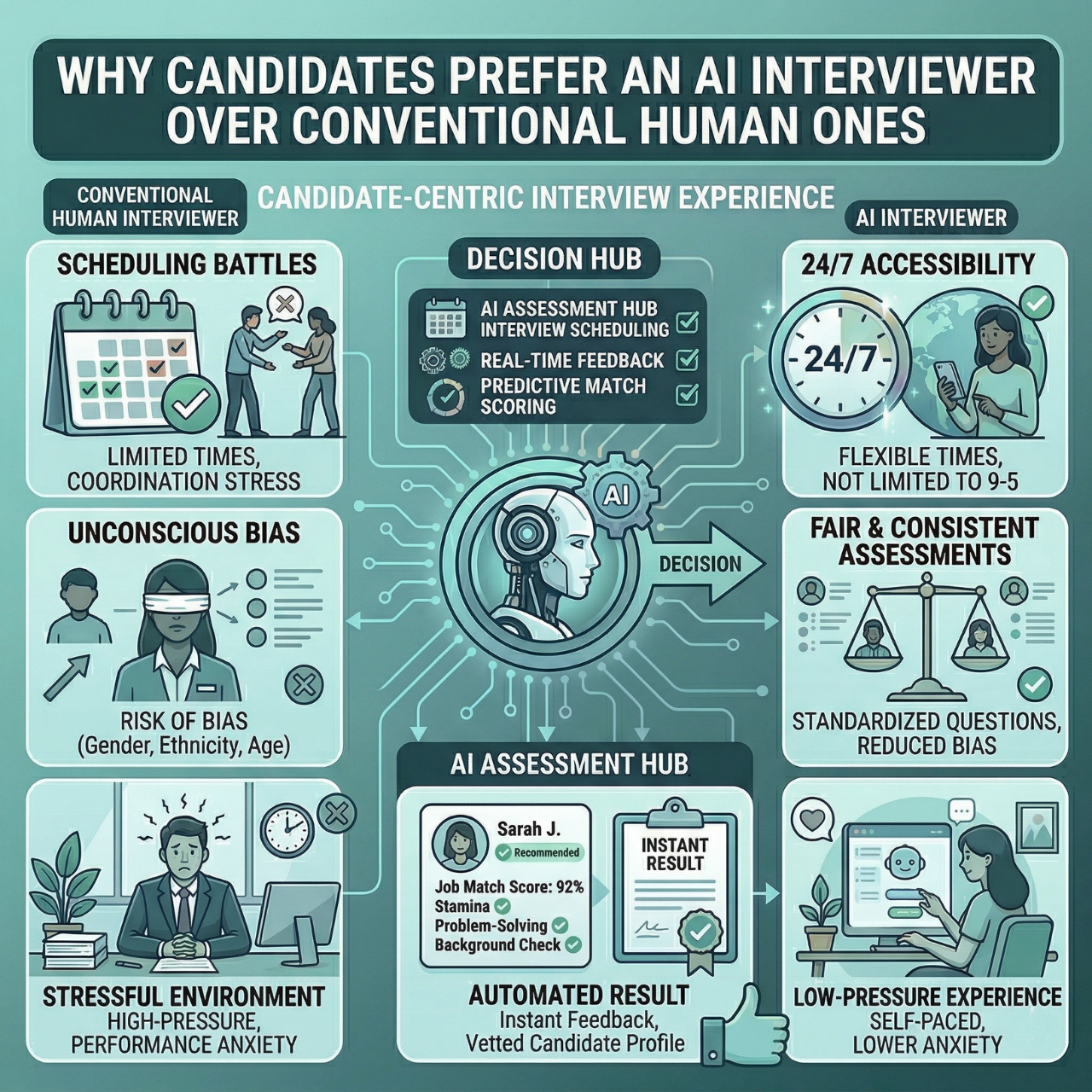
You can use AI to conduct 24/7 pre-screening interviews, scoring candidates fairly and consistently with the same rules. Automated scheduling and engagement tools then keep the interview process smooth and transparent. Data-driven decisions create a fairer hiring pipeline and attract a wider, more diverse pool of talent.
Measuring Success and ROI of AI in Talent Acquisition
To measure how well AI works in hiring, focus on clear data points and ongoing improvements. Look at indicators that show both efficiency and candidate quality. Use the results to refine your process over time.
Key Performance Indicators to Track
Track metrics that show how AI improves your hiring outcomes and saves time. Important KPIs include:
- Time to hire: How quickly roles are filled after AI tools are in use
- Candidate quality: Whether AI-sourced pools have higher match scores or better performance later
- Cost per hire: Expenses before and after AI adoption to justify the investment
- Candidate engagement: Response rates to AI-driven messages or interviews
- No-show rates: Whether automated scheduling reduces interview no-shows
These measures help you assess both short-term efficiency and long-term fit, which is essential for strategic hiring.
Continuous Optimization Strategies
Regularly review your data to improve how AI supports your hiring.
- Analyze drop-off points: Check where candidates leave the process and adjust workflows or communications
- Test messaging tactics: Experiment with different SMS and email formats to boost responses
- Update scoring models: Ensure AI filters align with changing role requirements and company goals
- Use real-time analytics: Use dashboards to spot bottlenecks and speed up hiring
- Gather feedback: Incorporate recruiter and candidate input to refine AI interactions
Consistent adjustments ensure AI stays effective and aligned with your hiring needs.
Future Trends in AI for Talent Acquisition
AI in hiring is evolving quickly. You will see new tools that go beyond simple automation and provide deeper insights into candidate potential and workforce planning. Adapting to these changes will help you stay efficient and hire better candidates faster.
Emerging AI Technologies
AI is moving toward smarter and more human-centered features. Predictive analytics will keep improving, forecasting candidate success and retention more accurately. This means you can focus on those likely to thrive in your roles.
Automated pre-screening will get sharper at spotting skills and potential based on richer data. Conversational AI interviews will become common, offering candidates 24/7 access to interviews on their schedule.
Voice engagement will add a more natural feel to AI interactions and help you evaluate communication skills more effectively. The future also includes tools that aim to reduce bias, making your process fairer and more inclusive.
Preparing for Ongoing Innovations
To keep up, you need systems that can flex as you grow. Integrated platforms help ensure automation fits smoothly into your existing workflow. Continuous learning for your AI tools matters because the best systems update with new data and regulations.
Training your team on these tools increases adoption and lets you maximize speed and quality. Plan for more real-time analytics, and track every step from application to hire.
This helps you spot bottlenecks early and adjust quickly. Staying proactive with innovation keeps you ahead in sourcing and engaging top talent.
Ethical and Legal Considerations
Using AI in hiring means handling sensitive information and following strict laws. You need to protect candidate privacy and comply with employment rules to keep your process fair and legal. This helps avoid bias, discrimination, and legal problems while building trust with candidates.
Data Privacy in Recruitment AI
When you use AI tools, you collect personal data such as resumes, contact information, and interview answers. You must protect this data from leaks or misuse. Follow laws like GDPR or CCPA by getting clear consent from candidates before collecting their information.
Limit data access only to those involved in hiring. Use encryption and strong security measures to keep data safe. Also, be clear with candidates about what data you collect, why you collect it, and how long you keep it. This transparency builds trust and reduces risk.
Compliance With Employment Laws
AI tools must follow anti-discrimination laws such as Equal Employment Opportunity (EEO) rules. That means your AI should not unfairly exclude candidates based on race, gender, age, or other protected traits.
Test your AI regularly for bias in screening and scoring. If your tool favors or rejects candidates unfairly, fix it before hiring decisions are affected. Keep documentation of how your AI works and the steps you take to ensure fairness.
Stay updated on regulations about AI use in hiring, which can differ by country or state. Combining automation with human review helps maintain compliance and fairness.
Best Practices for Using AI in Talent Acquisition
Use these best practices to keep your AI hiring tools compliant, secure, and fair as you learn how to use AI in talent acquisition:
- Collect data with clear consent
- Use transparent privacy notices
- Secure candidate data with strong controls
- Encrypt sensitive information and limit access
- Test AI models for bias and adjust as needed
- Follow local employment and data laws
- Update policies regularly as regulations evolve
Following these steps protects your company and ensures your hiring process treats all candidates fairly.
Turn AI Hiring Strategy Into Daily Practice
When you understand how to use AI in talent acquisition, hiring moves faster and feels more controlled. Automation covers screening, scheduling, and nudging candidates, while your team focuses on judgment, fit, and closing. The result is a pipeline that is quicker, clearer, and more consistent.
HRMLESS brings AI screening, scheduling, and engagement into one workflow so recruiters spend less time on admin and more time with qualified candidates. You get shorter time-to-hire, stronger candidate quality, and a hiring process that can scale without burning out your team.
If you are ready to modernize your recruiting process, book a demo and see exactly how AI can slot into your current stack and improve results in your next hiring cycle.
Frequently Asked Questions
What are the best practices for integrating AI into recruitment processes?
Start by identifying repetitive tasks, such as resume screening and interview scheduling, that are ready for automation. Use AI tools that connect easily with your existing ATS or HRIS systems. Keep candidates informed with automated messaging to reduce no-shows, and review AI outputs regularly to ensure accuracy and relevance.
How can AI tools improve candidate screening and selection?
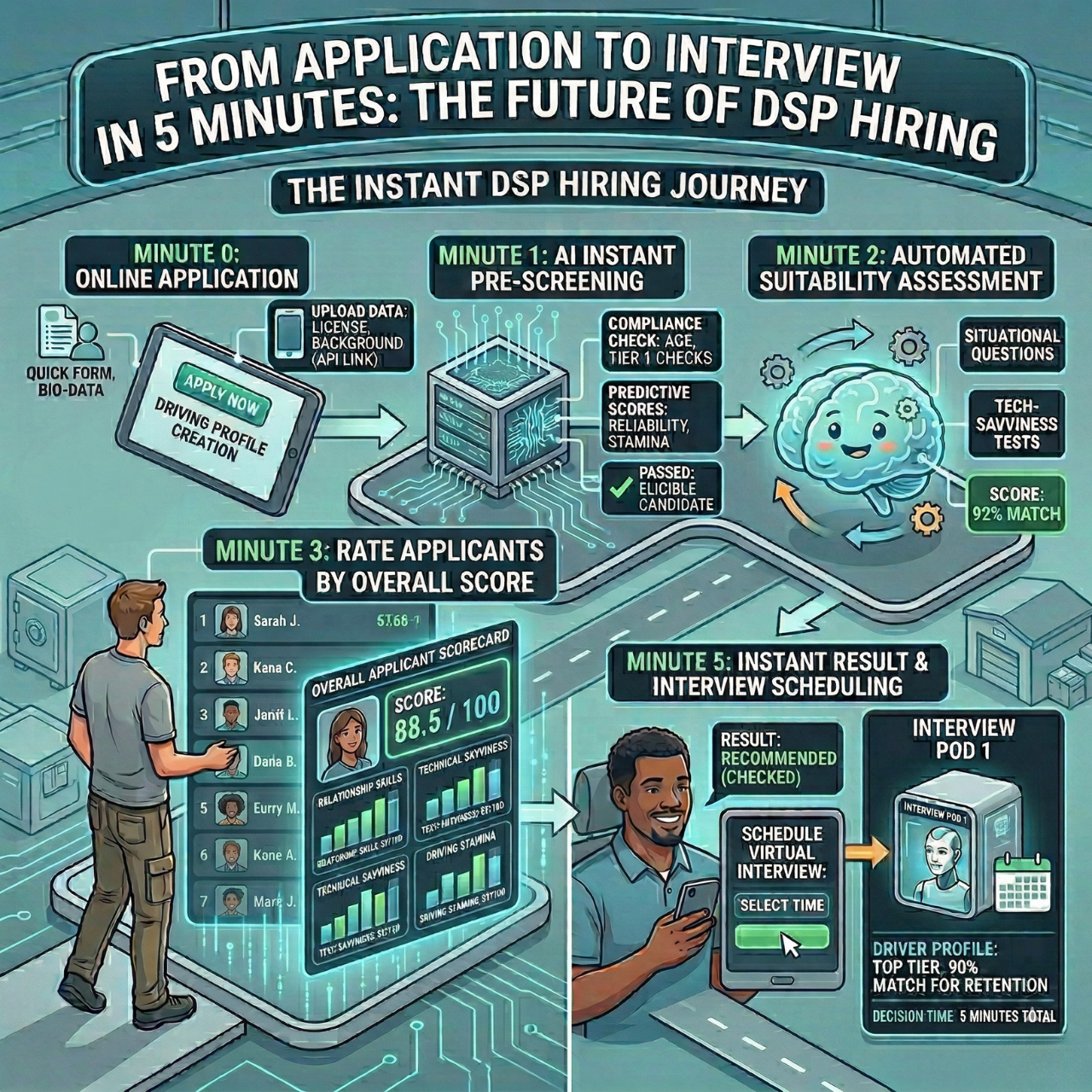
AI can quickly analyze resumes and pre-screen candidates based on your specific job criteria. It scores and ranks applicants to highlight the best fits. Automated interviews let candidates respond anytime, which speeds up engagement. This narrows down the pool before human review, saving you hours and improving candidate quality.
What measures should be taken to ensure AI in hiring adheres to legal and ethical standards?
Use AI systems built to comply with labor laws and data privacy rules. Regularly audit AI models to check for hidden bias in decision-making. Maintain transparency with candidates about how AI is used and keep human oversight in critical decisions. This protects your company and builds trust with applicants.
In what ways can AI contribute to reducing unconscious bias in talent acquisition?
AI can help remove biased language from job descriptions and focus screening on skills and qualifications rather than gender, race, or age. Automated scoring applies the same criteria to all candidates, which helps standardize evaluations and reduce the influence of unconscious bias.
Can AI be used to predict candidate success, and what are the methodologies?
Yes. AI can analyze past hiring data, job performance, and skills to predict future success. Machine learning models compare candidate traits with those of top performers in your company. This data-driven approach supports better decisions but should always be combined with human judgment.
How should companies measure the effectiveness of AI-driven recruitment efforts?
Track metrics like time-to-hire, candidate quality, and engagement rates. Compare the number of qualified candidates and offer acceptance rates before and after AI implementation. Tools with real-time dashboards help you identify bottlenecks and adjust settings. Also measure reductions in no-shows and ghosting to see how well AI keeps hiring moving.
Featured

Subscribe to ournewsletter
Related posts
Explore the world of photography with our curated selection of
portfolio websites that showcase creativity and innovation.