

Improve Hiring Accuracy With AI: A Guide to Smarter Recruitment
Improve hiring accuracy with AI by reducing bias, speeding screening, and identifying better-fit candidates using data-driven insights.
Trying to improve hiring accuracy with AI can feel impossible when you’re buried in resumes, rushed decisions, and conflicting feedback. Even strong teams miss great candidates when the process moves too fast.
HRMLESS helps by automating the early steps that create the most noise: screening, scoring, and scheduling. That means less guesswork, fewer time-wasting interviews, and a clearer shortlist.
In this guide, you’ll see where AI fits best, how to use it without overrelying on it, and what to track so accuracy improves over time.
How AI Fits Into Modern Hiring
AI tools now handle tasks like resume screening, candidate ranking, and interview scheduling; stuff that used to eat up recruiters’ days. These systems use pattern recognition and data analysis to match candidates with job requirements, and they do it way faster than a human could.
What is AI-Powered Recruitment?
AI-powered recruitment uses software that reads resumes, evaluates qualifications, and predicts job fit, all without constant human input. The tech relies on machine learning algorithms that get smarter as they see more data.
These systems scan resumes and actually interpret context, not just keywords. They look at how a candidate’s skills relate to job success, based on patterns from previous hires.
AI tools can even handle initial candidate outreach and automatically schedule interviews.
Common AI recruitment tools include:
- Resume screening software that ranks candidates by qualification level
- Chatbots that answer candidate questions 24/7
- Assessment platforms that evaluate skills through automated tests
- Predictive analytics that forecast candidate success rates
The technology takes over repetitive admin work, so your recruiting team can actually focus on connecting with top candidates.
Key Advantages of AI for Talent Acquisition
AI recruitment tools chew through hundreds of applications in minutes instead of days. Your team can review the most qualified candidates much faster, reducing time-to-hire.
The tech boosts accuracy by analyzing more data points than any person could reasonably handle. AI compares candidate qualifications to specific job requirements and historical performance data.
This helps you spot people who are likely to succeed, based on objective info—not just a hunch. AI also broadens your reach. The software can search databases and platforms nonstop, finding passive candidates who fit your needs.
You’re not stuck with just the folks who apply directly. These tools cut costs, too. When you spend less time on manual screening, your recruiters can manage more open roles at once.
Limitations and Ethical Considerations
AI systems can pick up biases from the data they’re trained on. If past hiring skewed toward certain groups, the algorithm might keep repeating those patterns. You’ve got to monitor AI tools regularly to catch and fix unfair screening.
The tech can’t fully grasp human qualities like creativity, adaptability, or cultural fit. AI measures what it can, but it misses the nuanced, soft skills that matter in so many jobs.
Your team still needs to run meaningful interviews and assessments.
Key ethical concerns include:
- Transparency: Candidates should know when AI reviews their applications.
- Data privacy: Keep personal info safe and use it right.
- Accountability: Someone has to take responsibility if AI makes a mistake.
- Fairness: Audits should check for discriminatory outcomes.
Use AI as a support tool, not the final decision-maker. Human judgment is still essential for seeing the full picture.
Optimizing Candidate Screening With AI
AI tools can zip through resumes, run smart assessments, and help root out hidden biases in your hiring. These technologies work together to make screening faster and more accurate.
Automated Resume Parsing
Resume parsing software automatically reads and organizes information from applications. The system pulls out work history, education, skills, and contact details with no manual data entry needed.
This tech saves you a ton of time during initial screening. Instead of slogging through hundreds of resumes, the AI scans them and creates structured data you can actually use.
It spots relevant keywords and qualifications based on your job requirements. Modern parsers handle all sorts of resume formats and layouts. PDFs, Word docs, even scanned images—no problem.
The software recognizes different ways candidates list their experience and standardizes the info, making it easy to compare. You can set criteria for the parser to flag, helping you zero in on candidates who meet your minimum requirements first.
AI-Driven Pre-Employment Assessments
AI assessment tools test candidates on skills and abilities that matter for the job. These tests measure technical chops, problem-solving, and job-relevant competencies through automated challenges.
The AI adapts questions as candidates go. If someone nails an answer, the system throws tougher questions at them. This adaptive testing gives you a clearer sense of each person’s abilities.
You get objective scores and detailed reports for every candidate. The data highlights strengths and weaknesses, so comparing applicants feels a lot fairer. Many systems even predict job performance based on assessment results and past hiring data.
These tools work for both technical and soft skill evaluation. They can test coding, communication, or industry-specific knowledge.
Reducing Unconscious Bias
AI screening hides personal info that could trigger unconscious bias during reviews. The system can strip names, ages, photos, and other demographic details before you even see a resume.
You focus on qualifications and experience, plain and simple. The AI applies the same criteria to everyone. This helps ensure a fair assessment based on actual abilities.
The tech also flags biased language in job descriptions. It flags words that might turn off certain groups and suggests neutral alternatives. Some systems track your hiring patterns and alert you to potential bias in your process.
Still, AI tools need the right setup and regular check-ins. Make sure your criteria don’t accidentally weed out qualified folks or favor certain groups.
Enhancing Interview Processes Using AI
AI is changing how interviews work. It analyzes candidate responses in real time, uncovers personality traits, and ranks applicants based on objective criteria—stuff that’s easy to miss with traditional methods.
Intelligent Video Interview Analysis
AI video interview platforms watch and evaluate candidates during live or recorded interviews. The tech examines facial expressions, tone of voice, and word choice to assess communication skills and confidence.
You can screen more candidates in less time this way. The AI looks for qualities you care about, such as problem-solving and teamwork. It creates detailed reports on each candidate’s performance.
The system applies the same standards to everyone. That makes it easier to compare applicants fairly. You also get timestamps showing when candidates gave their best or weakest answers, so you can focus review sessions where it matters.
Behavioral and Personality Insights
AI analyzes how candidates answer different question types to map out behavioral patterns. The tech identifies traits such as leadership, adaptability, and stress management by analyzing speech patterns and decision-making.
You get data on personality characteristics that predict job performance. The AI compares candidate responses to those of successful employees in similar roles at your company. This matching helps you find people who’ll thrive in your environment.
Key behavioral metrics AI tracks:
- Response speed and confidence
- Emotional intelligence indicators
- Communication clarity and structure
- Problem-solving style
- Cultural fit signals
These insights go way beyond what’s on a resume.
Real-Time Candidate Ranking
AI scoring systems rank candidates right after interviews wrap up. The tech assigns numerical scores based on your criteria and weights each factor as you want.
You can instantly see how candidates stack up. The AI creates sortable lists, highlighting top performers across skill categories. This really speeds up your decision-making process.
The ranking system updates as new candidates finish interviews. No more manual spreadsheets or endless note comparisons. The AI handles the math and offers clear recommendations, but you still make the final call.
Implementing AI Tools for Greater Hiring Accuracy
Getting AI tools into your hiring process takes some planning. You’ll want to pick solutions that fit your needs, connect them to your current systems, and roll them out without causing chaos.
Selecting the Right AI Solutions
Start by figuring out which hiring problems bug you the most. Are you drowning in resumes? Struggling to find qualified people? Once you know your pain points, look for AI tools that address them.
Check whether the AI learns from your hiring decisions and improves over time. The best tools improve as you use them. Ask vendors to show you real data on how their tool performs.
Don’t forget about bias testing and fairness features. Your AI should help reduce bias, not worsen it. Look for vendors who audit their algorithms and can explain how the system makes decisions.
Compare pricing models. Some charge per user, others by number of candidates or positions filled. It adds up.
Integration With Existing HR Systems
Your AI tools have to play nice with your current applicant tracking system and HR software. Most modern solutions offer integrations through APIs or pre-built connectors.
Test the data flow before going all-in. You want candidate information, interview feedback, and hiring decisions to sync automatically without manual entry. That’ll save you time and headaches.
Work with IT to make sure security and privacy are tight. The AI tool must comply with data protection laws and your company’s standards. Set up proper access controls so only the right people see candidate info.
Plan a testing period where you run the AI alongside your current process. That way, you can compare results and spot any hiccups before a full rollout.
Best Practices for Seamless Adoption
Train your hiring team before launching the new tools. Show them what the tech can and can’t do. Address worries about AI replacing people—these tools are here to support decisions, not make them for you.
Start with one part of your hiring process instead of trying to change everything at once. Resume screening is a popular place to start because it’s time-consuming and yields results quickly.
Set clear metrics to track success. Look at time-to-hire, quality of candidates reaching interviews, and hiring manager satisfaction. Check these numbers monthly to see if the AIs are actually helping.
Keep a human in the loop for final decisions. Use AI insights to inform your choices, but let real people make the call. Collect feedback from your team about what’s working and what needs a tweak.
Monitoring and Improving AI Hiring Outcomes
AI hiring systems need regular checkups to stay accurate and fair. You should measure performance, retrain models with new data, and gather feedback from recruiters and candidates to keep improving.
Measuring Predictive Hiring Accuracy
You’ll want to track specific metrics to see if your AI system is making solid predictions. Quality of hire is huge; it tells you if the candidates your AI selects actually do well on the job.
Compare your AI’s predictions to real job performance after 90 days, 6 months, and a year. Look at performance reviews, retention rates, and time to productivity.
If your AI thought someone would be a star but they left after three months, that’s something you need to dig into.
Track false positives and false negatives, too. False positives are weak candidates that the AI rated highly. False negatives are strong candidatesthat the AI missed.
Both can cost you. Set up a dashboard that shows these metrics by department, role, and hiring manager. This helps you spot where your AI shines—and where it needs work.
Continuous Model Training and Updates
Your AI hiring model needs fresh data to stay sharp. Job requirements change, company culture shifts, and the talent market never sits still. A model trained on 2023 data could easily miss the mark by 2025. Update your model every three to six months with the latest hiring data.
Include info about which candidates succeeded and which ones didn’t quite fit. This way, your AI learns to spot patterns that actually predict real success in your current environment. Keep an eye out for data drift. That’s when the types of candidates you’re seeing start to change.
Maybe your AI learned on mostly four-year degree holders, but now you’re seeing more bootcamp grads and self-taught folks. You’ll want to retrain your model to reflect this new crowd. Before rolling out an updated model, test it on historical data. Make sure your changes help, not hurt, accuracy.
Collecting and Acting on Feedback
Recruiters and hiring managers notice things AI metrics just don’t catch. They know when a top-rated candidate bombs the interview or when someone with a lower score turns out to be perfect.
Set up a simple feedback system where recruiters can flag AI decisions that seem off. Ask quick, specific questions like, “Did this candidate’s skills match the AI assessment?” or “Would you interview this person again?” Keep it short so people actually use it. Candidates have insights, too.
Send out surveys asking about their application experience and whether the job match felt right. If candidates keep saying the job descriptions don’t line up with what the AI recommended, it’s probably time to tweak something.
Review feedback every month and look for patterns. If several recruiters say your AI overvalues certain credentials or misses out on specific experience types, dig into your training data and model logic. Adjust things based on what you find, then check if those changes actually move the needle.
Make Hiring Decisions You Can Trust
When hiring accuracy is low, teams waste time, miss strong candidates, and feel pressure to move fast without enough signal. Using AI thoughtfully helps you improve hiring accuracy with AI by adding structure, consistency, and better data at each step.
HRMLESS supports teams by removing early-stage noise so recruiters can focus on judgment, not guesswork. The result is a faster process with clearer shortlists and fewer costly hiring mistakes.
Ready to reduce uncertainty in your hiring decisions? Book a Demo and see how smarter screening can improve accuracy without slowing you down.
Frequently Asked Questions
How does AI help improve hiring accuracy?
AI helps improve hiring accuracy by analyzing large amounts of candidate data consistently. It spots patterns linked to job success that humans may miss when reviewing resumes quickly or under pressure.
Can AI really make better hiring decisions than humans?
AI does not replace human judgment. It supports better decisions by reducing noise, standardizing evaluations, and highlighting strong-fit candidates earlier.
Will AI eliminate bias in hiring?
AI can help reduce bias, but it does not remove it completely. Regular audits, diverse training data, and human oversight are still required to ensure fair outcomes.
Is AI only useful for large companies with high hiring volume?
No. Small and mid-sized teams benefit by saving time on screening and focusing effort where it matters most.
What parts of the hiring process benefit most from AI?
Resume screening, pre-employment assessments, interview scheduling, and early candidate ranking see the biggest gains. These steps are repetitive and data-heavy, which makes them ideal for automation.
Does using AI make the hiring process feel impersonal to candidates?
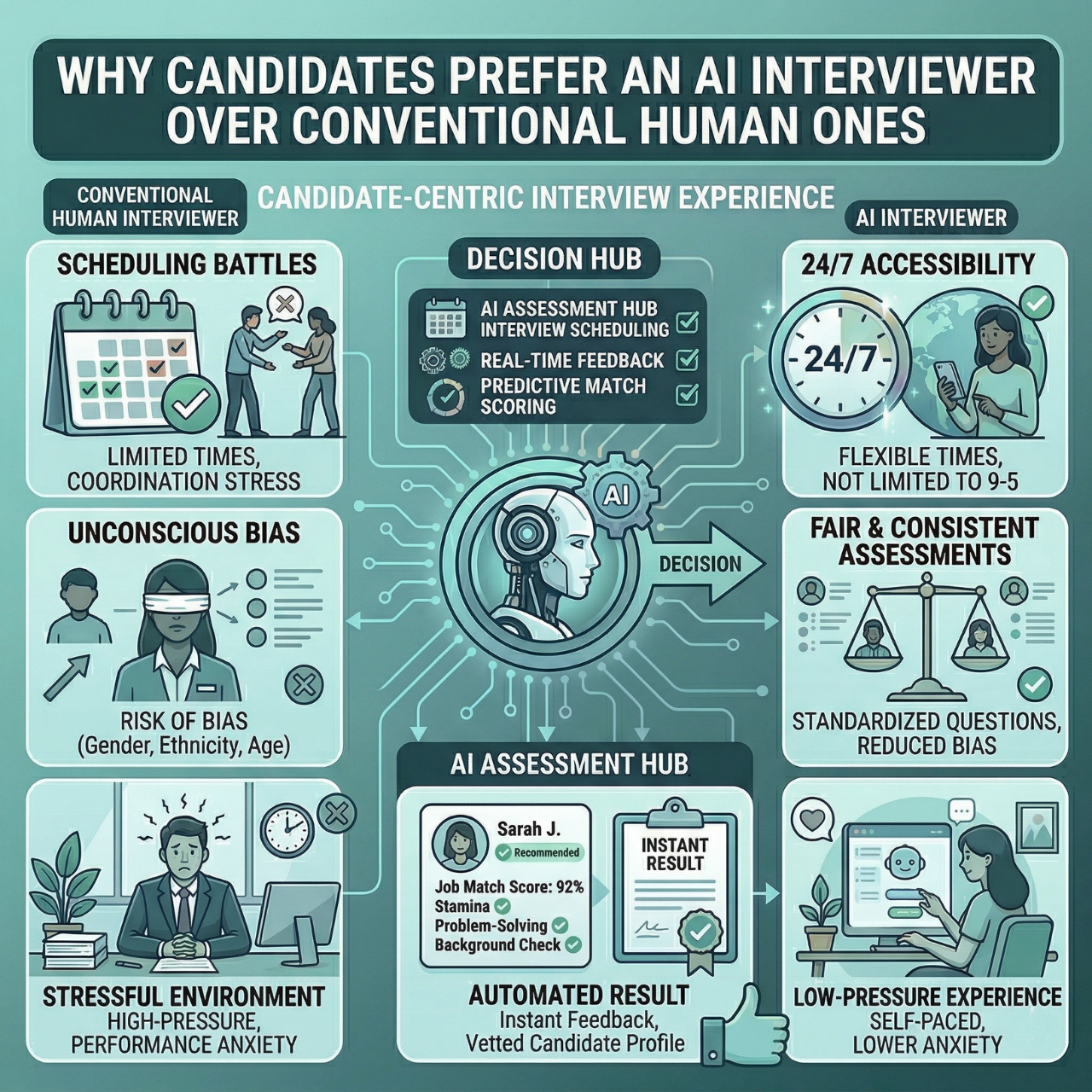
When used correctly, AI often improves the candidate experience. Faster responses, clear next steps, and fewer unnecessary interviews reduce frustration.
How do teams know if AI is actually improving hiring accuracy?
Teams should track quality of hire, retention, and performance after onboarding. Comparing outcomes before and after AI adoption shows whether predictions align with real success.
Featured

Subscribe to ournewsletter
Related posts
Explore the world of photography with our curated selection of
portfolio websites that showcase creativity and innovation.