

Pros and Cons of AI Hiring: What Modern Recruiters Need to Know
Learn the pros and cons of AI hiring, from faster screening to bias risks. See how recruiters can use AI to improve speed without losing quality.

Hiring teams are under pressure to move faster without lowering the bar. When inboxes fill up and schedules get messy, it is hard to keep strong candidates engaged and avoid costly delays. That is why so many recruiters are weighing the pros and cons of AI hiring right now.
Used well, HRMLESS helps automate the busiest parts of early screening and scheduling so recruiters can spend more time on real conversations. The goal is simple: shorten time-to-hire, reduce admin work, and keep candidates from dropping out when the process drags.
In this guide, you will learn how AI hiring works, where it can improve speed and consistency, and where it can introduce risk. You will also see practical ways to keep humans in the loop so automation supports better decisions instead of replacing judgment.
What Is AI Hiring?
AI hiring means using artificial intelligence to find, evaluate, and select job candidates. These systems use machine learning and natural language processing to read resumes, analyze responses, and match people to jobs.
You'll see AI tools sorting through hundreds of applications or chatting with candidates through automated messages. The tech looks for keywords, skills, and experience that align with a company's needs. It ranks candidates based on how well they fit the role.
Plenty of companies lean on these tools to speed up hiring. Instead of reading every resume by hand, recruiters let AI do the first pass. This frees up hiring teams to focus on the most promising candidates.
How AI Recruitment Tools Work
AI recruitment tools scan documents and data, hunting for patterns. When you submit a resume, the system breaks down your information into categories such as skills, education, and work history.
The software compares your background to the job description. It assigns scores based on how well you match the employer's requirements. Some tools use chatbots to ask screening questions and record your answers.
Common AI recruitment functions include:
- Resume screening and keyword matching
- Candidate ranking and scoring
- Automated interview scheduling
- Chatbot communications
- Video interview analysis
- Predictive assessments of job fit
These systems learn from previous hiring decisions. They spot which candidate traits led to successful hires and look for similar patterns in new applicants.
Advantages of AI Hiring
AI hiring tools are changing recruitment by processing applications faster, removing some human bias, matching candidates more accurately, and handling big applicant pools with ease. These technologies help you make smarter hiring decisions while saving time and resources.
Increased Efficiency and Speed
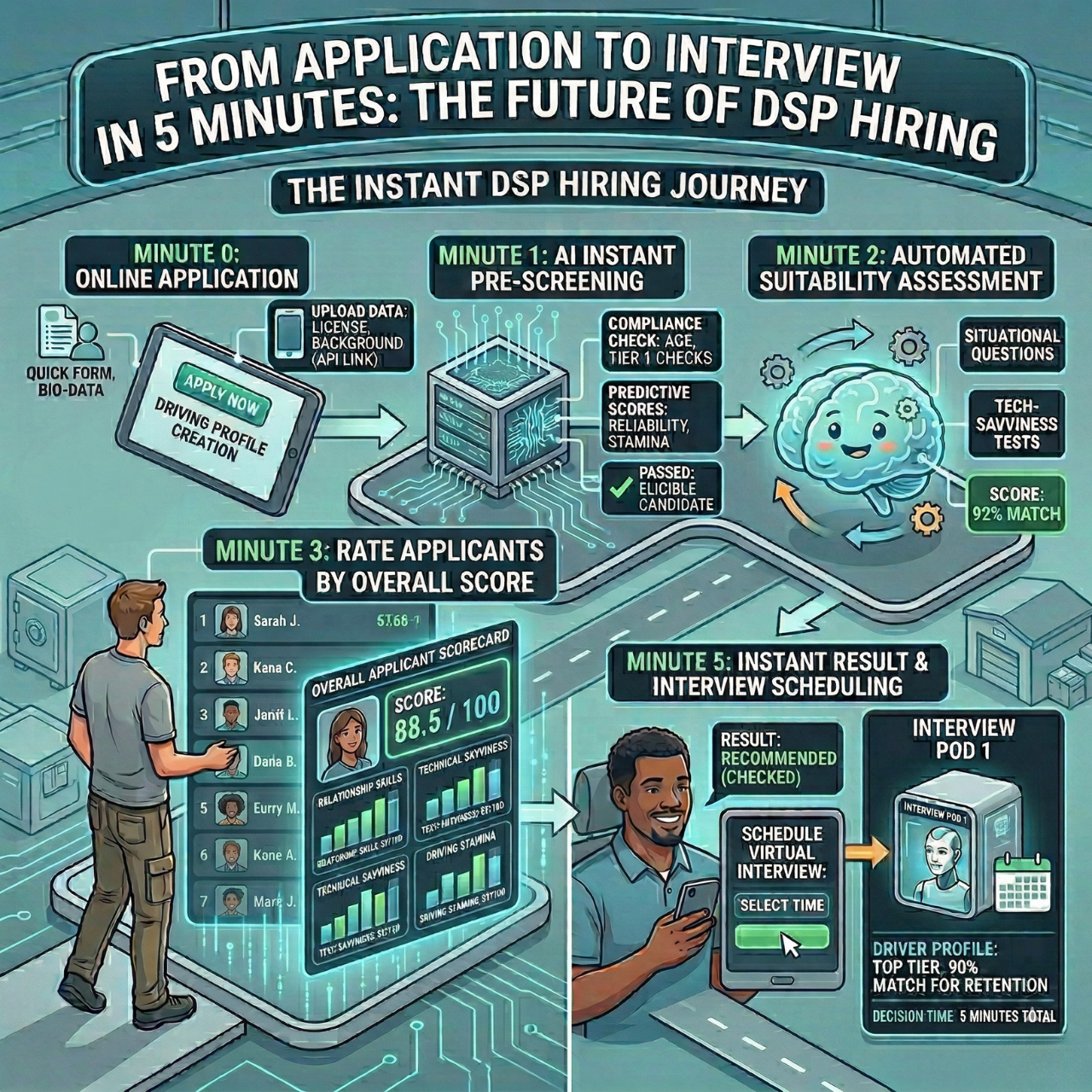
AI tools screen resumes in seconds, not hours. You can process hundreds of applications quickly, which slashes your time-to-hire.
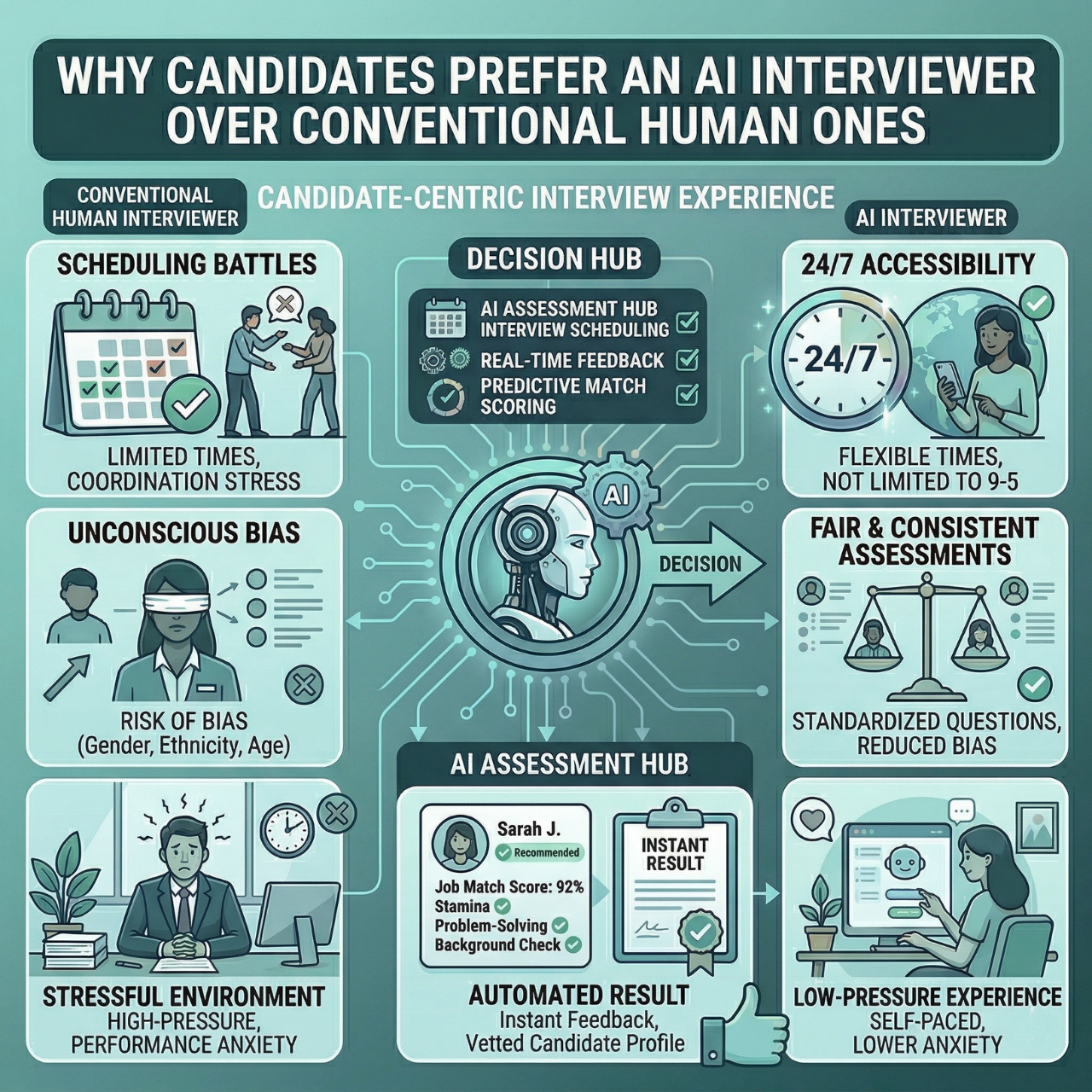
Automated scheduling tools handle interview coordination—no more endless emails. The system checks calendars and books meetings on its own. That means less time on administrative tasks, more time talking to people who might actually get the job.
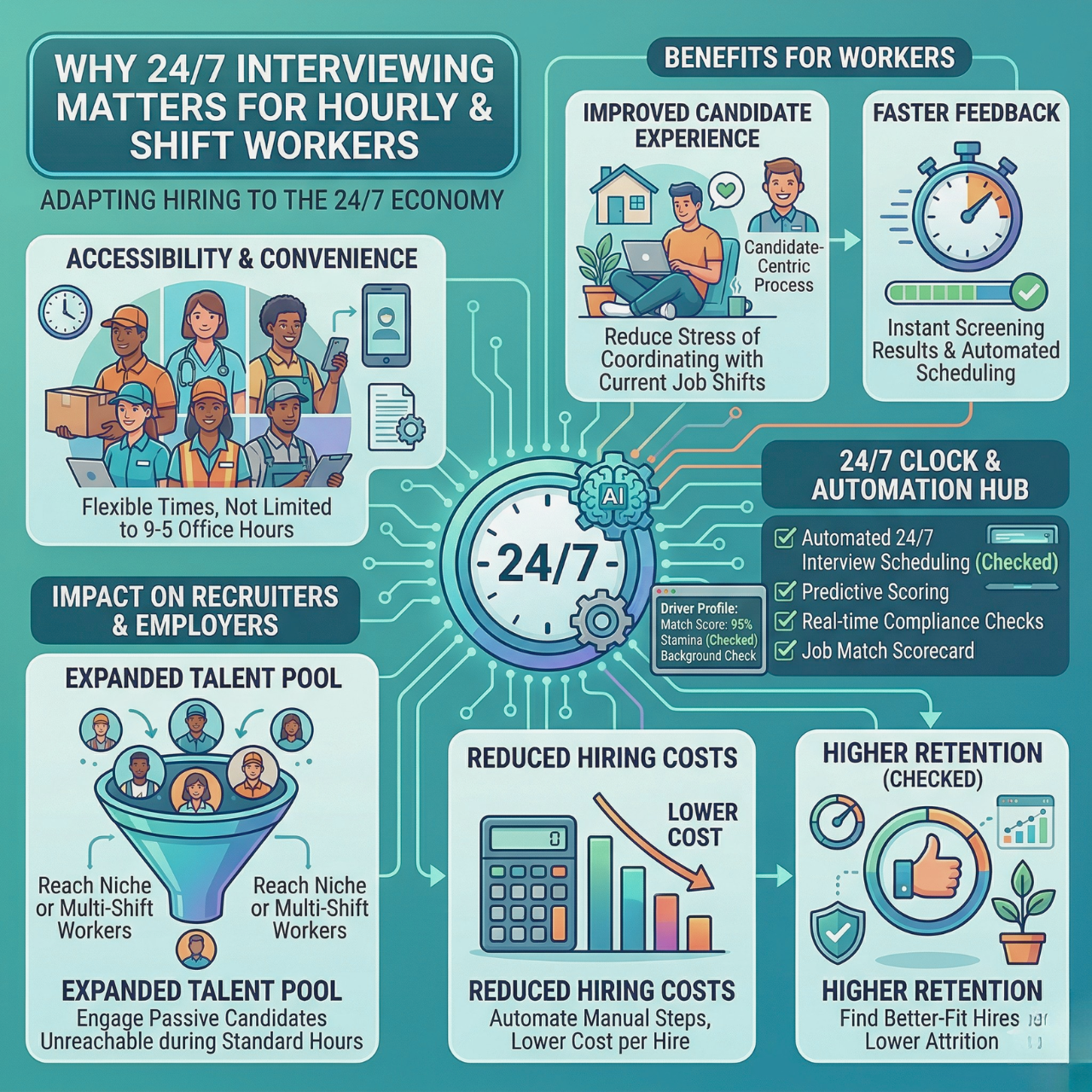
AI analyzes candidate responses and qualifications 24/7. You don't have to wait for business hours to keep things moving. Your process keeps rolling even when your team isn't at their desks.
These time savings add up. What once took weeks can now happen in days, so you can snag top talent before someone else does.
Objective Decision-Making
AI evaluates candidates based on the criteria you set, not on gut feelings or hidden biases. The technology checks skills, experience, and qualifications without being swayed by a candidate's name, age, or background.
Traditional hiring can get sidetracked by where someone went to school or who they know. AI sticks to whether candidates meet your job requirements. It's a more level playing field.
Data-driven decisions reveal patterns in successful hires. You can see which qualifications actually matter for job performance. Over time, this info sharpens your hiring standards.
The consistent evaluation process means every candidate gets reviewed the same way. No more guessing if different interviewers are using different standards.
Enhanced Candidate Matching
AI systems analyze job descriptions and match them with candidate profiles more accurately than manual searches. You end up with people whose skills really fit your needs.
The tech finds relevant experience even when candidates use different words. Maybe someone lists "customer success," and your posting says "client relations"—AI knows they're related.
Key matching capabilities include:
- Skills assessment and comparison
- Experience level analysis
- Culture fit indicators
- Growth potential evaluation
You might discover qualified candidates who would've slipped through traditional screening. AI looks past obvious keywords and spots transferable skills or non-traditional backgrounds.
Scalability for High-Volume Recruitment
AI handles application surges without extra staff. Whether you get 50 or 5,000 resumes, the system processes them just as quickly. Seasonal hiring and sudden growth become manageable. You can scale recruitment up or down without overwhelming your HR team.
The tech keeps quality standards steady, even with huge applicant pools. Every resume gets a fair review, so great candidates don't get lost in the shuffle. Companies using AI for high-volume roles say they keep things consistent, whether hiring for one job or twenty.
Challenges and Limitations
AI hiring tools come with real problems that can trip up companies and job seekers alike. These systems sometimes repeat unfair patterns, miss important human details, and put sensitive information at risk.
Algorithmic Bias Concerns
AI learns from past hiring data, so it can copy the same unfair practices as before. If your company mostly hires one type of person, the AI might continue to favor similar candidates and overlook qualified folks from different backgrounds.
Algorithms can discriminate based on factors such as names, zip codes, or schools. For example, an AI tool might rank candidates lower if their names are associated with certain ethnic groups or if they live in specific neighborhoods.
Common sources of bias include:
- Training data from companies with poor diversity records
- Proxies that indirectly reveal protected characteristics
- Resume keywords that favor certain educational backgrounds
- Voice or video analysis tools that misread cultural differences
You often can't see how the AI makes decisions. Many systems act as "black boxes"—even the company using them might not know why some candidates get rejected.
Lack of Human Judgment
AI tools miss the nuances that make someone a good fit. They can't read body language, sense excitement, or pick up on soft skills that really matter.
Your automated system might reject someone who took time off for family or switched careers. Those gaps look bad to AI, but a human recruiter might see responsibility and courage.
AI struggles with creative roles or jobs that need emotional intelligence. It can't tell if someone will mesh with your culture or bring new ideas. The tech focuses on data points rather than the whole person.
Data Privacy and Security Issues
AI hiring tools collect tons of personal info: resumes, social media profiles, video interviews, sometimes even voice patterns or facial expressions.
You have to protect this data from breaches and misuse. Many candidates don't realize how much info these systems gather or how long companies keep it. Some AI tools scrape public data without clear consent.
Key privacy risks include:
- Storing sensitive info on vulnerable servers
- Sharing candidate data with third parties
- Keeping records longer than needed
- Using data for things beyond hiring
Different places have different privacy laws. Your AI system could break rules if it collects or processes data the wrong way.
Impact on Candidates and Recruiters
AI hiring tools change how both job seekers and recruiters experience the process. Everything from how fast you hear back to how recruiters spend their days can shift.
Candidate Experience in AI Screening
AI screening speeds up responses to job applications. You might get a reply in hours, not weeks. Chatbots can answer your questions about jobs at any hour, even in the middle of the night.
But AI screening can feel impersonal. Sometimes you never talk to a real person in the early stages. If the AI makes a mistake or doesn't get your background, there's no easy way to explain.
Common candidate concerns include:
- Getting rejected by an algorithm without knowing why
- Not being able to show off personality or soft skills
- Worrying about resume formatting that AI might misread
- Lack of human connection in the process
AI systems sometimes struggle with career gaps or non-traditional backgrounds. You could get filtered out even if you're qualified. The system might not recognize skills from freelance work, volunteering, or unique career paths.
Effects on Recruiters' Workflows
Recruiters save loads of time on repetitive tasks with AI tools. The tech can screen thousands of resumes in minutes, not days. This lets recruiters focus on talking to candidates and building relationships.
AI handles scheduling, sends automated updates, and organizes applicant data. You don't have to sort through stacks of applications or send out status emails one by one.
But new challenges pop up. Recruiters need to learn how to use AI tools well and double-check their results. The technology needs oversight to catch bias or mistakes. It's a balancing act between efficiency and the human touch that candidates still expect.
Many recruiters spend more time training AI systems and tweaking settings. In some ways, you become an AI manager as much as a traditional recruiter.
Future Trends in AI Hiring
AI hiring tools are becoming more advanced, but they'll need greater human involvement in final decisions. Assessment methods are also evolving to evaluate candidates in ways that go beyond the old-school resume.
Integration With Human Oversight
Companies are moving toward a hybrid model in which AI handles initial tasks while humans make the final calls. You'll see AI screening applications and scheduling interviews, while hiring managers focus on culture fit and soft skills.
This approach helps you dodge the risks of fully automated hiring. AI can miss important context or make mistakes based on flawed data. When you mix AI efficiency with human judgment, you get speed without giving up quality.
Key aspects of this trend include:
- AI provides rankings and suggestions, not final decisions
- Hiring managers review AI-flagged concerns before rejecting candidates
- Regular audits check for bias in AI recommendations
- Clear policies spell out which tasks AI handles and which need a human touch
You'll need to train your team on how to work with AI tools. That means knowing what the tech can and can't do.
Evolution of AI-Powered Assessment Tools
Assessment tools now go way beyond just scanning resumes. You'll see AI handling video interview analysis, skills tests, and even work sample evaluations.
These platforms watch how candidates solve problems in real time. Sometimes, AI observes someone working through a coding challenge or dealing with a customer service issue, then evaluates their approach, speed, and results.
Some emerging assessment methods are shaking things up:
- Game-based evaluations that measure cognitive abilities
- AI chatbots conducting initial screening conversations
- Sentiment analysis of video responses to gauge enthusiasm
- Skill simulations that mirror actual job tasks
These tools keep getting better at predicting job performance. They're moving away from simple keyword matching and starting to understand what people can actually do.
Making AI Hiring Work Without Losing the Human Touch
AI hiring can save time, handle volume, and bring more consistency to early screening. At the same time, it can frustrate candidates and introduce risk if left unchecked. Understanding the pros and cons of AI hiring helps teams move faster without damaging trust or quality.
HRMLESS is designed to take pressure off recruiters by automating repetitive steps while keeping people in control of final decisions. The focus stays on reducing drop-off, protecting candidate experience, and giving hiring teams back time to engage.
If slow screening, missed candidates, or manual scheduling are holding you back, it may be time to reassess your process. Book a Demo to see how smarter automation can improve hiring outcomes.
Frequently Asked Questions
What does AI hiring actually do in the recruiting process?
AI hiring tools handle early-stage tasks like resume screening, candidate ranking, and interview scheduling. They help recruiters manage high volume faster without manually reviewing every application.
What are the main pros and cons of AI hiring?
The biggest benefits are speed, scalability, and consistency in screening. The main drawbacks include potential bias, limited context, and a less personal candidate experience if humans are removed too early.
Can AI hiring tools reduce bias in recruitment?
AI can help reduce some forms of bias by focusing on skills and qualifications instead of personal details. However, if the training data is flawed, the system can repeat or amplify existing bias without proper oversight.
How does AI hiring impact the candidate experience?
Candidates often get faster responses and clearer timelines. At the same time, fully automated screening can feel impersonal and make it hard for candidates to explain unique backgrounds.
Is AI hiring suitable for all roles?
AI hiring works best for high-volume or structured roles with clear skill requirements. Creative, leadership, or highly interpersonal roles usually need more human judgment earlier in the process.
What should recruiters watch out for when using AI hiring tools?
Recruiters should monitor decision patterns, audit for bias, and avoid relying on automation alone. Keeping humans involved in final decisions helps balance efficiency with fairness and trust.
How can teams use AI hiring without losing the human touch?
The most effective approach is a hybrid model. AI handles repetitive tasks, while recruiters focus on conversations, context, and final hiring decisions.
Featured

Subscribe to ournewsletter
Related posts
Explore the world of photography with our curated selection of
portfolio websites that showcase creativity and innovation.