

Save Time with AI in Recruitment and Hire Faster
Hiring teams are stretched thin. Sorting resumes, chasing availability, and managing follow-ups slows everything down. If you want to save time with AI in recruitment, the goal is simple: remove busywork without sacrificing quality.
HRMLESS helps teams automate screening, scheduling, and early candidate conversations so recruiters stop reacting all day. By letting AI handle repetitive steps, hiring moves faster, and teams regain time for meaningful candidate decisions.
This guide breaks down how AI works in recruitment, where it saves the most time, and how to adopt it safely. You’ll learn practical ways to speed up hiring while keeping control, consistency, and a strong candidate experience.
How AI Transforms Recruitment Processes?
AI changes recruitment by automating repetitive tasks at every stage of the hiring process. It reads through hundreds of resumes in minutes, identifying candidates whose skills and experience match your job requirements.
It searches job boards and social media platforms to find potential hires you might have missed. You can use AI to send personalized messages to candidates automatically.
The system schedules interviews by coordinating calendars; no more endless email chains. AI also analyzes interview responses and assessments to help you make faster decisions.
The technology tracks patterns in your hiring data, showing which job boards bring the best candidates and how long each hiring stage drags on. This info can help you tweak your recruitment strategy over time.
Types of AI Tools for Hiring
Resume screening software reads applications and ranks candidates based on qualifications you set. These tools pull out key info like work history, education, and skills.
Chatbots answer candidate questions 24/7 and guide applicants through your hiring process. They collect basic information and schedule initial conversations.
Sourcing platforms search databases and social networks to find passive candidates who aren’t actively job hunting. They match people to your open positions based on their profiles and work history.
Interview analysis tools record video or phone interviews and evaluate responses. Some even assess tone of voice and word choice to measure soft skills.
Assessment platforms use AI to create and grade skills tests. They adapt question difficulty based on how candidates answer.
Benefits of AI for Recruiters and Candidates
You save serious time when AI handles those admin tasks. Recruiters spend less time reading resumes and more time talking to qualified candidates.
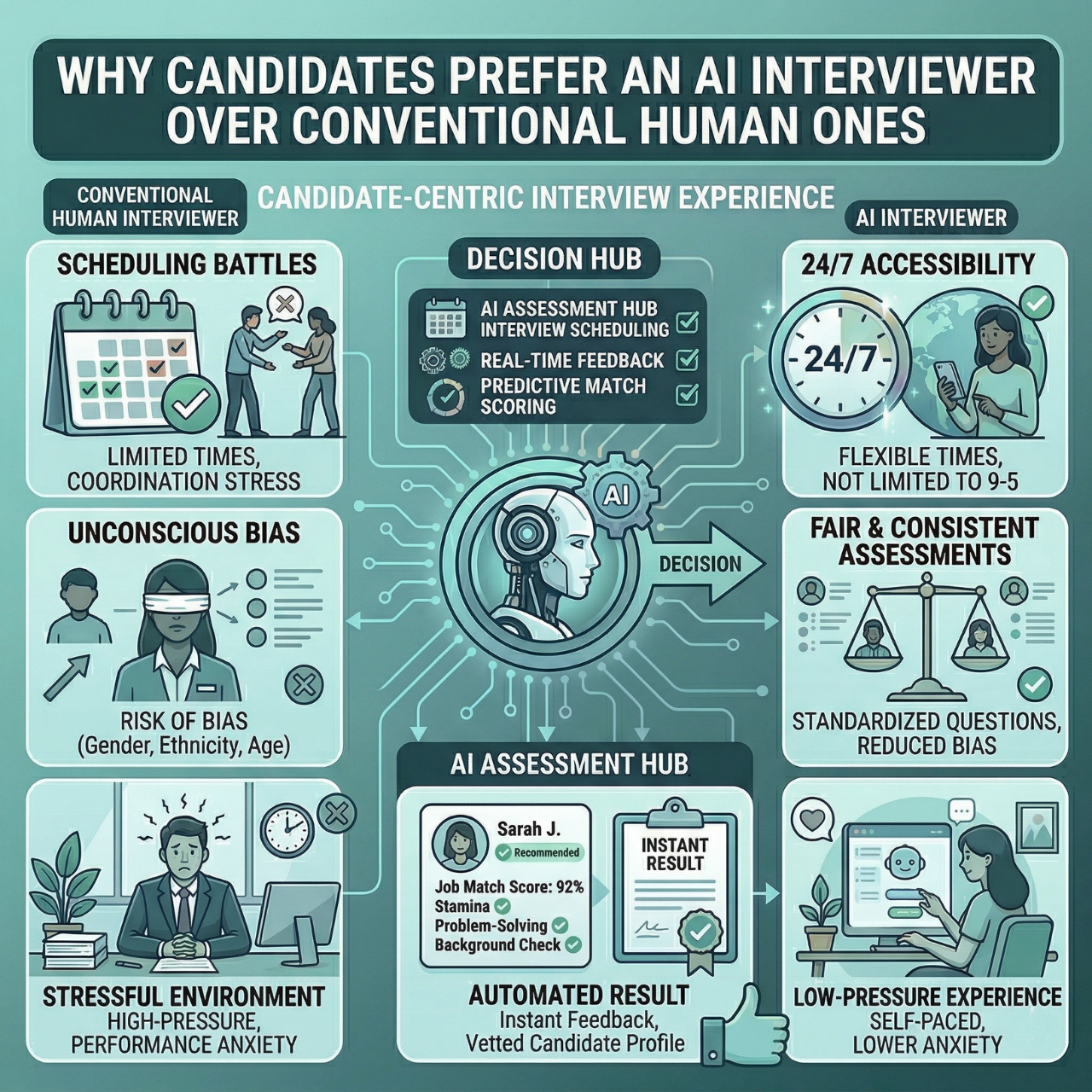
AI helps reduce unconscious bias by focusing on skills and qualifications instead of demographic info. The technology evaluates everyone using the same criteria.
Candidates get faster responses about their applications. They can schedule interviews at times that work for them - no more waiting days for an email reply. The process gets simpler when chatbots answer questions immediately. You make better hiring decisions with data-backed insights.
AI shows you which candidates have the strongest match to your role requirements. Your quality of hires improves because the technology finds patterns that predict job success.
Key Ways AI Saves Time During Hiring
AI cuts down hiring time by handling repetitive tasks that normally eat up hours or days. Recruiters can save up to 23 hours per hire just by letting AI screen resumes and match candidates automatically.
Automated Resume Screening
AI reads through hundreds of resumes in minutes instead of the hours it would take you to review them manually. The software scans each application for specific skills, experience levels, and qualifications that match your job requirements.
It pulls key details from resumes and adds them to your hiring system, eliminating tedious typing and data entry. The AI ranks candidates based on how well they fit the role.
You only spend time reviewing the top matches, not slogging through every single application. Your team can finally focus on having real conversations with qualified candidates.
Most AI screening tools process resumes in different formats and languages. They spot relevant experience even when candidates use different job titles or describe their skills in their own way.
AI-Powered Candidate Matching
AI matching tools compare candidate profiles against your job requirements to find the best fits. The technology looks at more than just keywords.
It analyzes work history patterns, skill combinations, and career progression to predict success in your role. You get a ranked list of candidates with match scores that explain why each person fits the position.
AI can also search through past applicants in your database to find people who might work for current openings. This saves you from starting your candidate search from scratch every time.
The system learns from your hiring decisions over time. When you move candidates forward or pass on them, the AI adjusts its recommendations to better match what you want.
Instant Interview Scheduling
AI scheduling assistants coordinate interview times without the endless back-and-forth. The software checks your calendar and the candidate’s availability to suggest time slots that work for everyone.
Candidates can pick their preferred time through a simple booking link. The system sends automatic reminders to both you and the candidate before the interview.
It can reschedule appointments if something comes up and find a new time that fits all schedules. Your hiring team gets a centralized dashboard that shows all upcoming interviews and candidate progress.
This keeps everyone on the same page —no more status update meetings or messy email chains.
Optimizing Candidate Sourcing with AI
AI tools can find candidates faster by searching multiple platforms at once and identifying people who match specific skills and experience levels. These systems reach talent pools that traditional recruiting methods often miss.
Discovering Hidden Talent Pools
AI systems scan databases and professional networks to find candidates who aren’t actively job hunting. These tools look beyond basic keywords to match people based on skills, experience, and career patterns.
You can use AI to find candidates with transferable skills from different industries. The technology identifies people whose background might not be an obvious fit but who have the right abilities for your role.
AI sourcing tools also help you locate underrepresented candidates by removing location and name-based filters that can create bias. The software focuses on qualifications and experience instead.
Many platforms use machine learning to suggest candidates based on your job description. This saves you hours of manual searching through profiles and resumes.
Social Media and Job Board Automation
AI tools automatically post your job openings across multiple job boards and social media platforms at the same time. Your positions reach more people without any extra work.
These systems track which platforms bring in the best candidates for specific roles. You can then focus your efforts on the sites that actually work for your needs.
AI chatbots can engage with potential candidates on social media by answering basic questions about your company and open positions. This keeps people interested while you focus on other recruiting tasks.
The technology also monitors social media for passive candidates who have the skills you need. It can spot professionals discussing relevant topics or showing off work that matches your requirements.
Reducing Bias and Improving Efficiency
AI recruitment tools evaluate candidates using standardized criteria and provide measurable data that supports faster, fairer hiring decisions.
Objective Assessments with AI
AI systems evaluate every candidate using the same criteria. This creates consistency across your entire hiring process.
Traditional screening often varies based on who reviews the application. One recruiter might prioritize certain skills while another focuses on different qualifications.
AI removes this inconsistency by applying identical standards to each resume and application it reviews. These tools can focus on job-relevant qualifications rather than demographic information.
You can configure AI systems to ignore factors like names, addresses, or graduation dates that might trigger unconscious bias. The software analyzes skills, experience, and qualifications that actually predict job performance.
AI also expands your candidate pool by identifying qualified applicants that human reviewers might overlook. The technology recognizes various ways candidates express similar skills and experiences.
Providing Data-Driven Insights
AI recruitment platforms track metrics throughout your hiring process. You gain clear visibility into where candidates spend the most time and which steps create bottlenecks.
The data shows you patterns in successful hires. You can see which qualifications and characteristics correlate with strong job performance in your organization.
Analytics from AI systems reveal potential bias in your current process. The software identifies if certain candidate groups advance at different rates or get inconsistent evaluations.
You can address these disparities before they affect hiring decisions. These insights help you make adjustments quickly.
Implementing AI Recruitment Tools Effectively
Choosing the right AI software and connecting it to your current hiring process takes some planning. You need to match the tool’s features to your specific needs and make sure it works smoothly with your team’s daily tasks.
Selecting the Right AI Software
Start by listing your biggest hiring headaches. Do you spend too much time reading resumes? Are you struggling to find qualified candidates?
Different AI tools solve different problems, so knowing your pain points helps you pick the right one. Look for software that fits your company's size and hiring volume.
Small businesses need simple tools with basic screening features. Large companies might need platforms that handle thousands of applications and include advanced analytics.
Key features to evaluate:
- Resume screening accuracy
- Integration capabilities with your current systems
- Candidate communication tools
- Reporting and analytics options
- Pricing structure and contract terms
Test at least three platforms before making a decision. Most vendors offer free trials or demos. Ask other companies in your industry which tools they use and what results they’ve seen.
Integrating AI with Existing Workflows
Map out your current hiring process step by step. Identify which tasks eat up the most time and where AI can help.
The goal is to automate repetitive work while keeping human judgment in important decisions. Connect your AI tool to your applicant tracking system and job boards first.
This lets the software automatically pull in new applications and start screening right away. Set up clear rules for how the AI should rank candidates based on your requirements.
Train your recruiting team on the new system before going live. Show them how to review AI recommendations and override decisions when needed.
Schedule regular check-ins during the first month to fix any issues quickly. Start with one job opening or department as a test run.
Track metrics like time saved per hire and candidate quality. Once the system runs smoothly, expand it to other areas of your hiring process.
Hire Faster Without Adding More Work
Manual screening, scheduling, and follow-ups are what slow hiring down the most. AI removes these delays so teams can save time with AI in recruitment and focus on qualified candidates sooner.
HRMLESS helps recruiting teams automate the most time-consuming steps while keeping humans in control. The result is faster hiring, better decisions, and less burnout for recruiters.
Ready to reduce hiring delays? Book a Demo and see how much time your team can get back.
Frequently Asked Questions
How does AI help save time in recruitment?
AI automates repetitive tasks like resume screening, candidate matching, and interview scheduling. This reduces manual effort and helps teams save time with AI in recruitment by shortening time-to-hire.
What recruiting tasks should be automated first with AI?
Resume screening and interview scheduling usually deliver the fastest time savings. These steps remove hours of manual review and back-and-forth communication.
Does using AI in recruitment reduce hiring quality?
When configured correctly, AI improves quality by focusing on skills and job requirements. Recruiters review stronger candidate shortlists instead of sorting through unqualified applicants.
Can small hiring teams benefit from AI recruitment tools?
Yes. Small teams often see the biggest impact because AI removes admin work that they cannot scale. Even basic automation can free up hours each week.
Will candidates react negatively to AI in the hiring process?
Most candidates prefer faster responses and flexible scheduling. Clear communication and human touchpoints help maintain a positive experience.
How long does it take to implement AI recruitment software?
Many tools can be set up in days, not months. Starting with one role or workflow helps teams see results quickly without disruption.
Featured

Subscribe to ournewsletter
Related posts
Explore the world of photography with our curated selection of
portfolio websites that showcase creativity and innovation.