

Smart Interview Tools Using AI: 2026 Hiring Guide
Hiring today feels slow, inconsistent, and hard to scale. Recruiters juggle resumes, scheduling emails, and repetitive screenings while top candidates drop off. Smart interview tools using AI and modern AI hiring software help teams reduce ghosting in hiring and create a faster, more structured process.
HRMLESS helps teams automate screening, scoring, and scheduling with 24/7 AI interviews that move candidates forward without delays. Instead of manual coordination and guesswork, recruiters gain speed, consistency, and clearer insights at every stage of the hiring journey.
In this guide, you’ll learn how smart interview tools using AI work, the core features to look for, and how they improve efficiency and fairness. You’ll also see how to implement them effectively without disrupting your existing workflow.
Core Features of Smart Interview Tools Using AI
AI interview tools come with specific capabilities that are changing how companies find and evaluate job candidates. They handle repetitive tasks, offer data-driven insights, and help create a fairer hiring process.
Automated Candidate Screening
AI screening tools can review resumes and applications in minutes instead of hours. The software scans documents for keywords, skills, and qualifications that match your job requirements. It ranks candidates based on how well they fit the position.
You can set criteria like years of experience, education level, or technical skills, and the AI filters through hundreds or even thousands of applications automatically. This saves your hiring team a ton of time during the early recruitment stages.
The system also spots red flags like employment gaps or missing qualifications. You'll get a shortlist of the most qualified candidates ready for the next interview stage. That means your team can focus on meaningful conversations with top prospects instead of sorting through endless paperwork.
AI-Driven Interview Question Generation
These tools create customized interview questions based on the job role and candidate background. The AI analyzes what the position needs and generates questions that actually test the right skills and knowledge.
You get questions tailored to each candidate’s experience and the competencies you’re after. The system can whip up behavioral questions, technical assessments, and situational scenarios; whatever fits.
It even adjusts question difficulty on the fly. If a candidate breezes through basic questions, the tool throws in some tougher ones. This adaptive approach gives you a much clearer picture of each person’s capabilities.
Real-Time Sentiment Analysis
AI tools can track facial expressions, tone of voice, and word choice during video interviews. The software picks up on emotions like confidence, nervousness, or enthusiasm as candidates talk. You get instant feedback on how engaged and interested each person seems.
The analysis digs into micro-expressions and speech patterns that humans might overlook. It measures things like eye contact, speaking pace, and energy levels throughout the conversation.
These insights help you get a feel for a candidate’s communication style and emotional intelligence. You can review sentiment data alongside interview responses to make more informed choices. The tool even highlights moments when candidates showed strong passion or hesitation about a specific topic.
Bias Detection and Mitigation
AI systems keep an eye on interview processes for potential bias in question selection and evaluation. The tools flag language or patterns that might unfairly advantage or disadvantage certain groups. You get alerts when bias creeps into your hiring workflow.
The software standardizes questions across all candidates for the same role, making sure everyone gets a fair shot. It removes subjective factors that can influence human judgment.
The AI tracks demographic data and hiring outcomes to spot disparities. You can see if certain groups move through your process at different rates. That kind of transparency helps you build a more inclusive recruitment strategy.
Benefits of AI-Powered Interview Solutions
AI-powered interview tools help companies hire faster and reduce bias in their selection process. These platforms also make interviews smoother for job candidates and give hiring teams better data to work with.
Enhanced Efficiency for Recruiters
AI interview tools save you a ton of time during hiring. These platforms can screen hundreds of candidates automatically, so you’re not stuck reviewing applications and conducting initial interviews for hours on end.
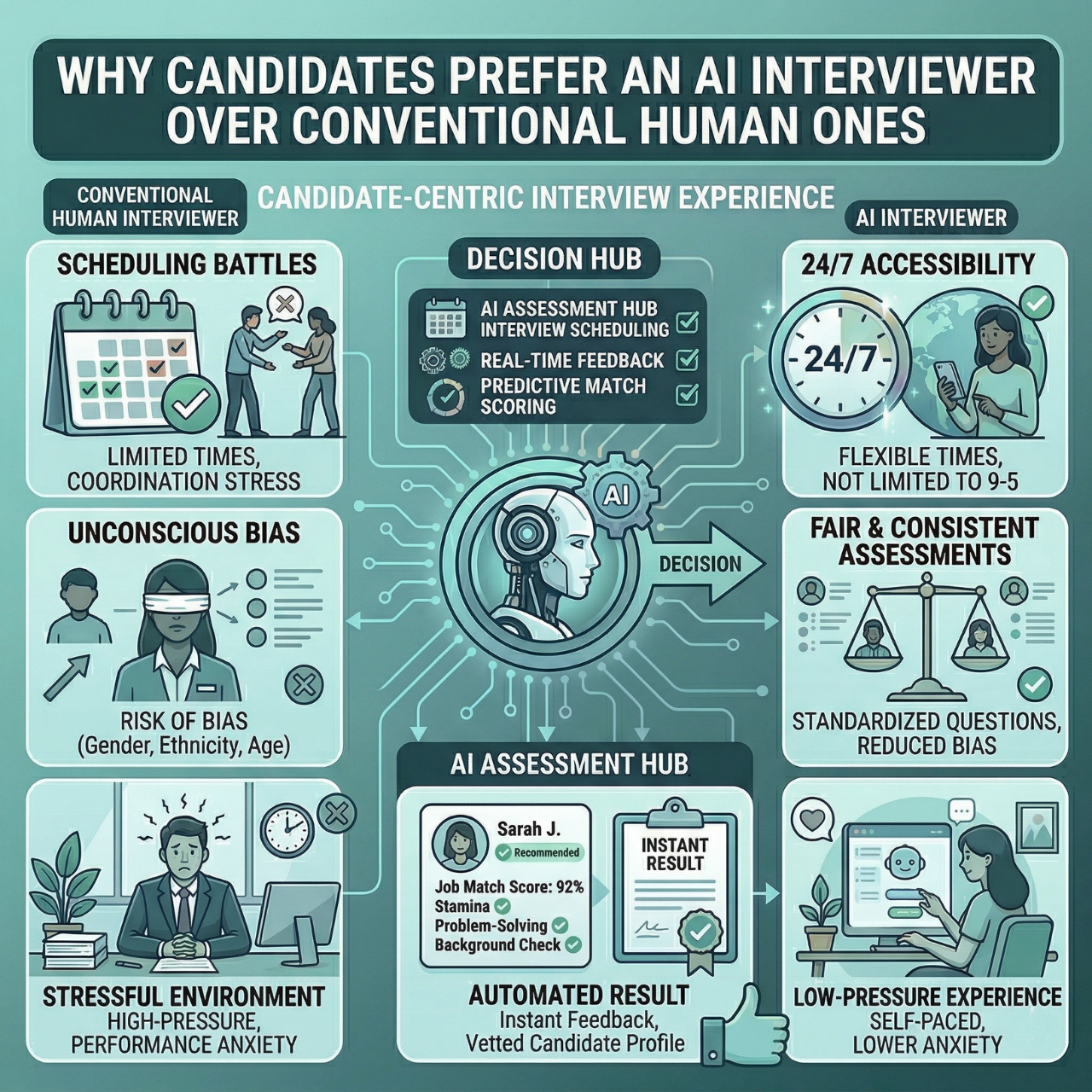
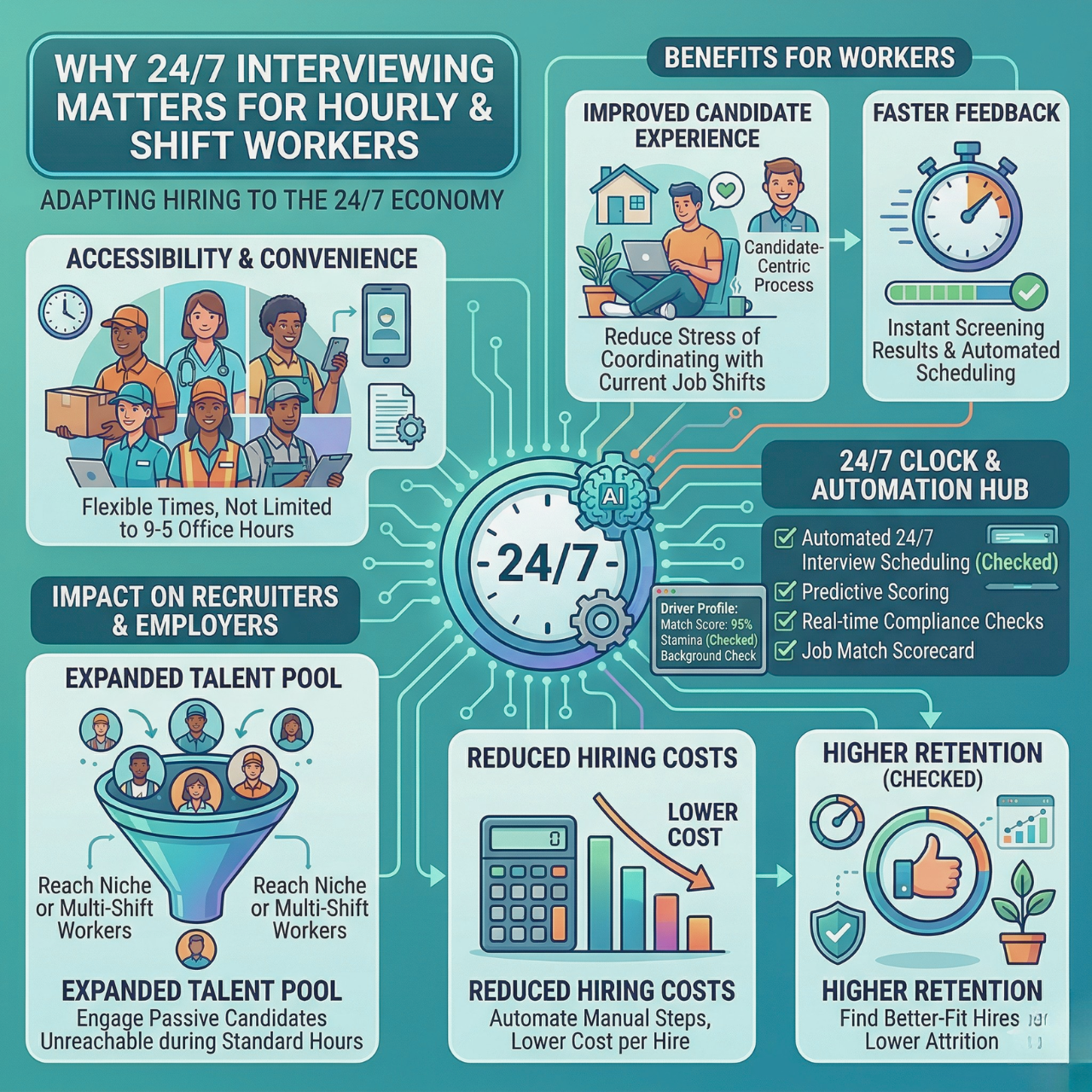
The software handles scheduling, too; no more endless back-and-forth emails. It can handle first-round interviews at any time, even when your team’s offline. Candidates can complete interviews when it works for them, which is a huge plus.
AI tools also organize candidate info in one place. You can compare responses, review scores, and access video recordings without jumping between different systems. The technology highlights key qualifications and red flags, so you can focus on the most promising applicants.
Many platforms cut your time-to-hire by 30-50%. That speed can help you snag top talent before your competitors even get a chance.
Improved Candidate Experience
Candidates love the flexibility AI interview tools provide. They can complete interviews on their own schedule instead of taking time off work for screenings. The process feels more consistent because everyone gets the same questions in the same way. That fairness makes applicants feel respected.
AI tools also give faster feedback than traditional methods, so candidates aren’t left waiting and wondering. The interview interface is usually simple and user-friendly. People can practice beforehand and get comfortable with the format. Some platforms even let applicants redo answers if there’s a technical issue.
Still, it’s important to balance automation with real human interaction. Candidates want to connect with people eventually; nobody wants to talk to robots forever.
Data-Driven Decision Making
AI interview platforms give you objective metrics about each candidate. The software analyzes speech patterns, word choices, and relevant experience based on actual data instead of gut feelings.
You can track which assessment questions predict job success over time. This info helps you refine your interview process and ask better questions. The platforms also spot patterns in successful hires, so you know what traits to look for.
Here are some key metrics these tools provide:
- Communication skills scores
- Technical competency ratings
- Culture fit indicators
- Response consistency measures
- Comparison data across all applicants
The technology helps reduce unconscious bias by zeroing in on qualifications and performance. You get standardized evaluations that make it easier to defend your hiring decisions and stay compliant with employment regulations.
Implementation Strategies for Organizations
Getting the most out of AI interview tools means connecting them to your current systems, prepping your team to use them well, and keeping candidate information secure throughout the process.
Integrating AI Tools with Existing HR Systems
Your AI interview platform should work smoothly with your Applicant Tracking System and other HR software. Start by checking if the AI tool offers direct integrations with your current systems. Most modern platforms connect with popular ATS solutions through APIs.
Map out your hiring workflow before adding AI tools. Figure out where the AI interview fits. Does it replace phone screens? Does it come after resume review?
Some key integration points:
- Automatic candidate data transfer between systems
- Synchronized interview scheduling
- Result reporting to your ATS
- Single sign-on for your hiring team
Test the integration with a small group of candidates first. That way, you can catch technical issues before rolling it out company-wide. Work closely with your IT team during setup to handle any security requirements or firewall configurations.
Training Hiring Teams
Your recruiters and hiring managers need hands-on experience with AI interview tools before using them with real candidates. Set up training sessions that cover the platform’s features and how to interpret AI-generated insights.
Show your team how to customize interview questions for different roles. Teach them to review AI assessments alongside their own judgment, not just rely on automated scores. Your hiring team should understand what the AI measures—and what it doesn’t.
Create clear guidelines for when to advance candidates and when to reject them. Practice sessions with sample AI interview results help build confidence. Give your team easy access to support resources and documentation for reference later.
Ensuring Data Privacy and Security
Protecting candidate information collected through AI interview platforms is a must. Review the vendor’s data storage policies and make sure they comply with privacy laws like GDPR or CCPA.
Set up role-based access controls so only authorized team members can view interview recordings and assessments. Establish a clear data retention policy. Delete candidate videos and transcripts after a certain period.
Let candidates know how you’ll use their interview data. Your privacy notice should explain what information the AI collects and how long you keep it. Get explicit consent before recording video interviews. Pick vendors that encrypt data both in transit and at rest.
Future Trends in AI Interview Technology
AI interview tools are evolving past basic screening. Now we’re seeing smart learning systems, support for multiple languages, and even immersive virtual environments that could change how companies find and evaluate talent.
Adaptive Learning Algorithms
AI interview platforms keep getting smarter with every interview they run. These systems learn from past interviews to improve their question selection and candidate evaluation over time. The technology tweaks its approach based on the specific role you’re hiring for.
If you’re screening for a sales position, the AI learns which responses match successful hires in that field. It then refines its questioning strategy for future candidates.
Some of the key benefits of adaptive learning:
- Personalized interview experiences for each candidate
- More accurate predictions of job performance
- Reduced bias through data-driven pattern recognition
- Continuous improvement without manual updates
Your interview system gets better with every use. The AI figures out which communication styles and answer patterns match your top performers, then uses that info to score new applicants more accurately.
Multilingual Interview Capabilities
Modern AI interview tools now support dozens of languages—no need for separate systems or translators. You can evaluate candidates from different countries in their native language and still get the results in yours.
The technology doesn’t just translate; it understands cultural context and regional communication styles to avoid misinterpreting responses. A candidate in Japan might answer differently from someone in Brazil, and the AI gets that.
This opens up your talent pool to global candidates. You don’t have to limit your search to English speakers or hire translators for initial screenings. The AI handles language barriers while maintaining fair evaluation standards for everyone.
Integration with Virtual Reality
Virtual reality is now colliding with AI interview tech, and honestly, it's changing the whole game. You can drop candidates straight into lifelike work situations and just watch how they handle the chaos they'd probably face on the job.
Picture this: a customer service representative dealing with a virtual customer who is angry. Or maybe a manager candidate navigating a simulated team conflict. The AI tracks their decisions, the way they talk, and how they try to solve problems—all as it happens. It's wild.
VR assessments dig up skills that old-school interviews just can't find. Instead of listening to someone talk about what they did before, you see how they actually perform under real pressure. That mix of VR worlds and AI analysis? It gives you a much clearer picture of what someone can really do, not just what they say.
Transform Hiring Without Slowing Down
Manual screening, scattered scheduling, and inconsistent interviews slow your team down and cost you top talent. Smart interview tools using AI streamline screening, scoring, and coordination so you can move faster while improving quality and fairness. The result is less admin work, faster decisions, and stronger hires.
HRMLESS helps hiring teams automate interviews, integrate with their ATS, and create a structured process that scales. Instead of chasing candidates and juggling spreadsheets, you gain a system built for speed, efficiency, and better outcomes.
If your hiring process feels stretched and reactive, it’s time to modernize. Book a Demo and see how smart interview tools using AI can simplify your workflow and help you hire with confidence.
Frequently Asked Questions
What are smart interview tools using AI?
Smart interview tools using AI are digital platforms that automate and structure parts of the interview process. They can screen resumes, generate interview questions, analyze responses, and assist with scheduling. These tools help recruiters move faster while creating a more consistent and data-driven hiring experience.
How do smart interview tools using AI reduce bias?
These tools standardize questions and scoring criteria across candidates. By focusing on skills, competencies, and structured evaluation metrics, they help reduce the impact of subjective decision-making. They do not eliminate bias entirely, but they help minimize inconsistencies and improve fairness.
Can smart interview tools using AI integrate with an ATS?
Most modern platforms connect directly with an Applicant Tracking System (ATS). This allows candidate data, interview results, and scores to sync automatically between systems. An integrated setup reduces manual data entry and keeps your hiring workflow organized.
Do candidates prefer AI-powered interviews?
Many candidates appreciate the flexibility of completing interviews on their own schedule. Faster feedback and a consistent process can also improve the overall experience. However, it’s important to balance automation with human interaction to maintain engagement and trust.
Are smart interview tools using AI suitable for small teams?
Yes. Small and mid-sized teams benefit from automation because it reduces manual screening and scheduling work. Even with limited resources, these tools can help create a fast-track hiring process without sacrificing structure or quality.
Featured

Subscribe to ournewsletter
Related posts
Explore the world of photography with our curated selection of
portfolio websites that showcase creativity and innovation.