

Voice AI in Logistics Hiring: Faster Screening, Better Fit
Learn how voice AI in logistics hiring speeds screening and scheduling, cuts time-to-hire, and keeps candidates engaged for high-volume roles.

Logistics hiring moves fast, but traditional recruiting rarely keeps up. Manual phone screens, missed calls, and slow scheduling cost you strong candidates. This is where voice AI in logistics hiring helps teams respond instantly and hire before competitors do.
HRMLESS uses voice AI to automate screening, scheduling, and follow-ups without adding recruiter workload. Candidates get immediate engagement, while hiring teams save time and keep roles moving. The result is faster hiring with more consistent, job-relevant screening.
This guide breaks down how voice AI works in logistics hiring, where it fits into your process, and what it does best. You’ll see real use cases, practical benefits, and how teams reduce time-to-hire while keeping candidates engaged.
The Role of Voice AI in Modern Logistics Hiring
Voice AI technology is shaking up logistics hiring by automating phone screenings, answering candidate questions at any hour, and freeing recruiters from repetitive tasks.
Benefits for Recruitment Processes
Voice AI takes over initial candidate interactions. It calls applicants, asks screening questions, and collects basics like availability and certifications. Your HR team saves hours of phone time every week. You can reach more candidates faster since voice AI doesn't sleep.
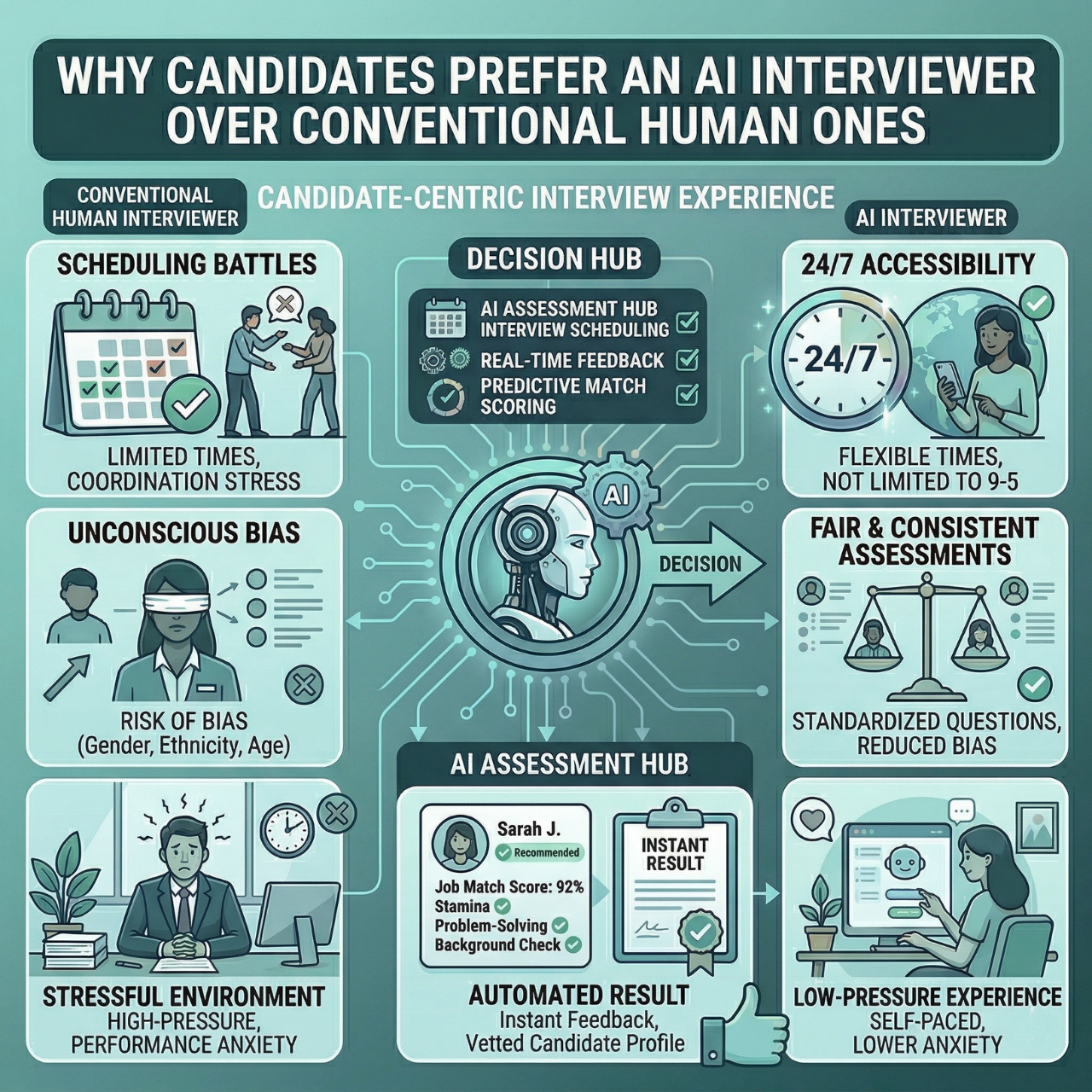
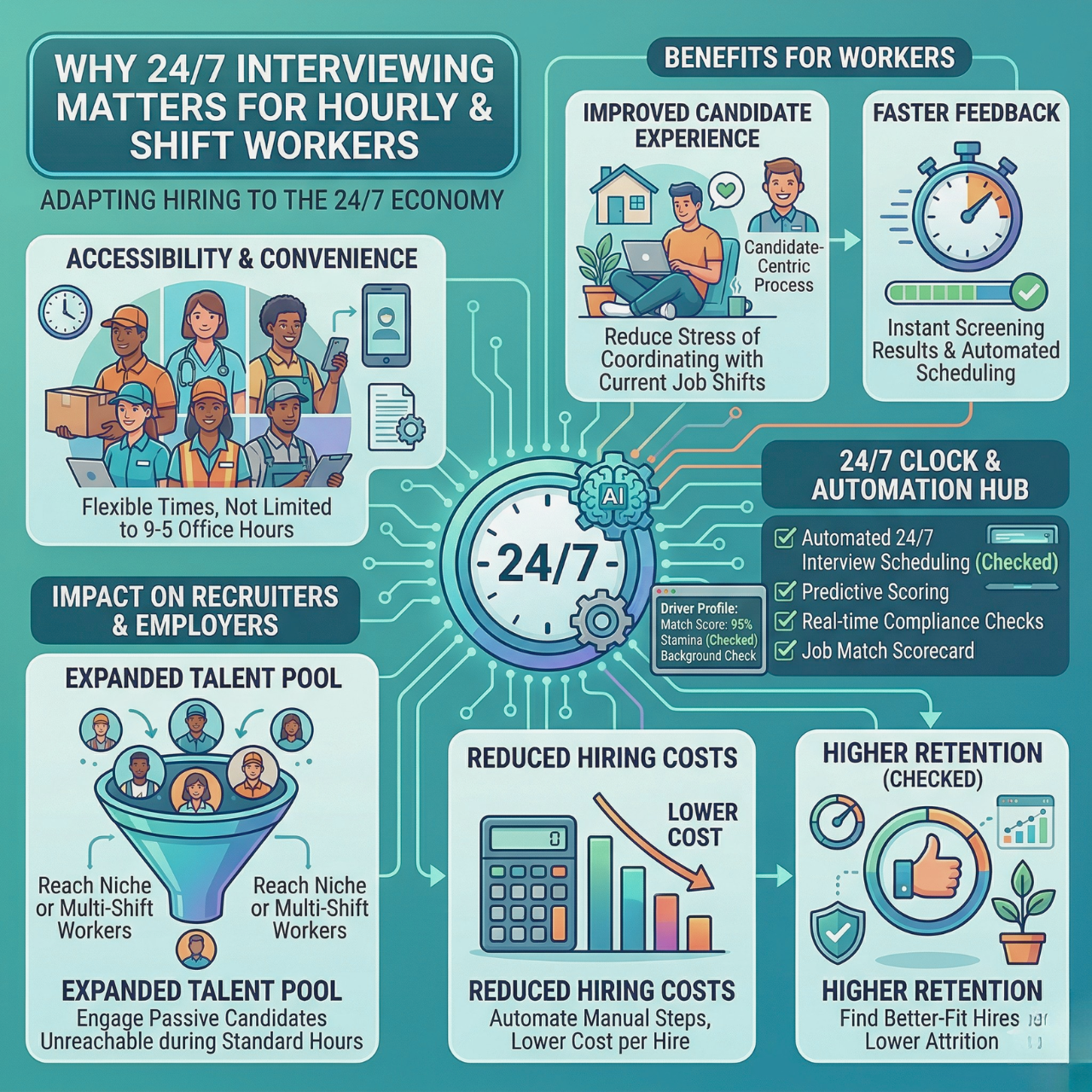
Applicants can finish screenings at midnight or on weekends, which is huge in logistics, where drivers and warehouse workers often job hunt outside business hours.
The system reduces bias in early screening. Voice AI asks everyone the same questions, the same way.
Your recruiters get standardized data to make better comparisons between applicants. Voice AI also chops hiring costs by 30-40% for high-volume roles. The tech handles hundreds of calls at once, while a human recruiter only manages one conversation at a time.
Key Use Cases in Talent Acquisition
Driver recruitment gets a major boost from voice AI. The system calls driver candidates, checks their CDL status, and verifies years of experience.
It schedules driving tests and routes qualified applicants straight to hiring managers. Warehouse worker screeningspeeds up with automated calls.
Voice AI confirms shift availability, physical requirements, and previous warehouse experience. Qualified candidates move to the next stage automatically.
Interview scheduling is a breeze when voice AI coordinates with candidates and interviewers. The system finds open time slots, sends confirmations, and handles reschedules—no more endless emails.
Voice AI keeps applicants updated as they move through the hiring process. Candidates get status calls about their application, interviews, or required paperwork.
Integration with Existing HR Tools
Voice AI connects with your current applicant tracking system (ATS) using APIs. It pulls candidate data from your ATS and pushes screening results back in. No more manual data entry. Your recruitment team sticks with familiar tools while voice AI works behind the scenes.
The system shows up as another data source in your ATS dashboard. You can view call transcripts, responses, and candidate scores all in one place.
Voice AI links with calendar systems like Outlook and Google Calendar for scheduling. It checks interviewer availability and books time slots without switching tabs.
Background check services and onboarding software can connect too, creating a smooth workflow. Most voice AI platforms offer pre-built integrations with big HR software like Workday, Greenhouse, and iCIMS. Custom integrations for specialized systems usually take 2-4 weeks to set up.
How Voice AI Streamlines Candidate Screening
Voice AI slashes screening time by 70-85% and helps logistics companies fill positions 50-60% faster. It does this through automated phone interviews that assess candidates consistently, day or night.
Automated Interview Solutions
Voice AI conducts screening calls so human recruiters don't have to. The system dials candidates at any time and asks pre-programmed questions about experience, availability, and qualifications.
Your hiring team doesn't have to spend hours repeating the same questions to dozens of people. The tech handles different question types—yes/no for basics, multiple-choice for scenarios, and open-ended for career goals.
Voice AI also uses knockout questions to filter out candidates who don't meet must-haves like CDL certification or shift availability. Recruiters save time because the AI always makes the first contact. This is especially handy for high-volume roles where you might get hundreds of applications.
Improved Assessment Accuracy
Voice AI evaluates every candidate with the same criteria and questions. You don't get the inconsistency that creeps in when different recruiters handle screenings or when someone gets tired after a dozen calls.
The system scores responses in real-time and captures exact answers for your review. You get structured data instead of messy handwritten notes.
Comparing applicants side-by-side becomes way easier. Voice AI even understands context, tone, and intent during conversations. It can pick up on enthusiasm, hesitation, or confusion—not just the words.
Enhancing Candidate Experience
Candidates can complete screening interviews whenever it works for them—evenings, weekends, you name it. This flexibility matters for logistics workers who might already be on the job and can't take calls during the day.
The AI holds conversations that feel more natural than old-school phone trees. It can answer candidate questions about the role, company, or next steps.
Your applicants get immediate engagement instead of waiting days for a callback. Voice AI also speeds up the whole process.
Candidates hear back about their application status faster, so they're less likely to disappear or take another offer while waiting.
Implementing Voice AI for Logistics Recruitment
Getting voice AI up and running in your recruitment process takes some planning. Platform selection, team training, and solid security measures all matter.
Choosing the Right Voice AI Platform
Start with platforms built for recruitment workflows—not just generic voice assistants. You need features like automatic call scheduling, candidate screening capabilities, and integration with your ATS.
Check if the platform can handle high call volumes during peak hiring. Logistics companies sometimes need to hire dozens of people at once, so your voice AI should juggle multiple conversations without freezing up.
Look for customizable voice scripts for different logistics roles. The questions for a CDL driver are nothing like the ones for a warehouse associate or dispatcher.
Test voice recognition with different accents and backgrounds. Your candidate pool is diverse, and bad voice recognition will just frustrate people.
Pricing models vary. Some platforms charge per minute, others use monthly subscriptions based on call volume or hires.
Onboarding and Training for Recruiters
Your recruiting team needs to actually use the voice AI system before going live. Set up mock screening calls where recruiters play both sides to see what candidates experience.
Train your team on when to let the AI handle calls and when to jump in. Complicated questions about benefits or shift differentials usually need a human touch.
Make clear escalation protocols so recruiters know which flagged candidates to prioritize. The AI might mark someone as a strong match, but your team should make the final call on cultural fit and soft skills.
Recruiters should know how to review and interpret the AI's candidate assessments. They need to understand what data points the system uses to rank applicants.
Data Security Considerations
Voice AI systems collect sensitive info during screening calls—names, addresses, work history, sometimes even social security numbers. You'll want encryption for both data in transit and at rest.
Check if your chosen platform complies with privacy laws like GDPR or CCPA. Even if you only hire locally, these rules keep expanding.
Set up strict access controls so only authorized recruiters can listen to recorded calls or view candidate data. Use role-based permissions and audit logs to track who sees what.
Have a clear data retention policy. Delete voice recordings and personal data after hiring decisions or after a set timeframe—don't hang onto them forever.
Let candidates know their calls are being recorded and processed by AI. Put this disclosure at the start of every voice interaction and in your job postings.
Impact on Hiring Outcomes and Efficiency
Voice AI technology chops down the time it takes to fill positions, brings in a wider range of candidates, and lowers recruitment costs. These changes help logistics companies compete for workers in a tight market.
Reducing Time-to-Hire
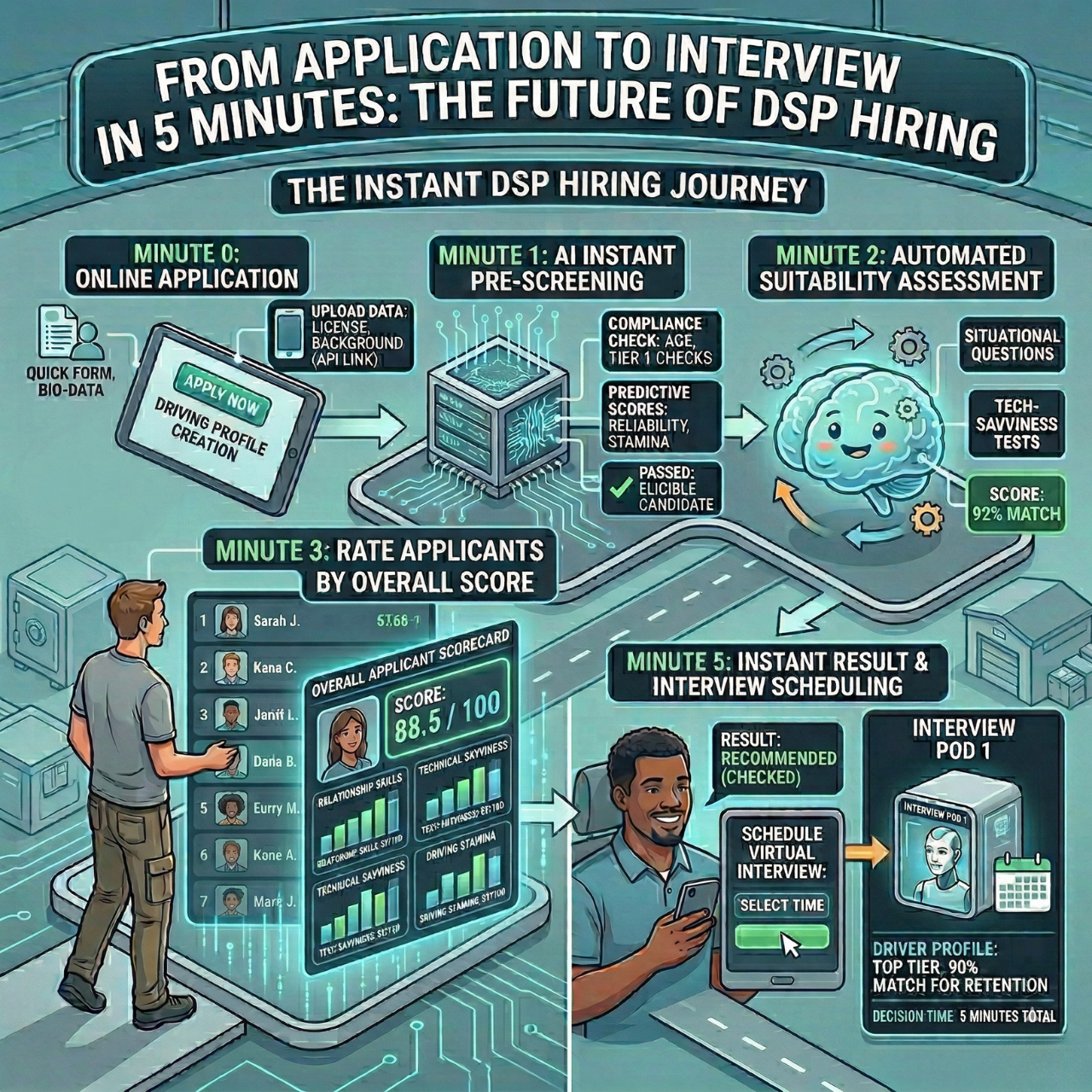
Voice AI jumps on candidate screenings right after applications come in. No more waiting days for a recruiter to review resumes and schedule phone calls.
One logistics company using AI voice tech ditched 2-7 day delays and swapped them for instant phone screenings. The same hiring team saved over 10 hours a week on manual screening.
The technology works around the clock to reach candidates. Applicants can do initial interviews whenever—outside business hours, during a break, whenever they have time.
This speed matters in logistics hiring, where good drivers and warehouse workers usually take the first solid offer they get. Voice AI also schedules follow-up interviews automatically. No more endless emails or phone tag slowing things down.
Increasing Diversity in Applicants
Voice AI uses the same questions and criteria for every candidate. This standardized approach reduces unconscious bias that can sneak into human-led screenings.
You reach candidates who might struggle with traditional applications. Some people would rather talk than type out long forms—especially in jobs where communication skills matter more than writing.
The tech evaluates candidates based on their responses and qualifications, not their name, accent, or background. Research shows AI recruitment tools can help create more diverse candidate pools when set up thoughtfully.
Voice AI also works with different schedules and time zones. Your candidate pool grows because people can interview when it works for them—not just during your team's office hours.
Cost Savings for Logistics Companies
You cut staffing costs when voice AI handles high-volume screening. The technology processes thousands of applicants without hiring more recruiters.
Your cost per hire drops. Traditional recruitment in logistics eats up money on advertising, recruiter time, and lost productivity while positions stay vacant.
Key cost reductions include:
- Lower recruiter overhead
- Shorter time-to-fill, so less productivity loss
- Fewer resources wasted on unqualified candidates
- Less need for pricey third-party recruiting agencies
The technology pays for itself quickly if you're hiring at scale. Logistics companies filling dozens or hundreds of roles each year see the biggest ROI.
Future Trends in Voice AI for Logistics Talent Acquisition
Voice AI is getting more personal and will adapt to individual candidate needs. New voice tech will make screening faster and more accurate for logistics jobs.
Personalization and Customization
Voice AI systems will learn your company's hiring needs and tweak questions for each logistics position. A voice assistantmight ask different technical questions for a warehouse manager than a freight coordinator.
The system can remember candidate preferences and communication styles from past interviews. You'll be able to customize the voice agent's personality to fit your company culture.
Some logistics companies want a straight-to-the-point tone; others prefer something warmer. The AI will analyze which speaking pace and question style work best for different backgrounds.
These systems will adapt in real time during conversations. If a candidate seems confused by technical jargon, the voice AI will simplify its language.
It can switch between languages automatically when needed, which helps logistics companies hire diverse teams across regions.
Emerging Voice Technology Innovations
New voice recognition models are starting to understand industry-specific logistics terms and a wider range of accents. They'll even pick up on subtle voice cues, like whether a candidate sounds genuinely enthusiastic or maybe a little hesitant.
This kind of nuance helps you spot candidates who actually care about the role. It's not just about what they say; it's how they say it.
Voice AI will work right alongside your applicant tracking systems and CMMS platforms. You won't have to click through endless screens; just track candidate progress using voice commands.
Some systems even try to predict which candidates are most likely to accept offers, using patterns in their voice and responses. It's a little futuristic, honestly.
Advanced voice agents can juggle multiple conversations at once, even if people are in different time zones. They'll handle initial screenings, set up interviews, and answer basic candidate questions around the clock.
Hire Faster Without Burning Out Your Team
Logistics teams can’t afford slow hiring cycles. Manual screenings and scheduling delays push good candidates away. Voice AI removes these bottlenecks by handling high-volume screening, follow-ups, and scheduling at speed.
HRMLESS helps logistics hiring teams reduce recruiter workload while keeping candidates engaged from first contact. Automated voice screening supports faster decisions without sacrificing consistency or quality.
Ready to fix slow, manual logistics hiring? Book a demo and see how voice AI can help you fill roles faster.
Frequently Asked Questions
What is voice AI in logistics hiring?
Voice AI in logistics hiring uses automated voice technology to handle early-stage recruiting tasks. It conducts phone screenings, asks job-specific questions, answers basic role details, and schedules interviews without recruiter involvement.
How does voice AI help reduce time-to-hire in logistics roles?
Voice AI contacts candidates immediately after they apply. By removing delays from manual phone screens and scheduling, hiring teams move qualified candidates forward faster before they accept other offers.
Can voice AI handle high-volume logistics hiring?
Yes. Voice AI is designed for high-volume roles like drivers, warehouse workers, and distribution staff. It can manage hundreds of screening calls at once, something human recruiters cannot scale efficiently.
Does voice AI replace recruiters?
No. Voice AI handles repetitive early steps so recruiters can focus on qualified candidates. Recruiters still make final decisions, conduct deeper interviews, and assess soft skills and team fit.
How does voice AI integrate with an ATS?
Voice AI connects to most applicant tracking systems using APIs. Screening results, call transcripts, and candidate scores are pushed directly into the ATS for easy review.
Is voice AI fair and consistent in candidate screening?
Voice AI asks the same questions in the same order for every applicant. This consistency helps reduce bias in early screening and gives recruiters standardized data for comparisons.
What types of logistics roles benefit most from voice AI?
Voice AI works best for high-volume and time-sensitive roles. Common use cases include CDL drivers, warehouse associates, forklift operators, dispatchers, and seasonal logistics staff.
Do candidates respond well to voice AI screening?
Most candidates prefer faster responses over waiting days for a callback. Voice AI lets applicants complete screenings outside business hours, which fits the schedules common in logistics jobs.
What security measures should be in place for voice AI recruiting?
Voice AI platforms should use encryption, role-based access controls, and clear data retention policies. Candidates should also be informed when calls are recorded and processed by AI.
When should a logistics company consider voice AI?
If your team struggles with slow screenings, missed candidates, or recruiter burnout, voice AI is a strong fit. It is especially useful when hiring at scale or competing in tight labor markets.
Featured

Subscribe to ournewsletter
Related posts
Explore the world of photography with our curated selection of
portfolio websites that showcase creativity and innovation.