

Benefits of AI in Hiring: Faster, Fairer Recruiting
Learn the key benefits of AI in hiring, from faster screening and automated scheduling to fairer decisions, better candidates, and a smoother experience.

Hiring still feels slow, manual, and messy for most teams. Juggling resumes, calendars, and no-shows eats up hours you don’t have. The real question is how to unlock the benefits of AI in hiring without losing control of the process.
HRMLESS shows how AI can handle pre-screening, scoring, and scheduling so recruiters stay focused on real conversations, not admin work. With the right setup, you cut noise, reduce bias, and move qualified people forward faster while keeping candidates informed.
In this guide, you’ll see how AI speeds up hiring, improves candidate quality, reduces ghosting, and supports diversity. By the end, you’ll know which benefits of AI in hiring matter most for your team.
How AI Is Changing Hiring Today
AI is changing how you find, assess, and hire talent. It slashes time spent on repetitive tasks and helps you focus on the candidates who actually matter.
You can expect less bias and a smoother experience for both recruiters and applicants. That’s a win-win, right?
AI-driven recruitment uses software to automate parts of the hiring process. This covers things like screening resumes, scheduling interviews, and scoring candidates based on what they can actually do.
AI leans on objective data, making hiring both fairer and faster. You don’t need to manually review every application anymore—AI filters out unqualified folks and highlights top talent.
It also keeps candidates engaged by sending reminders and updates, which means fewer no-shows and less ghosting. That’s always a relief.
Evolution of AI in Talent Acquisition
AI started out as a basic resume parser. Over time, it’s grown into a full-blown hiring automation platform. Early AI tools just matched keywords. Now they evaluate a candidate’s fit using real data and structured interviews.
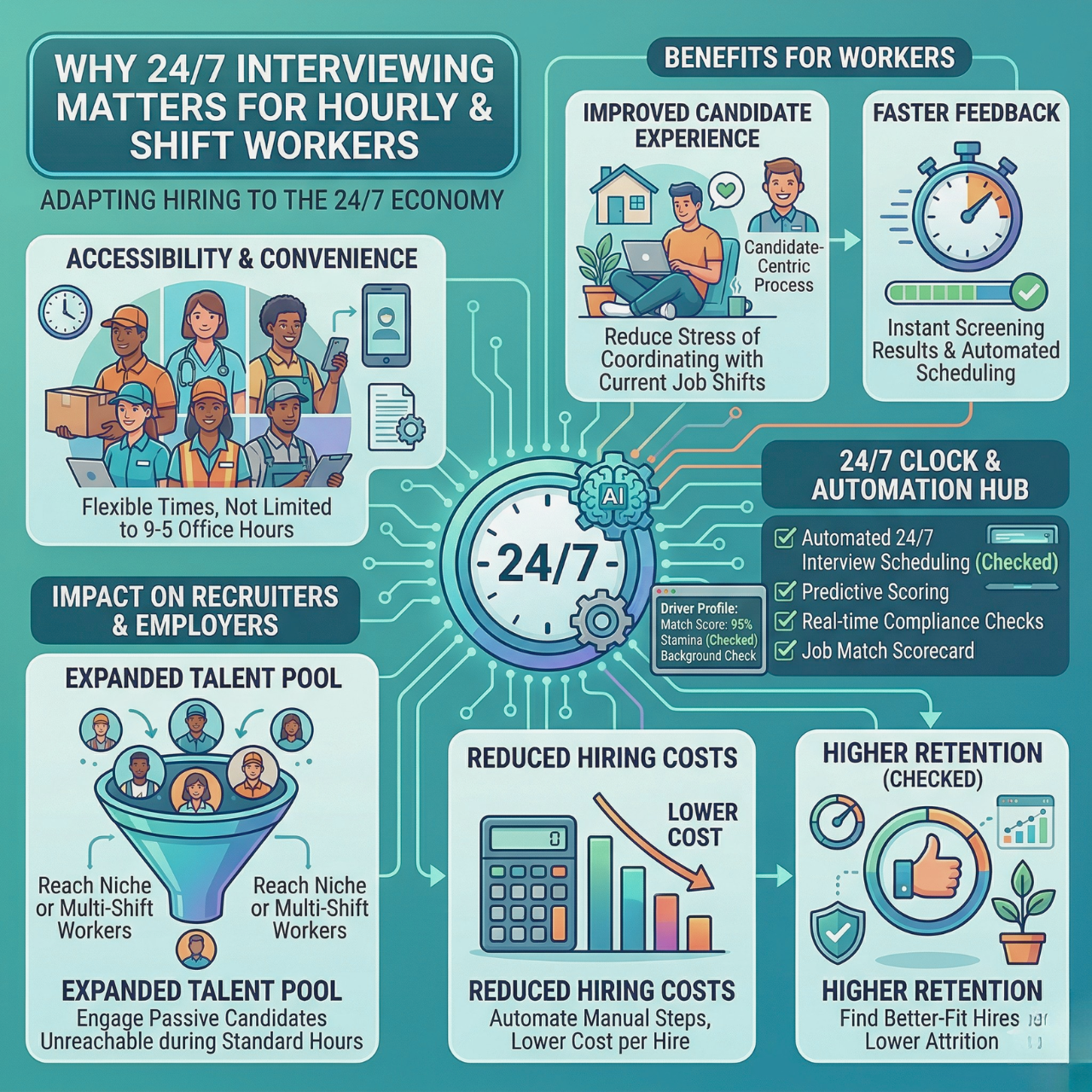
Today’s AI even offers conversational interviews that run 24/7, so candidates can respond whenever it suits them. You get real-time insights into which steps are slowing things down, making it way easier to fix bottlenecks quickly.
Types of AI Tools in Hiring
AI tools cover different stages of hiring. Here are the main types you’ll probably run into:
- Pre-Screening AI: Runs initial interviews and scores candidates automatically.
- Candidate Sorting: Filters resumes and ranks applicants by fit.
- Scheduling Automation: Arranges interviews and sends reminders.
- Engagement Bots: Keep candidates in the loop via SMS or email.
- Analytics Dashboards: Tracks hiring metrics like time-to-hire and drop-offs.
Some platforms combine all of these into one tidy solution. You get smooth integration with your ATS and can scale hiring without sacrificing consistency or fairness.
Efficiency Gains Through AI
AI in hiring saves you a ton of time by handling tasks like sorting resumes, setting up interviews, and finding great candidates fast. That means you can focus on making good decisions instead of drowning in busywork.
Automated Resume Screening
AI scans resumes lightning-fast to spot candidates who actually fit your job criteria. This shaves hours off the process—you don’t have to read every single application.
The technology looks for keywords, skills, and experience that really matter. With AI-driven screening, you get candidates ranked by fit, so only the best land on your desk.
Automated screening handles high-volume hiring without breaking a sweat. You can sort hundreds or thousands of resumes without needing extra staff. This can save up to 23% in recruitment costs and seriously cut down your time-to-hire.
Streamlined Interview Scheduling
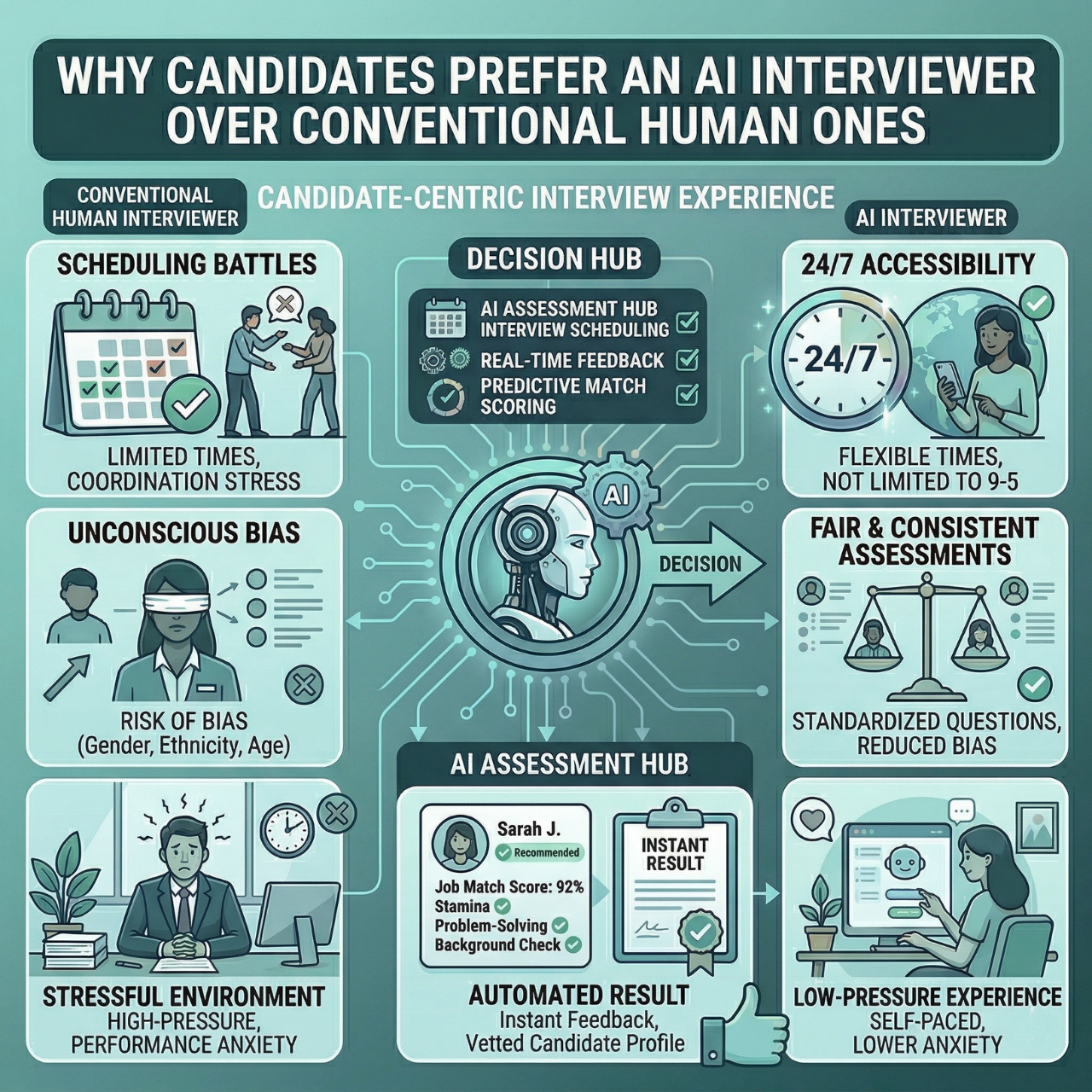
Scheduling interviews can be a nightmare with busy calendars on both sides. AI tools fix this by syncing calendars and sending invites instantly.
Candidates can just pick a time that works for them from your available slots. This cuts down on endless back-and-forth emails and slashes no-show rates by half.
Automated scheduling keeps things moving without delays and frees your team from manual tasks. Candidates get quick responses and feel like you actually value their time.
Faster Candidate Sourcing
Finding qualified candidates used to mean endless digging through job boards and social media. AI speeds this up by scanning tons of sources and delivering relevant prospects right to you.
AI-powered platforms even spot passive candidates who fit your role but aren’t actively applying. That means your talent pool gets bigger without any extra effort.
By zeroing in on top candidates faster, you can cut days—or weeks—off your hiring timeline. That kind of efficiency helps you grab great talent before your competitors even know what hit them.
Enhancing Candidate Quality
Getting better candidates starts with clear, data-backed methods. Automation and analytics help you spot the best fits and avoid common hiring mistakes. This lets you focus on people who actually match your open roles, not just those who look good on paper.
Data-Driven Candidate Assessment
AI tools analyze huge sets of candidate data quickly and consistently. They look at resumes, skills, work history, and even interview responses.
Instead of relying on gut feeling, you get objective scores that highlight the strongest applicants. You can automate pre-screening to surface top candidates based on the qualifications that matter for your role.
This cuts down time spent on unqualified profiles. Automated scoring means fewer mistakes and faster decisions. Your team reviews a filtered list where every candidate meets baseline criteria. It’s a real boost for overall applicant quality.
Pre-Hire Predictive Analytics
Predictive analytics uses past hiring data to forecast which candidates are likely to succeed. AI models look at patterns like job performance, retention rates, and even behavioral traits from previous hires.
By applying this data, you can predict outcomes like time to productivity and cultural fit. That lets you focus on candidates with higher success potential, saving time and avoiding costly mis-hires.
Some platforms even work predictive metrics right into scheduling and scoring, so you can home in on candidates who’ll stick around and thrive.
Reducing Human Bias in Selection
Bias in hiring can lead you to overlook great candidates and hurt diversity. AI helps by standardizing evaluation criteria.
Automated systems size up candidates based on skills, experience, and performance data. They ignore things like age, gender, or ethnicity entirely.
It’s worth remembering: AI supports your judgment, not replaces it. You still make the final call, but now you’ve got unbiased data to help you avoid favoritism and keep things fair.
Cost Reduction and Resource Optimization
AI in hiring lets you save money and make better use of your team’s time. It cuts down on recruitment expenses and shortens the hiring process without sacrificing quality.
Lower Recruitment Costs
AI can really trim your hiring costs by automating routine stuff like resume screening, interview scheduling, and candidate follow-ups. That means you don’t need as much extra staff or pricey outsourcing.
Some companies see savings of 20% to 50% on total hiring costs. Automation handles pre-screening and candidate engagement, so you lower the workload and cost per hire.
You also spend less on no-shows and ghosting since only engaged candidates move forward. Key savings include:
- Less time on admin work
- Fewer scheduling headaches and no-shows
- Reduced the need for outside recruiters
Lower costs mean you can put more into candidate experience or team growth—whatever matters most to you.
Minimized Time-to-Hire
AI speeds up your recruiting by automating steps that usually slow you down, like initial screening and interview booking. Faster hiring means less time per role and quicker productivity once someone’s on board.
Some users see a 27% or more drop in time-to-hire. Candidates can complete interviews anytime, and your team can automatically rank the best fits faster—less back-and-forth, quicker decisions.
AI improves workflow by:
- Scheduling interviews instantly, so no more delays
- Automating candidate scoring to highlight top talent
- Sending reminders and nudges to keep candidates moving
This streamlined process lets you fill roles quickly and takes the pressure off your HR team.
Improved Candidate Experience
AI in hiring makes the entire recruitment journey smoother and more responsive. Candidates feel valued with clear communication and quicker feedback—no more waiting in the dark.
Personalized Communication
With AI tools, you can send timely messages tailored to each candidate’s status. Automated SMS and email keep everyone in the loop about where they stand, which goes a long way toward reducing frustration.
Personalized communication means candidates get the right message at the right time, whether it’s an interview reminder, a feedback request, or an update on next steps.
Candidates notice when communication feels both human and efficient. AI helps you strike that balance—automating routine stuff, but leaving room for a personal touch when it matters.
Quick Application Processing
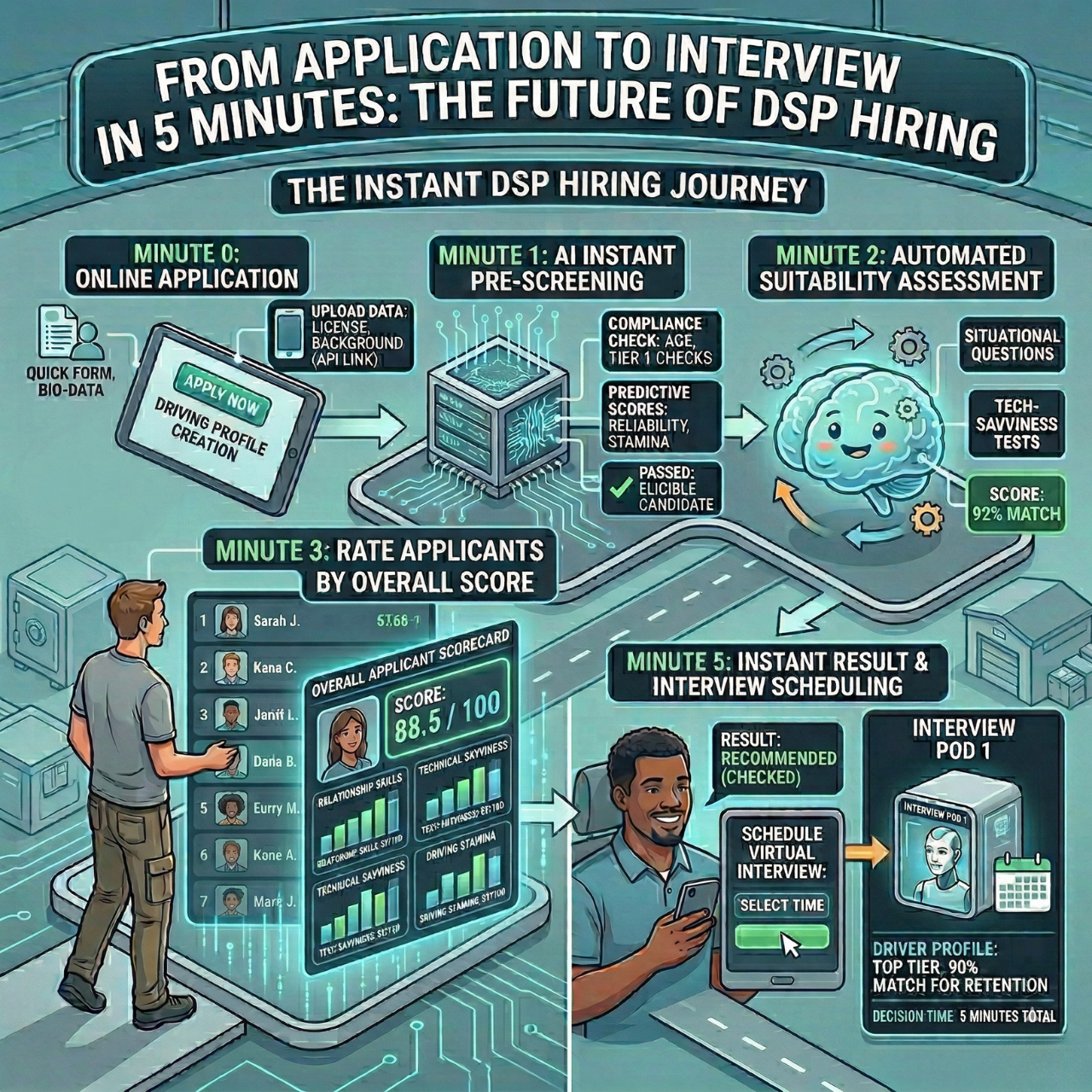
AI speeds up screening and scheduling so candidates aren’t left hanging. Instant pre-screening questionnaires and scoring surface your top matches fast.
Automated scheduling tools let candidates book interviews when it suits them, cutting delays and no-shows by up to 50%. You can focus on quality over quantity, knowing only the best move forward.
Fast processing not only makes for a better candidate experience but also shortens your overall time to hire. You save hours per hire by ditching manual steps and making decisions faster.
Diversity and Inclusion Benefits
AI in hiring helps reduce bias and opens doors to a broader range of candidates. It creates a more objective process by focusing on skills and qualifications, not personal factors.
These changes make things fairer and help you build stronger, more diverse teams. Isn’t that what we’re all aiming for?
Blind Screening for Objectivity
Blind screening strips out personal details like names, age, and gender from applications. This way, you can judge candidates by what really matters: their skills and experience.
AI tools scan resumes and filter candidates without letting human biases sneak in. With AI-driven blind screening, you sidestep the unconscious bias that creeps into hiring.
You can set clear, objective criteria for skills and qualifications. This approach feels fairer and helps you spot the best person for the job, no matter their background.
Wider Talent Pool Access
AI opens your search way beyond the usual hiring channels. It digs up candidates from different places, industries, and backgrounds that you might never spot manually.
This lets you reach underrepresented talent pools. Automation also helps remove biased language from job descriptions, so more people feel welcome to apply.
Clear, inclusive language attracts a wider range of applicants. Tools now combine AI screening and scheduling to engage candidates fast, so you don’t lose great people to clunky, slow processes.
Scalability and Adaptability
AI hiring software lets you handle shifting hiring needs without piling on extra work. It adjusts on the fly, whether you’re drowning in applications or dealing with a sudden market shift.
Handling High-Volume Applications
Getting hundreds—or thousands—of applications? Sorting them by hand just isn’t practical. AI-driven tools jump in, quickly screening candidates and scoring resumes based on your criteria.
You can zero in on just the best fits. Automated scheduling and communication keep candidates in the loop, and you barely have to lift a finger.
These platforms help cut no-shows in half by inviting only top candidates to book interviews. You also save hours per hire by ditching repetitive chores.
Adapting to Market Fluctuations
Hiring needs can swing up or down without warning. AI systems flex with your demand, scaling up when openings spike so you don’t get buried in paperwork.
If the market shifts, the AI updates filters and scoring to focus on the skills or traits you need right now. This keeps your hiring on track, even if everything else feels chaotic.
You don’t have to pause or slow down your recruitment when things get unpredictable. Automation keeps things moving, so you can stay ahead.
Future Trends in AI Hiring
AI tools just keep getting smarter. Now, they blend deep data analysis with learning models that actually improve hiring decisions over time.
These advances let you automate more of the process while still keeping things fair and precise. It’s honestly pretty exciting to watch this stuff evolve.
Integration with Advanced Analytics
Advanced analytics give you a window into every step of hiring. By tracking real-time data—like candidate engagement and time-to-hire—you can spot bottlenecks before they slow you down.
Dashboards highlight which job posts attract the best talent and where candidates drop off. That’s a game-changer for making fast, data-driven calls.
For example:
- Identify delays in steps like interview scheduling
- Measure quality by comparing candidate scores and hiring success
- Track diversity to reduce hiring bias
Some platforms use integrated analytics to streamline recruiting at scale. They sync with your ATS, so you don’t lose your data or mess up your workflow.
This seamless setup saves you hours and lets you focus on actually hiring, not wrestling with spreadsheets.
Role of Machine Learning Models
Machine learning models get better at hiring by learning from past data. They sharpen candidate screening by predicting which applicants will fit best for each role.
These models read resumes, interview responses, and assessment scores automatically. As the model trains on more hires, it tunes itself to your company’s standards and quirks.
It helps cut out human bias by zeroing in on skills and behaviors that matter. This keeps your hiring fair and a little more consistent, which honestly feels like a relief.
Machine learning also powers features like:
- Automated scoring and ranking of candidates
- Predictive matching of skills to job requirements
- Smart scheduling that finds optimal interview times
Bringing machine learning into hiring means you get quality candidates faster, with way less manual effort. It’s a solid upgrade for any workflow.
AI hiring software brings a lot to the table, but there are some issues you can’t ignore if you want the benefits of AI in hiring without surprises. One major concern is bias in algorithms.
AI can pick up unfair patterns from historical data, which can affect how candidates are scored or filtered. That risk makes it essential to monitor and test your models regularly.
Privacy and data security are another critical piece. Handling large volumes of candidate data means you need strong controls to stay compliant and keep information safe. A single misstep here can be costly.
System integration also matters. Your AI tools should work smoothly with your existing ATS or HRIS; if they don’t, you get more disruption than value. Good integration reduces manual work instead of adding it.
The candidate experience is the final layer. AI can speed things up, but too much automation can feel cold or impersonal. You still need human touchpoints where they matter most.
Here are some challenges to keep in mind:
- Risk of algorithm bias
- Data privacy and security concerns
- Integration with existing systems
- Maintaining a positive, human candidate experience
Turning AI Hiring Into Real Results
The key benefits of AI in hiring show up in the everyday work your team feels most: faster screening, smoother scheduling, and clearer shortlists. When routine tasks are automated, recruiters gain time to focus on better conversations and stronger hiring decisions.
With HRMLESS in your stack, AI supports each step without adding complexity, helping you cut delays, reduce bias, and keep candidates informed from first touch to offer. Your team gets structure and speed, while applicants get a fair, responsive experience.
Ready to see what this looks like in your own process? Book a demo to turn AI into measurable hiring wins.
Frequently Asked Questions
What are the main benefits of AI in hiring?
The biggest benefits of AI in hiring are faster screening, easier scheduling, and more consistent candidate evaluation. It helps teams focus on decision-making instead of admin work and shortens the time to hire.
Does AI in hiring replace human recruiters?
No, AI supports recruiters instead of replacing them. It handles repetitive tasks so humans can focus on interviewing, relationship building, and final hiring decisions.
How does AI help reduce bias in recruitment?
AI applies the same criteria to every candidate and can use blind screening to hide personal details. This helps shift decisions toward skills, experience, and role fit instead of subjective impressions.
Is AI hiring software only for large companies?
Not at all. Smaller teams also see the benefits of AI in hiring because it automates work they do not have the capacity for. Even a lean HR team can manage higher volume without adding headcount.
How can we get started with AI in our hiring process?
Begin by automating one or two steps, such as resume screening or interview scheduling. Then review results, adjust criteria, and expand AI to more stages as your team gets comfortable with the workflow.
Featured

Subscribe to ournewsletter
Related posts
Explore the world of photography with our curated selection of
portfolio websites that showcase creativity and innovation.