

How To Use AI For Recruiting To Hire Faster And Better

If you are figuring out how to use AI for recruiting, the goal is to hire faster without losing quality. AI tools handle repetitive work like resume screening, scoring, and scheduling. Your team can focus on real conversations instead of manual tasks.
With HRMLESS, AI acts like a digital recruiting assistant that runs pre-screening, scores candidates, and coordinates interviews in the background. You get 24/7 AI interviews, fewer no-shows, and clearer signals on who to advance.
This guide explains how to use AI across your recruiting process, from screening and chatbots to scheduling and feedback. By the end, you will know which automated recruitment tools to prioritize and how to roll them out safely.
What Is AI Recruiting?
AI recruiting uses computer programs to handle parts of the hiring process automatically. Instead of manually screening every resume or scheduling interviews, AI analyzes resumes, ranks candidates, and manages communication.
This saves you time and cuts down on mistakes caused by bias or fatigue. You get a more consistent process where each candidate is scored fairly based on data.
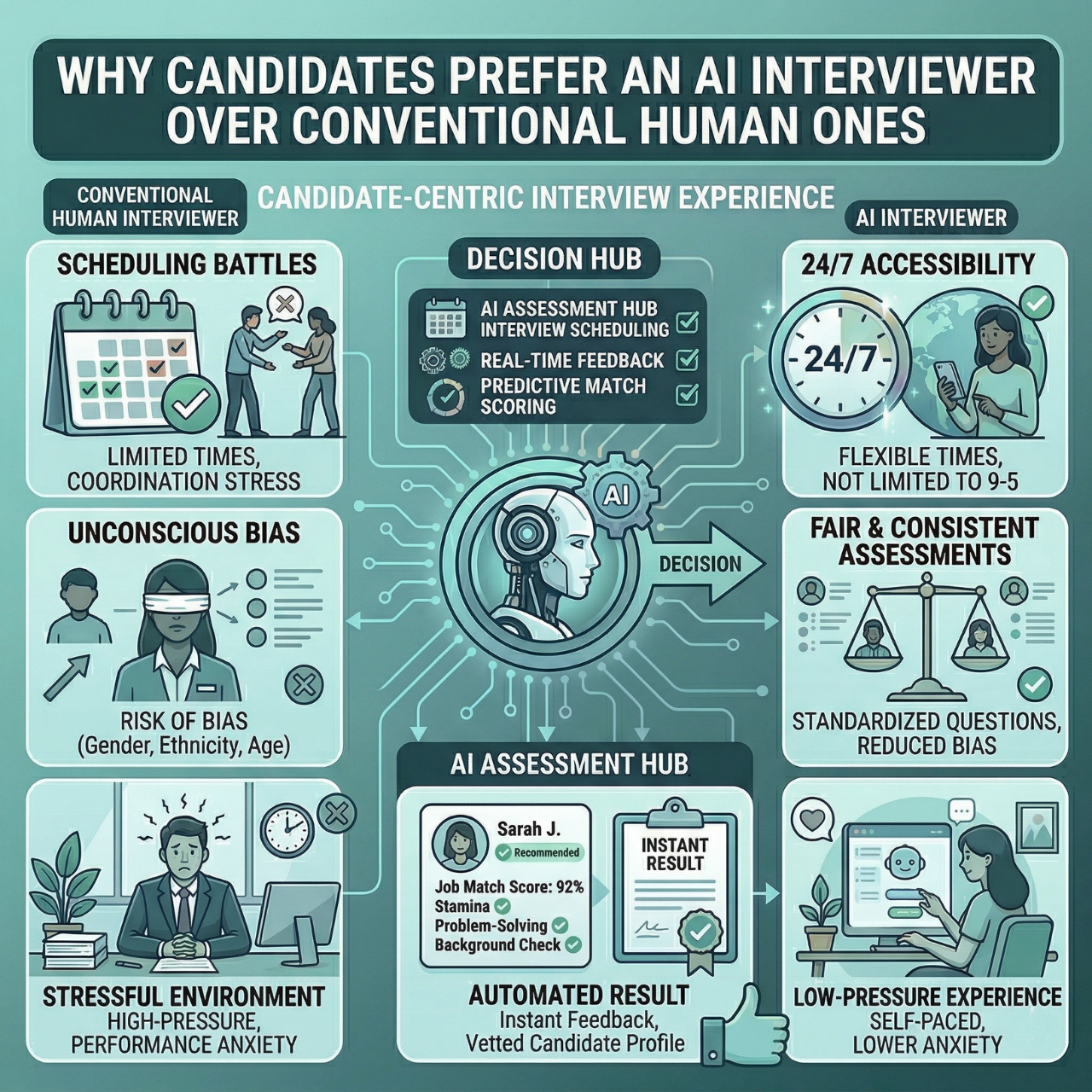
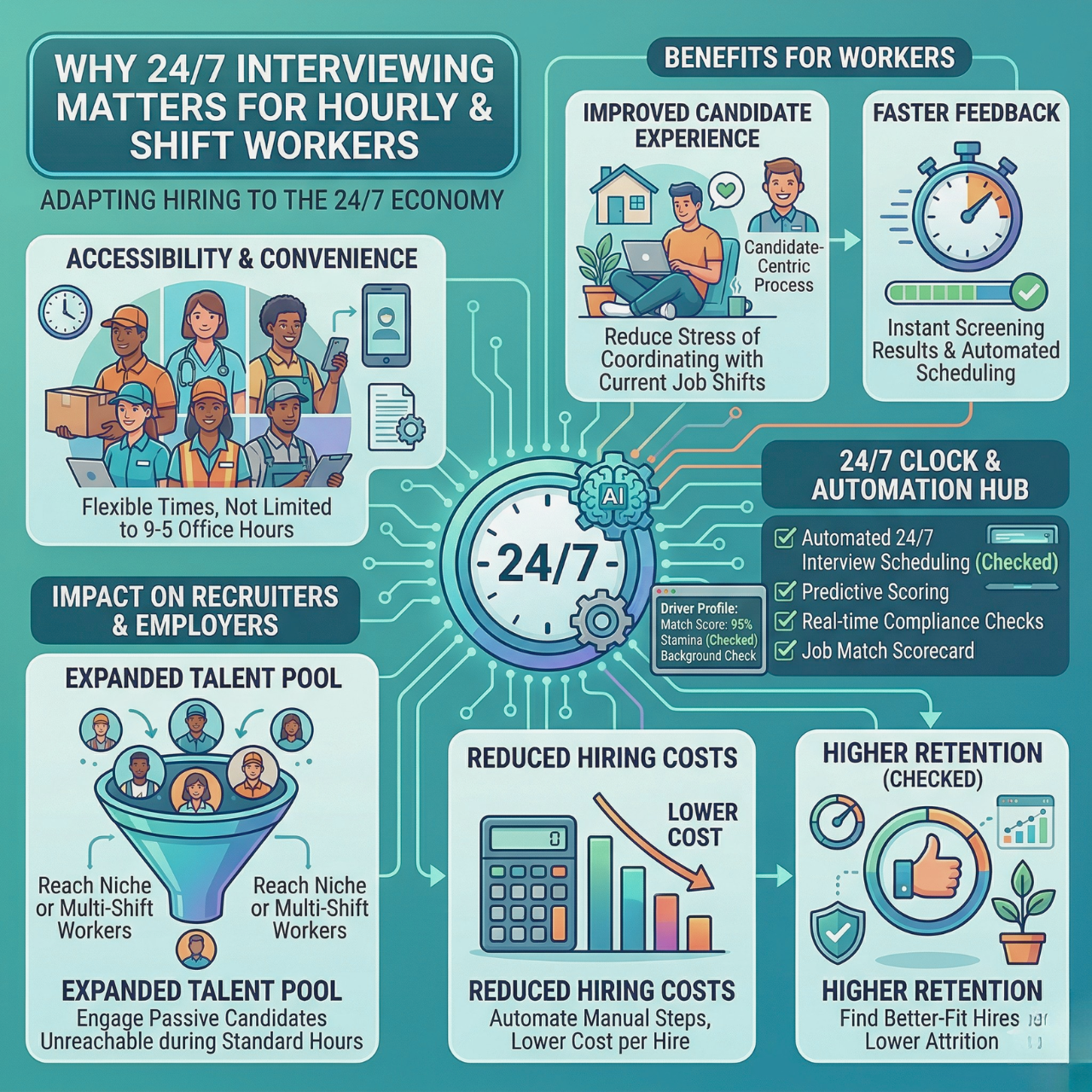
For example, conversational AI can run pre-screening interviews anytime, even outside business hours. This way, you don’t miss great applicants just because they can’t talk during regular office hours.
How AI Enhances the Hiring Process
AI improves hiring by making tasks faster and simpler. It can:
- Screen resumes in seconds, focusing on the skills and experience you need.
- Engage candidates through SMS or email, reducing no-shows by 50%.
- Automatically schedule interviews based on availability, so you don’t waste time on back-and-forth emails.
- Score candidates with consistent criteria, ensuring you focus only on qualified people.
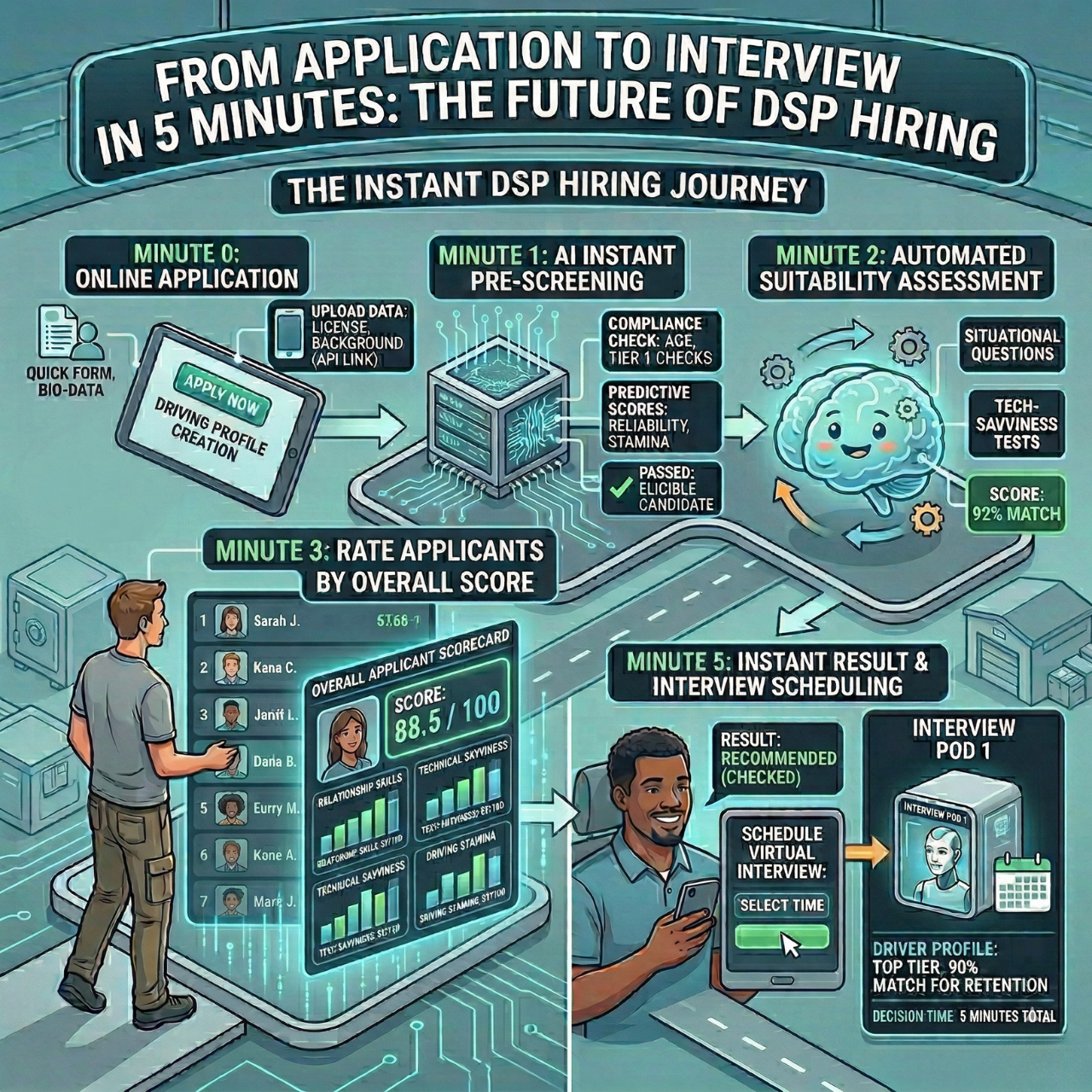
These improvements reduce the average time to hire by over 60% and help you keep hiring moving smoothly as your company grows.
Types of AI Used in Recruitment
There are different AI tools in recruiting; each helps in specific parts of the process:
AI Type
What It Does
Why It Helps
Resume Screening AI
Quickly sorts and ranks applicant resumes
Saves hours by eliminating weak matches
Conversational AI
Conducts pre-screening interviews and chats 24/7
Keeps candidates engaged anytime
Scheduling AI
Automatically books interviews
Removes admin work and reduces ghosting
Candidate Scoring AI
Rates candidates based on skills and fit
Focuses your attention on the best hires
Benefits of Using AI for Recruiting
Using AI in recruiting helps you hire faster, find better candidates, and make the process fairer. It cuts down on repetitive work and ensures you focus on the right people for your jobs.
Reduced Time to Hire
AI automates key tasks like screening resumes and scheduling interviews. This means you spend less time sorting through piles of applications and coordinating calendars. Candidates can complete pre-screening interviews anytime, removing bottlenecks in your workflow.
Automated communication, like SMS and email nudges, keeps candidates engaged. This reduces delays and no-shows, so your hires happen smoothly and quickly.
Improved Candidate Matching
AI scoring and filtering help you identify the best-fit candidates for your roles. The system analyzes skills, experience, and responses to highlight top talent instantly. By automating this, you avoid missing qualified applicants in large applicant pools.
Your team focuses only on candidates who meet your specific needs. This leads to better hires who match job requirements closely. At the same time, AI tools integrate with your ATS so your workflow stays seamless.
Bias Reduction in Recruitment
AI helps reduce unconscious bias by focusing on objective data like skills and qualifications. It removes personal details that may unfairly influence decisions. This makes hiring more inclusive and opens up opportunities to diverse candidates. You create a fairer process where candidates are chosen based on merit.
Implementing AI-Powered Recruitment Tools
Using AI tools can speed up hiring, improve candidate quality, and reduce costs. Choosing the right software, linking it with your current systems, and keeping data safe are key steps for success.
How to Choose AI Recruiting Software
Focus on what your team really needs. Look for software that automates key tasks like resume screening, scheduling interviews, and candidate engagement. Check features such as:
- AI pre-screening: saves time by filtering candidates automatically
- Scoring and ranking: highlights the best fits fast
- Communication tools: like SMS and email nudges to reduce no-shows
Make sure the tool works with your current ATS to avoid extra steps. Also, consider ease of use and customer support.
Integrating AI With Existing HR Systems
Your AI tool should connect smoothly with your ATS, HRIS, and calendar apps. This ensures data flows without extra manual work. Use API integrations to sync candidate info, interview feedback, and scheduling in real time. This helps your recruiters stay organized and work faster.
Test integrations in a controlled setting before full rollout to catch any issues early. Keeping your systems linked avoids duplication and keeps candidate data accurate throughout the hiring stages.
Data Privacy and Compliance Considerations
Protecting candidate data is critical. AI tools must follow laws like GDPR or CCPA, depending on where you operate. Understand what personal data the AI collects and how it’s stored. Look for features like:
- Data encryption to protect information
- Access controls that limit who can see sensitive data
- Audit trails that track usage for compliance
Also, be transparent with candidates about AI use. Inform them how their data is processed and get consent where needed. Proper handling of data builds trust and avoids legal risks while using AI in your recruitment.
AI Applications Across the Recruitment Process
AI tools can help you save time, reduce bias, and improve how you engage candidates. From sorting resumes to managing interviews, each step benefits from smart automation and faster workflows.
Automated Resume Screening
Automated resume screening uses AI to quickly sort through hundreds or thousands of applications. It looks for key skills, experience, and qualifications that match your job description. This lets you focus only on qualified candidates without spending hours on manual work.
The AI can rank candidates by relevance and flag potential fits. It also reduces bias by ignoring names or personal details. This means your screening process is fairer and more efficient.
Chatbots for Candidate Engagement
AI-powered chatbots interact with candidates instantly, answering questions and collecting basic info 24/7. This keeps candidates engaged and reduces no-shows by giving timely updates and reminders. Chatbots also conduct preliminary interviews, gathering answers and assessing fit before you get involved.
This speeds up early-stage screening and personalizes candidate communication. Using chatbots means you never miss a top candidate because they received a quick reply.
Scheduling Interviews With AI
Scheduling interviews can be slow and frustrating with back-and-forth emails. AI-powered scheduling tools handle all this automatically, matching calendars and sending invites without manual effort.
AI also reduces ‘no-shows’ by confirming appointments only with engaged candidates. Automated reminders cut missed interviews in half, saving your team time and frustration. Integration with ATS and calendar apps means scheduling fits right into your workflow. This speeds up your time to hire by 62%, letting you focus on interviewing rather than organizing.
Optimizing Candidate Experience With AI
Using AI can improve how candidates feel during your hiring process. It helps you talk to candidates in a way that feels personal and keeps them informed quickly at every step. This boosts engagement and reduces drop-offs.
Personalized Communication
AI lets you send messages that match each candidate’s profile and stage in the process. Instead of generic emails, you can deliver tailored updates, reminders, and next steps through SMS or email. This keeps candidates interested and reduces confusion.
For example, AI can automatically nudge candidates to complete forms or schedule interviews without you lifting a finger. Personalization also means candidates feel valued, which improves your employer brand. You get consistent, clear updates sent on time, every time.
Faster Feedback Cycles
Candidates expect quick responses. AI speeds up screening and analysis by automatically scoring and filtering applicants based on your criteria. This means you can share interview feedback or next steps faster.
Instead of waiting days or weeks, candidates get timely updates that keep them engaged. Faster feedback reduces anxiety and the chance that they will look elsewhere. It helps you make better hires while giving candidates a smooth, fast experience that feels professional and respectful.
Best Practices for Using AI in Recruitment
Using AI in recruitment can save time and improve the quality of your hires. To get the most from these tools, focus on fairness, transparency, and ongoing performance checks. Clear communication with candidates and careful monitoring help keep the process effective and unbiased.
Ensuring Fairness and Transparency
Fairness means your AI should treat all candidates equally. Avoid bias by regularly checking how AI scores and selects applicants. Use data to identify any patterns that unfairly favor or exclude groups.
Transparency means you explain to candidates how AI is used in your hiring. Let them know what parts of the process AI handles, such as screening or scheduling. This builds trust and helps candidates feel comfortable.
You can also combine AI insights with human judgment. This ensures decisions are balanced and fair.
Monitoring and Improving AI Performance
AI systems need regular updates to stay accurate and effective. Monitor how well the AI predicts candidate success and adjusts to changes in your job market or company needs. Watch for signs of problems, like AI missing top talent or creating unexpected bias.
Use real-time analytics dashboards to track engagement and hiring speed. Test your AI tools often. Update models when you see new hiring trends or regulations. This keeps your process sharp and aligned with your goals.
Challenges and Limitations of AI Recruiting
Using AI for recruiting brings clear benefits but also some key challenges. These issues mainly involve handling bias in the data and understanding where automation falls short. Knowing these limits helps you use AI tools smarter and keep your hiring fair and effective.
Managing Data Bias
AI systems learn from past hiring data, which can carry bias. If your data reflects unfair preferences, like favoring certain genders or schools, AI may repeat these mistakes. This means some candidates might be unfairly screened out.
To reduce bias, you should regularly review your AI’s decisions and the data it uses. You can also adjust algorithms or add rules to ensure fairness. Transparency is important, so know how your AI screening scores candidates. Human review is necessary to catch any AI errors or bias that slip through.
Limitations of Automation
AI speeds up many hiring steps, but can’t replace human judgment. It works best for tasks like pre-screening, scoring, and scheduling. However, AI may miss subtle candidate qualities like cultural fit or soft skills.
Automation also depends on good data inputs. Poor data means poor results. Plus, AI tools need time and resources to set up, which can be costly upfront. You might not see immediate ROI if you don’t design your process carefully.
You still need recruiters to make final decisions and build candidate relationships. Combining AI with your expertise ensures the best outcomes without losing fairness or quality.
Future Trends in AI for Recruiting
AI recruiting is moving toward more precise, efficient, and personalized hiring processes. You will see new tech that improves candidate matching and better predictions about hiring needs and outcomes.
Emerging Technologies
AI recruiting tools now use hyper-personalization to match candidates more closely to jobs. This goes beyond keywords, analyzing skills, experience, and even cultural fit. Immersive assessments with simulations or virtual reality are gaining ground. These let you see how candidates perform in real-world tasks.
Conversational AI automates interviews 24/7. This improves engagement and filters candidates faster. AI will also integrate voice-based tools soon. You will be able to hear candidate responses naturally, making screening feel more human while keeping scalability.
Predictions for the Recruitment Industry
The recruitment industry will adopt full-cycle automation. From sourcing to onboarding, AI will save you hours by handling pre-screening, scheduling, and messaging automatically. Expect a 60% or more reduction in time-to-hire as AI eliminates bottlenecks and reduces no-shows.
Automated SMS and email nudges keep candidates engaged throughout. Bias reduction tools will become standard. This will offer fairer, data-driven decisions. This means better candidate quality and less unconscious bias.
Turning AI Recruiting into Real Hiring Results
When you understand how to use AI for recruiting, you can automate screening, scheduling, and follow-up, so hiring moves faster with less manual work. That efficiency gives your team more time for high-quality interviews and better decisions.
HRMLESS brings those pieces together in one workflow, from 24/7 pre-screening to candidate scoring and smart scheduling. The result is a faster, more consistent hiring process that still leaves room for human judgment.
Ready to put AI to work in your recruiting process? Book a demo and see exactly where automation can speed up your funnel, reduce ghosting, and lift hire quality.
Frequently Asked Questions
How do I get started with AI for recruiting?
Begin by mapping your current hiring steps, from sourcing to offer. Then identify repetitive tasks like resume screening, scheduling, and follow-up. Start with one AI hiring software tool that automates a single step, measure results, and expand from there.
What roles benefit most from AI recruiting tools?
High volume roles, such as customer support, retail, and entry-level operations, benefit the most. These positions generate many applicants and repetitive screening work. AI helps you quickly filter large pools so recruiters focus on the most qualified candidates.
Will AI replace recruiters in the hiring process?
No, AI will not replace recruiters, but it will change how they work. AI handles repetitive tasks, scoring, and scheduling so humans can focus on interviews and relationship building. The best results come from combining automation with human judgment.
How can AI reduce bias in recruiting?
AI can reduce bias by focusing on structured data like skills, experience, and assessments instead of personal details. When you design consistent scoring rules, every candidate is evaluated the same way. Regular audits of AI decisions help you catch and correct any patterns that look unfair.
Is AI recruiting software difficult to integrate with my ATS?
Most modern AI hiring tools offer direct integration or API connections with major applicant tracking systems. Once connected, candidate data flows automatically between platforms. This keeps your team in one main system while AI runs screening and scheduling in the background.
Featured

Subscribe to ournewsletter
Related posts
Explore the world of photography with our curated selection of
portfolio websites that showcase creativity and innovation.