

Hiring With AI Recruitment: Faster, Fairer Talent Wins
AI recruitment helps teams screen faster, reduce delays, and keep candidates engaged. Learn tools, benefits, and how to hire smarter.

Hiring today is slower and messier than it should be. Manual screening, scheduling delays, and candidate drop-off drain time and leave good talent waiting. AI recruitment addresses these pain points by automating the work that clogs your pipeline.
With tools like automated screening, scoring, and scheduling, teams using HRMLESS move faster without sacrificing quality. Recruiters spend less time chasing resumes and more time engaging candidates who are actually a fit.
This guide breaks down how AI recruitment works, what tools matter most, and where teams see real gains. You’ll learn how to reduce friction, improve fairness, and keep hiring moving without burning out your team.
What Is AI Recruitment?
AI recruitment brings technology into the hiring process. It automates everyday tasks, analyzes data, and helps you focus on the best talent faster. You'll see how AI recruitment stands apart from old-school methods, and what kinds of tools are in the mix now.
AI recruitment applies artificial intelligence to things like screening resumes, scheduling interviews, and engaging candidates. It leverages machine learning, natural language processing, and automation to speed up hiring.
The core idea? Strip away manual work that slows you down. AI sifts through thousands of applications fast, pinpointing top matches based on skills and experience.
You get higher-quality candidates, and you barely break a sweat. That's the goal, right?
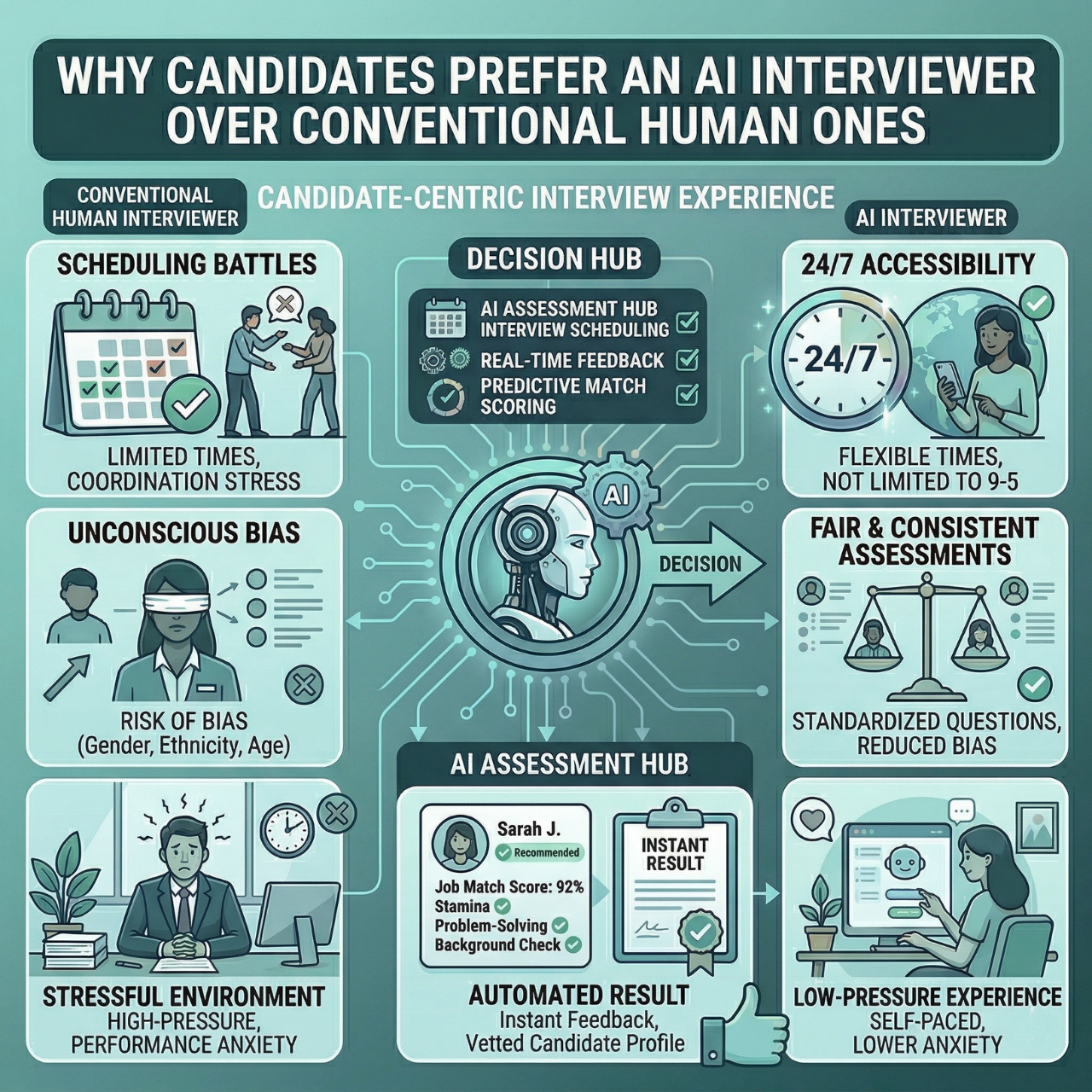
Modern platforms automate pre-screening, scoring, and scheduling, which cuts down time-to-hire and helps reduce bias by focusing on objective data instead of gut feelings.
Key Differences From Traditional Recruitment
Traditional recruitment leans heavily on people reviewing resumes and reaching out manually. It's slow and, honestly, pretty error-prone.
AI automates much of that. It sorts resumes, contacts candidates, and books interviews without you micromanaging every step.
This speeds up the process and ensures good candidates don't slip through the cracks just because you're swamped. Real-time insights let you track candidates at every stage.
Automated messaging keeps candidates engaged, which means fewer no-shows and less ghosting. Scaling up? No problem. AI flexes with your needs, whether you're hiring two or twenty.
Types of AI Used in Recruitment
- Machine Learning: Spots patterns in resumes and job descriptions to pair candidates with roles.
- Natural Language Processing (NLP): Reads and evaluates application text for better screening and interviewing.
- Automation: Handles interview scheduling, sends reminders, and moves candidates forward, no manual work needed.
Other tools include predictive analytics that forecast candidate success, plus chatbots that screen applicants with quick, conversational questions.
How AI Recruitment Works
AI recruitment flips the script by making hiring faster and more data-driven. Smart programs help you find top candidates quickly, cutting bias and manual slog. AI tools keep candidates engaged and make sure only the most qualified move ahead.
Process Overview
It all starts with sourcing candidates from job boards, social media, and resume databases. AI scans their applications for keywords, skills, and experience.
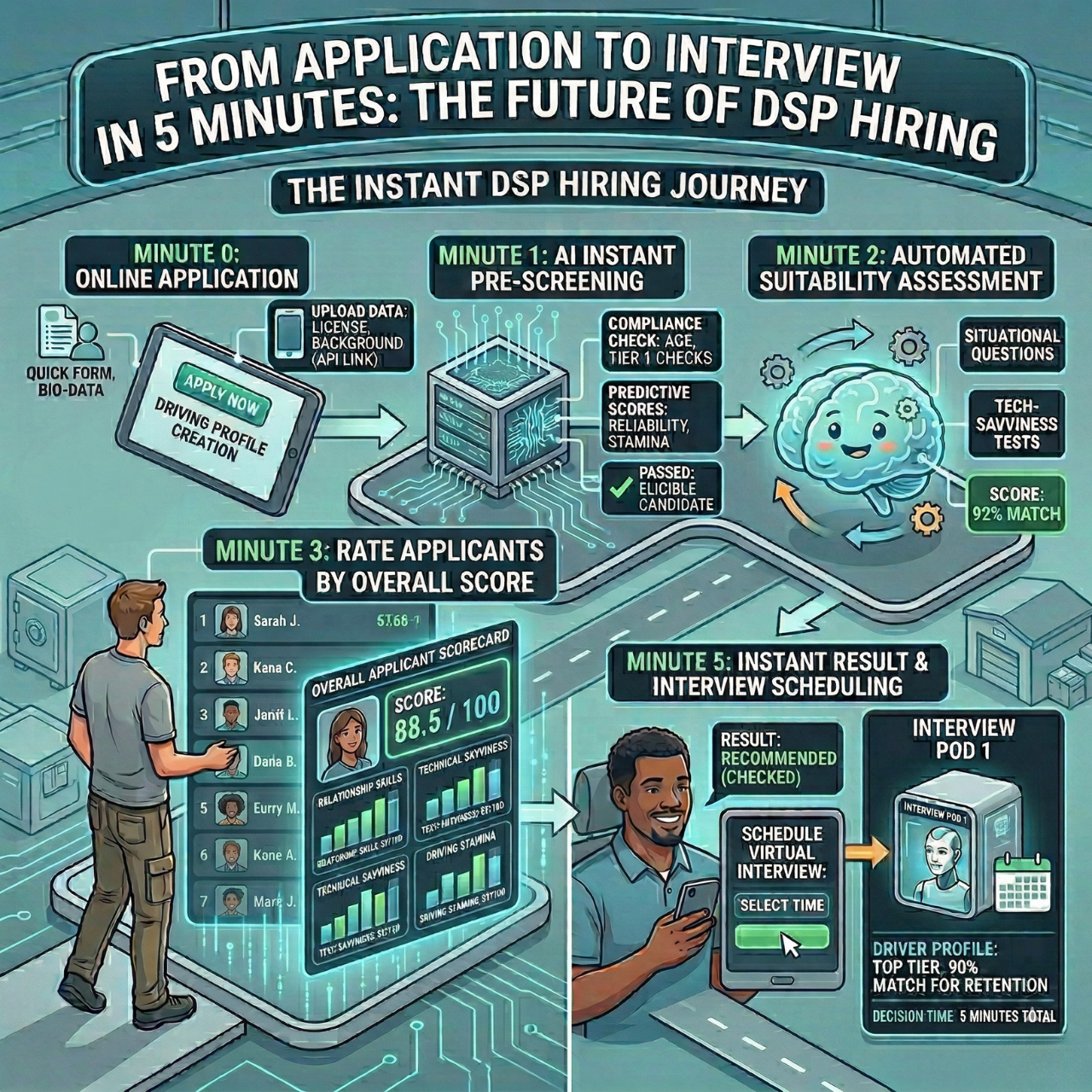
The system ranks candidates by fit, so you review scores instead of drowning in resumes. After scoring, AI tools schedule interviews and send SMS or email nudges to keep things moving.
AI Algorithms and Applications
AI taps into machine learning and natural language processing (NLP) to understand resumes and job descriptions. It looks for patterns in successful hires and predicts candidate fit for your roles.
Predictive analytics help you get a sense of who might thrive. Chatbots answer basic candidate questions, so your team can skip the small stuff. AI can also spot bias, making your hiring process fairer.
Automation in Candidate Screening
Automation takes over repetitive screening tasks and does them quickly and fairly. AI reviews thousands of resumes in seconds, picking out candidates who meet your criteria.
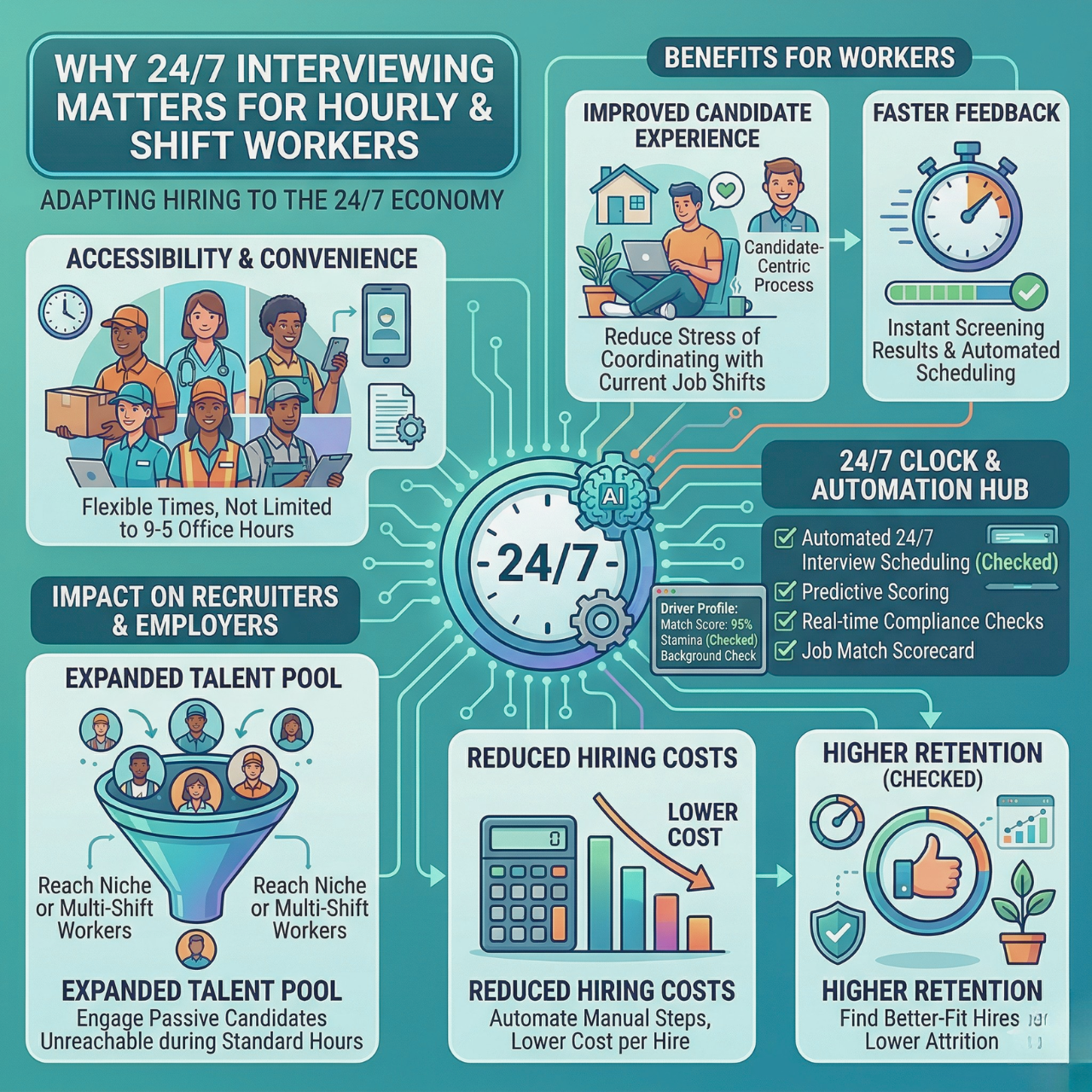
Pre-screening interviews run 24/7, letting candidates respond when it works for them. Automated scoring pushes top matches to the front.
Scheduling tools cut down on back-and-forth and keep no-shows to a minimum by letting only engaged candidates book interviews.
Benefits of AI Recruitment
AI in recruitment saves time and money, reduces bias, and matches candidates to roles more accurately. The right tools handle routine work and boost the quality of your hires, all without extra effort from you.
Time and Cost Efficiency
AI automates manual steps like resume screening and interview scheduling, freeing you up for the decisions that actually matter. Pre-screening and scoring happen automatically, cutting hours off every hire.
Automation also trims costs by speeding up hiring and letting you run leaner recruiting teams. You avoid delays from missed emails or endless coordination.
Faster hiring means your open roles don't sit empty, so your business keeps humming along. By saving time on repetitive tasks, your team can connect with top candidates sooner.
Unbiased Candidate Evaluation
AI recruitment software focuses on skills and experience, not irrelevant details. Instead of relying on gut instinct, AI uses consistent criteria to evaluate candidates and helps you dodge mistakes rooted in personal bias.
Every applicant gets a fair shake, which boosts diversity and inclusion. AI can anonymize resumes or use neutral scoring for objectivity.
Your decisions become more data-driven, and you hire the best talent for the job. With bias minimized, your hiring outcomes improve, and your employer brand gets a modern, fair reputation.
Enhanced Candidate Matching
AI digs deep into job descriptions and candidate profiles, going way beyond simple keyword searches. It surfaces top candidates by scoring and filtering applicants, so you get a shortlist of people who actually fit your needs.
This means less time wasted on unqualified resumes and fewer false positives. Better matching also gives candidates a smoother experience.
People end up in roles that suit their skills, which lowers early dropouts and ghosting. Your hiring funnel works better, turning more applicants into lasting hires.
AI Recruitment Tools and Technologies
AI recruitment tools automate key hiring tasks, helping you track applicants, engage candidates, and analyze resumes quickly. Less manual work, faster decisions, what's not to like?
Applicant Tracking Systems with AI
Applicant Tracking Systems (ATS) use AI to organize and manage applications. Instead of sorting resumes yourself, the AI scans and ranks candidates by your requirements.
You can focus on the best matches right away. AI-powered ATS also schedules interviews and sends reminders to reduce no-shows.
Integration with other HR systems keeps your workflow smooth. Some platforms combine ATS features with automated scoring and scheduling, making it easier to cut time-to-hire and avoid bottlenecks.
Benefits:
- Faster candidate sorting
- Automated interview scheduling
- Integration with existing hiring tools
Conversational AI for Candidate Engagement
Conversational AI uses chatbots or virtual assistants to talk with candidates in real time. These tools answer questions, collect info, and keep people engaged without you having to jump in every time.
SMS or email nudges prompt candidates to finish screening or book interviews, which helps keep your pipeline moving. You still call the shots, but AI takes care of most of the outreach.
Some platforms offer conversational AI that automates pre-screening and follow-ups, so you only spend time with candidates who are a good fit.
Benefits:
- Instant candidate responses
- Automated follow-ups
- Reduced candidate drop-off
AI-powered Resume Parsers
Resume parsers use AI to pull key info from CVs fast. They spot skills, experience, education, and keywords, no need to read every line yourself.
This tech standardizes data and matches it to your job criteria, so you don't miss out on strong candidates buried in the stack. The system flags the best matches and organizes the info for easy review.
Resume parsers often work inside ATS platforms, streamlining the whole process. AI resume parsing saves time and sharpens your shortlist.
Benefits:
- Quick, accurate resume review
- Standardized candidate data
- Faster matching to job needs
Implementing AI Recruitment in Organizations
Rolling out AI in recruitment means syncing it with your current systems, supporting culture shifts, and training your team. You'll want clear plans for each step to keep things smooth and effective.
Focus on finding the right tech fit, building new skills, and backing up your people as things change.
Integration With Existing HR Systems
Start by checking how AI tools connect with your ATS or HRIS. Smooth integration saves time and cuts down on errors; nobody wants to copy-paste data all day.
Look for platforms that offer ready-made connections to popular systems, so data flows automatically. Keep your workflows intact while adding AI features like pre-screening, scoring, or scheduling.
Test integrations before going all in, just to catch any bugs. Make sure your reports and analytics blend AI insights with your usual data for a clear hiring picture.
Change Management Strategies
Switching up recruitment methods shakes things up for everyone, from HR to hiring managers. To keep pushback low, talk about why AI matters: faster hires, less bias, better candidates.
Share real success stories and keep expectations realistic. Bring key stakeholders in early and actually listen to their feedback.
Update everyone during the rollout so teams feel in the loop, not blindsided. Assign a few AI champions to coach coworkers and answer questions.
Try phased implementation. Start with one team or job type, then scale up. This lowers risk and builds confidence with early wins.
Staff Training and Adoption
Training is key if you want AI recruitment to stick. Your team needs to know how to use the new tools and see that AI is here to help, not replace them.
Focus on hands-on sessions, not endless lectures. Highlight features like automated engagement, scoring, and scheduling, and show how these make life easier. Encourage questions and feedback; nobody gets it perfect right away. Offer ongoing support with quick guides or live chat, so everyone feels confident using the tools.
Challenges and Limitations of AI Recruitment
AI recruitment is fast and efficient, but it's not magic. You'll need to watch out for data privacy, make sure AI is used fairly, and keep bias out of automated decisions.
Knowing these challenges helps you get the most out of AI tools, without risking your hiring quality or reputation.
Safeguarding Candidate Data in AI Recruitment
Using AI in recruitment means you’re handling sensitive candidate data. These systems pull in personal info, resumes, contact details, and sometimes even video interviews.
You need to keep all that data locked down and out of the wrong hands. It’s not just about ticking boxes; it’s about real trust.
Key points for data privacy:
- Follow laws like GDPR or CCPA, depending on where you operate.
- Store data with encryption and limit access to only those who need it.
- Audit your AI tools regularly to catch vulnerabilities before they become problems.
If you skip these steps, you could face fines or lose candidate trust. You really don’t want that kind of headache.
Ethics in AI Hiring: What Matters
AI can mess with fairness if you’re not careful. It’s easy for these systems to tip the scales for or against certain groups without anyone noticing at first. Being transparent about how AI evaluates candidates helps build trust. Nobody likes feeling like they’re up against a black box.
To keep your hiring ethical, focus on:
- Letting AI assist, but not take over human decisions.
- Explaining to candidates how AI shapes their journey.
- Making sure every candidate is treated with respect and without bias.
Dealing with Algorithmic Bias
AI recruiting still struggles with bias. The tech learns from old hiring data, and let’s face it, those records aren’t always perfect.
This can mean unfair screening based on gender, race, or age, even if you didn’t intend it.
You can push back against bias by:
- Checking AI outcomes often for red flags.
- Training your models on diverse, balanced data.
- Mixing in human judgment to catch problems early.
It’s a moving target, but you’ve got to keep an eye on it. Bias can quietly hurt your diversity and shrink your talent pool if you let it slide.
The Future of AI Recruitment: What’s Next?
AI is shaking up hiring with smarter tools and broader applications. The tech digs deeper into candidate data and finds new ways to connect with talent. Recruitment teams are seeing their roles shift as AI takes on more grunt work.
New Tech on the Block
AI is moving way past basic keyword matching. Now, you’ve got predictive analytics that actually forecast how likely someone is to succeed, all based on past hires.
Intelligent matching pairs you with better-fit candidates, saving everyone a ton of time. And conversational AI interviews? Candidates answer when it suits them, no more endless scheduling back-and-forth.
Voice engagement is coming, too, making it easier to size up soft skills naturally. The tech’s getting pretty slick.
Automation now handles pre-screening and scoring, so you can focus on what really matters, making decisions, not ticking boxes.
AI Expands Its Reach in HR
AI isn’t just for hiring anymore. It’s automating interview scheduling and keeping candidates engaged with nudges via SMS or email.
It’s also helping with workforce planning and spotting skills gaps. You don’t have to overhaul your systems; AI plugs into your current ATS and just works.
Need to scale up hiring? AI lets you go from a few roles to whole teams without breaking a sweat. That kind of flexibility is honestly a game-changer.
Where Talent Acquisition Is Headed
Expect AI to handle most candidate engagement, making it harder for top talent to slip through the cracks due to slow replies.
Companies are doubling down on fairness, using automated scoring and standardized interviews to cut out bias. That should make hiring more objective, at least, that’s the hope.
With real-time analytics, you’ll spot bottlenecks faster and tweak your strategy on the fly. The best platforms will keep streamlining everything, so you can hire with confidence even when things move fast.
How to Pick the Right AI Recruitment Tool
Choosing AI for recruitment comes down to finding features that actually help, speed, accuracy, and a good experience for candidates. You’ll want to vet vendors closely and get your team ready for the switch.
If you do it right, the software slides into your process and delivers real results, not just promises.
Must-Have Features
Look for automation where it matters: pre-screening, candidate scoring, and scheduling. These cut down manual work and keep hiring moving.
Automated interview scheduling alone can slash no-shows by half. Integration with your ATS or HRIS is a must if you don’t want to disrupt everything.
Real-time analytics let you spot issues and keep candidates engaged with multi-channel messaging. And 24/7 AI interviews mean candidates can apply whenever, which really widens your net.
How to Size Up Vendors
Check if vendors have a solid track record and good support. Are they actually updating the product to solve real hiring headaches?
Dig into their onboarding and training resources. Ask them straight up about privacy and bias, how do they keep things fair and secure?
Pricing flexibility matters, too. You want plans that can grow with you, whether you’re hiring five people or fifty. Integration support is non-negotiable.
Rolling Out AI Recruitment: Tips and Pitfalls
Start with clear goals; maybe you want to cut interview time or bring in more diverse candidates. Get your team involved early; their buy-in makes all the difference.
Train everyone on the new platform and help them make sense of AI results. You want the tool to fit into daily work, not become another headache.
Run AI alongside your old process first, then move over fully when you’re ready. Keep an eye on metrics like time to hire and candidate drop-offs. Don’t forget to gather feedback from both candidates and recruiters. Tweak settings as you go to keep improving the experience.
Is AI Recruitment Working? Here’s How to Tell
You can’t just guess if AI is helping; you need hard data. Does it help you find better candidates faster, cut costs, and make better hires?
Tracking the right metrics and ROI is the only way to know for sure. And honestly, you’ll want to keep tweaking things as you go.
What to Measure
Watch the numbers that actually matter at each hiring step. Here’s what to keep tabs on:
- Time to fill: How quickly you fill jobs with AI in play.
- Quality of hire: Are your new hires hitting their marks?
- Candidate engagement: Are people responding and finishing interviews?
- Diversity: Is your candidate pool getting broader and less biased?
Compare these to your old numbers to see what’s working. Dashboards make it easy to spot where things slow down or drop off.
Calculating ROI
Proving AI’s worth means looking at savings and speed. Figure out how many hours you save on screening and scheduling.
- Count fewer no-shows thanks to better engagement.
- Lower your cost per hire by filling roles faster and making fewer bad picks.
Don’t forget to factor in faster onboarding and better talent matches. When your team isn’t bogged down with repetitive stuff, they can focus on the big picture. That’s where AI really pays off.
Keeping AI Recruitment Sharp
AI isn’t “set it and forget it.” You need to keep reviewing your numbers and making tweaks.
- Tune AI settings to fight bias or boost candidate quality.
- Use recruiter feedback to improve scoring models.
Try out new features like conversational interviews or SMS reminders to keep candidates in the loop. Your AI should grow with your hiring needs. If you stay on top of it, AI becomes a real partner, not just another tool gathering dust.
Legal and Regulatory Must-Knows for AI Hiring
When you bring AI into hiring, you’ve got to stay on the right side of the law. Data privacy is huge; protect candidate info according to GDPR, U.S. rules, or whatever applies in your region.
Always get clear consent before using AI in recruitment. Let candidates know up front how AI affects their application.
Watch out for bias. AI can unintentionally favor some groups, so you need regular audits and bias-busting strategies. It’s not just about compliance, it’s about fairness.
If a candidate says no to AI screening, offer alternatives like manual interviews. Equal opportunity matters, and it’s the law in many places.
Here’s your legal checklist:
- Data privacy: Keep candidate info secure and respect their consent.
- Transparency: Tell candidates how you use AI, don’t keep it a secret.
- Bias control: Audit regularly and fix any unfair patterns.
- Alternatives: Offer non-AI assessments if candidates ask.
- Documentation: Track AI decisions and your compliance steps.
Following these keeps your hiring both safe and fair. The right tools help you stay compliant and move fast.
Hire Faster Without the Hiring Headaches
Slow screening, scheduling back-and-forth, and candidate drop-off make hiring harder than it needs to be. AI recruitment removes these bottlenecks by automating routine steps, keeping candidates engaged, and helping teams focus on the right talent sooner.
By using AI recruitment the right way, HRMLESS helps teams reduce delays, improve hiring consistency, and move candidates through the funnel without added workload. The result is faster decisions, better experiences, and fewer missed hires.
Ready to fix the slow parts of your hiring process? Book a demo and see how AI recruitment can streamline your workflow and keep candidates moving.
Frequently Asked Questions
What are the top tools used in AI recruitment?
You’ll see AI chatbots, resume screeners, and candidate scoring systems everywhere. The best platforms roll all these features into one, giving you pre-screening, scheduling, and engagement tools together.
How are companies implementing AI in the recruitment process?
Most companies use AI for initial screenings, interview scheduling, and answering candidate questions. Integrating AI with your ATS makes workflows smoother and decisions faster.
Which recruitment agencies have specialized in AI-driven hiring processes?
Agencies using AI focus on cutting bias and speeding up hiring. They often offer automation from sourcing to scheduling, making life easier for both employers and applicants.
Can you provide some examples of AI in action within recruitment?
AI chatbots can answer FAQs and book interviews instantly. Resume analysis software highlights the most relevant candidates for you.
Some platforms automate scoring so recruiters can zero in on top talent.
What software is most recommended for AI-powered recruitment?
The best AI recruitment software combines automation with seamless integration. Look for conversational interviews, automated scheduling, and tools to keep candidates engaged. These features help cut down on no-shows and ghosting.
Featured

Subscribe to ournewsletter
Related posts
Explore the world of photography with our curated selection of
portfolio websites that showcase creativity and innovation.