

How AI Is Changing Recruitment for Faster Hiring
Learn how AI is changing recruitment with faster screening, automated scheduling, and better candidate engagement to reduce delays and ghosting.

Hiring today is slower and more frustrating than it should be. Recruiters spend hours screening resumes, chasing candidates, and rescheduling interviews, only to lose strong talent to delays or ghosting. This is the core problem behind how AI is changing recruitment across modern hiring teams.
Tools like HRMLESS help remove those bottlenecks by automating screening, pre-interviews, and scheduling in one flow. Instead of juggling manual tasks, teams move faster, stay organized, and keep candidates engaged without adding more work.
This guide breaks down how AI is changing recruitment at every stage, from sourcing and screening to interviews and analytics. You’ll see where AI saves time, where it improves fairness, and how it helps hiring finally keep pace with growth.
The Evolution of Recruitment With AI
Recruitment has come a long way with AI in the mix. Instead of slogging through manual resume reviews, you get automated interviews and AI that speeds up hiring while improving fairness and how you keep candidates engaged.
Now, you can rely on smart tools to reduce bias, handle scheduling, and screen candidates efficiently. It’s a huge shift from the old way of doing things.
Traditional Recruitment vs. AI-Driven Recruitment
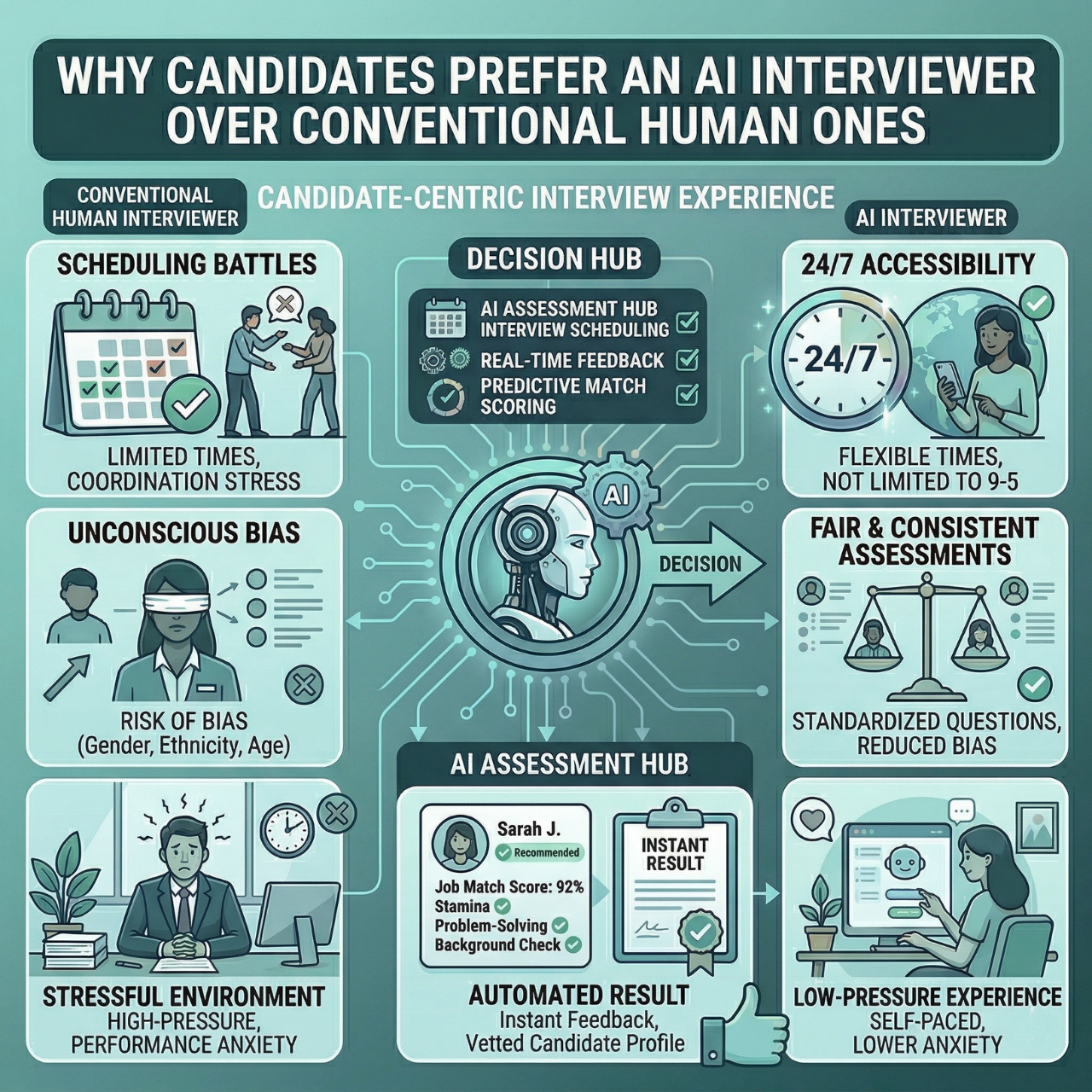
Traditional recruitment leans heavily on human effort. Recruiters spend hours reviewing resumes, setting up interviews, and chasing candidates for updates.
This approach drags things out and often leads to missed opportunities or unconscious bias sneaking in. It’s not exactly fun for anyone involved.
With AI-driven recruitment, tools automate a lot of the grunt work. AI screens resumes instantly, scores candidates based on fit, and schedules interviews without endless back-and-forth emails.
This can cut hiring time by over 60%. You get fewer no-shows because only engaged candidates move forward.
AI helps reduce bias by zeroing in on qualifications instead of personal details. You get to focus on the decisions that actually matter, while the routine stuff just happens in the background.
Milestones in AI Recruitment Technology
AI recruitment started out with basic resume parsing. Now, it’s grown to cover automated interviews, talent prediction, and real-time analytics.
Early tools just scanned for keywords, but modern AI evaluates candidate responses and engagement patterns. That’s a pretty big leap.
Nerva AI-powered platforms use conversational AI interviews that candidates can complete anytime. Hiring doesn’t have to stop just because it’s after hours.
Scheduling automation also stands out. It ditches endless email chains and lets candidates pick interview times instantly.
SMS and email nudges keep candidates engaged, cutting ghosting rates nearly in half. AI now tracks bottlenecks with clear dashboards, so you can adjust hiring steps for better speed and quality.
AI-Powered Candidate Sourcing
AI-powered candidate sourcing speeds things up by automating key tasks. You can filter resumes and match candidates by skills and fit way faster.
This tech helps you focus on the best people without wasting time on those who aren’t a match. It’s a real time-saver if you’ve got a pile of resumes staring you down.
Automated Resume Screening
Automated resume screening uses AI to zip through huge numbers of resumes. It hunts for keywords, experience, and education that actually matter for your job openings.
This process weeds out unqualified applicants early. You end up saving hours you’d otherwise spend reading every resume.
AI-powered platforms can automatically score and rank candidates. Only the top matches move forward, which helps cut down on bias and human error.
Automated screening tools update in real time, keeping your hiring pipeline fresh and accurate. You get a shortlist sooner and can move faster to hire the right people.
Intelligent Talent Matching
Intelligent talent matching uses AI algorithms to compare candidate profiles to job requirements. It goes beyond keywords, looking at skills, experience, and even cultural fit.
This level of precision really boosts your odds of finding the right hire. AI gives you recommendations on candidates most likely to succeed in the role.
The platform can even learn from your past hiring decisions to make future matches smarter. This approach keeps engagement focused on qualified, interested candidates.
Automated messaging helps maintain candidate interest and schedules interviews efficiently. You spend less time searching and more time actually talking to the best talent.
Enhancing Candidate Experience With AI
AI makes the candidate journey smoother from start to finish. It keeps people engaged and delivers timely, relevant communication.
Candidates spend less time waiting and get more clarity about where they stand. That’s something everyone can appreciate.
AI Chatbots for Candidate Engagement
AI chatbots help you connect with candidates instantly. They answer common questions, guide applicants through forms, and provide updates around the clock.
This cuts down on delays and keeps everyone in the loop. Chatbots can handle:
- Quick replies to FAQs
- Reminders about missing documents
- Clear explanations of next steps
Candidates feel supported, even when you’re not at your desk. This also cuts down on no-shows by keeping people engaged and confident about their status.
Personalized Communication
Sending the right message at the right time really keeps candidates interested. AI-driven tools analyze each candidate’s progress and tailor communication accordingly.
You can set up automated emails or texts to:
- Confirm application receipt
- Remind about interview schedules
- Share feedback or next steps
This targeted approach helps candidates feel valued. It also makes the hiring process move faster by taking the guesswork and manual follow-ups off your plate.
AI-powered outreach keeps things feeling human, even when it’s automated. That balance actually does improve candidate satisfaction and helps you build a stronger talent pipeline.
Bias Reduction and Diversity in AI Recruitment
AI can help you build a fairer hiring process by cutting down on bias and widening your talent pool. It screens candidates more objectively and helps you stick to consistent decisions.
Of course, with all this tech, you’ve got to watch out for privacy and data handling concerns. It’s not all smooth sailing, but the benefits are hard to ignore.
Mitigating Human Bias With Algorithms
AI tools analyze candidates without bringing in the unconscious biases humans tend to have. They focus on skills, experience, and qualifications—leaving gender, race, or age out of the equation.
Algorithms can be fine-tuned with diverse and balanced data sets. Regular audits help catch bias that might sneak in.
Automated pre-screening and scoring systems ensure only qualified candidates move forward. This removes subjective decisions early and keeps the process fairer and faster.
Ensuring Inclusive Hiring Practices
Inclusive hiring means opening doors to candidates from all sorts of backgrounds and experiences. AI helps widen the talent pool beyond the usual networks.
You can set AI tools to ignore demographic data and focus strictly on job-related skills. Automated communication, like SMS engagement, keeps diverse candidates involved and informed.
Transparent processes powered by AI increase trust. Automated scheduling and candidate nudges make sure every applicant has an equal shot to advance.
AI-Based Interviewing Techniques
AI interviewing uses smart tools to speed up hiring and improve accuracy and fairness. These technologies let you dig deeper into candidate potential in less time.
Video Interview Analysis
Video interview analysis uses AI to review recorded or live candidate interviews. It can assess facial expressions, tone, and word choice to give you insights you’d never get from a resume.
AI scores answers consistently and highlights key moments, so you don’t have to watch every minute. This makes it easier to focus on top candidates.
Automated Assessments
Automated assessments let you test skills and knowledge early on. AI creates custom quizzes or simulations that candidates complete online.
This way, you only move forward with people who’ve got the right stuff. Your team saves hours by skipping manual grading and endless follow-ups.
Automated tools give objective results based on performance, not just what’s on a resume. You get instant scores and reports, letting you decide fast who fits your team.
Recruitment Analytics and Data-Driven Insights
Data-driven insights help you make smarter hiring choices by leaning on facts, not just gut feelings. You can predict candidate success and track how your hiring process performs in real time.
You get a clearer view of every step and can focus on the best candidates without the usual guesswork.
Predictive Analytics in Hiring
Predictive analytics uses past hiring data to forecast which candidates will thrive. It looks at skills, experience, and job fit to score applicants before interviews.
This helps you avoid bad hires and save time by zeroing in on those who really match your needs. Predictive models can flag risks like poor retention or performance early on.
Automated systems screen, score, and rank candidates instantly, so you don’t have to sift through piles of resumes or applications.
Real-Time Performance Tracking
Real-time tracking tools let you see how your hiring process flows from start to finish. You get live metrics like application rates, time-to-hire, interview completion, and candidate engagement.
Spotting bottlenecks gets way easier, whether it’s delays in scheduling or drops in candidate responses. You can tweak things on the fly to keep the process moving.
Dashboards pull all the data into easy visuals. It’s a relief not having to dig for numbers just to see what’s working and what’s not.
Challenges and Ethical Considerations of AI in Recruitment
Using AI in recruitment definitely speeds up hiring and improves candidate matching. Still, it raises important questions about data handling and how decisions get made.
These issues touch your company’s reputation and the fairness of your hiring process. It’s worth keeping an eye on as the tech keeps evolving.
Data Privacy Concerns
AI-powered recruitment tools collect a ton of personal data from candidates. We're talking resumes, interview answers, social media profiles—the works.
It's crucial to keep this information safe and use it solely for hiring. If you don't, well, candidates expect their details to stay private, and mishandling data can really wreck trust or even break laws like GDPR or CCPA.
Make sure your AI systems use strong encryption and restrict who can access candidate information. You should also be upfront with folks about what you're collecting and why.
Being transparent about your data practices helps build trust. Plus, it keeps the hiring process fair (or at least, fairer than the alternative).
Transparency and Accountability in AI Systems
AI makes decisions fast—sometimes too fast—and honestly, it’s not always clear how those decisions happen. You’ve got to know exactly how your AI tools score and filter candidates, or you risk losing control.
If you just trust the algorithm blindly, bias can creep in. Like, if your AI learned from old hiring data, it might start favoring certain groups without anyone noticing.
Keep humans in the loop to double-check what the AI spits out. Human review helps catch mistakes and gives candidates a fairer shot.
Lay out your AI’s rules and methods for the hiring team. That way, everyone knows what’s going on, and you can tweak things as needed.
The Future of Recruitment With Artificial Intelligence
AI is shaking up recruitment, making hiring both quicker and more dependable. You don’t have to slog through piles of resumes or blast out endless emails anymore.
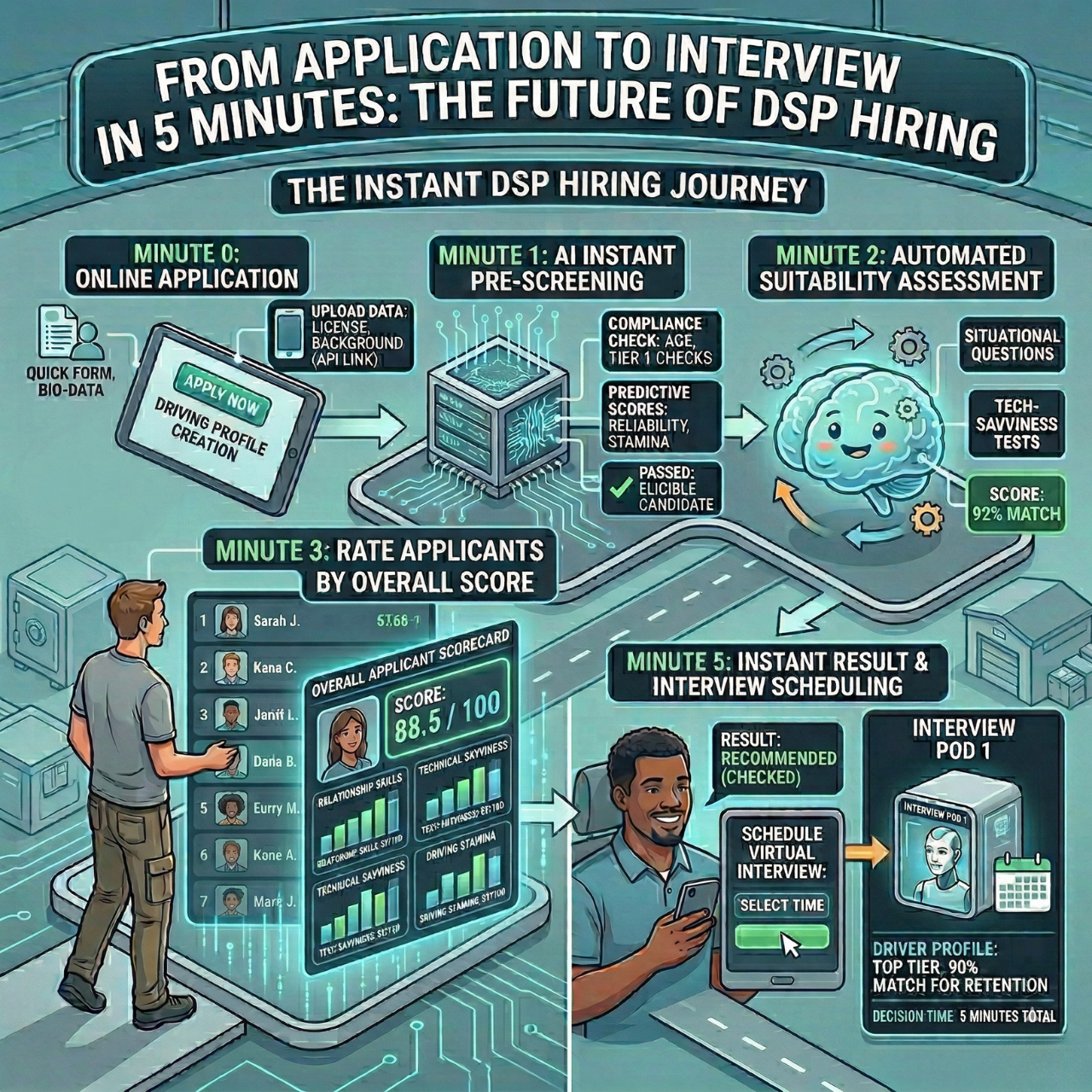
Automated pre-screening, scoring, and scheduling tools now handle those tedious steps. That means you can focus on what actually matters—connecting with people.
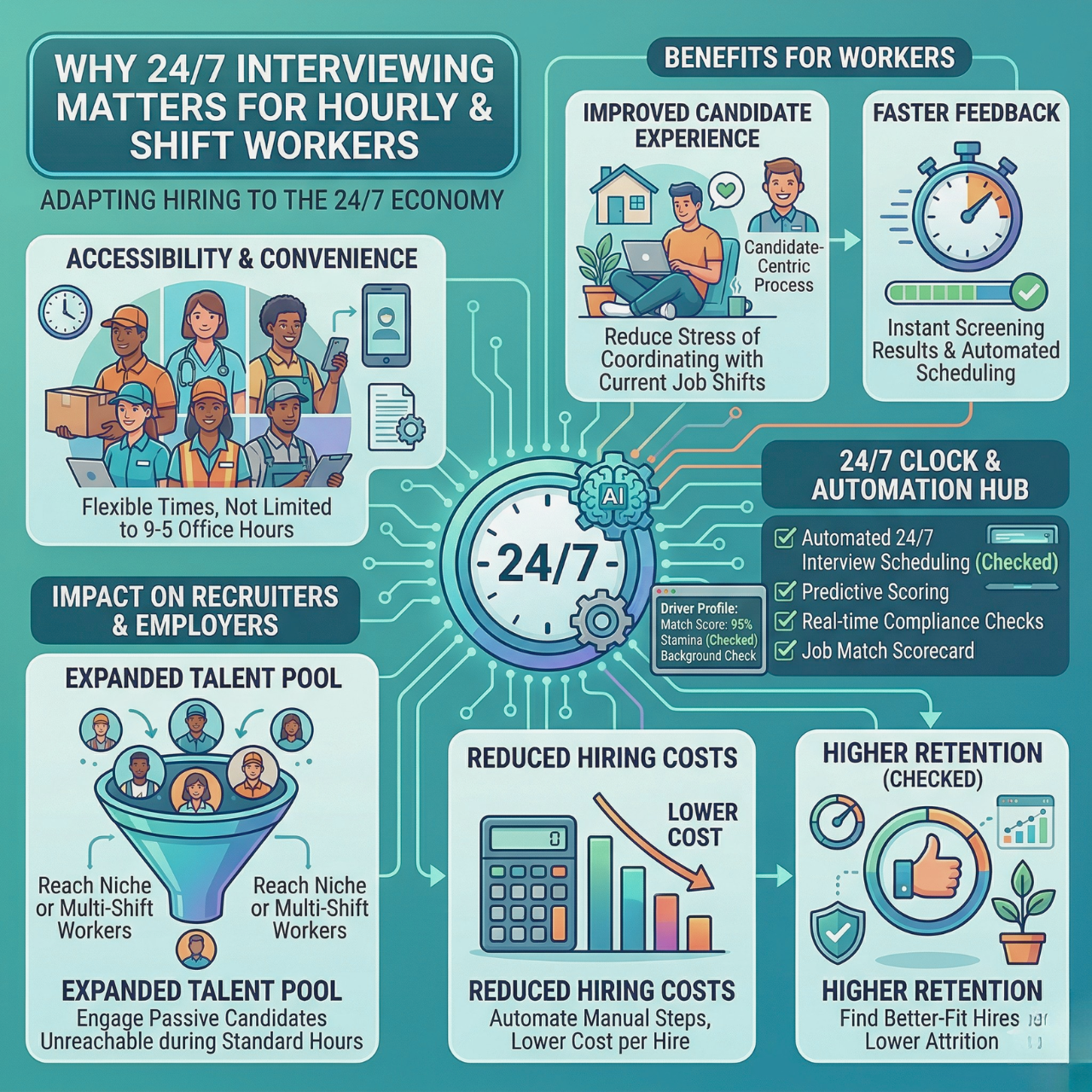
Picture this: 24/7 AI interviews that let candidates apply and interview whenever it works for them. No more chasing folks down or playing email tag for weeks.
Automated SMS and email nudges help keep candidates in the loop, cutting down on no-shows and keeping things moving along.
What’s actually great about AI in hiring?
- Speed: You could slash your time-to-hire by more than 60%.
- Efficiency: Scale up from a handful of roles to hundreds—without losing your mind.
- Quality: AI highlights only the most qualified folks, and ghosting drops by half.
- Bias reduction: Automated screening helps keep things fair and square.
AI-driven platforms now integrate with your existing ATS and HRIS systems. No big disruptions—just smoother workflows and a little less chaos.
You’ll see real-time analytics that flag bottlenecks and track how engaged your candidates are. Soon enough, voice engagement will add a more personal vibe, letting candidates speak naturally during smart AI interviews.
Some days it feels like hiring just got a whole lot easier. You’re still in charge, but the technology takes care of the grunt work. Isn’t that the dream?
Hiring Without the Usual Bottlenecks
Hiring should not feel like a constant scramble. Manual screening, slow scheduling, and candidate drop-off all drag the process down and cost teams great talent. Automation helps remove friction so hiring moves faster, stays organized, and focuses on quality instead of cleanup.
HRMLESS supports this shift by handling pre-screening, interviews, and scheduling automatically. Teams spend less time chasing candidates and more time making confident decisions, with fewer delays and less ghosting along the way.
If hiring feels harder than it needs to be, it may be time to simplify the process. Book a demo and see how AI can remove bottlenecks and help your team hire at the speed you need.
Frequently Asked Questions
How is AI changing recruitment today?
AI is changing recruitment by automating time-consuming tasks like resume screening, interview scheduling, and candidate communication. This helps teams hire faster, reduce delays, and keep candidates engaged throughout the process.
Does AI replace recruiters?
No. AI supports recruiters by handling repetitive work, not replacing human judgment. Recruiters still make final hiring decisions and focus more on relationship-building and evaluating fit.
Can AI help reduce bias in hiring?
AI can help reduce bias by focusing on skills, qualifications, and job-related criteria rather than personal details. When monitored and audited regularly, AI tools help make screening and shortlisting more consistent and fair.
How does AI improve the candidate experience?
AI improves the candidate experience through faster responses, clear updates, and flexible interview options. Candidates spend less time waiting and more time understanding where they stand in the process.
Is AI recruitment software difficult to integrate?
Most modern AI recruitment tools integrate with existing ATS and HR systems. This allows teams to improve workflows without replacing the tools they already rely on.
What are the biggest risks of using AI in recruitment?
The main risks involve data privacy, transparency, and over-reliance on automation. These risks can be managed by keeping humans in the loop, protecting candidate data, and clearly understanding how AI decisions are made.
Is AI only useful for high-volume hiring?
AI is useful for both high-volume and specialized hiring. It scales screening and scheduling for large roles while also helping smaller teams move faster and stay organized without added workload.
Featured

Subscribe to ournewsletter
Related posts
Explore the world of photography with our curated selection of
portfolio websites that showcase creativity and innovation.